A pagan wedding in Italy is a symbolic ceremony built around nature: the elements, the seasons and rituals such as handfasting, led by a celebrant in a forest, by a lake or on a mountain. Kiss Me Italy packages with nature rituals cost from €2,200 to €8,900 for two people, with celebrant, flowers and photographer included. The ceremony has no legal value on its own, so the legal marriage is a separate civil step.
Packages for a Nature-Based Ceremony
There is no package labeled “pagan” in our catalog. These live packages are symbolic ceremonies outdoors, and their descriptions include rituals that fit a pagan ceremony: handfasting, the Tree Ritual, water blessings and candlelight. Prices are in euros, for two people.
| Package | Setting and rituals included | Price |
|---|---|---|
| Crystal Lake · Lago di Carezza | Lakeshore of Lago di Carezza, Dolomites: celebrant, handfasting, Alpine Bell Ritual, photographer | €2,200 |
| Our Secret · Seceda | Seceda ridge, Dolomites: celebrant, handfasting, Alpine Bell Ritual, photographer | €2,200 |
| Positano Dream | Basilica of Sant’Eustachio, Praiano, above the sea: celebrant, handfasting, toast, photographer | €2,900 |
| Stradivari In Love · Paneveggio | Paneveggio Forest, Dolomites: celebrant, handfasting, Tree Ritual at the old spruces, violinist, picnic | €3,600 |
| The Barolo Wedding | Barolo wine cellar, Langhe: celebrant, handfasting, Barolo Ritual, tasting, photographer | €3,600 |
| The Secret Canal | Gondola ceremony near the Bridge of Sighs, Venice: red ribbon ritual and Venetian water blessing | €3,600 |
| Forever Alpine · Alpe di Siusi | Alpe di Siusi meadows, Dolomites: celebrant, handfasting, Alpine Bell Ritual, lunch in a mountain hut | €4,500 |
| The Tuscan Love Story | Among the cypresses of Chianti, Tuscany: red ribbon ritual, candlelight and a Tuscan wine blessing | €4,600 |
| Barolo Infinity | Barolo wine cellar, Langhe: handfasting, Barolo Ritual, tasting, Piedmontese dinner | €5,200 |
| White Dolomites · Rifugio Fuciade | Winter ceremony at Rifugio Fuciade, arrival by horse-drawn sleigh, handfasting, Alpine Bell Ritual | €6,200 |
| The Perfect Sunset Garda | Terrazza Rivellino of the Castello Scaligero, Malcesine, Lake Garda: red ribbon and Lake Garda water blessing | €6,900 |
| Sunset Royale Como | Villa Monastero, Lake Como: red ribbon ritual, Lake Como water ritual, candle ritual | €7,500 |
| Into The Blue Portofino | Abbey terrace at San Fruttuoso, Portofino: red ribbon ritual, sea water ritual, candle ritual | €7,900 |
| Dolomites Infinity · Col Pradat | Col Pradat at 2,030 meters: handfasting, Alpine Bell Ritual, dinner, night in a mountain lodge | €8,900 |
Other rituals, readings and invocations can be added on request. For a ceremony planned outside these packages, a celebrant for a symbolic ceremony costs about €800 to €2,500. More options are in our Italy elopement packages.

What a Pagan Wedding Ceremony Looks Like
Modern paganism is not one religion. It includes several groups, such as Wiccans, heathens and Celtic neopagans, as History UK explains. Each tradition has its own words and customs.
Most pagan weddings share a few ideas: the ceremony takes place outdoors, it follows the seasons, and it honors nature and the elements. The couple usually writes much of the ceremony with the celebrant.
A typical order, which the celebrant adapts to your tradition, is:
- Opening: the celebrant welcomes guests and marks the space, often as a circle
- The four elements: earth, air, fire and water are called in, one for each direction
- Vows: promises written by the couple, often tied to nature or the season
- Handfasting: the hands are bound with a ribbon or cord
- A second ritual: candle, water, tree or wine, depending on the place
- Closing: the elements are thanked and the circle is opened
A short ceremony lasts about 20 to 30 minutes. If you have a high priestess, a druid or a friend from your own community, they can lead it, and we organize everything around them.

Handfasting
Handfasting is the ritual most people link with a pagan wedding. Your hands are tied together with ribbons or cords while you make your promises. It is included in most of the packages above.
Our guide to the handfasting ceremony in Italy covers its history, how it is performed and how to choose the cords.

The Four Elements
Calling the four elements is common in pagan ceremonies. Italy makes it easy to give each one a real place in the setting:
- Earth: the old spruces in the Tree Ritual at Paneveggio, or a stone, soil or seeds from the place
- Air: an open ridge such as Seceda, incense, feathers, or the Alpine Bell Ritual
- Fire: candles, lanterns, or a ceremony timed for sunset
- Water: the water blessings on Lake Como, Lake Garda, in Venice or from the sea at Portofino

Other Rituals
- Tree Ritual: in the Paneveggio package, your hands meet on the bark of a centuries-old spruce
- Wine ritual: two wines poured into one cup, as in the Barolo Ritual in the Langhe
- Candle ritual: one flame lit from two, included in several lake and coast packages
- Broom jumping: a step over a broom at the end, easy to add on request
- Offerings: flowers, bread or wine left for the land, if the place allows it
Best Places for a Pagan Wedding in Italy
Because the ceremony is symbolic, you can hold it almost anywhere the owner or the authority allows. These are the settings where our packages already take place:
- Forests: the Paneveggio Forest in the Dolomites, among old spruces. See our forest wedding in Italy guide
- Mountains and meadows: Seceda, Alpe di Siusi, Col Pradat and Rifugio Fuciade. See Dolomites wedding
- Mountain lakes: the shore of Lago di Carezza, with the Latemar behind
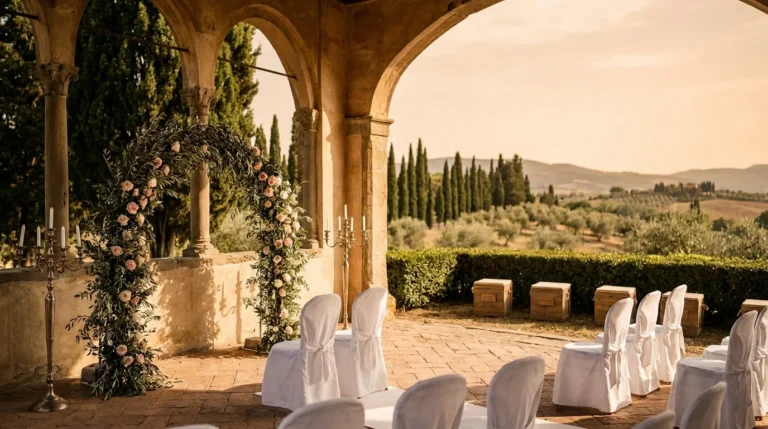
- Vineyards and cellars: the Langhe around Barolo, and the Chianti hills in Tuscany
- Great lakes: Lake Como wedding and Lake Garda wedding settings, with a water ritual
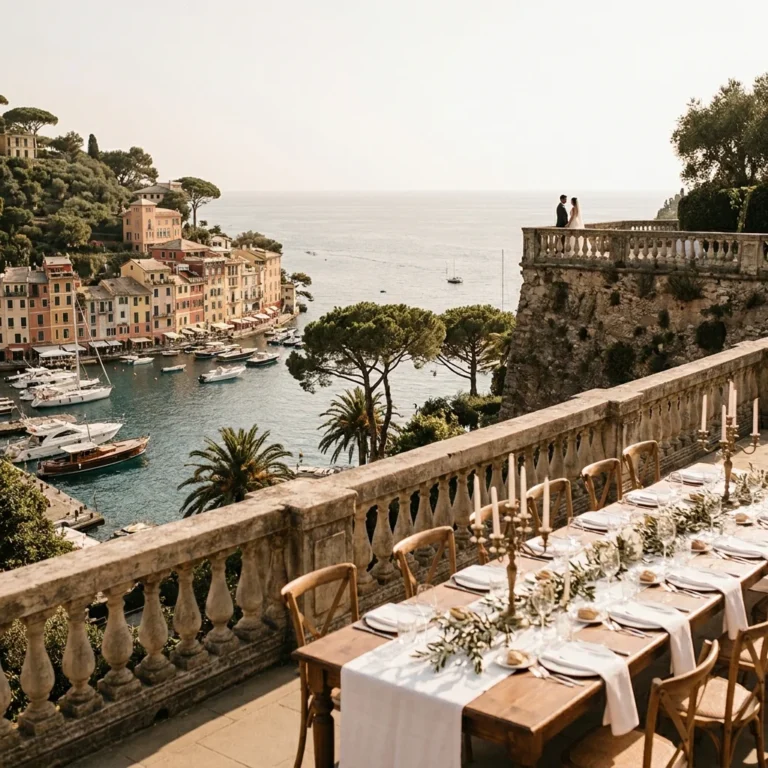
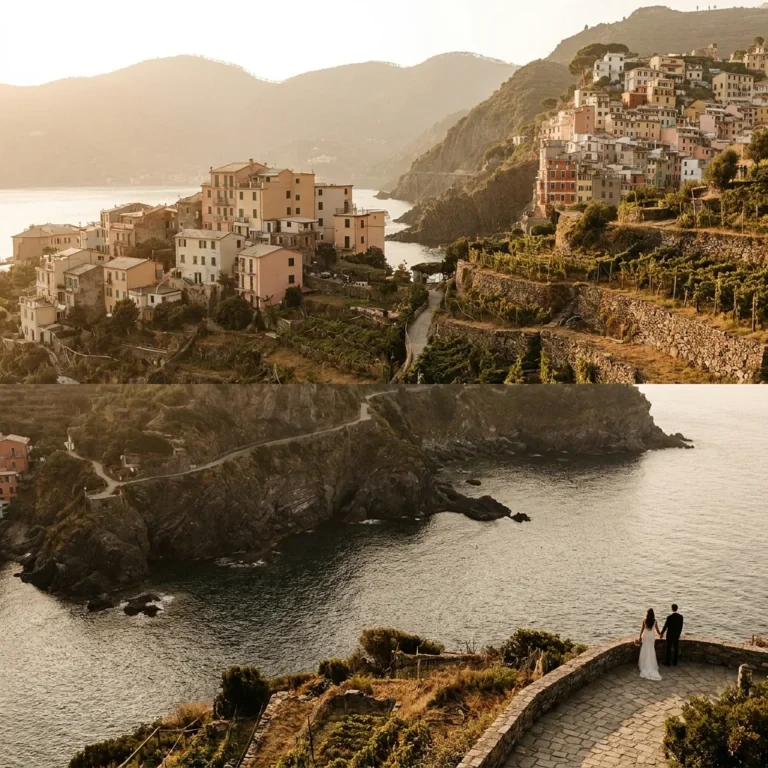
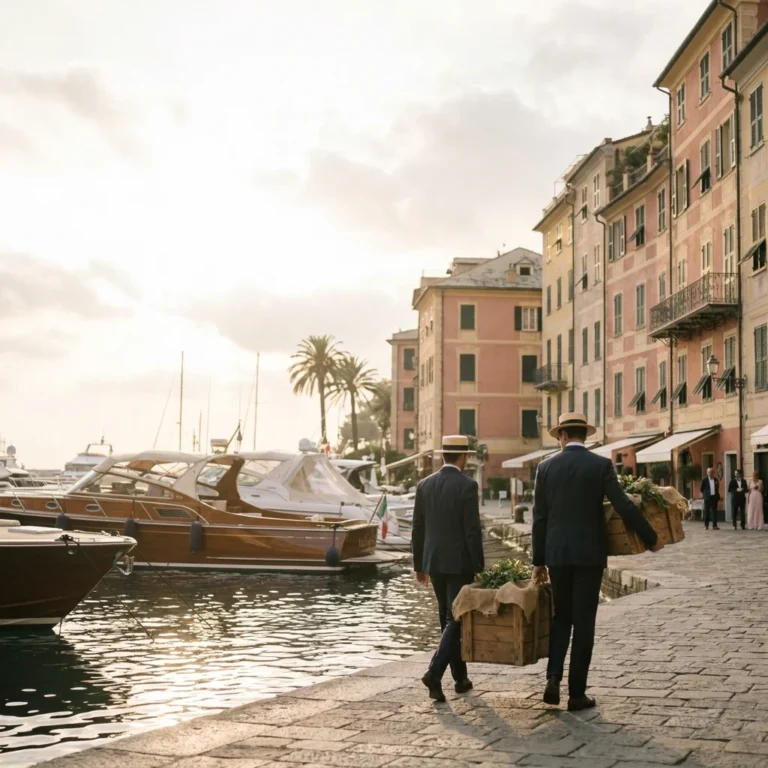
- The sea: the Amalfi Coast, the abbey cove of San Fruttuoso, a Portofino wedding or a Cinque Terre wedding
- Venice: a gondola ceremony with a water blessing. See wedding in Venice
Ancient sites, such as Roman ruins or temples, are a natural wish for many pagan couples. Most are protected and managed by public bodies, so any ceremony there needs their permission. We check what is allowed case by case, before you book anything.
Outdoor places always need a plan B for rain or wind. Open flames may also be limited in forests and on dry hillsides in summer, so candles may need lanterns.


Choosing the Date: The Wheel of the Year
Many pagans follow the Wheel of the Year, eight festivals spaced about six to seven weeks apart. The dates below are those given by History UK:
| Festival | When | Wedding note |
|---|---|---|
| Imbolc | 1 February | Winter in the Dolomites: a snowy ceremony, as at Rifugio Fuciade |
| Ostara | Around 21 March (spring equinox) | Spring blossom on the lakes; cool evenings |
| Beltane | May Eve and May Day | The traditional start of summer; meadows in flower |
| Litha | Around 21 June (summer solstice) | The longest day: late sunsets and warm evenings |
| Lughnasadh | Beginning of August | Harvest feast; the busiest month for travel in Italy |
| Mabon | Between 21 and 24 September | Grape harvest in the Langhe and Chianti |
| Samhain | Night of 31 October to 1 November | Autumn colors; shorter days |
| Yule | Around 21 December (shortest day) | Candlelit winter ceremony in the mountains |
Beltane, the May Day festival linked with fertility, and Litha, the midsummer solstice, are popular wedding dates. Mabon fits couples who love wine country in harvest time.
Sunset matters if you want the ceremony at dusk. On 21 June 2027 the astronomical sunset is about 21:09 at Lago di Carezza and about 21:16 at Barolo. In the mountains the sun drops behind the peaks earlier, so we plan by the real light on site.
On 23 September 2027 the sunset is about 19:09 in the Dolomites and 19:24 in Barolo. Times are calculated for a flat horizon, in Italian local time.

Is a Pagan Wedding in Italy Legal?
Not on its own. A pagan ceremony in Italy is a symbolic act and does not create a legal marriage. Our package pages describe all these ceremonies as symbolic.
The Italian State has signed agreements, called intese, with a list of religious denominations. The Italian government’s list includes 14 groups, among them the Waldensian Church, the Union of Italian Jewish Communities, the Italian Buddhist Union and the Italian Hindu Union. No pagan group appears on it.
A civil marriage is a separate act. Under article 106 of the Italian Civil Code it is celebrated publicly in the town hall, or in a venue the Comune has set aside for weddings, as the Comune di Chiavari explains in its public notice on wedding venues.
Couples usually choose one of three paths:
- Legal at home, pagan ceremony in Italy: the simplest option, and the one our packages are built for
- Civil ceremony in Italy, then the pagan ceremony: a short civil wedding at the town hall, followed by the ritual outdoors, on the same day or the next
- Pagan ceremony only: a commitment ceremony without a legal marriage, if that is what you want
For the documents needed for a civil wedding, see getting married in Italy as a US citizen and how to get married in Italy as a foreigner.

The Celebrant
In our symbolic packages a professional celebrant is included. For a pagan ceremony, tell us your tradition early, so the celebrant can prepare the right words, or work with your own officiant.
- Ask whether the celebrant has led pagan, Wiccan or druid ceremonies before
- Agree on languages: English, Italian, or both
- Share your readings, invocations and the names of deities, if any
- Decide who calls the elements: the celebrant, family members or friends
- Rehearse the handfasting once, so the cords sit right
A friend can lead a symbolic ceremony, but cannot perform a legal marriage in Italy. Our guide to the wedding officiant in Italy explains who can marry you. For other non-religious options, see the humanist wedding in Italy and our overview of wedding ceremony types in Italy.
Food, Guests and the Celebration
Seasonal food suits a pagan wedding well. A harvest table, local bread, honey, cheese and wine from the same land as the ceremony all carry meaning. See our Italian wedding menu ideas.
Some Italian customs sit well next to pagan ones, such as sharing bread and wine or throwing rice. Our guide to Italian wedding traditions lists them.
Most of the packages above are for two people, as an elopement. With guests, a pagan ceremony can be part of an intimate wedding in Italy or of a larger celebration planned with a luxury wedding planner in Italy. For a small ceremony without guests, see how to elope in Italy.
Planning a proposal first? See our proposal in Italy ideas. To check a date or a place, contact Kiss Me Italy.

Frequently Asked Questions
What are the best pagan wedding locations in Italy?
Forests, mountains and water suit pagan rituals best. Our packages take place in the Paneveggio Forest, on Seceda and Alpe di Siusi, by Lago di Carezza, in Barolo cellars, in Chianti, on Lake Como and Lake Garda, in Venice and at San Fruttuoso near Portofino. Ancient sites need permission from the body that manages them.
What are traditional pagan wedding dates?
Many couples pick a festival of the Wheel of the Year. Beltane, at May Eve and May Day, and Litha, around the summer solstice on 21 June, are the most popular. Mabon, between 21 and 24 September, matches the grape harvest. Others choose a full moon or a date with personal meaning.
Is a pagan wedding legal in Italy?
No, not on its own. No pagan group is among the denominations that have an agreement with the Italian State, so the ceremony is symbolic. For a legal marriage you need a civil ceremony, either at home or at an Italian town hall. Many couples marry legally at home and hold the pagan ceremony in Italy.
Can a pagan wedding include a handfasting?
Yes. Handfasting is part of most pagan weddings, and it is included in many of our symbolic packages, from €2,200 in the Dolomites. The celebrant or your own officiant ties the ribbon or cords during the vows, and family members can join in by placing a ribbon each.