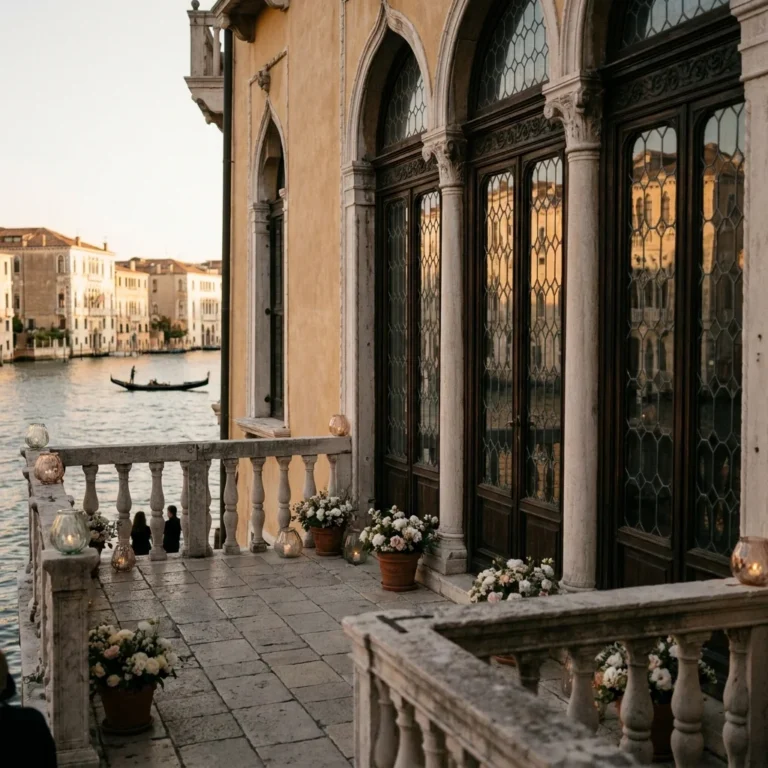
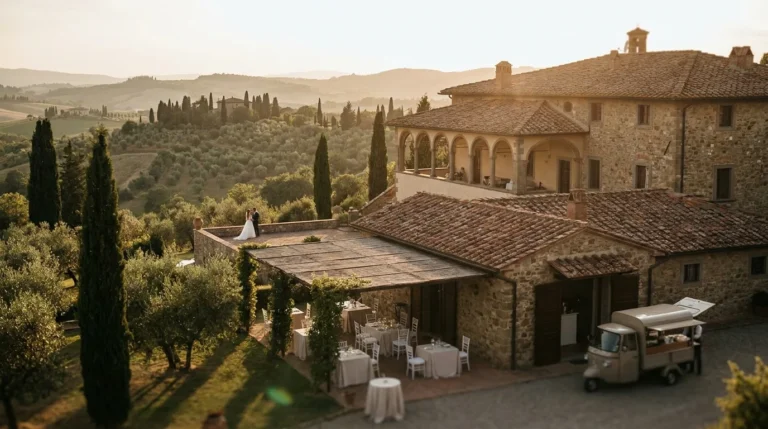
Tuscan Wedding Table Setting
Most Tuscan wedding table settings fail for practical reasons before aesthetic ones: the linen is too stark for the stone, the flowers are chosen without regard for heat, or the table is styled beautifully but cannot support the actual dinner service. A refined tuscan wedding table setting begins with the venue, the season, and the hour of dining, then builds outward into linen, glass, flower, candlelight, menu, and service flow.
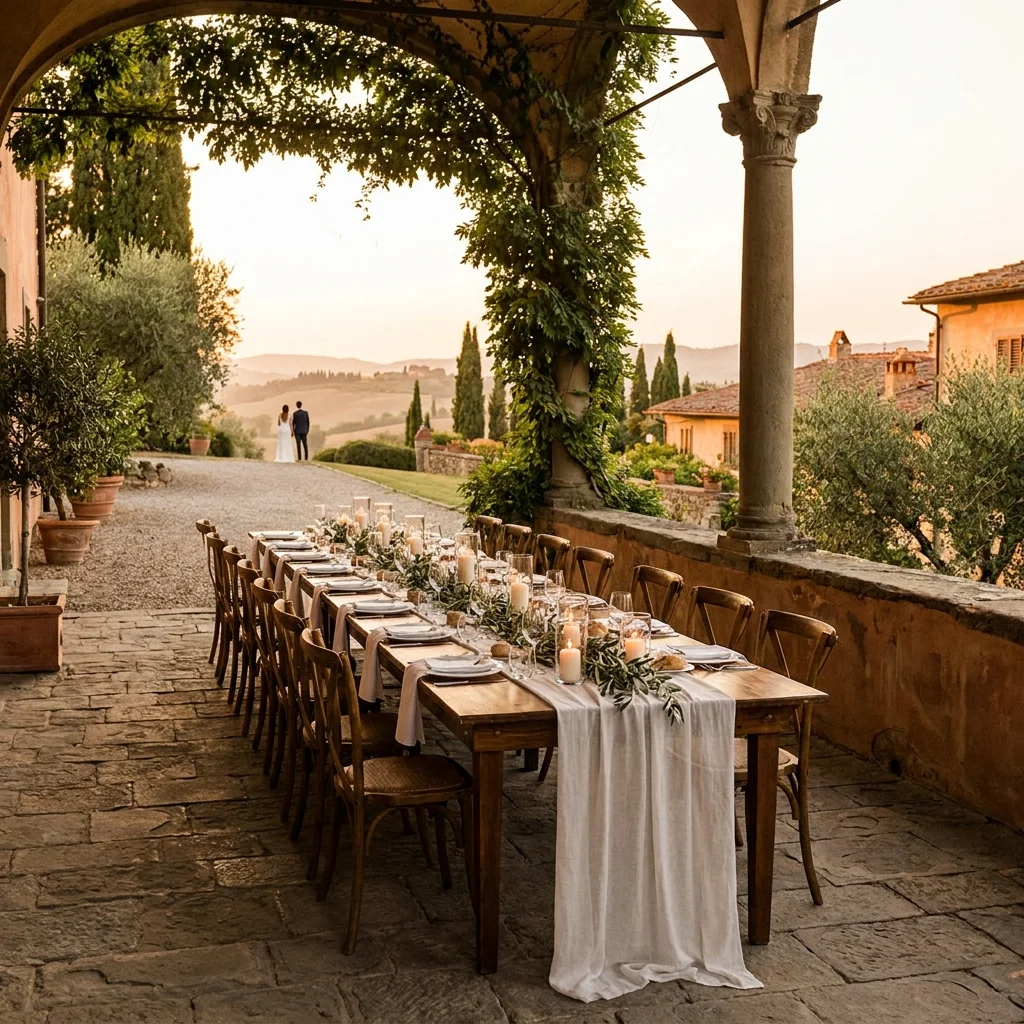
The first question couples ask me is almost always the same: how do we make a Tuscan table feel elegant without it looking rustic in the wrong way? The answer lives in restraint. We let the cypress, the olive, the warm terracotta and the low golden light carry the atmosphere, then we refine everything they touch — the weave of the cloth, the weight of the cutlery, the particular shade of the candle. At Kiss Me Italy, we curate, source, and coordinate the entire composition so that what your guests experience feels effortless and entirely yours.
The First Conversation: Reading the Venue, the Season, and the Hour You’ll Dine
Before a single flower is chosen, we read three things. The architecture of your venue, the season of your date, and the precise hour your dinner begins. These three together decide everything else.
A long table set beneath a centuries-old loggia at seven o’clock in late September behaves nothing like the same table at midday in July. The light catches differently. The stone holds warmth differently. The flowers last differently. We begin every Tuscan and Versilia design by mapping these conditions, because a tablescape that ignores them photographs beautifully for ten minutes and then begins to wilt.
Couples planning across the region often start with the broader picture, and the most useful overview of estate types and settings is our guide to wedding venues in Tuscany. Once the venue is known, the table conversation becomes specific. Walled garden or open vineyard terrace. Frescoed hall or gravel courtyard under plane trees. Each carries its own palette, its own constraints, and its own kind of beauty — and we design into it rather than against it.
This is where we like to begin a relationship with a couple. A first conversation costs nothing and clarifies everything — tell us where and when, and we will tell you what the table can become.
Why a Tuscan Table Is a Design System, Not a List of Decorations
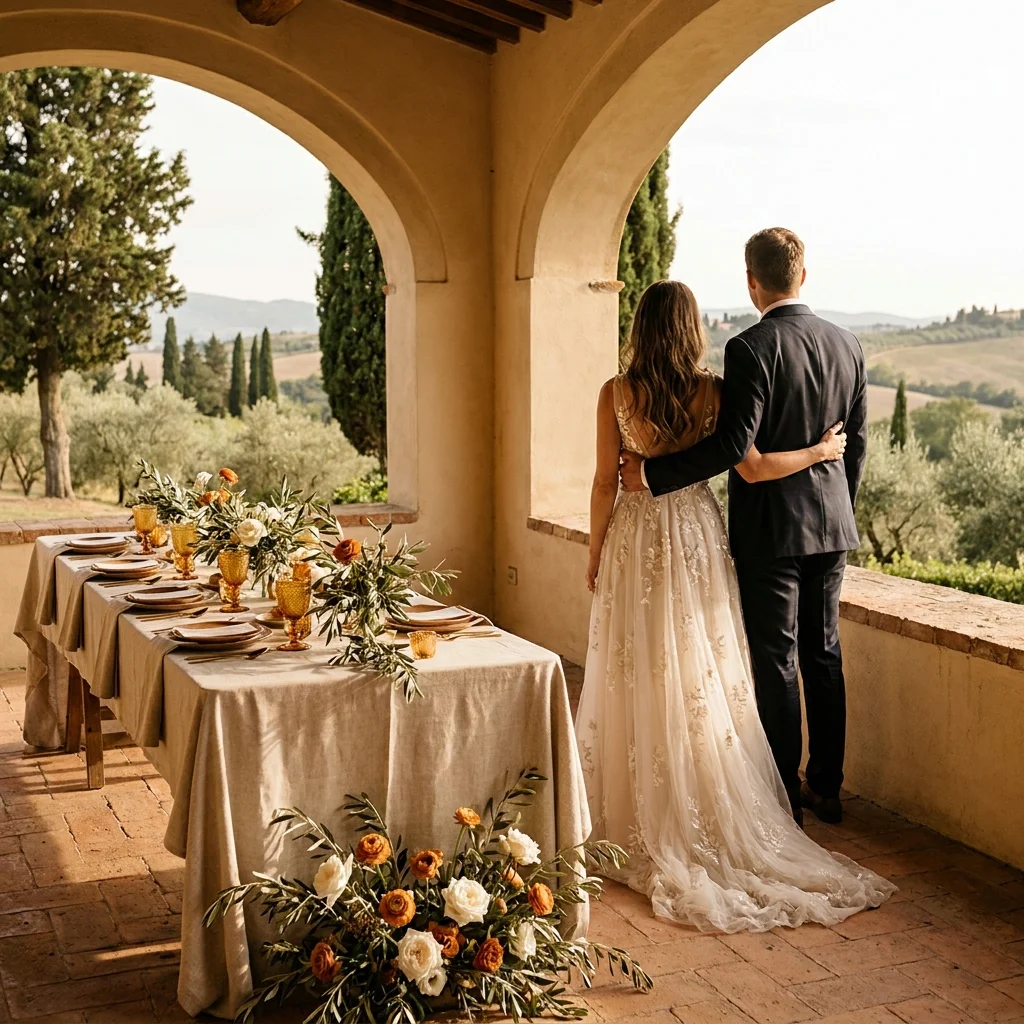
Many couples arrive with a folder of saved images — a runner here, a candle arrangement there, a place setting from a magazine. Beautiful, all of them. But assembled without a system, they fight each other on the night.
We treat the tuscan wedding table setting as a single composition in which eight elements speak to one another: the linen, the tableware, the glassware, the flowers, the candlelight, the stationery, the menu, and the service flow. Change one and the others must respond. A heavier charger plate asks for a more substantial glass. A foraged, loose floral arrangement asks for an unstructured linen with visible texture. A multi-course Tuscan menu asks for a place setting deep enough to carry it without crowding.
The aesthetic decisions that hold an entire reception together are the same ones we examine in our broader study of wedding tablescapes in Italy — proportion, repetition, and the discipline of editing. For couples drawn to the sinuous, sculptural form that has become a signature of the most editorial receptions, the curved layout is worth considering early, because it changes how flowers and light are distributed along the table.
Our role is to be the editor. We narrow a hundred lovely possibilities into one coherent atmosphere, and then we make it real. That is the difference between a table that looks assembled and a table that looks inevitable.
The Materials That Define a Refined Tuscan Table
Tuscany gives us a palette that no other region quite repeats. Warm stone, aged terracotta, raw linen, hand-thrown ceramic, and the deep greens of olive and cypress. The art is in how these tactile, Mediterranean materials are refined rather than abandoned.
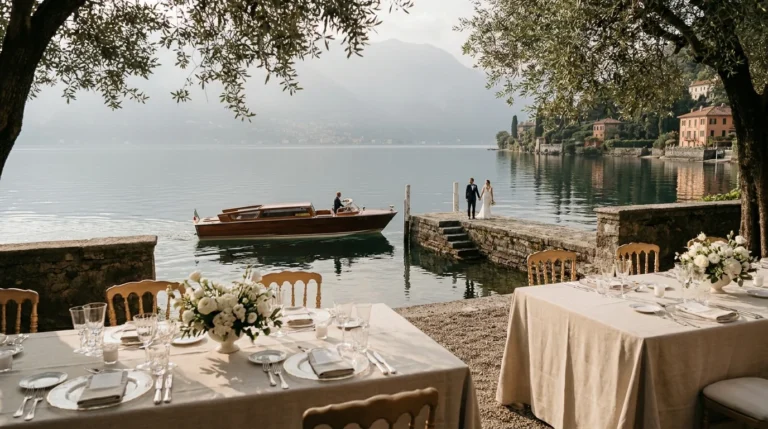
For linen, we favour washed weaves in oatmeal, bone, soft sage, or a pale dusty ochre — fabrics with a visible texture that catches the low evening light instead of reflecting it flatly. Crisp white has its place under a frescoed ceiling at a black-tie dinner, but in a vineyard terrace it can read cold against the warmth of the land.
Glassware is where refinement announces itself quietly. Hand-blown coloured stems — amber, smoke, the faintest olive-green — sit beautifully against neutral linen and warm metal. Cutlery in brushed gold or aged bronze, rather than bright steel, keeps the whole composition in the warm register that Tuscan light demands. The colour palette that photographs beautifully in this region almost always lives in earth tones, never in cool brights.
And then the flowers. We work seasonally and, where the estate allows, with foraged and locally grown botanicals — branches of olive in spring, ranunculus and sweet pea in May, dahlias and figs in late summer, dried grasses and seed heads in autumn. The seasonal floral language of the region often follows the same logic as the menu, which is why our guide to Italian wedding menu ideas is useful for couples who want the table and cuisine to feel completely connected. A table that uses what the season is actually offering will always feel more alive than one flown in against the calendar.
Designing the Table Around a Tuscan Menu, Not Despite It
Tuscan cuisine is built on cucina povera — the genius of simplicity, where a few honest ingredients become unforgettable. This philosophy should shape the table as much as the kitchen.
A menu that opens with crostini di fegatini and a board of pecorino, then moves through ribollita or pappa al pomodoro, on to a shared bistecca alla Fiorentina carved at the table, and closes with cantucci dipped in Vin Santo or a slice of torta della nonna — this is generous, tactile, communal food. It asks for a table that can hold sharing platters and carving boards without losing its elegance. We design place settings with the depth and breathing room these courses require, and we coordinate the service flow so the bistecca arrives at its peak rather than the moment your speeches begin.
The way Italian food becomes part of the guest memory, rather than merely a meal, is something we examine in our piece on why Italian wedding food feels different. The pairings matter too: a structured Chianti Classico or a Brunello asks for a glass with real volume, and the wine selection managed end to end is part of how we set the table, not an afterthought to it.
We coordinate tastings with the estate kitchen, align the menu with the season and the floral palette, and ensure the tableware suits each course. If you would like us to build a table around a genuinely Tuscan menu, our team is ready to begin that conversation.
The Real Styling Decisions: Long Tables, Heat, and Rustic Versus Refined
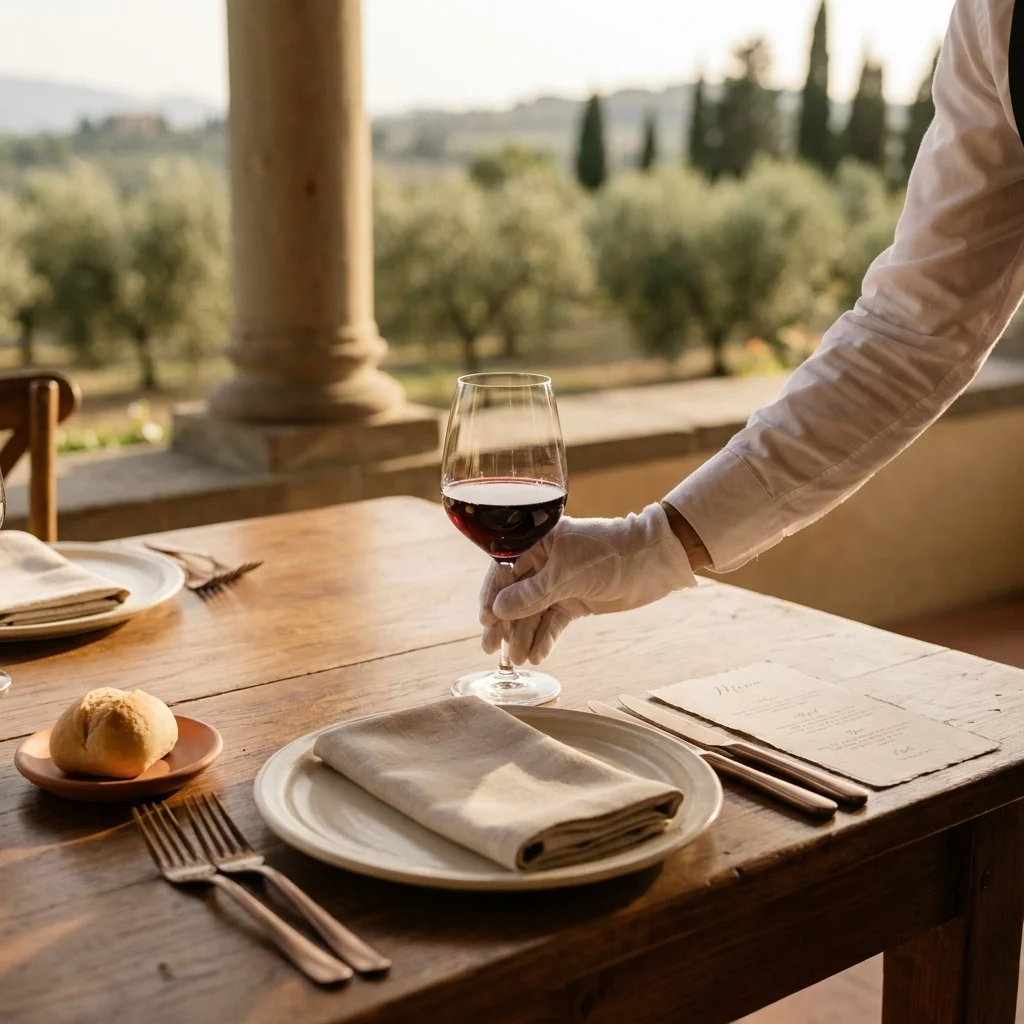
Every couple faces a handful of genuine decisions, and they are rarely the ones the magazines mention.
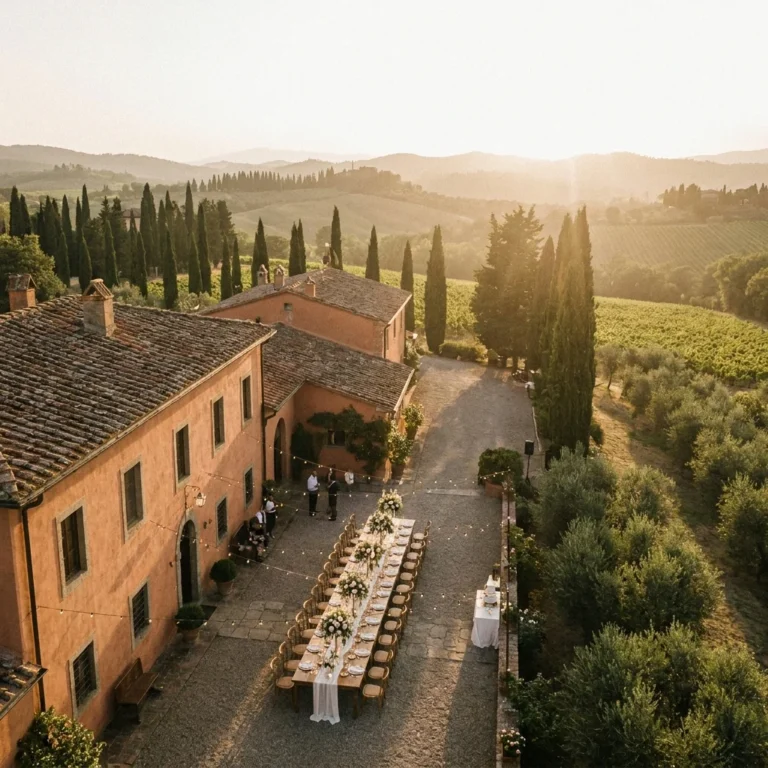
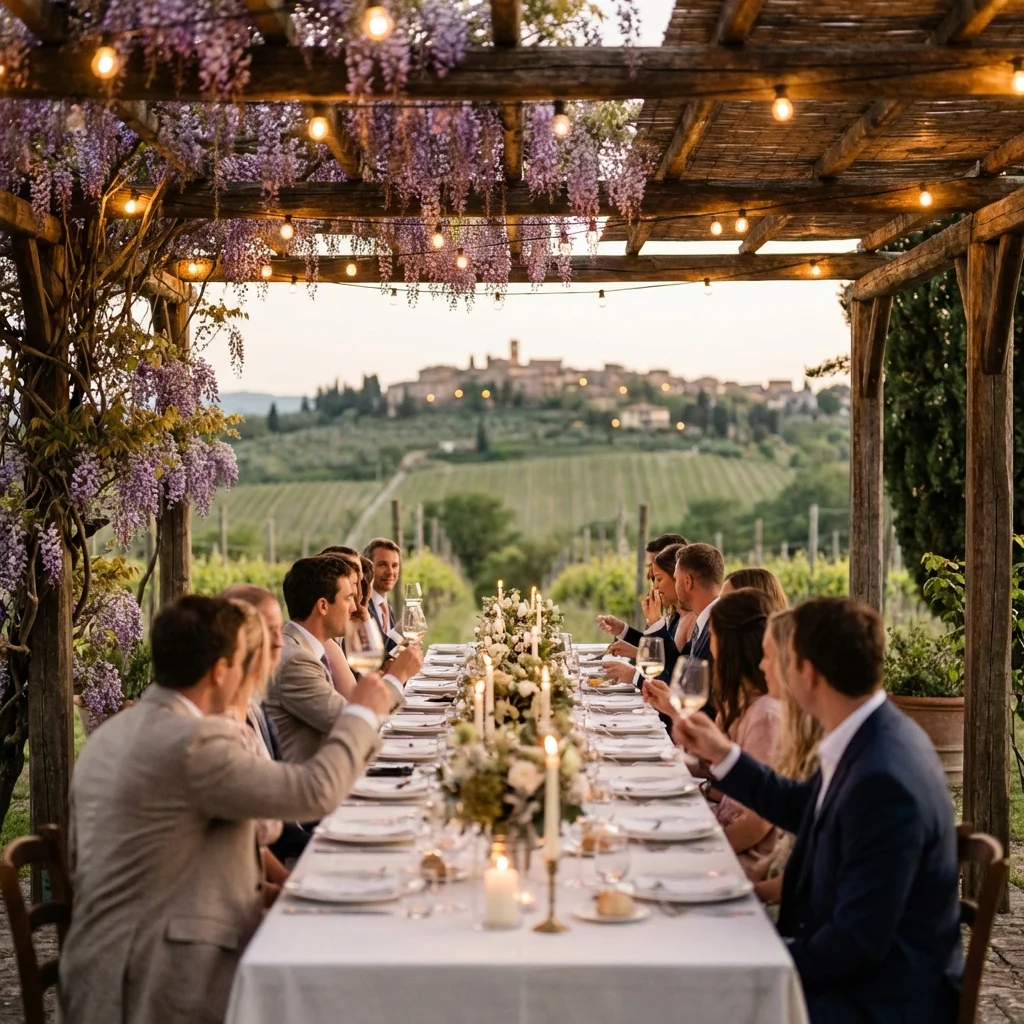
Long imperial tables or round tables. A single long table running beneath a pergola creates intimacy and an unbroken line of flowers and candlelight — it is dramatic and deeply convivial, but it limits flexibility and demands a venue with the right footprint. Round tables seat more guests comfortably and ease conversation, but they ask for a different floral logic. We advise on this based on your guest count and the actual dimensions of your space, drawing on the principles in our guide to choosing the guest count that protects your experience.
Vineyard informality or black-tie service. A Chianti estate can carry a barefoot-elegant aperitivo and a polished, formal dinner on the same evening — but the table has to signal which is which. We calibrate the formality of the linen, glass, and service to match the register you want, and the feeling of a vineyard wedding in Italy is one we know how to keep relaxed without ever letting it slip into careless.
Summer heat versus floral longevity. July and August afternoons in inland Tuscany are intense. Delicate blooms cut at midday simply will not survive a four o’clock setup for an eight o’clock dinner. We choose heat-resilient seasonal varieties, schedule the floral installation for the cool of late afternoon, and build in shaded holding areas — so the arrangement your guests see at dinner is the arrangement your photographer captures at dessert.
The Technical Side: Rentals, Candles, Wind, Permits, and Production Cutoffs
This is the part of a tuscan wedding table setting that couples never see — and the part that decides whether the evening is seamless. The register here is deliberately plain, because logistics reward precision.
Rentals and sourcing. Premium linen, hand-blown glass, chargers, and specialist tableware are reserved well ahead of peak dates — May, June, September, and early October book first. We coordinate delivery windows with the estate, confirm replacement counts for breakage, and manage the return logistics so nothing falls to you or your family.
Candles and open flame. Many Tuscan estates, particularly those with historic timber or dense surrounding vegetation, restrict open flame. We confirm each venue’s policy in writing and use hurricane glass, footed holders, or hardwax pillars that satisfy fire rules while keeping the candlelight you want.
Wind. Hilltop and ridge-top settings are gloriously scenic and frequently breezy at dusk. Tall tapers, loose petals, and lightweight stationery need weighting, shielding, or rethinking. We assess exposure on the site visit and design accordingly.
Permits and access. Outdoor receptions on certain estates require coordination with local authorities, and historic properties have their own restrictions on fixings, amplified sound, and end times. We manage this entirely.
Production cutoffs and VAT. Final guest counts, menu confirmations, and tableware quantities are locked roughly three to four weeks before the date, and Italian VAT (IVA) at 22% applies to design, rental, and service costs. We present every figure transparently, with VAT shown rather than buried.
What a Tuscan Wedding Table Setting Actually Costs
Pricing depends on guest count, venue restrictions, the volume of floral work, and the calibre of rentals. The ranges below are indicative and per the design and table elements only — venue, catering, and full production are quoted separately. For the wider financial picture of a regional celebration, our overview of what a Tuscany wedding typically costs sets useful context.
| Design Tier | Indicative Range (per guest) | Included | Quoted Separately |
|---|---|---|---|
| Refined Essential | €90–€150 | Linen, standard premium glassware & cutlery, seasonal centrepiece sharing one floral language, taper candles, basic place card | Venue, catering, premium hand-blown glass, bespoke stationery suite, VAT |
| Curated Signature | €160–€280 | Washed designer linen, coloured hand-blown glass, brushed-metal cutlery, layered seasonal florals, charger plates, candlelight scheme, printed menus | Venue, catering, custom calligraphy, lighting production, VAT |
| Editorial Bespoke | €300–€550+ | Custom linen, full coloured glass & ceramic programme, abundant foraged/seasonal florals, full candle scenography, complete stationery suite, on-site styling team | Venue, catering, structural installations, lighting design, VAT |
Indicative ranges. Contact Kiss Me Italy for a personalized proposal.
| Floral & Candle Element | Indicative Range | Notes |
|---|---|---|
| Long-table floral runner (per linear metre) | €120–€350 | Seasonal botanicals; density and variety affect cost; foraged elements reduce import cost |
| Round-table centrepiece (each) | €90–€300 | Low or elevated; elevated arrangements priced higher for structure and stem volume |
| Candle scenography (per table) | €25–€90 | Hurricane glass and fire-safe holders included where venue requires; tapers separate |
| On-site styling & breakdown team | €600–€2,500 (event) | Setup, table dressing, repositioning for golden hour, full breakdown; VAT separate |
Indicative ranges. Contact Kiss Me Italy for a personalized proposal.
| Stationery & Detail | Indicative Range | Included / Separate |
|---|---|---|
| Printed menu (per guest) | €6–€22 | Design and print included; hand calligraphy and foiling quoted separately |
| Place card & escort card suite | €4–€18 per guest | Print included; bespoke calligraphy and natural-material tags separate |
| Table numbers & signage | €150–€600 (set) | Design and materials included; custom framing or stone engraving separate |
Indicative ranges. Contact Kiss Me Italy for a personalized proposal.
Travel, accommodation, venue permits, and any production access fees are quoted separately where applicable. Photography-specific items such as post-production, second shooters, and albums are not part of table design pricing and are handled only if included within a wider wedding planning or creative production brief.
The Week Before: How the Table Comes Together Without Touching You
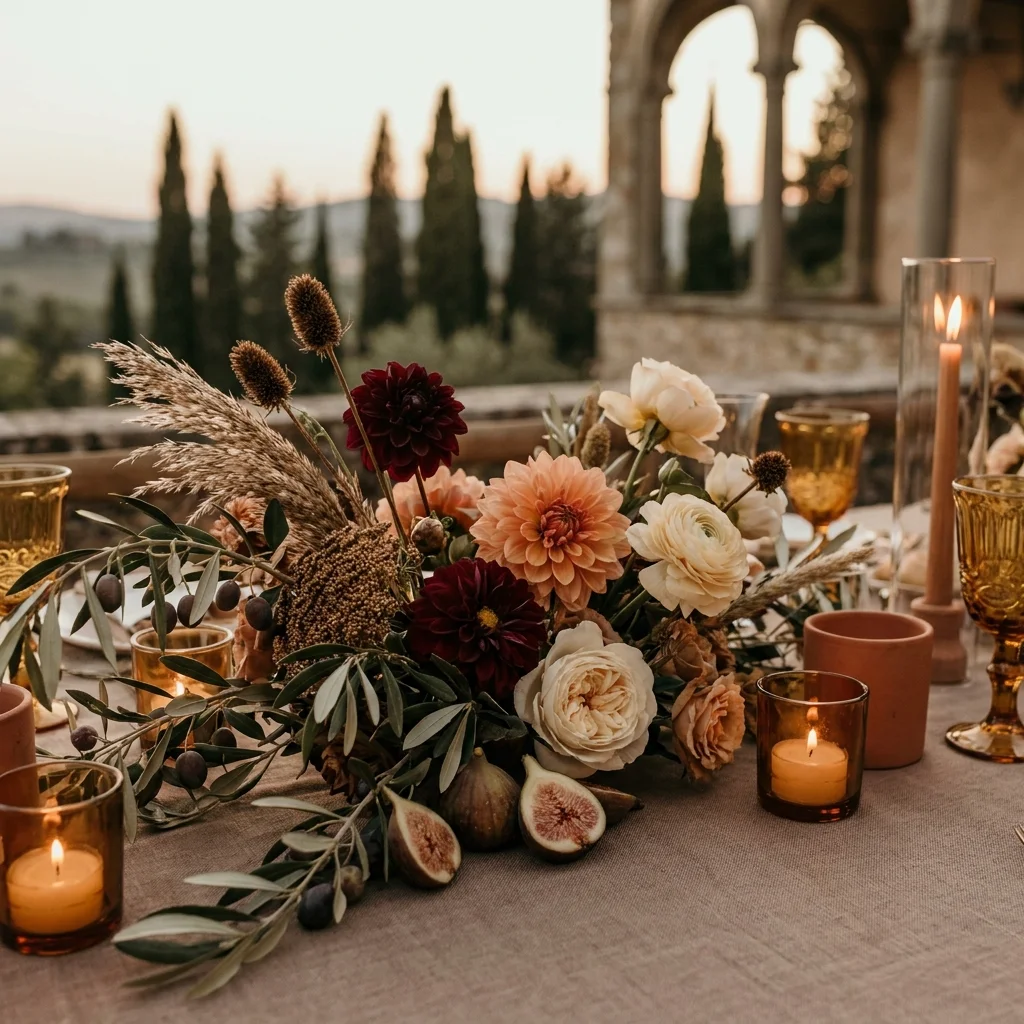
By the final week, the design is locked and our work becomes invisible. That invisibility is the entire point.
We confirm rental deliveries, walk the floor plan against the final guest count, and brief the service team on the order and timing of each course. The florals are conditioned in cool storage and installed in the late afternoon. The candles are placed and tested against the wind. The stationery is laid, the glassware polished, the chargers aligned to the line of the table.
The couples we work with spend that week with their families, not on the phone with rental companies. Our approach to relieving that pressure is described in full in our approach to a personalized wedding in Italy, and it is the reason so many couples choose us as their planning team in Italy. If you want a table that simply appears, finished and luminous, while you are getting ready — that is precisely what our team handles.
The Hour the Table Comes Alive
There is a moment, as the sun drops behind the cypress and the first candles are lit, when the whole table changes character. The amber glass begins to glow. The texture of the linen deepens. The olive branches throw soft shadows across the cloth.
This is the atmosphere of a Tuscan evening that cannot truly be photographed — only lived. The warmth of the stone, the scent of the herbs and the wax, the way the candlelight catches the rim of each glass as your guests are seated. We design for this hour above all others, because it is the one your guests will remember in their bodies long after the images fade.
It is also why we never treat the tuscan wedding table setting as static. We reposition florals for golden hour, adjust candle density as the light falls, and ensure the table you arrive to is the table that carries you through the toasts and into the night.
After the Last Toast: Breakdown, Returns, and What You Keep
When the evening ends, our team manages the breakdown so the morning belongs to you. Nothing is left for your family to resolve.
Rentals are counted and returned, florals that can be repurposed are arranged for a next-day brunch or sent home with guests, and the venue is restored to its condition. Many couples extend the celebration into a relaxed gathering the following day, and the way to close a wedding weekend gracefully is something we plan from the start rather than improvise at the end.
For couples beginning to imagine their own Tuscan table, the most valuable next step is a conversation about your venue, your season, and the evening you picture — reach out to our team whenever you are ready to begin.
Frequently Asked Questions
Can you work with a table design we’ve already started with another florist?
Yes. We frequently step in to refine or take over a design that has stalled, auditing what has been committed and reshaping it into a coherent whole. We are transparent about which existing decisions hold and which we would adjust to protect the final result.
Can the table design reflect our family heritage without becoming themed?
Yes. We translate personal references through material, colour, menu details, and stationery rather than literal motifs, so the table feels intimate while remaining refined.
Can you coordinate table design with a welcome dinner or farewell brunch?
Yes. We often create a visual progression across the weekend, allowing each meal to feel distinct while still belonging to the same celebration.
Can you design for a mixed international guest list with different dining expectations?
Yes. We balance Italian service rhythm with the comfort of your guests, adjusting table depth, glassware, menu presentation, and pacing so the evening feels natural to everyone.
Can the design travel between two locations, such as a ceremony site and a separate dinner venue?
It can, with planning. We design elements that either repurpose cleanly or have a dedicated second set, and we manage transport and re-staging between sites so the transition is invisible to guests.
Is it possible to keep some of the florals or tableware after the wedding?
Often, yes. Purchased ceramics, certain candle holders, and bespoke stationery are yours to keep, while rented glass and linen return to suppliers. We flag which elements are purchase versus rental during the proposal so there are no surprises.
How far in advance should we engage you for the table design specifically?
For peak-season dates in May, June, September, and early October, eight to twelve months allows the best access to premium linen and hand-blown glassware. Shorter timelines are workable, though specialist rentals and bespoke stationery have lead times we confirm at the first conversation.
Do you charge separately for site visits and the floral mock-up?
A pre-wedding site visit and a sample table or floral mock-up can be included in the higher design tiers or quoted as a defined extra, depending on the scope. We state clearly in the proposal what is included and what carries an additional, VAT-inclusive fee.
Can you accommodate a guest with a serious allergy to certain flowers or scents at the table?
Absolutely. We routinely design fragrance-light or pollen-conscious arrangements and can isolate sensitive guests from heavily scented blooms entirely. Sharing this at the planning stage lets us choose the right botanical palette from the outset.