
A comprehensive wedding planning checklist for Italy covers twelve to eighteen months of decisions — from legal pathway selection and venue exclusivity deposits to stationery design deadlines and guest transportation logistics. Kiss Me Italy manages this timeline end-to-end, coordinating Italian bureaucratic requirements, vendor curation, and scenographic design so that couples engage only with the creative choices that matter most to them.
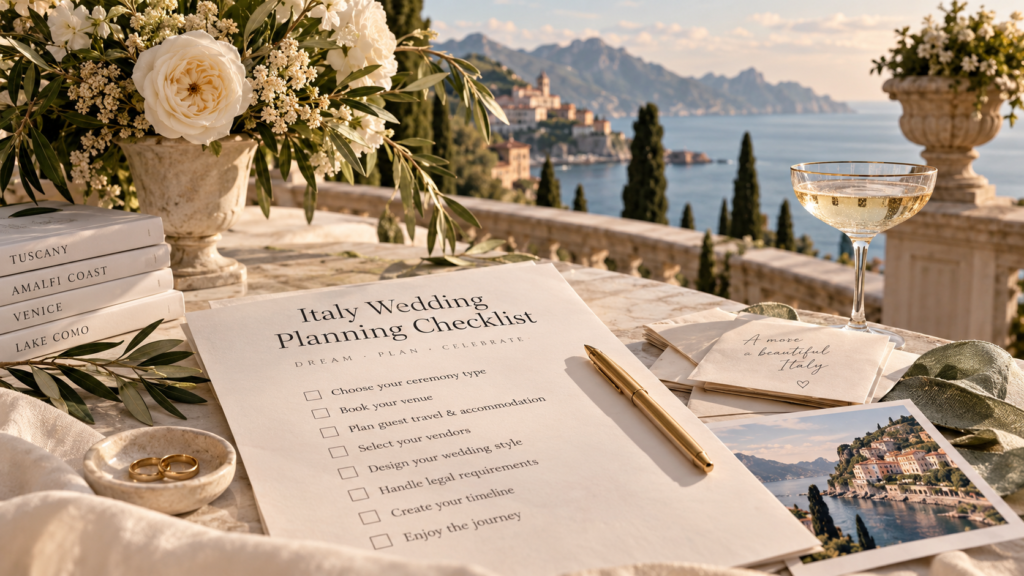
Italy Wedding Planning Checklist
Most couples who contact us have already discovered one uncomfortable truth: planning a destination wedding in Italy is not a matter of transposing a domestic checklist onto a foreign calendar. The Italian legal system operates on municipal schedules that vary from commune to commune. Venue contracts follow conventions that differ sharply from American or British norms. And the best properties — the frescoed palazzi, the Renaissance villas with private chapels, the Baroque estates overlooking the Ligurian coast — require commitments that must be sequenced carefully against civil or symbolic ceremony bookings. This is not complexity for its own sake. It is the architectural grammar of Italian celebration, and when each element is placed in its correct position, the result is cinematic.
Symbolic vs Civil Ceremony: The First Fork in Every Italy Wedding Planning Checklist
Before a single venue is scouted or a florist contacted, one decision reshapes the entire timeline. A civil ceremony in Italy is legally binding and requires document procurement — apostilled birth certificates, a Nulla Osta (declaration of no impediment), and in many communes a sworn translation filed no fewer than two business days before the ceremony. A symbolic ceremony carries no legal weight in Italy; couples marry legally in their home country before or after the Italian celebration. This distinction is not administrative trivia. It determines which venues are available, which dates are possible, and how far in advance the planning must begin.
Civil ceremonies are performed by a municipal officer, typically inside the town hall or at a venue that holds a specific municipal license. Not every historic villa qualifies. Not every commune permits outdoor civil rites. We navigate these municipal rules across Tuscany, Veneto, Liguria, Campania, and Lombardy daily — securing ceremony slots that align with the couple’s preferred venue and time of day. Our detailed guide to civil ceremony rules and real costs in Italy explains the bureaucratic sequence in full.
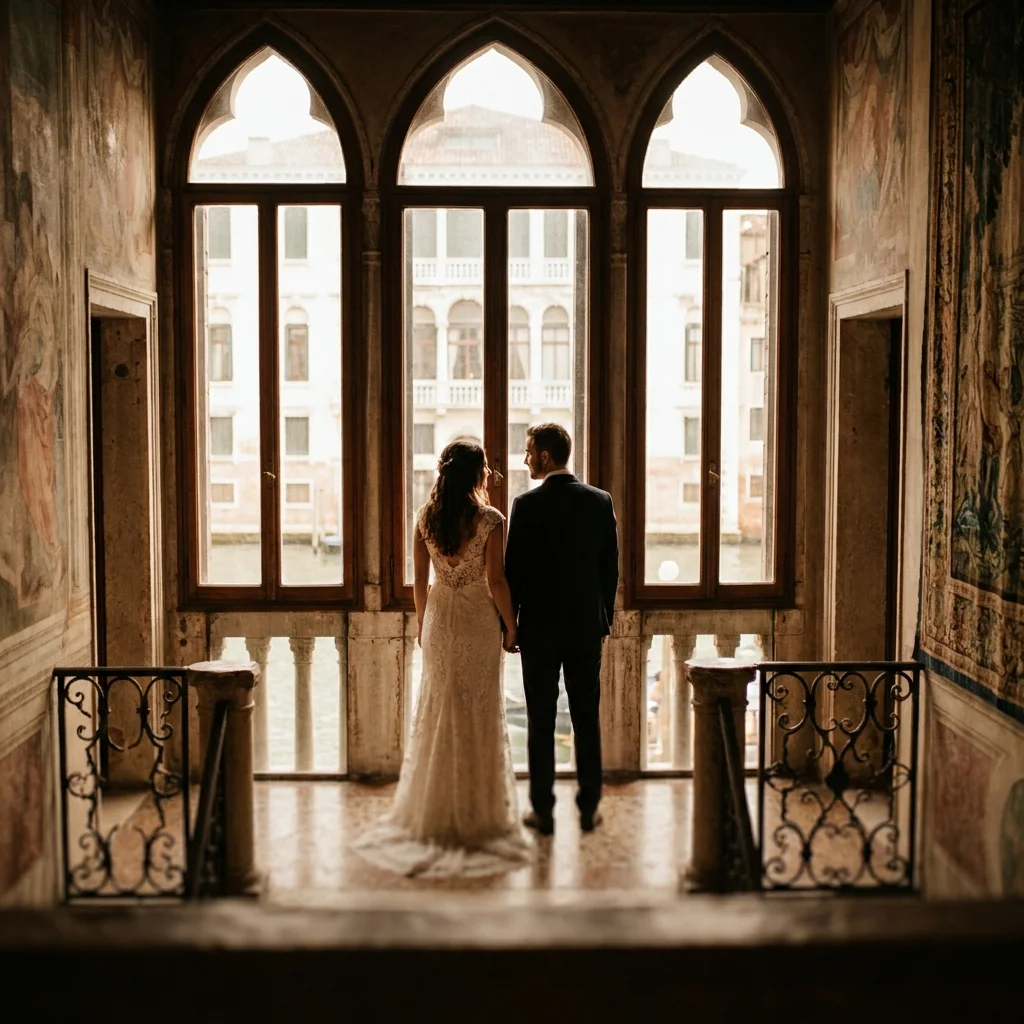
A symbolic ceremony, by contrast, opens the entire landscape. A sixteenth-century terrace above Ravello. A private garden within a medieval borgo in Umbria. A candlelit gallery inside a Venetian palazzo originally built for a doge’s nephew. When the legal requirement is removed from the Italian side, the scenographic possibilities multiply — and the timeline compresses slightly, because the document procurement phase is eliminated. We help couples weigh this choice in the first consultation, long before any deposit is placed.
Fourteen Months vs Eight: How Lead Time Changes What’s Possible
A wedding planning checklist for Italy that begins fourteen months out offers access to the widest range of venues, vendors, and dates. One that begins at eight months is still entirely feasible — but the menu of options narrows, particularly for peak-season celebrations between May and October.
Here is the distinction in practical terms. At fourteen months, we can secure exclusive-use agreements at properties that limit events to one per weekend. These are the estates where no other wedding party will be on-site, where the couple’s scenography occupies every courtyard and loggia without compromise. At eight months, many of these properties are already committed for the most sought-after Saturdays. We can still find extraordinary settings — a Baroque villa on Lake Garda whose gardens were commissioned in the 1740s, a cliffside terrace along the Amalfi Coast — but the couple must be flexible on the precise date.
The timeline also affects vendor curation. The finest editorial wedding photographers in Italy book twelve to fourteen months ahead for June through September. Our team maintains relationships with a curated roster, but even within that network, early commitment matters. The same is true for live musicians, videographers, and — perhaps most critically — the officiant whose voice and presence shape the ceremony itself.
We recommend that couples reach out to our team as early as the decision to marry in Italy feels serious. Even a preliminary conversation allows us to map the timeline against the couple’s priorities.
What Our Team Manages vs What We Request from the Couple: A Transparent Division
A wedding planning checklist for Italy can feel overwhelming when presented as a to-do list. We prefer a different architecture: a clear division between what our planning team manages and what we request from the couple at specific moments.
We manage:
- Venue scouting, site visits, and contract negotiation — including corkage terms, noise ordinances, and exclusive-use clauses
- Civil ceremony document coordination with the relevant Italian commune (translations, apostilles, Nulla Osta filings)
- Vendor curation: photographer, videographer, florist, lighting designer, musicians, officiant, hair and makeup artists
- Catering coordination, including tasting logistics, dietary accommodations, and kitchen-access schedules at historic venues
- Guest transportation mapping — from airport transfers to ceremony-to-reception shuttles across terrain that may include unpaved medieval roads
- Stationery design direction and production timeline management, including save-the-dates, invitations, day-of paper goods, and menu cards
- Weather contingency planning with pre-agreed indoor alternatives at every outdoor venue
- Day-of production direction: a scenographic timeline that choreographs every transition, every lighting cue, every musical entrance
We request from the couple:
- Personal documents (birth certificates, passports, any prior divorce decrees) — we provide the exact list and deadline
- Creative preferences: color direction, formality level, any family traditions to honor
- Guest list with confirmed count at agreed milestones
- Tasting attendance (in person or via curated video review)
- Final approvals on design boards, menus, and run-of-show documents we prepare
This division is not rigid. Some couples wish to be deeply involved in floristry decisions; others prefer to see a single refined proposal and approve it. We calibrate our process to each couple’s temperament. What remains constant is that the logistical weight — the emails to communes, the permit applications, the vendor scheduling — rests entirely with us.
How Region and Season Reshape the Italy Wedding Budget: Venice vs Tuscany vs the Amalfi Coast
An Italy wedding budget is not a single number. It is a composition shaped by geography, season, guest count, and the architectural character of the venue itself. A frescoed palazzo on the Grand Canal in Venice carries different cost structures than a hilltop estate in the Val d’Orcia, and both differ from a terraced villa above Positano. Understanding these regional differences is essential to building a realistic wedding planning checklist for Italy.
The tables below reflect verified ranges drawn from our own project data across these regions. All figures are in euros and include Italian VAT (IVA at 22%) unless noted otherwise.
| Cost Category | Venice (40–80 guests) | Tuscany (40–80 guests) | Amalfi Coast (40–80 guests) |
|---|---|---|---|
| Venue hire (ceremony + reception) | €8,000–€30,000 | €5,000–€25,000 | €6,000–€28,000 |
| Catering (per guest, 4–5 courses + open bar) | €200–€450 | €180–€350 | €200–€400 |
| Photography (full-day, single shooter; travel within region included) | €4,000–€8,000 | €3,500–€7,500 | €4,000–€8,000 |
| Floristry & scenographic design | €5,000–€20,000+ | €4,000–€18,000+ | €5,000–€20,000+ |
| Planning & coordination fee | €5,000–€15,000 | €4,500–€12,000 | €5,000–€15,000 |
Indicative ranges. Second shooter, albums, post-production, and prints quoted separately. Photographer/videographer accommodation outside the region quoted separately. Contact Kiss Me Italy for a personalized proposal.
Our comprehensive breakdown of Venice wedding costs details how water-taxi logistics, palazzo access fees, and noise curfews influence the final investment. Similarly, our Amalfi Coast wedding cost guide addresses the terraced-venue access constraints that affect catering setup and guest flow. For couples drawn to the intimacy of the Ligurian Riviera, the Portofino wedding cost page offers comparable clarity.
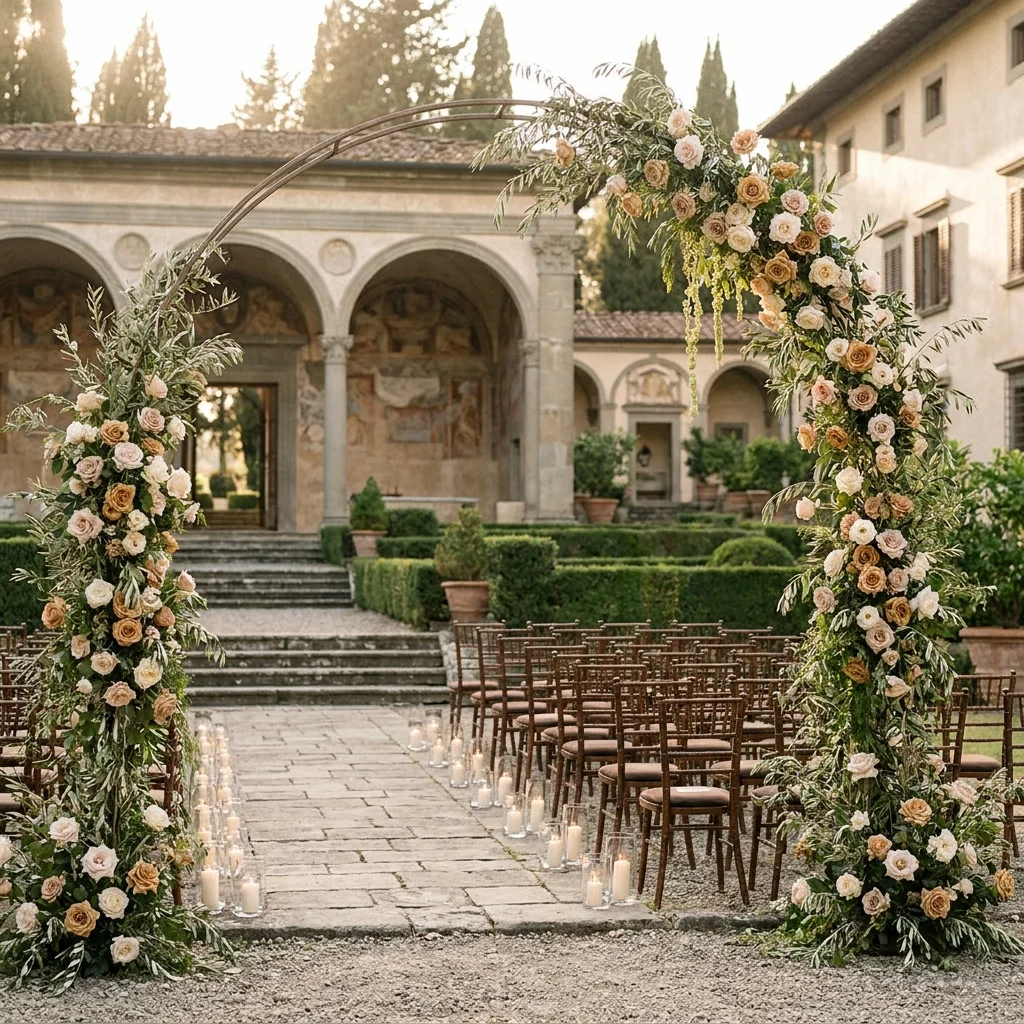
In Italian venue contracts, the term uso esclusivo — exclusive use — is the single most consequential clause. It means no other event will take place on the property during your celebration. In a sixteenth-century villa with multiple courtyards, this guarantees that the scenography extends uninterrupted from the ceremony loggia to the dinner garden to the late-night dance floor. Without it, another party’s music, lighting, or guest traffic can intrude on the experience.
Exclusive-use properties typically require a minimum spend or a flat hire fee that is 30–50% higher than shared-access venues. The investment is significant, but it purchases something money cannot retrofit: privacy, acoustic control, and the freedom to design every sightline. Our team negotiates these agreements with venue managers we have worked with across seasons, ensuring that the contract includes clear terms on setup access times — often the day before — and breakdown windows.
For couples considering a villa wedding in Italy, exclusive use is nearly always the default. For those drawn to urban settings — a palazzo in Florence, a museum gallery in Rome — the conversation is different. We guide that conversation with precision, because the venue contract is the foundation upon which every other checklist item rests.
The Legal Document Timeline That Catches Most Foreign Couples Off Guard

Italian communes do not operate on a single national standard. The Comune di Firenze requires different lead times and document formats than the Comune di Ravello or the Comune di Venezia. This is the reality that makes a generic wedding planning checklist for Italy insufficient — and it is the reason our team maintains direct relationships with civil registrars across the regions where we work.
A legally binding civil ceremony in Italy typically requires:
- An apostilled birth certificate (issued within the preceding six months in many communes)
- A Nulla Osta — a sworn declaration that no legal impediment to marriage exists — obtained from the couple’s home-country consulate in Italy
- Official Italian translation of all documents, performed by a certified translator
- Filing at the commune at least two business days before the ceremony (some communes require longer)
Our guide to marrying in Italy as a foreigner walks through each step in detail. What matters here, within the checklist context, is timing: we initiate document coordination four to five months before the wedding date. Couples who begin this process later risk discovering that their home-country consulate in Rome or Milan has a backlog that pushes the Nulla Osta appointment past their filing deadline. We monitor these consular calendars and adjust the timeline proactively.
Guest Logistics as Curated Hospitality, Not a To-Do List
The anxiety most couples feel about guest logistics — airport pickups, hotel blocks, dietary restrictions, language barriers — dissolves when these elements are treated as hospitality design rather than administrative tasks. This is a fundamental distinction in how we build the wedding planning checklist for Italy.
We begin guest-experience planning approximately eight months before the celebration. Room blocks are negotiated at properties within a defined radius of the venue, with rate tiers that accommodate different budgets within the guest list. Transfer routes are mapped with local drivers who know the seasonal traffic patterns — the August congestion on the SS163 along the Amalfi Coast, the vaporetto schedules that shift in Venice after October, the mountain passes near the Dolomites that require specific vehicle types.
Welcome events — an aperitivo the evening before, a farewell gathering the morning after — are sequenced to build anticipation without exhausting guests. Our Italian wedding menu ideas guide illustrates how regional cuisine anchors these gatherings, from Ligurian focaccia stations to Venetian cicchetti spreads. Every element is coordinated through a single production timeline that our team manages on the day.
If your guest list includes travelers from multiple time zones, we adjust arrival-day programming to account for jet lag — lighter welcome formats, later start times, shorter durations. These are not generic hospitality tips. They are decisions we make based on the specific composition of each guest list.
Stationery Milestones and Weather Guidance: Two Checklist Items Most Couples Discover Too Late
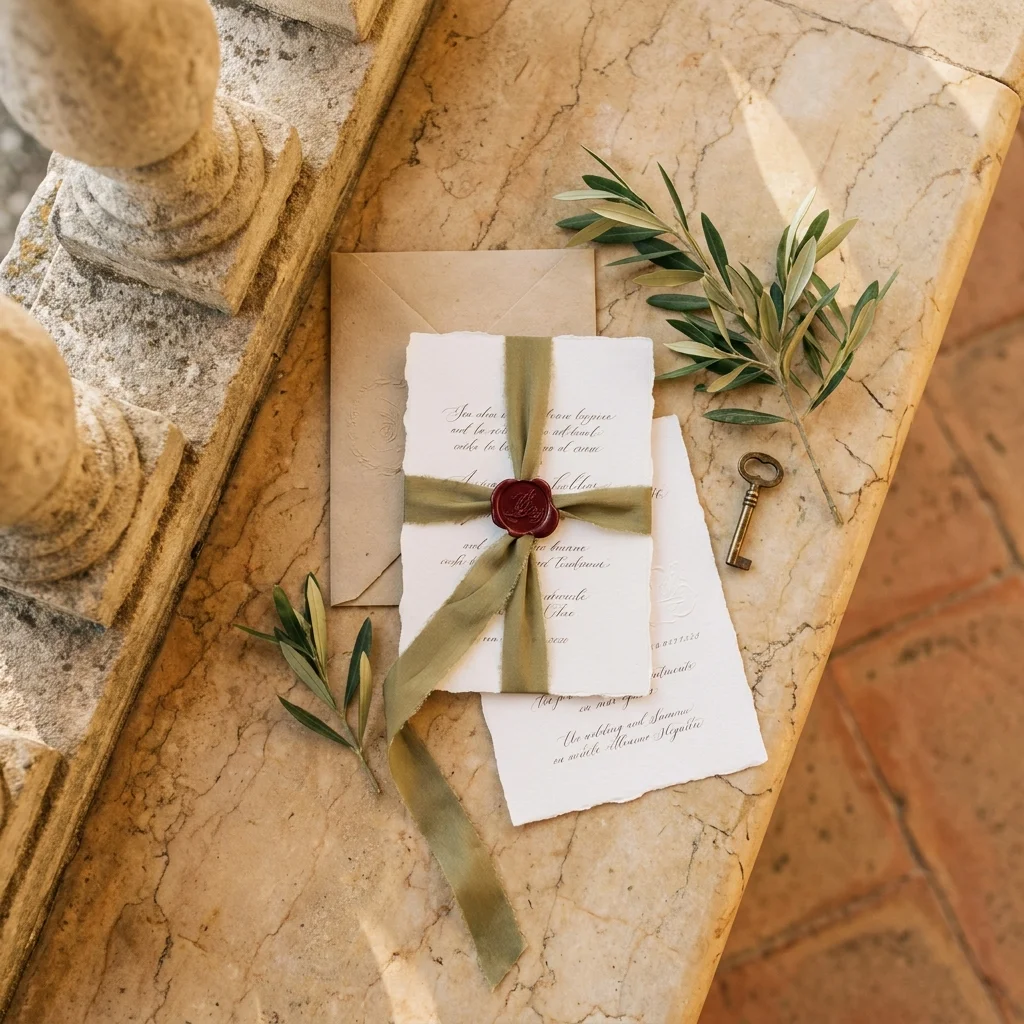
Wedding stationery operates on a production timeline that is easy to underestimate. Save-the-dates should be dispatched ten to twelve months before a destination wedding — earlier than domestic norms, because guests need time to arrange international travel. Formal invitations follow six to seven months out. Day-of paper goods — ceremony programs, menu cards, table assignments, escort displays — require final content four to five weeks before the wedding, which means guest counts and menu selections must be locked before the stationery goes to print.
We coordinate with stationers who understand Italian postal logistics and who can produce bilingual or multilingual pieces when the guest list requires it. The design direction is integrated with the overall scenography: the paper stock, the ink color, the typographic style all echo the venue’s architectural character. A Renaissance palazzo in Florence calls for a different material language than a modernist terrace above Lake Como.
Weather, meanwhile, is not a matter of hope. It is a planning input. Italy’s microclimates vary dramatically by region and altitude. June on the Amalfi Coast averages 27°C with low rainfall, but humidity can reach 75% by late afternoon — a factor that affects both guest comfort and floristry longevity. September in Tuscany offers warm days and cooler evenings, ideal for outdoor dining, but requires lighting design that accounts for sunset arriving nearly an hour earlier than in June. October in Venice brings the first acqua alta risks, which we monitor through municipal tide forecasting systems.
Our Italy wedding calendar guide maps these seasonal realities across every major region. We build weather contingency into every production plan — not as an afterthought, but as a structural element of the checklist from the earliest planning stage.
What a Full-Service Italy Wedding Actually Costs: Two Budget Architectures Compared
Below, we present two budget architectures — one for an intimate celebration of 20–30 guests, and one for a mid-scale wedding of 60–80 guests — to illustrate how the wedding planning checklist for Italy translates into real investment. These ranges are drawn from our project history across Tuscany, the Italian Lakes, and the Amalfi Coast.
| Category | Intimate (20–30 guests) | Mid-Scale (60–80 guests) |
|---|---|---|
| Venue (ceremony + reception, exclusive use) | €4,000–€15,000 | €8,000–€30,000 |
| Catering (per guest, full menu + beverages) | €180–€400 | €180–€450 |
| Photography (full-day, single shooter, regional travel included) | €3,500–€7,000 | €4,000–€8,000 |
| Videography (full-day, single operator, regional travel included) | €3,000–€6,000 | €3,500–€7,500 |
| Floristry & scenographic design | €3,000–€10,000 | €5,000–€20,000+ |
| Live music (ceremony + reception) | €1,500–€5,000 | €3,000–€10,000+ |
| Hair & makeup (bride + trials) | €800–€2,000 | €800–€2,500 |
| Guest transfers (airport + venue shuttles) | €1,000–€3,000 | €2,500–€8,000 |
| Planning & coordination fee | €4,000–€10,000 | €5,000–€15,000 |
| Legal/permit fees (civil ceremony) | €500–€1,500 | €500–€1,500 |
All ranges inclusive of IVA (22%). Second shooter, albums, post-production editing, prints, and photographer/videographer accommodation outside the event region quoted separately. Stationery design and production quoted separately. Contact Kiss Me Italy for a personalized proposal.
| Additional Services (quoted separately) | Typical Range |
|---|---|
| Second photographer/videographer | €1,000–€2,500 |
| Wedding album (fine-art, 30+ pages) | €800–€2,500 |
| Post-production & editing (photo, 4–8 week delivery) | Included in photography fee above |
| Cinematic highlight film (3–5 min, 10–14 week delivery) | Included in videography fee above |
| Full-length ceremony & reception film | €1,500–€3,500 additional |
| Stationery suite (save-the-date through day-of goods) | €1,200–€4,000 |
Indicative ranges. Contact Kiss Me Italy for a personalized proposal.
For couples weighing an elopement or micro celebration, our elopement cost guide and micro wedding overview offer additional budget frameworks with full inclusion detail.
Peak Season Pressure vs Shoulder-Season Advantage: When the Checklist Timeline Matters Most
Italy’s wedding peak runs from mid-May through mid-October. Within that window, June and September command the highest demand — and the highest prices. A Saturday in June at a celebrated Lake Como estate may cost 20–30% more than the same property on a Friday in late April or early November. The venue is identical. The gardens are arguably more dramatic in autumn, when the foliage turns. The difference is demand.
Shoulder-season weddings — late March through April, and late October through November — offer three tangible advantages. First, venue availability widens, granting access to properties that are fully committed during summer. Second, vendor schedules are less compressed, which means more time for tastings, site visits, and design refinements. Third, the light itself changes. October in Tuscany produces a golden, low-angled light that photographers prize — the kind of illumination that makes a medieval stone facade glow as if it were lit from within.
The trade-off is weather variability. Our team builds this into the checklist by confirming indoor contingency spaces at every outdoor venue, negotiating contract clauses that permit last-minute layout shifts, and briefing all vendors on the pivot protocol at least two weeks before the event. Couples who explore a luxury Tuscan wedding in shoulder season often find that the experience feels more intimate, more exclusively theirs.
The Checklist Is the Architecture — We Build It Around You
A wedding planning checklist for Italy is not a generic spreadsheet. It is a sequence of interdependent decisions — legal, logistical, creative — that must be calibrated to the specific venue, region, season, and ceremony type the couple has chosen. When that calibration is precise, every element arrives in its correct position: the documents filed before the commune’s deadline, the floristry designed to complement the frescoed walls rather than compete with them, the guest shuttle timed to the minute so that no one waits on a Ligurian hillside in evening shoes.
This is the work we do at Kiss Me Italy. It is scenographic in its ambition and bureaucratic in its discipline — because a cinematic celebration requires both. We invite you to begin a conversation with our team whenever the idea of marrying in Italy moves from daydream to decision. The checklist begins with that first exchange.
Frequently Asked Questions
If we’re undecided between a symbolic and a civil ceremony, what can we reserve first without risking deposits?
Venue deposits can typically be placed before the ceremony type is finalized, because most Italian properties host both civil and symbolic celebrations. The critical distinction is that a civil ceremony requires a municipal slot, which must be reserved separately and may have limited availability — so we recommend confirming the ceremony format within six weeks of placing the venue deposit to avoid scheduling conflicts with the commune.
What happens if our preferred venue is available but the municipality ceremony slot is not?
This situation arises more often than couples expect, particularly in smaller communes with limited ceremony days. Our team can petition the municipality for an alternative date or time, negotiate a civil ceremony at a different licensed location nearby on the same day, or restructure the celebration around a symbolic ceremony at the preferred venue with the legal marriage completed separately. We present all viable options before any deposit is at risk.
Can we bring a photographer or videographer from home while still using your Italy-based team?
Yes. We coordinate hybrid creative teams regularly. The key is establishing a clear shot list and communication protocol between the visiting and local professionals before the wedding day. We manage this briefing, including a joint site visit or video walkthrough, so that both teams understand the venue’s light conditions, restricted areas, and the production timeline without overlap or friction.
How do you handle guest transportation when the venue is remote and taxis are limited?
We contract private shuttle services with drivers who know the specific roads — including unpaved access lanes common at rural Tuscan and Umbrian estates. Vehicles are staged at the venue throughout the evening so that guests can depart at their leisure rather than waiting for a single scheduled departure. For particularly remote locations, we also arrange on-site parking coordination with attendants to manage the flow of private cars.
What is typically quoted separately by Italian venues and caterers, and what surprises couples most?
The most common surprise is the corkage fee — many Italian venues charge €15–€40 per bottle if the couple sources wine independently rather than using the venue’s supplier. Other items frequently quoted separately include generator hire for outdoor lighting, cleaning fees for events exceeding midnight, and setup-day access charges at historic properties. We itemize all of these in the initial budget architecture so nothing arrives unexplained.
How far in advance do we need to confirm the final guest count with Italian venues and caterers?
Most Italian caterers require a guaranteed minimum guest count four to six weeks before the event, with the final confirmed number due ten to fourteen days prior. Venue seating plans and table configurations are typically locked at the same ten-to-fourteen-day mark. We build these deadlines into the couple’s personal timeline and send reminders well in advance so that RSVP follow-ups happen at the right moment.
If we plan a wedding weekend, how do you sequence welcome events without exhausting guests?
We design multi-day programs with intentional pacing — a relaxed welcome aperitivo on the arrival evening (90 minutes maximum), a free morning the next day for guests to explore independently, and the main celebration beginning in the late afternoon. The day-after brunch is kept to two hours with an open departure window. This rhythm respects jet-lagged travelers while maintaining the sense of occasion across the full weekend.
What changes in the checklist if we’re planning an elopement instead of a 50–80 guest wedding?
The legal and document requirements remain identical if a civil ceremony is chosen. What compresses is the guest-logistics phase — no room blocks, no shuttle coordination, no multi-day programming. This allows more of the timeline and budget to be directed toward venue selection, editorial photography, and experiential elements like a private dinner in a space that would be inaccessible for larger parties. Our elopement planning page outlines the adjusted framework.
How do you protect the design vision when vendors propose substitutions close to the date?
Every vendor receives a detailed design brief that includes approved alternatives for key elements — specific flower varieties, linen colors, candle dimensions. When a substitution is proposed (most commonly due to seasonal flower availability), our scenographic team evaluates it against the overall palette and either approves, adjusts, or sources from a secondary supplier. The couple is consulted only when the substitution would noticeably alter the visual narrative.
What happens if weather forces a last-minute plan change — who coordinates the pivot on the day?
Our day-of production director — present on-site from setup through the final hour — holds the authority to activate the weather contingency plan. This plan is pre-agreed with the couple, the venue, and every vendor at least two weeks before the wedding. The pivot typically involves relocating the ceremony to a covered space within the same property and adjusting the lighting and floral placement to suit the new setting. The couple is informed of the decision, not burdened with making it.