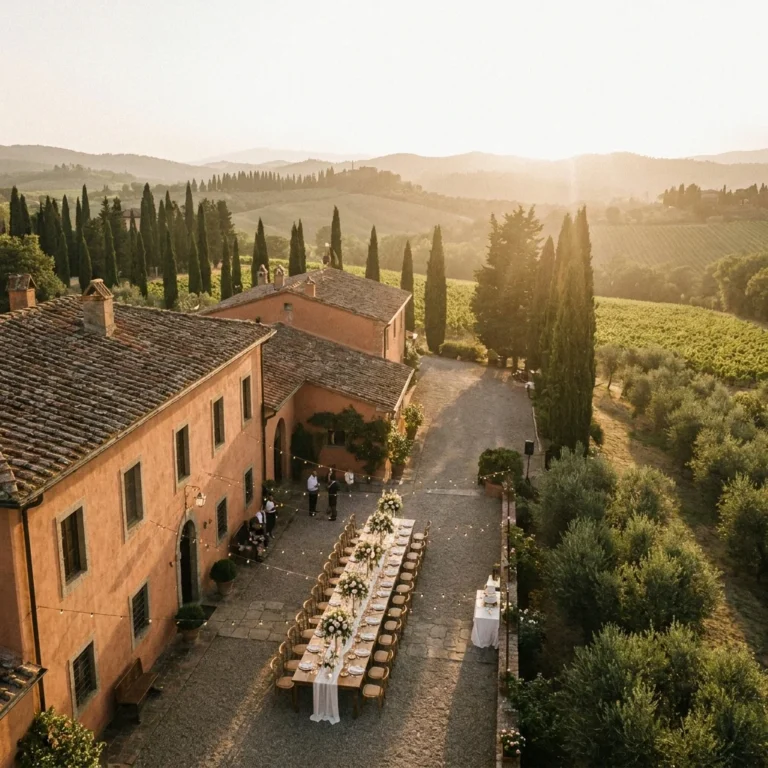
A Catholic wedding in Italy is possible for foreign couples when at least one partner is Catholic and the file is prepared through your home parish and diocese. Once transcribed by the town hall, the church ceremony is also your legal marriage. The full document checklist is in our guide to Catholic marriage in Italy for foreigners; this page covers churches, the ceremony and the costs.

Packages and Costs for a Church Wedding in Italy
Kiss Me Italy has one published wedding package that lists a religious ceremony among its options, and one elopement held at a historic church site. Prices are in euros, as published on the product pages.
| Package | Where | Ceremony | Price |
|---|---|---|---|
| The Tuscany Castle Wedding — Castello Vicchiomaggio | Medieval borgo above Greve in Chianti, with its own small church; 3 nights in exclusive use | Symbolic, civil or religious | €79,000 (Castle, 36 guests); €129,000 (whole Borgo, 60 guests) |
| Positano Dream | Basilica of Sant’Eustachio, above Vettica Maggiore in Praiano, Amalfi Coast | Symbolic, with a celebrant | €2,900 |
The Vicchiomaggio package covers three nights for your guests, a welcome dinner, the ceremony day with reception, a farewell brunch, flowers, photographer and videomaker. For a church in another region, we plan the wedding around the parish you choose and quote the venue and services separately.
| Other costs of a church wedding | Price range |
|---|---|
| Offering to the parish | Set by each parish: quoted on request |
| Musicians for the ceremony | €800 to €1,500 |
| String quartet for the ceremony | €2,000 to €3,500 |
| Opera singer, one performance | €1,200 to €6,500 |
| Wedding photographer, full day (8–10 hours) | €5,000 to €12,000 |
| Day-of coordination by a planner | €1,500 to €4,000 |
| Kiss Me Italy planning consultation | €720 |
These ranges are the ones already published on Kiss Me Italy. The parish offering is agreed directly with the church, so we do not quote a fixed figure.
Who Can Marry in a Catholic Church in Italy
The Catholic Church sets the rules, not the destination. Under the Code of Canon Law, a marriage between a Catholic and a non-baptized person needs a dispensation (canon 1086). A marriage between a Catholic and a baptized Christian of another church needs the express permission of the competent authority (canon 1124).
- Both partners Catholic: the standard path, with full sacramental marriage.
- One partner a baptized non-Catholic: possible, with the bishop’s permission for a mixed marriage.
- One partner not baptized: possible, with a dispensation from disparity of cult.
- Neither partner Catholic: a sacramental Catholic marriage is not available. A symbolic ceremony or a blessing of an existing marriage is the usual alternative.
Canon 1115 says a marriage is celebrated in the parish of one of the partners, or elsewhere with permission of the proper ordinary or pastor. That is why the file always starts in your home parish, which then sends it to the Italian diocese.
Is a Church Wedding Legally Valid in Italy?
Yes. Italy recognizes the civil effects of marriages celebrated under canon law. The rule comes from Article 8 of the 1984 agreement between the Holy See and Italy, ratified by Law 121 of 1985 (full text of the Villa Madama Agreement).
Three conditions apply. Banns must be published at the town hall before the wedding. After the ceremony, the priest reads the articles of the Italian civil code on the rights and duties of spouses. He then draws up the marriage act in two originals.
The parish priest must ask the town hall to transcribe the marriage within five days of the ceremony. The registrar transcribes it within 24 hours of receiving the act. You then request the Italian marriage certificate and have it legalized for use at home.
Couples who prefer to keep the legal part separate can marry civilly at home and hold the church ceremony in Italy. Ask your parish first: the Church treats this sequence differently case by case.

Nuptial Mass or Liturgy of the Word
A Catholic wedding can be celebrated within Mass or without Mass. According to the US bishops’ For Your Marriage guide, the rite without Mass keeps the readings, the vows and the blessing, but has no Liturgy of the Eucharist.
When a Catholic marries a Christian of another denomination, the rite without Mass is usually used. A couple can ask the bishop for permission to marry within Mass. The same source notes that most interfaith weddings take place outside of Mass.
| Nuptial Mass | Liturgy of the Word | |
|---|---|---|
| Liturgy of the Eucharist and Communion | Yes | No |
| Usual when | Both partners are Catholic | One partner is not Catholic, or many guests are not Catholic |
| Vows, rings and blessing | Yes | Yes |
The length of either rite depends on the readings and the music you choose. The parish priest confirms the final order of service.
Churches by Region
Every church in Italy belongs to a parish and a diocese, and each one sets its own calendar and rules. We shortlist churches that accept weddings of non-parishioners, then check dates with the parish office before you book the venue.
Lake Como and the Italian Lakes
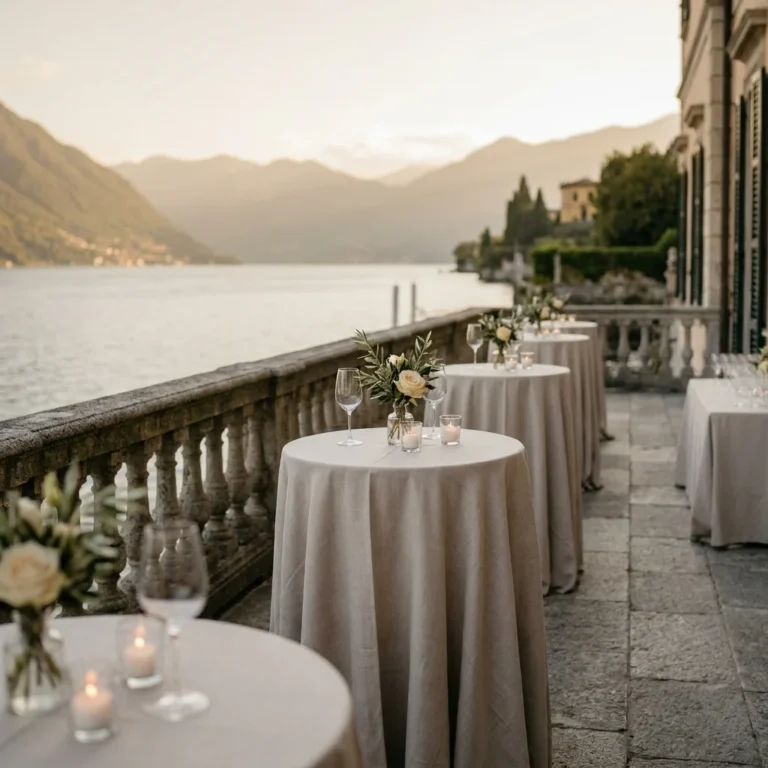
Lakeside villages have small parish churches close to the water, so guests can walk or arrive by boat. The reception usually follows in a villa or hotel garden. See our Lake Como wedding planning page.
Venice
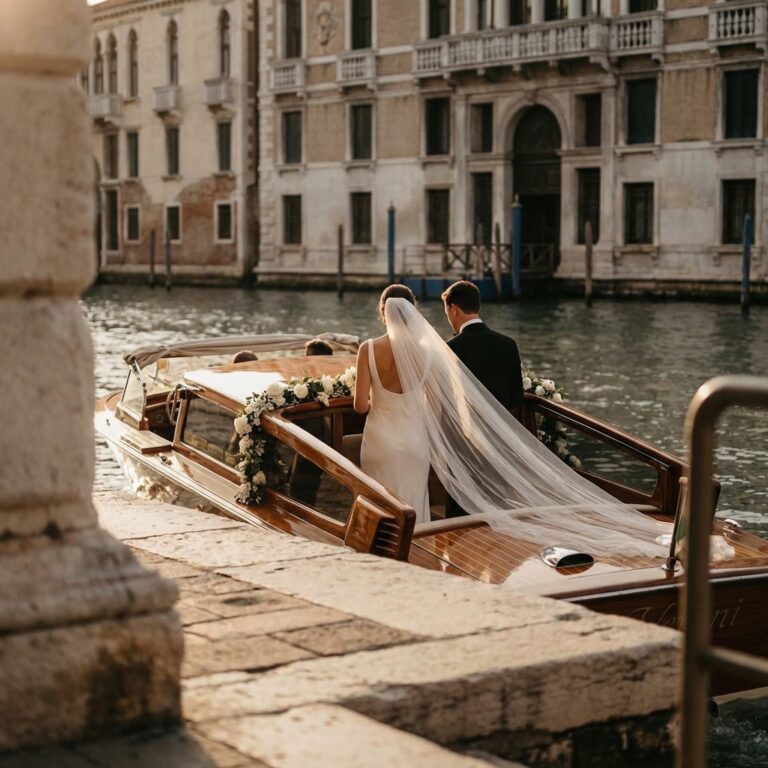
Venice has parish churches in every sestiere, and every transfer happens by boat. Plan water taxis for the couple and boats for guests. Our wedding in Venice guide explains civil, symbolic and religious options in the city.
Portofino and the Italian Riviera
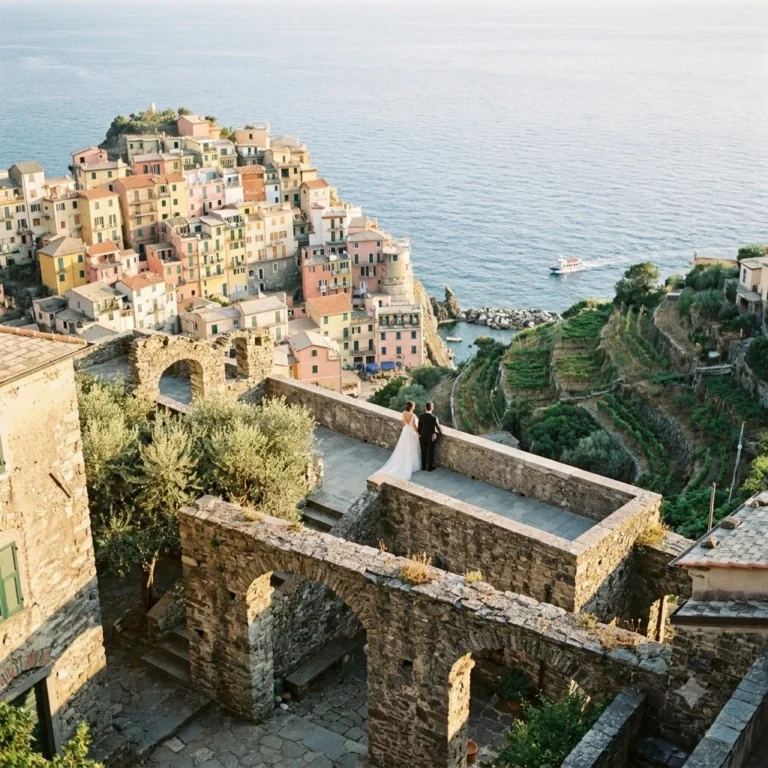
In Portofino, Castello Brown stands in the pines between the church of San Giorgio and the lighthouse. Church ceremonies in the village need planning around the harbour and its narrow lanes. See Portofino wedding planning and Cinque Terre wedding planning.
Tuscany and the Hill Towns
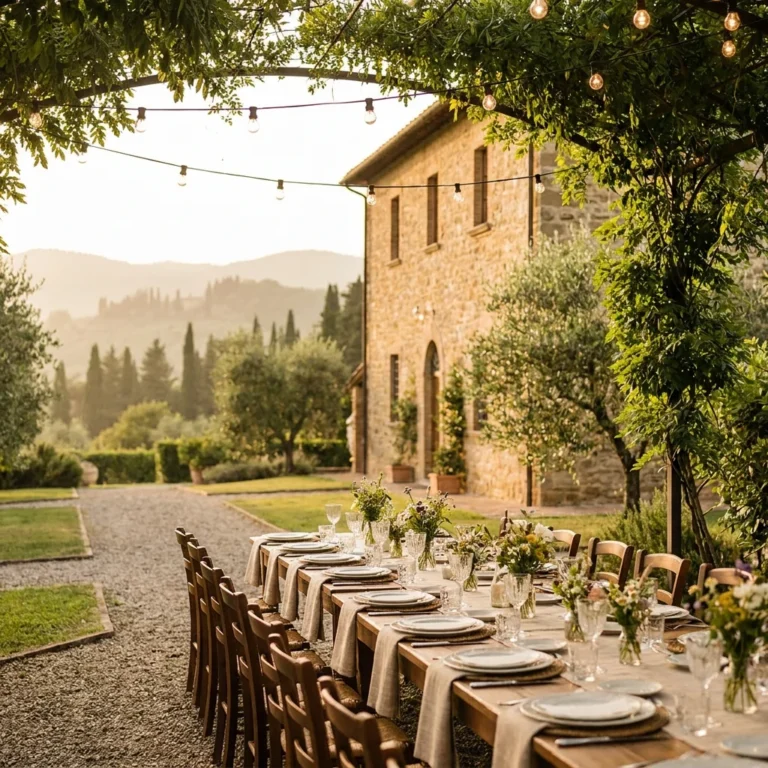
Tuscany suits couples who want the church and the reception in one place. At Castello Vicchiomaggio, the little church sits inside the borgo, steps from the guest suites. Our Tuscany wedding cost guide lists every published package.
Amalfi Coast and Rome
On the Amalfi Coast, many churches sit on cliffs or squares reached by steps, so guest transport needs planning. Rome offers basilicas and parish churches in the historic centre; we confirm availability parish by parish.

Music, Flowers and Photography Rules
Each parish sets its own house rules, and the priest has the final word. Ask for them in writing before you sign with suppliers.
- Music: choose sacred or classical pieces for the ceremony and agree every piece with the parish. Keep secular songs for the reception.
- Organ and musicians: some churches have their own organist; others accept outside musicians.
- Flowers: ask whether you can decorate the altar and the pews, and when the florist can enter and must leave.
- Photography: ask where the photographer may stand and whether flash is allowed during the liturgy.
- Rice and petals: ask whether they are allowed, and where: inside, on the steps or only in the square.
If you want a priest from home to celebrate, the local pastor can delegate him. Canon 1108 allows a priest or deacon delegated by the local ordinary or pastor to assist at the marriage.
Timeline for a Church Wedding in Italy
The church file moves through two dioceses, so start early. This is the order we follow with our couples.
| When | Step |
|---|---|
| 12 months before | Choose the region, shortlist churches, confirm the date with the parish and book the reception venue |
| 9 months before | Meet your home parish priest and start the marriage preparation course |
| 6 months before | Collect the church documents; your home diocese sends the file to the Italian diocese |
| 3 months before | Prepare the civil documents for the banns and the transcription |
| 1–2 months before | Agree readings, music, flowers and photography with the parish |
| After the wedding | Transcription at the town hall, then the marriage certificate for use at home |
Each step and document is detailed in our guide to Catholic marriage in Italy for foreigners. For other ceremony formats, see wedding ceremony types in Italy and how to get married in Italy as a foreigner.

Frequently Asked Questions
Do you have to be Catholic to get married in a church in Italy?
At least one partner must be Catholic for a sacramental marriage. A Catholic can marry a baptized Christian of another church with the bishop’s permission, or a non-baptized person with a dispensation. If neither partner is Catholic, a symbolic ceremony or a blessing is the alternative.
Can foreigners get married in a Catholic church in Italy?
Yes. Foreign couples prepare the file in their home parish, which sends it through the home diocese to the Italian diocese. The Italian parish then confirms the date. Civil documents are also needed so the town hall can publish the banns and transcribe the marriage.
What are the requirements for a Catholic wedding in Italy?
You need at least one Catholic partner, freedom to marry under canon law, a marriage preparation course and the church documents from your home parish. For legal effect, the town hall publishes banns and transcribes the act. The complete checklist is in our foreigners guide.
Is a church wedding legally valid in Italy?
Yes, if it is a concordat marriage. Under the 1984 Holy See–Italy agreement, the town hall publishes banns, the priest reads the civil code articles and requests transcription within five days. The marriage then has full civil effect and you receive an Italian marriage certificate.