How to choose a wedding planner in Italy comes down to three checks: local experience in your region, a clear written scope, and a fee model you understand. Planner fees published on our site run from €1,500 to €4,000 for day-of coordination, €4,000 to €10,000 for partial planning and €10,000 to €30,000+ for full service. In every Kiss Me Italy wedding package a dedicated wedding planner is already included, with prices from €13,000 for 10 guests.
Planner Fees in Italy at a Glance
These are the fee ranges for planning services as published on Kiss Me Italy. They cover the planner only, not the venue, catering or suppliers. Prices are in euros.
| Service level | What it covers | Fee (EUR) |
|---|---|---|
| Day-of coordination | Final weeks before the wedding, timeline, supplier check on the day | €1,500 – €4,000 |
| Partial planning | Help with selected suppliers and the logistics, the couple handles the rest | €4,000 – €10,000 |
| Full-service planning | Venue search, contracts, all suppliers, design, guests and the full weekend | €10,000 – €30,000+ |
Wedding Packages With a Dedicated Planner Included
If you prefer one price for everything, these live packages already include a dedicated wedding planner, complete event design, photographer, videographer and English-speaking coordination. Guest numbers and prices are those published on each product page.
| Package | Location | Guests | Price |
|---|---|---|---|
| Intimate Lake Como Marriage — Villa Pizzo Micro Wedding | Cernobbio, Lake Como | 10 (3 hours) | €13,000 |
| Small Wedding on Lake Garda — Villa Sostaga | Lake Garda | 50 | €19,000 |
| Intimate Wedding — Tuscan Countryside (Castello di Bibbione, Villa il Poggio) | Tuscany | up to 12 | €28,000 |
| The Private Alpine Lodge Wedding — Baita Resch, Dolomites | Dolomites | 70 | €29,000 |
| The Gulf of Poets Wedding — Grand Hotel Portovenere | Portovenere, Liguria | up to 30 | €32,000 |
| Iconic Seaside Wedding — Hotel Porto Roca, Cinque Terre | Monterosso, Cinque Terre | 40 | €39,000 |
| The Romantic Sorrento Wedding — Villa Antiche Mura | Sorrento | 30 | €39,000 |
| Authentic Wedding in Puglia — Masseria Spina, Monopoli | Monopoli, Puglia | 60 | €44,000 |
| Romantic Wedding in the City of Juliet — Villa Cariola | Verona hills, multi-day | 60 (low season) | €69,000 |
More options by region are in our wedding packages in Italy. For the full service behind these packages, see our Luxury Wedding Planner service.
How to Choose a Wedding Planner in Italy: 6 Steps
1. Decide what you want the planner to do
Start with the scope, not the name. Do you need someone to find the venue, or do you already have one? Do you want help with every supplier, or only a coordinator for the last weeks and the day itself?
The answer tells you which service level to compare. Our guide to the difference between a wedding planner and a coordinator explains the two roles.
2. Match the planner to your region
Italy is not one market. Lake Como depends on boats and villa rules, Venice on water transport, the Amalfi Coast on narrow roads and steps, the Dolomites on altitude and weather.
Ask how many weddings the planner has organized in your region in recent seasons, and at which venues. A planner who works mainly in Tuscany may not know the ports and boat permits of Lake Como.
Our regional guides show how much the logistics change: Lake Garda weddings, wedding venues in Tuscany and Amalfi Coast wedding venues.
3. Ask for a written scope and a sample timeline
A good planner can show you, before you sign, what the work includes month by month. Ask for a sample planning timeline and a sample wedding-day schedule.
Check that the contract lists the services, the number of site visits, the hours on the day, and what happens if the date moves.
4. Understand how the fee is calculated
Ask whether the fee is flat, a percentage of the budget, or a mix. Ask what is not included: travel, the assistant on the day, extra visits, rehearsal dinner coordination.
5. Check the language and the response time
You will exchange hundreds of messages. Agree in writing on the language, the main contact person, and how fast replies arrive, especially across time zones.
6. Meet the person who will be there on the day
In some agencies the person who sells the service is not the person who runs your wedding. Ask who your day-to-day planner will be and who will be on site.
Questions to Ask a Wedding Planner Before You Sign
- Which weddings have you planned in this region, and at which venues?
- Is the venue search included, and how many venues will you propose?
- How is your fee calculated, and what costs are extra?
- Do you receive commissions from venues or suppliers? If yes, how is that disclosed?
- Who will be our main contact, and who will be on site on the day?
- How many weddings do you run on the same weekend?
- How do you share and update the budget?
- Who signs the supplier contracts, you or us? Who pays the deposits?
- What is the plan for rain, heat or a cancelled boat?
- Can you help with the civil or religious paperwork, or do you work with a specialist?
- What happens if you are ill on the wedding day?
Paperwork depends on the type of ceremony. Our guides on how to get married in Italy as a foreigner and on ceremony types in Italy help you check what the planner says.
Red Flags When Comparing Planners
- No written contract, or a contract without a list of services.
- Prices that change after the first call, with no explanation.
- No answer on commissions from suppliers.
- Only photos from other planners or from styled shoots, with no named venues.
- Pressure to pay a large deposit before you see a proposal.
- Vague answers on who will be present on the day.
- A planner who promises any venue on any date without checking availability.
- Reviews you cannot trace to a public platform.
One red flag is not always a deal-breaker, but two or three together are a reason to keep looking.
Flat Fee, Percentage or Hybrid: How Planners Charge
Planners usually charge in one of three ways. The guide to planner pricing on The Lane describes the same three models.
- Flat fee. One price for the agreed services, whatever the hours. It is the easiest to compare and to budget.
- Percentage of the budget. The fee grows with the total wedding cost. The Lane reports about 5-10% on smaller budgets and 15-20% on larger ones, and notes that high-end planners often use this model.
- Hybrid. A base fee plus a percentage. The split varies with the planner and the market.
Ask when each installment is due and what is refundable.
With a Kiss Me Italy package the planner is part of the package price, so there is no separate planner fee to calculate.
What a Destination Wedding Planner Does in Italy
A destination planner handles the work you cannot do from abroad. The main tasks are:
- Venue search and contracts: shortlist, site visits, reading the venue rules, curfews and noise limits.
- Suppliers: catering, flowers, music, photo and video, lighting, rentals, hair and makeup.
- Ceremony: coordination with the Comune or the church, translators, and a celebrant for symbolic ceremonies.
- Guests: room blocks, transfers, boats, welcome bags and excursions.
- Design: colors, flowers, table settings and signage.
- On the day: timeline, supplier arrivals, weather plan and problem solving.
Guest transport is often the hardest part. Our Italy wedding shuttle guide covers transfers, and weddings in Italy with accommodation covers venues where guests stay on site.
Do You Need a Wedding Planner in Italy?
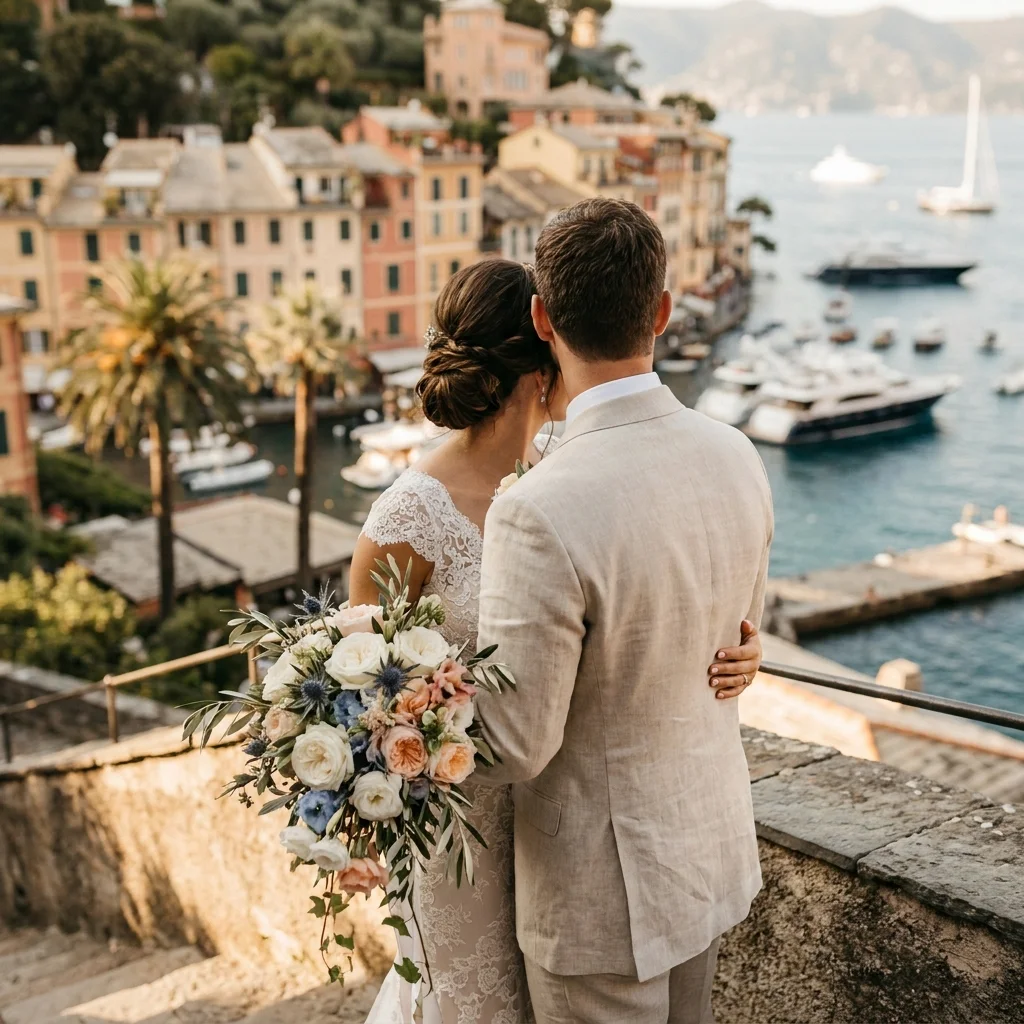
You can marry in Italy without a planner. It works best for a small wedding at one hotel that has its own events team, with a simple ceremony.
A planner becomes useful when the wedding has several suppliers, more than one location, guests arriving from abroad, or a legal ceremony with documents in Italian.
If you are unsure, a day-of coordinator is the lightest option: €1,500 to €4,000 on our published ranges. For the overall budget, see how much a wedding in Italy costs.
When to Start Looking for a Planner
Popular venues book up early for high-season dates. Book the planner before the venue if you want help choosing it, because the planner should check the contract.
The Italian wedding calendar shows the busy months and the holidays to avoid.
Where to Compare Planners
Our page on the best wedding planners in Italy explains the criteria in more detail, with total budget ranges by guest count.
Region pages: Lake Como wedding, Lake Garda wedding, Tuscany venues. For design ideas, see wedding decoration in Italy and Italian wedding color palettes.
To talk about your date, region and guest list, contact Kiss Me Italy.

Frequently Asked Questions
How much does a wedding planner in Italy cost?
On the ranges published by Kiss Me Italy, day-of coordination costs €1,500 to €4,000, partial planning €4,000 to €10,000 and full-service planning €10,000 to €30,000 or more. The fee depends on the region, guest count and number of days. In our wedding packages the planner is already included in the price.
Do I need a wedding planner in Italy?
Not always. A small wedding at a hotel with its own events team can work without one. A planner is worth it when you have guests flying in, several suppliers, more than one location or a legal ceremony with Italian paperwork. A day-of coordinator is the lighter option.
Do wedding planners in Italy charge a flat fee or a percentage?
Both exist, plus hybrid models. A flat fee covers the agreed services whatever the hours. A percentage ties the fee to the total budget, and a hybrid adds a percentage to a base fee.
What does a destination wedding planner do?
A destination planner finds and contracts the venue, books and manages the suppliers, coordinates the ceremony paperwork with the Comune or church, plans guest rooms and transfers, sets the design and runs the timeline on the day. In short, the planner does the work you cannot do from abroad.