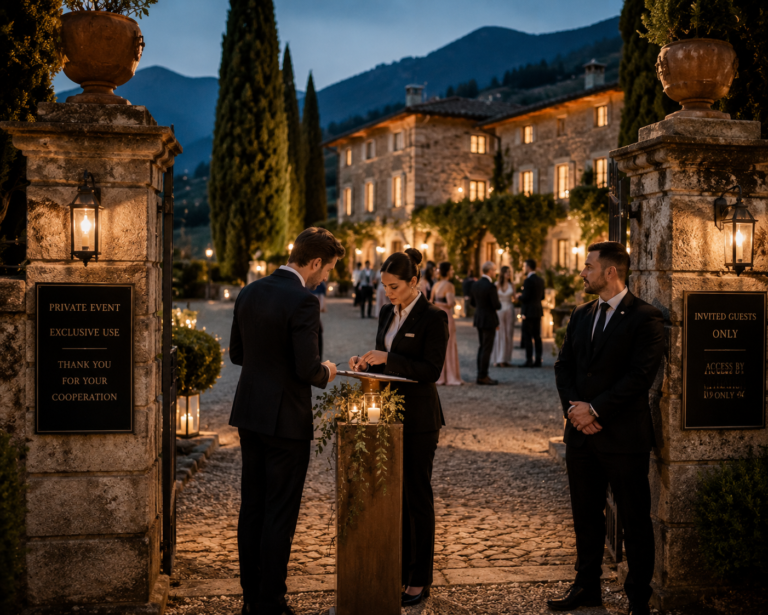
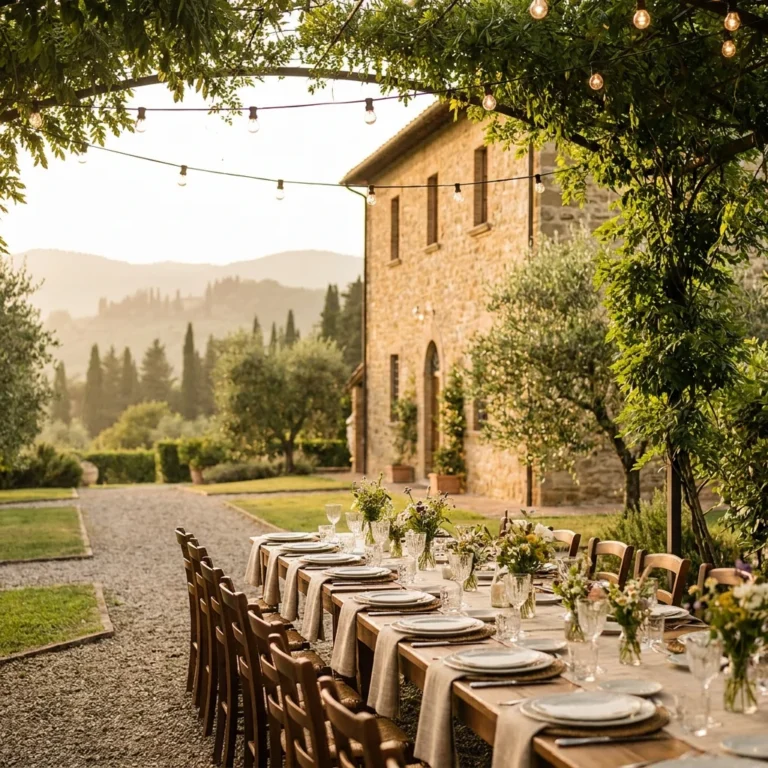
“Can we keep the wedding weekend luxurious—without exhausting everyone?” That is the real question behind most requests for an Italy wedding spa retreat. The answer is yes, but only when the venue, treatment capacity, noise rules, and guest-flow are engineered as one plan—rather than treated as separate bookings.
Italy Wedding Spa Retreat
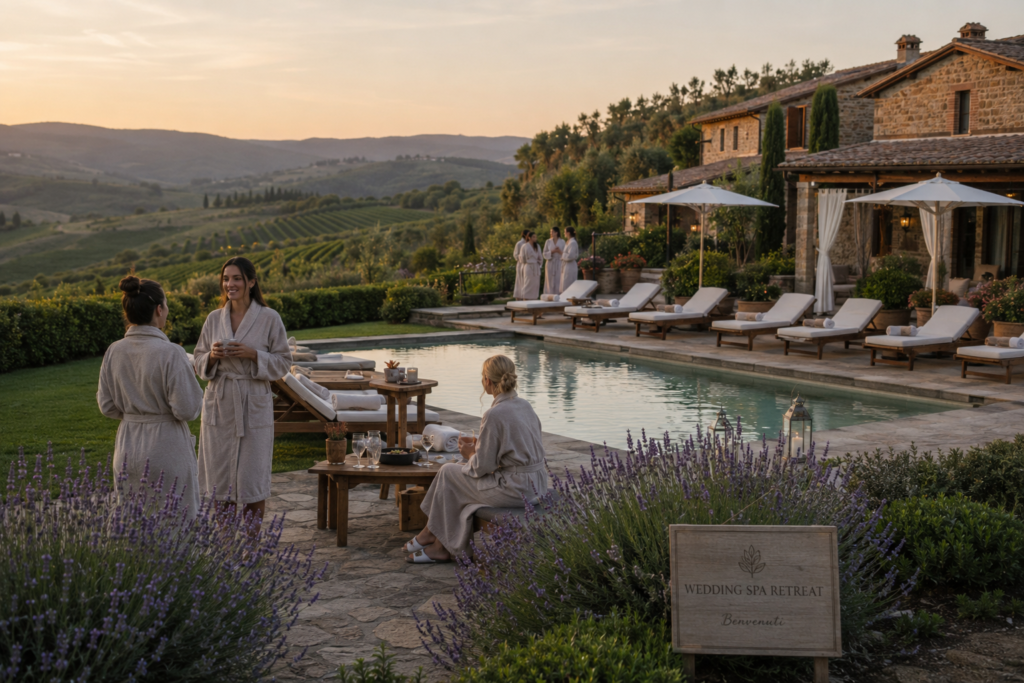
An Italy wedding spa retreat is a three- to five-day destination wedding experience that integrates thermal wellness, botanical treatments, and restorative pacing into the celebration itself—typically across Tuscany, the Amalfi Coast, the Veneto, or the Italian Lakes. Budgets commonly fall between €45,000 and €180,000+ depending on property exclusivity, guest count, treatment programming, and season. Kiss Me Italy designs and manages the retreat end-to-end—from thermal-pool ceremony timing to post-wedding recovery brunches—so wellness is built into the event architecture, not added as an afterthought.
Most couples who search for an Italy wedding spa retreat are not looking for a hotel with a spa on the premises. They want something more deliberate: a celebration where the pace itself feels restorative, where guests arrive to a welcome ritual that calms rather than overstimulates, and where the days surrounding the ceremony include curated wellness moments — a morning forest walk, an afternoon thermal soak, a pre-ceremony massage that replaces the usual bridal-suite chaos with stillness. The distinction matters, because it changes how we scout venues, how we structure the timeline, and what we negotiate with properties on your behalf. A standard luxury venue with a treatment room is not the same as a property whose entire rhythm supports a wellness-forward wedding. We know the difference because we’ve managed both.
Pre-Wedding Reset, Wedding-Weekend Wellness, or Post-Wedding Decompression: Three Formats That Shape Every Decision
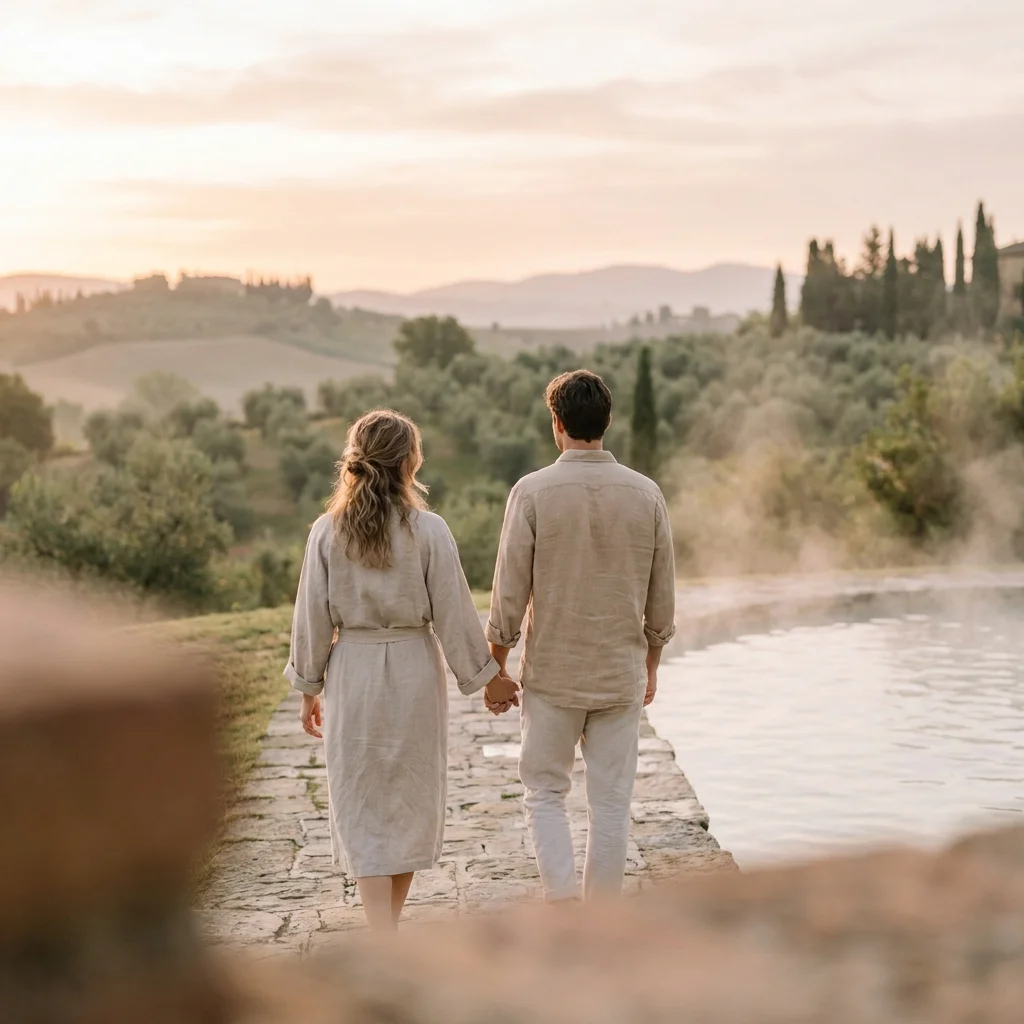
The first question we ask is not “where?” but “when does the wellness happen?” The answer restructures the entire event.
A pre-wedding reset typically runs two to three days before the ceremony. The couple — and sometimes a small inner circle — arrives early to decompress after months of planning. We arrange private thermal sessions, guided meditation in olive groves, and slow-paced tastings that double as rehearsal dinners. The wedding day itself then begins from a place of calm rather than cortisol.
A wedding-weekend wellness format integrates treatments and restorative experiences across the full event timeline. Guests receive a curated itinerary that balances celebration with recovery: morning yoga on a terrace before the ceremony day, a thermal-pool hour between the welcome dinner and the wedding itself, aromatherapy turndown amenities in every room. This is the format most clients envision when they imagine an Italy wedding spa retreat, and it requires the most precise scheduling — because treatment-room capacity, noise curfews, and catering timelines must all align.
A post-wedding decompression adds two to three days after the celebration. The couple — sometimes with parents or close friends — transitions from the social intensity of the wedding into quiet restoration. We’ve coordinated this at properties in Saturnia, in the Euganean Hills, and along the Cilento coast, where natural thermal springs and Mediterranean light create an atmosphere of genuine recovery. This format works especially well for couples whose wedding day involves large guest counts and high energy, and who want to close the chapter slowly rather than rushing to an airport.
Each format has different cost implications, different venue requirements, and different guest-management logistics. We clarify all of this before a single site visit.
Why Tuscany’s Thermal Belt — From Saturnia to San Casciano — Anchors Most Italy Wedding Spa Retreats
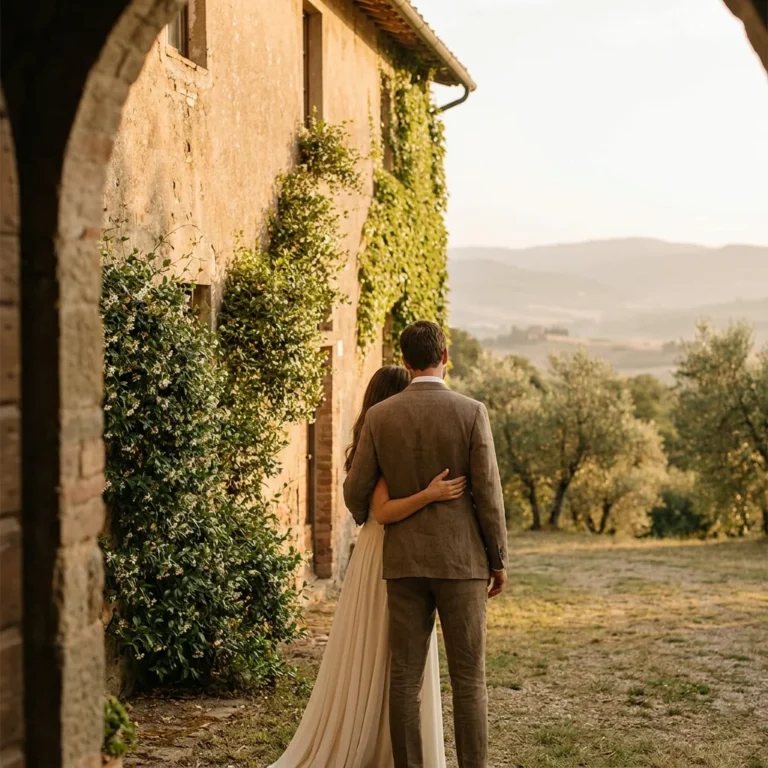
There is a particular shade of mineral-blue that exists only in Tuscan thermal water. You see it at Saturnia’s cascading pools, where sulfur-rich water holds a temperature of 37.5°C year-round, and you see it in the quieter, less-photographed springs near San Casciano dei Bagni, where Renaissance-era thermal buildings have been restored into properties of extraordinary refinement.
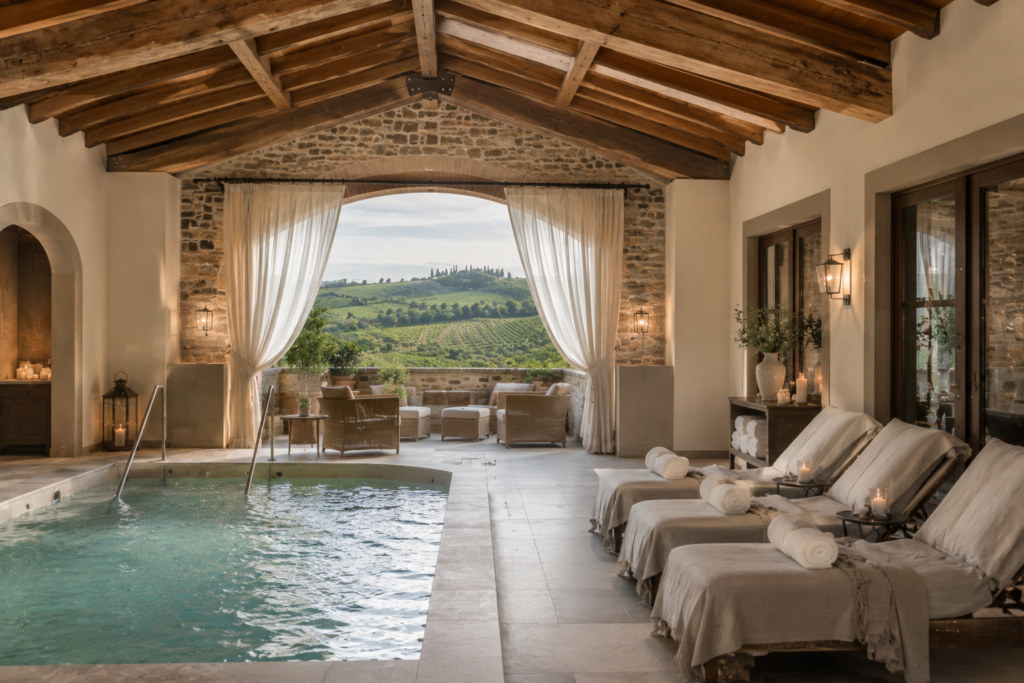
Tuscany dominates the Italy wedding spa retreat market for structural reasons. The region’s thermal corridor — running roughly from the Val d’Orcia south through Maremma — offers a density of wellness-capable properties that no other Italian region matches. Several estates combine working vineyards, private thermal pools, and event spaces large enough for 80–120 guests, all within a single property boundary. This matters because an exclusive-use buyout of such a property eliminates the noise-curfew conflicts and guest-flow complications that plague resort-based weddings.
We work with one estate south of Montepulciano where the seasonal botanical gardens supply foraged ingredients for both the spa treatments and the wedding menu — rosemary distilled into massage oil reappears as the dominant note in the bread course. That kind of sensory coherence is what distinguishes a curated wellness wedding from a standard Tuscan celebration with a spa add-on. For couples exploring wedding venues in Tuscany, the thermal belt offers a dimension most venue guides overlook entirely.
Seasonal timing matters here. May and early June bring wild fennel pollen and iris — the texture of the landscape is soft, green, almost linen-like. September and October offer warmer thermal contrast against cooler air, which makes outdoor soaking deeply satisfying. July and August are possible but require careful scheduling: midday treatments replace outdoor activities, and the ceremony moves to golden hour or later.
The Amalfi Coast: Where Lemon-Grove Aromatherapy and Sea-Salt Air Replace a Traditional Spa Menu
The Amalfi Coast does not have the thermal infrastructure of Tuscany. What it has is something harder to manufacture: the atmosphere of citrus groves descending toward the sea, the mineral quality of cliff-face air, and a tradition of lemon-based wellness rituals that predates modern spa culture by centuries.
An Italy wedding spa retreat on the Amalfi Coast tends to be more intimate—30 to 60 guests—and more vertically integrated into a single property. We often design retreats at private terraced estates in the Ravello area, where treatment rooms open onto lemon gardens and the culinary team can mirror those botanicals across both menu and wellness rituals. Seasonal, tactile, irreplaceable.
Logistics here are more complex than in Tuscany. Road access is narrow. Guest transport requires coordination with local shuttle services and often private boats from Positano or Amalfi town. Treatment practitioners travel from Naples or Salerno and need accommodation on-site or nearby. We manage all of this, including the permitting required for waterfront welcome cocktails, which involves the local Capitaneria di Porto. Couples considering the region will find our Amalfi Coast wedding cost guide useful for understanding how these logistics shape the budget.
The best months for a wellness-forward celebration here are late April through mid-June and mid-September through late October. The lemon blossom — zagara — peaks in May, and its scent is so present that it functions as a design element in itself. We’ve built entire floral arrangements around it: zagara at the ceremony, zagara in the welcome amenities, zagara in the evening’s limoncello service.
The Euganean Hills and the Veneto: Thermal Tradition Meets Venetian Elegance for Smaller Retreats
Forty minutes southwest of Venice, the Euganean Hills contain one of Europe’s oldest thermal districts. The water here is different from Tuscany’s — hotter, more mineral-dense, drawn from depths exceeding 3,000 meters. The mud treatments (fango) are UNESCO-recognized and have a tactile density that no synthetic spa product replicates.
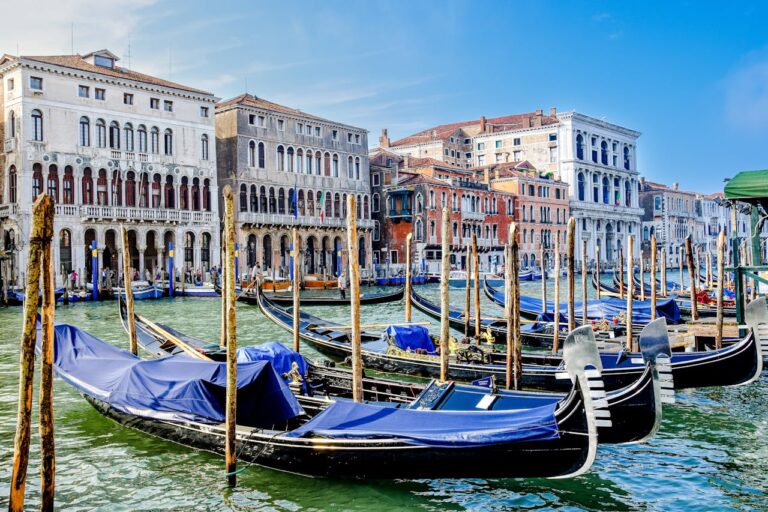
For couples who want to combine a Venice wedding with a genuine wellness retreat, the Euganean Hills offer a compelling structure: ceremony and reception in Venice or a Palladian villa on the Brenta Riviera, followed by a two- to three-day retreat in the thermal hills. We’ve designed this sequence for several couples, and the contrast — from the stone and water of Venice to the green, volcanic quiet of the Euganean landscape — creates a narrative arc that guests remember years later.
Property options here range from historic thermal hotels with private wings available for buyout to restored farmhouses with private thermal pools. Guest counts above 50 require careful property matching, as the Euganean wellness estates tend to be smaller and more intimate than their Tuscan equivalents. Treatment-room capacity is a real constraint: most properties offer four to six treatment rooms, which means a 40-guest retreat requires a staggered scheduling plan that we build into the master timeline.
The botanical character of this area is distinct — Mediterranean meets continental. Expect seasonal arrangements featuring wild cyclamen in autumn, wisteria in spring, and the particular green of vine canopy in summer. The design approach we apply through our in-house creative direction draws on the region’s Palladian proportions: symmetry, restraint, and materials that feel native to the architecture.
Lake Como and Lake Garda: Alpine Thermal Water and the Logistics of Lakeside Wellness Weddings
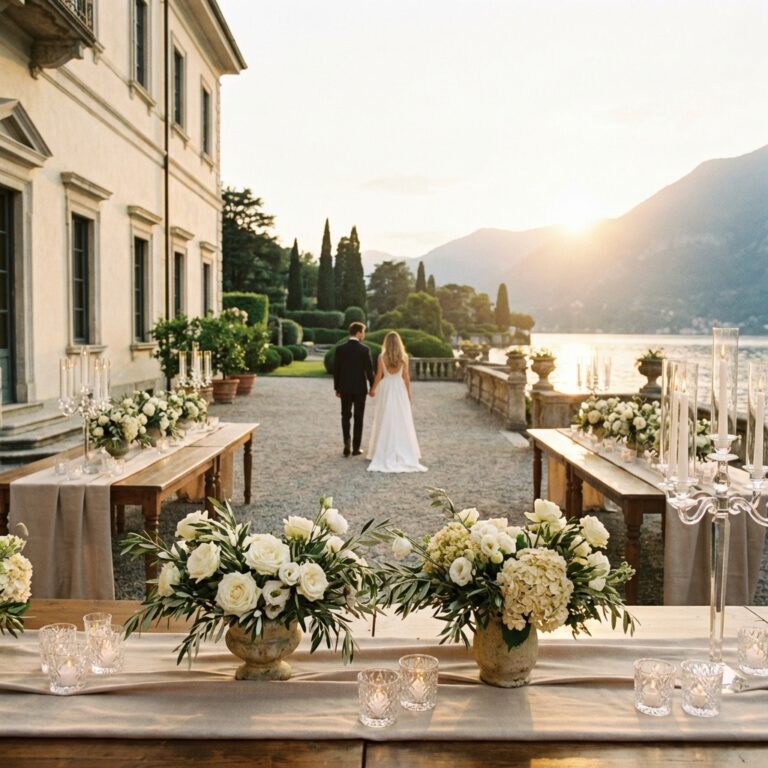
The Italian Lakes offer a different sensory register for an Italy wedding spa retreat. The light is cooler, more silver. The botanical palette shifts toward hydrangea, camellia, and the deep green of centuries-old parkland. Thermal resources exist — notably at Sirmione on Lake Garda, where sulfur springs feed directly into the lake — but the wellness infrastructure is more resort-oriented than estate-oriented.
At Lake Garda, we’ve coordinated retreats where the thermal component is based at Sirmione’s historic springs and the wedding itself takes place at a private villa on the western shore. This split-venue format requires precise guest logistics — boat transfers, timed arrivals, luggage handling — but the result is a multi-day experience with genuine variety. Couples arrive to thermal waters, transition to a lakeside celebration, and depart through Verona or Milan.
Lake Como properties tend to offer in-house spa facilities rather than natural thermal springs. The advantage is architectural: treatment rooms set within Liberty-era villas, infinity pools overlooking the lake, and private gardens where morning yoga sessions feel cinematic. The constraint is exclusivity — many of Como’s most famous properties operate as hotels, which means a full buyout is either expensive (€25,000–€60,000 for the property alone, depending on season and duration) or unavailable during peak months.
We navigate these negotiations routinely. A three-night buyout at a mid-lake villa with spa facilities for 40 guests, including welcome dinner, ceremony, reception, and post-wedding brunch, typically falls between €80,000 and €150,000 before photography, florals, and entertainment are quoted.
Transparent Cost Ranges: What an Italy Wedding Spa Retreat Actually Requires, Region by Region
Pricing an Italy wedding spa retreat is more complex than pricing a standard destination wedding, because the wellness component adds a distinct cost layer — property buyout duration, treatment programming, practitioner fees, and guest-flow management. Below are indicative ranges based on our recent projects. All figures exclude VAT (IVA at 22%) unless noted.
| Region | Format | Guest Count | Indicative Range (excl. VAT) | Included | Quoted Separately |
|---|---|---|---|---|---|
| Tuscany (thermal belt) | 3-night retreat + wedding | 50–80 | €65,000–€140,000 | Property buyout (3 nights), welcome dinner, ceremony setup, reception catering, basic floral design, retreat coordination, on-site management | Photography/videography, advanced floral design, guest treatments, entertainment, legal fees, transfers |
| Amalfi Coast | 2-night retreat + wedding | 30–60 | €55,000–€120,000 | Property buyout (2 nights), welcome cocktail, ceremony setup, reception catering, basic floral, on-site management, local permits | Photography/videography, spa treatments, boat transfers, entertainment, legal fees, advanced florals |
| Euganean Hills / Veneto | 2-night retreat + Venice ceremony | 30–50 | €50,000–€110,000 | Retreat property buyout (2 nights), Venice ceremony venue, reception catering, basic floral, on-site coordination | Photography/videography, thermal treatments, Venice water-taxi transfers, entertainment, legal fees |
| Lake Como | 3-night buyout + wedding | 40–70 | €80,000–€160,000 | Villa buyout (3 nights), welcome dinner, ceremony, reception catering, in-house spa access, on-site management | Photography/videography, private treatments, advanced florals, entertainment, boat transfers, legal fees |
Indicative ranges. Contact Kiss Me Italy for a personalized proposal.
| Wellness Component | Per-Guest Range (excl. VAT) | What’s Included | Notes |
|---|---|---|---|
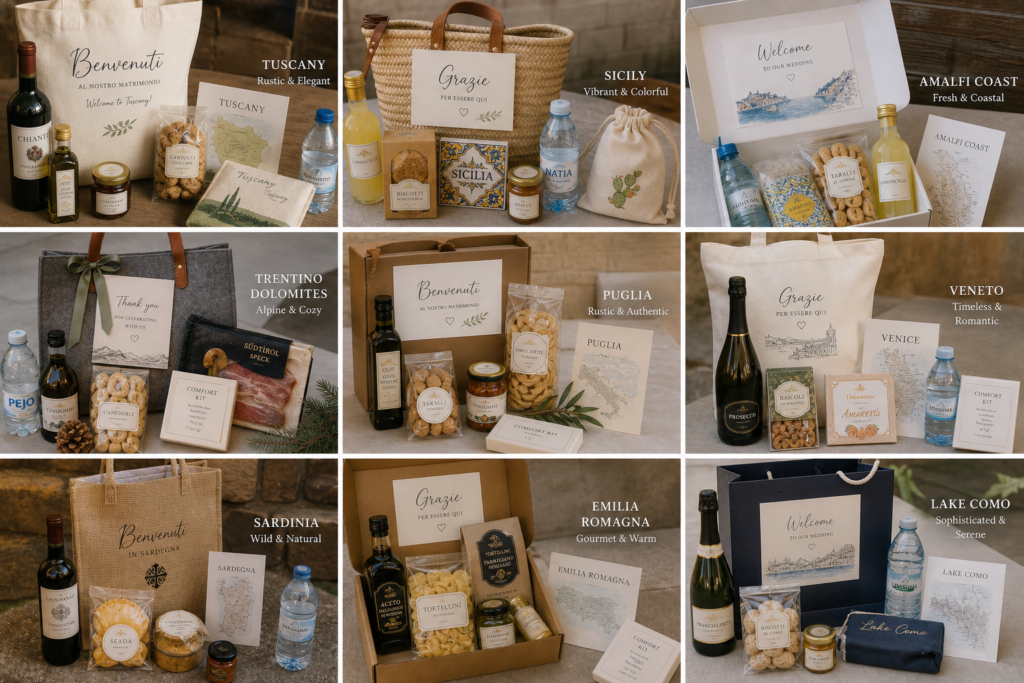
| Welcome aromatherapy amenity kit | €40–€90 | Curated botanical products (seasonal, locally sourced), branded packaging, room placement | Minimum order typically 20 kits |
| Group yoga / meditation session (1 hr) | €15–€30 per guest | Certified instructor, equipment, outdoor setup | Instructor travel quoted separately if venue is remote |
| Individual spa treatment (60 min) | €90–€180 per guest | Single treatment (massage, facial, or thermal wrap), practitioner fee, product | On-site treatment rooms required; mobile setup available at +20% |
| Thermal pool private session (2 hrs) | €25–€60 per guest | Exclusive-use thermal access, towel service, light refreshments | Available only at thermal properties; minimum 10 guests |
| Bridal wellness package (half day) | €350–€700 per couple | Couples massage, facial, thermal soak, light botanical lunch | Scheduled on pre-wedding day; photographer access quoted separately |
Indicative ranges. Contact Kiss Me Italy for a personalized proposal.
| Photography & Videography | Range (excl. VAT) | Included | Quoted Separately |
|---|---|---|---|
| Full-day wedding coverage (single photographer) | €4,500–€9,000 | 8–12 hours, travel within region, digital gallery (edited, 4–6 week delivery) | Second shooter (+€1,200–€2,500), albums/prints, drone, accommodation if venue is remote |
| Multi-day retreat coverage (2–3 days) | €7,000–€14,000 | Partial daily coverage across retreat, edited digital gallery, travel within region | Full-day rates for wedding day itself, second shooter, video, albums |
| Cinematic wedding film (single videographer) | €5,000–€10,000 | Full wedding day, 5–8 min highlight edit, 8–12 week delivery | Ceremony edit, full-length edit, raw footage, drone, second videographer, retreat-day coverage |
Indicative ranges based on recent projects. Contact Kiss Me Italy for a personalized proposal.
Buyouts, Noise Curfews, Treatment-Room Capacity: The Operational Realities We Manage So You Don’t Notice Them
This section is deliberately practical. An Italy wedding spa retreat involves coordination layers that property websites never mention, and that most couples only discover after signing a contract.
Exclusive-use buyouts. Most wellness properties require a minimum two-night buyout for wedding events. Some require three. The buyout fee covers accommodation but rarely includes F&B minimums, which are negotiated separately. We review these contracts line by line, flagging clauses around damage deposits, overtime charges, and guest-count thresholds that trigger surcharges.
Noise curfews. Italian municipal regulations (ordinanze comunali) vary by town. In much of Tuscany, outdoor amplified music must end by 00:00 or even 23:00. Properties in the Euganean Hills often follow Padova province rules, which are slightly more permissive. On the Amalfi Coast, Ravello enforces a strict 00:00 outdoor curfew. We confirm these before venue selection, not after — because a couple who envisions dancing under the stars until 2am needs a property in a municipality that permits it.
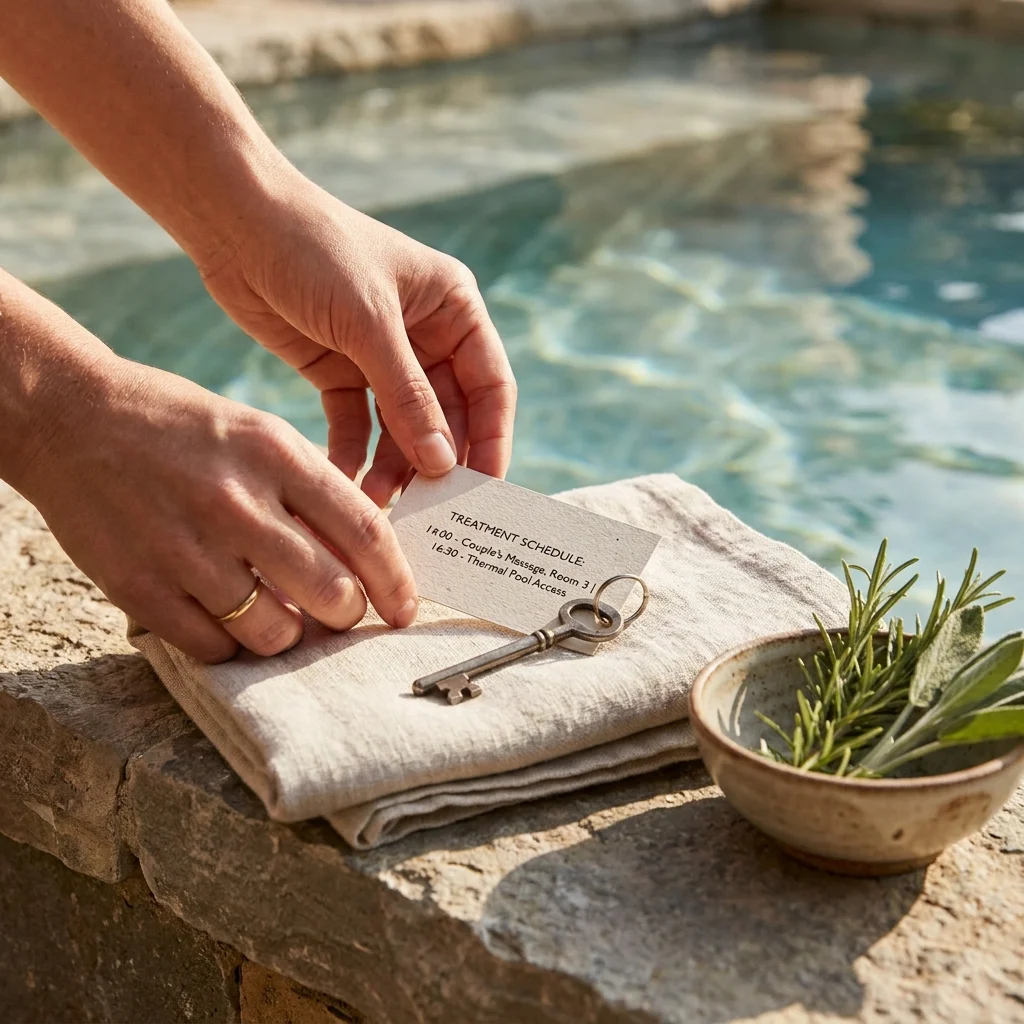
Treatment-room capacity. A property with four treatment rooms can serve approximately 16–20 guests per half-day session (assuming 60-minute treatments with 15-minute turnovers). For a 60-guest retreat, this means wellness programming must span two full days or require mobile treatment setups — tented massage stations in gardens, for instance — which we design and staff.
Guest-flow timing. The most common scheduling conflict in a wellness wedding is the gap between the last treatment slot and the ceremony start. Guests who’ve just had a deep-tissue massage at 15:00 need at least 90 minutes to shower, dress, and arrive composed for a 17:00 ceremony. We build these buffers into every timeline, and we assign a dedicated guest-experience coordinator whose sole role is managing this flow on the day.
For couples navigating the legal requirements of marrying in Italy as foreigners, we handle the paperwork timeline in parallel with venue and wellness coordination — the two processes run concurrently, and neither should delay the other.
If you want a retreat that feels effortless to guests, the planning must be uncompromising behind the scenes. Request a private consultation and we will map the venue shortlist, buyout strategy, and wellness programming around your guest count and preferred pace.
How Seasonal Botanicals and Mediterranean Light Shape the Wellness Design of Every Retreat
I approach a wellness wedding the way I approach any design project: as a complete sensory composition. The botanical choices, the textile selections, the timing of light through a specific window — all of these are design decisions, not decorative afterthoughts.
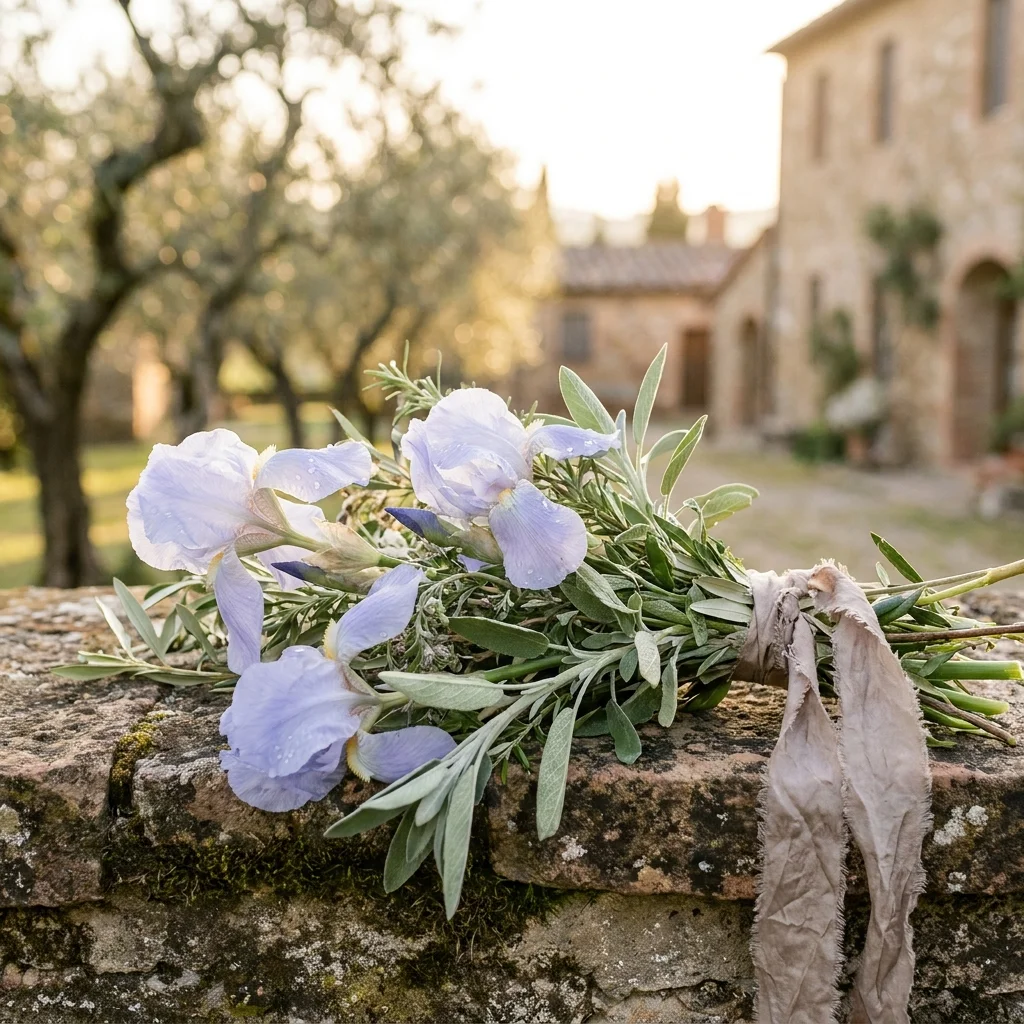
For a spring Italy wedding spa retreat in Tuscany, I might build the entire sensory arc around iris and wild sage. The iris pallida — cultivated in the hills above Florence for perfume production — has a particular shade of lavender-blue that photographs beautifully in late-April light. It appears in the ceremony arrangements, in the dried-root sachets placed in guest rooms, and in the essential oil used during morning treatments. The texture of the iris petal — papery, almost translucent — sets the material tone for the table linens: raw silk, unbleached linen, nothing too polished.
In autumn, the palette shifts. I work with foraged elements — dried seed heads, persimmon branches, late-harvest grape leaves in amber and burgundy. The atmosphere of an October retreat is warmer, more enveloping. Candlelight replaces the long daylight hours of June. Treatments move indoors, and the scent profile shifts toward resinous notes: cypress, juniper, beeswax. Couples considering an autumn celebration in Tuscany and Versilia will find that the season’s natural materials create a richness that summer cannot replicate.
Menu design follows the same seasonal logic. We work with chefs who understand that a wellness-forward wedding doesn’t mean restrictive — it means intentional. A lighter lunch on the retreat day (raw vegetable carpaccio, herb-infused broths, seasonal fruit) gives way to a generous wedding dinner. The Italian wedding menu we curate balances indulgence with digestibility, and we time courses to allow the body to settle between the aperitivo and the main service.
Ceremony Types That Complement a Wellness-Forward Celebration — And the Permits Behind Them
The ceremony itself should feel like an extension of the retreat’s restorative atmosphere, not a jarring shift into formality. We’ve found that certain ceremony formats integrate more naturally into a wellness wedding than others.
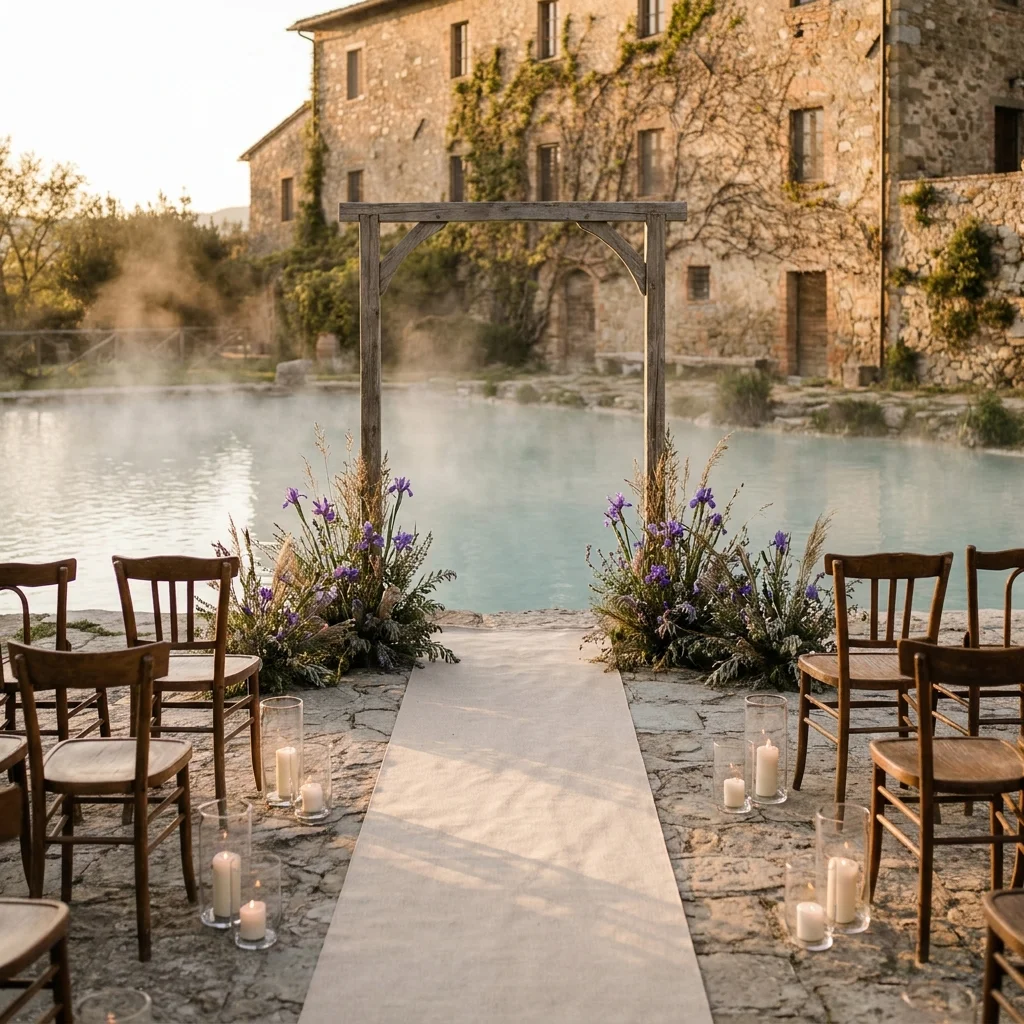
Symbolic ceremonies offer the most flexibility. They can be held at the thermal pool’s edge at golden hour, in a garden clearing after a morning of treatments, or on a terrace overlooking the Val d’Orcia. No municipal permits are required for the ceremony location itself, though the property must authorize the setup. Couples who want their wedding officiant to incorporate wellness-themed readings or mindfulness moments find symbolic ceremonies the most accommodating format.
Civil ceremonies (legally binding) require a municipal officiant and must take place in an approved location — either the town hall or a venue that holds a specific municipal authorization. Not every spa property has this authorization. We verify this during the venue-scouting phase and, where necessary, arrange for the legal ceremony at the nearest authorized location with the celebration continuing at the retreat property.
For couples who wish to include a religious element, we coordinate with local parishes or arrange for clergy to officiate at the venue where permitted. Our guide to marrying in Italy as a foreigner covers the documentary requirements for each ceremony type in detail.
What Your Guests Actually Experience Across a Three-Day Italy Wedding Spa Retreat
A well-designed retreat unfolds like a story. Here is a representative three-day sequence we’ve managed for a 50-guest Tuscan celebration:
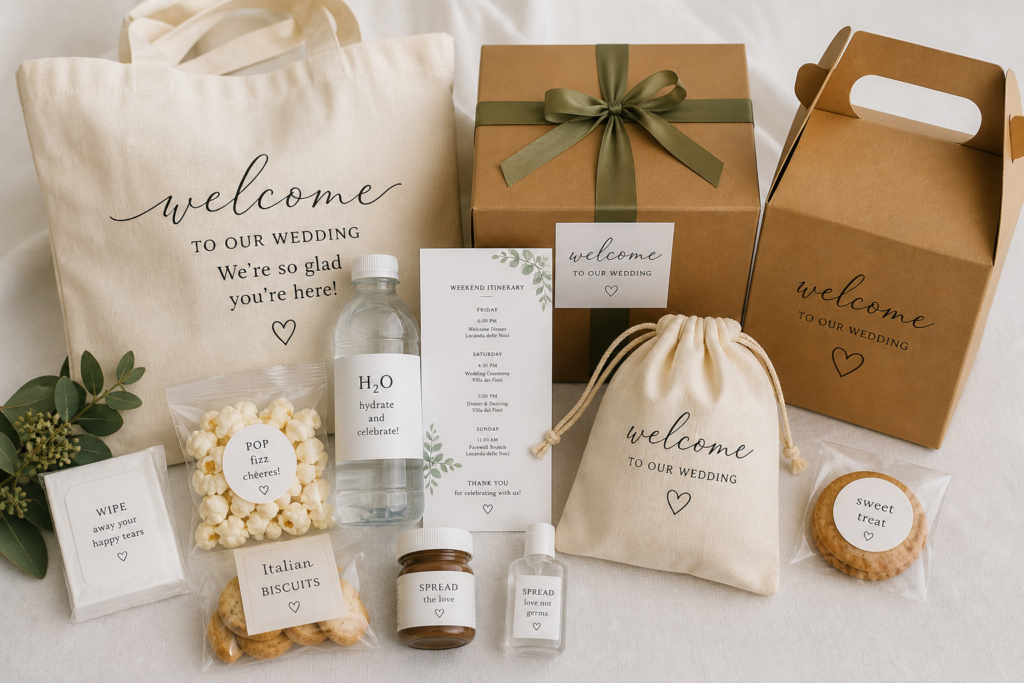
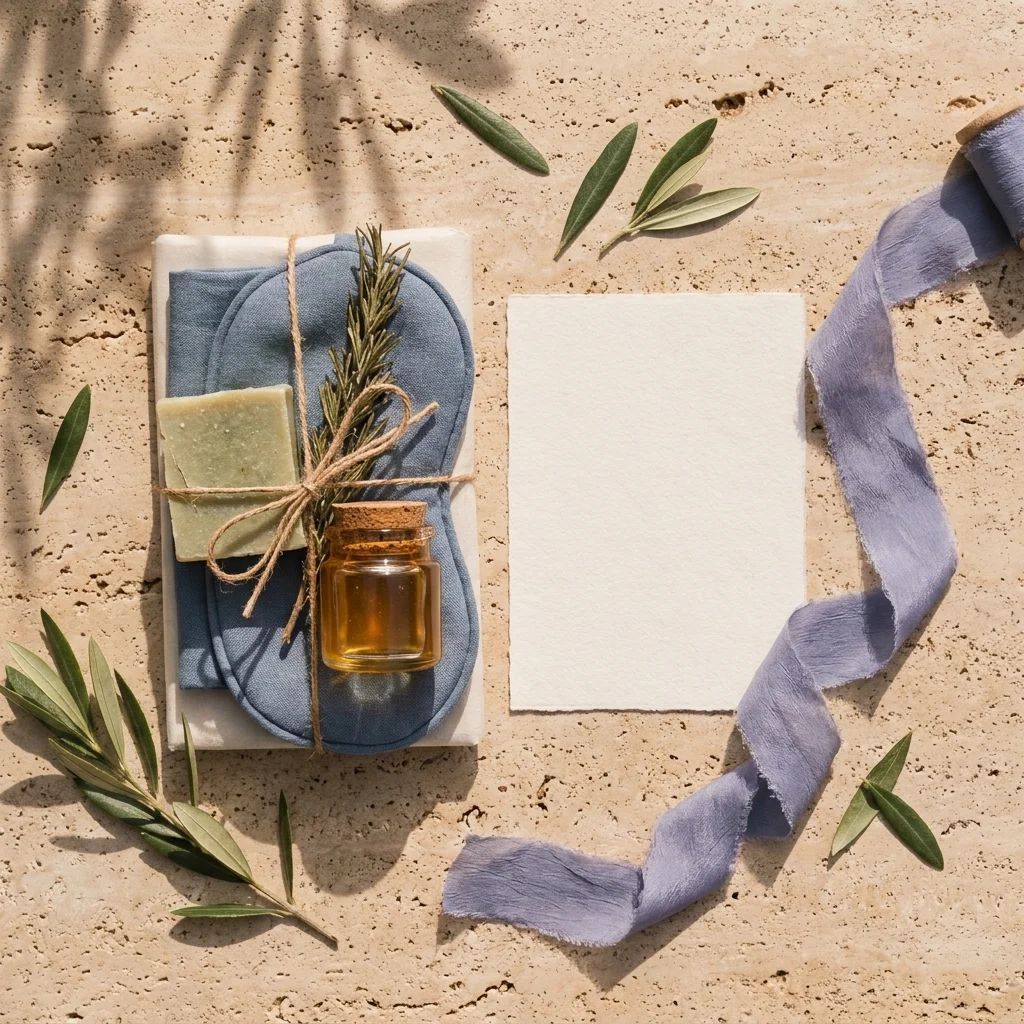
Day One — Arrival and Settling. Guests arrive between 14:00 and 17:00. Each room contains a welcome amenity: a hand-wrapped botanical kit with seasonal soap, a linen eye mask infused with lavender from the property’s garden, and a printed itinerary on heavy cotton paper. At 18:30, a guided walk through the estate’s olive groves ends at a long table set for a welcome dinner — no speeches, no formality, just shared food and the sound of cicadas fading into evening.
Day Two — Wellness and Preparation. Morning yoga at 08:00, optional. Thermal pool access from 09:00. Individual treatments scheduled in 90-minute blocks from 10:00 to 15:00. A light botanical lunch is served poolside at 13:00. The bride and groom have a private couples’ treatment at 11:00, followed by quiet preparation in separate suites. The ceremony begins at 17:30, when the light catches the stone façade at its warmest angle. Reception follows through midnight.
Day Three — Decompression. A late breakfast service runs until 11:00. Guests who depart early find a farewell gift in their room — a small jar of estate honey, a sprig of dried rosemary. Those who stay enjoy a final thermal session and a long Italian lunch that serves as an unhurried farewell. No schedule, no obligations. Just the quiet pleasure of a celebration that ended well.
This level of guest-experience design is what separates a managed Italy wedding spa retreat from a DIY booking at a resort. Every transition, every amenity, every timing decision has been tested and refined across dozens of events.
Why a Managed Retreat — Not a Self-Booked Resort Stay — Protects the Experience and the Budget
It is tempting to book a luxury spa hotel directly and layer a wedding on top. We understand the impulse. But the experience invariably suffers, for reasons that become apparent only during execution.
A hotel’s spa operates on its own schedule, serving all guests — not just yours. Treatment availability during a wedding weekend is limited. Noise restrictions may prevent the reception you envisioned. The hotel’s event coordinator, however skilled, is managing multiple events and cannot dedicate the attention a wedding retreat demands.
When we manage the retreat, we negotiate exclusive-use terms that guarantee your group’s priority in every shared space. We bring in our own wellness practitioners — vetted, briefed on the event timeline, and coordinated with the floral and culinary teams so that the sensory experience is coherent from the first treatment to the last toast. We handle the full cost architecture transparently, so there are no surprise invoices from the property after the event.
For couples exploring a more intimate format, our micro wedding approach adapts beautifully to a wellness retreat setting — fewer guests, deeper personalization, and a pace that feels genuinely restorative rather than performative.
A Celebration That Restores as Much as It Celebrates
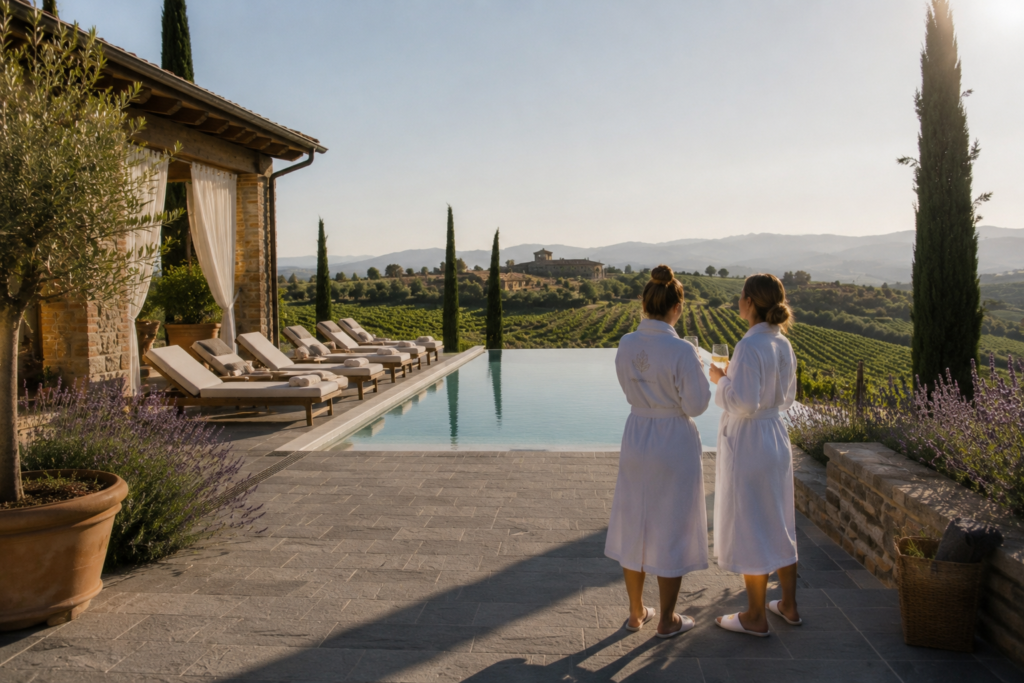
An Italy wedding spa retreat, when designed with intention, becomes something rare: an event that leaves everyone — couple, family, guests — feeling better than when they arrived. Not just emotionally, but physically. The texture of thermal water on tired skin. The scent of Mediterranean herbs in the morning air. The particular quiet of an Italian estate at dawn, before the day begins.
This is what we design. This is what we manage. And it begins with a conversation. Contact Kiss Me Italy to begin shaping yours.
Frequently Asked Questions About an Italy Wedding Spa Retreat
Can we book wellness treatments for only some guests, or must the entire group participate?
Absolutely — treatment programming is always optional for guests. We design a curated menu and scheduling system, but participation is entirely voluntary. Guests who prefer to explore the surrounding area, read by the pool, or simply rest are equally well accommodated. There is no minimum participation requirement for the wellness component.
How far in advance should we secure an exclusive-use buyout at a thermal property?
For peak season (May–June, September–October), we recommend initiating the venue search 14–18 months before the wedding date. Thermal properties with event authorization are limited in number, and the best ones receive multiple inquiries per season. Off-peak months (November–March, excluding holidays) offer more flexibility, often with 8–10 months of lead time.
What happens if a guest has allergies or sensitivities to the botanical products used in treatments?
We collect detailed wellness questionnaires from every guest approximately six weeks before the event. These are shared with our practitioners, who prepare alternative product lines for guests with sensitivities. All products used are disclosed in advance, and hypoallergenic options are always available on-site.
How do you protect privacy when a spa property is also a hotel open to the public?
We do it contractually and operationally. First, we negotiate either exclusive use or a clearly defined private wing with controlled access to key spaces (spa time blocks, pool areas, terraces, and event zones). Then we build a guest-flow plan—arrival windows, credentialing, signage, and staffing—so your group experiences the property as if it were private, even when the hotel is not fully bought out.
Can children participate in the retreat, or is it adults-only?
This depends on the property. Some thermal estates welcome families and offer age-appropriate activities (nature walks, art workshops, shallow-pool access). Others maintain an adults-only policy for wellness areas. We match the property to your guest profile during the initial consultation and can arrange dedicated childcare services where needed.
Do we need separate insurance for the wellness component of the retreat?
The property’s liability insurance typically covers on-site treatments performed by licensed practitioners. However, we recommend that couples carry their own event insurance policy that includes wellness activities — particularly if outdoor or adventure-wellness elements (forest bathing, thermal hiking) are part of the program. We provide guidance on appropriate coverage during the planning phase.
Our culinary coordination begins with a detailed dietary survey distributed with the RSVP. We work with chefs who specialize in wellness-aligned menus — lighter courses on retreat days, more celebratory service on the wedding evening — and accommodate restrictions including vegan, gluten-free, and medically prescribed diets without creating a separate “special menu” experience. Every guest eats beautifully.
What if the weather prevents outdoor thermal or wellness activities during the retreat?
Every retreat timeline includes a weather-contingency plan developed at least four weeks before the event. Indoor treatment rooms, covered terraces, and heated interior pools serve as alternatives. For properties without sufficient indoor space, we arrange mobile spa setups — heated tented treatment stations with full amenity service — that maintain the experience regardless of conditions.
Can we integrate a vow renewal into a wellness retreat format instead of a wedding?
Yes, and the format translates beautifully. A vow renewal in Italy within a spa retreat setting often feels even more intimate than a wedding, because there is no legal paperwork to manage and the focus is entirely on the experience. We’ve designed renewal retreats for milestone anniversaries that span four to five days, with the ceremony itself as a quiet, deeply personal centerpiece.
Is tipping expected for wellness practitioners at Italian properties?
Tipping is not customary in Italian spa culture, though it is always appreciated. A gratuity of €10–€20 per treatment is generous by local standards. We include tipping guidance in the guest welcome materials so that international visitors feel confident navigating this gracefully.
Related on the Kiss Me Italy blog: Wedding Photographer Italy: How to Choose the Right Style, Coverage & Locations.