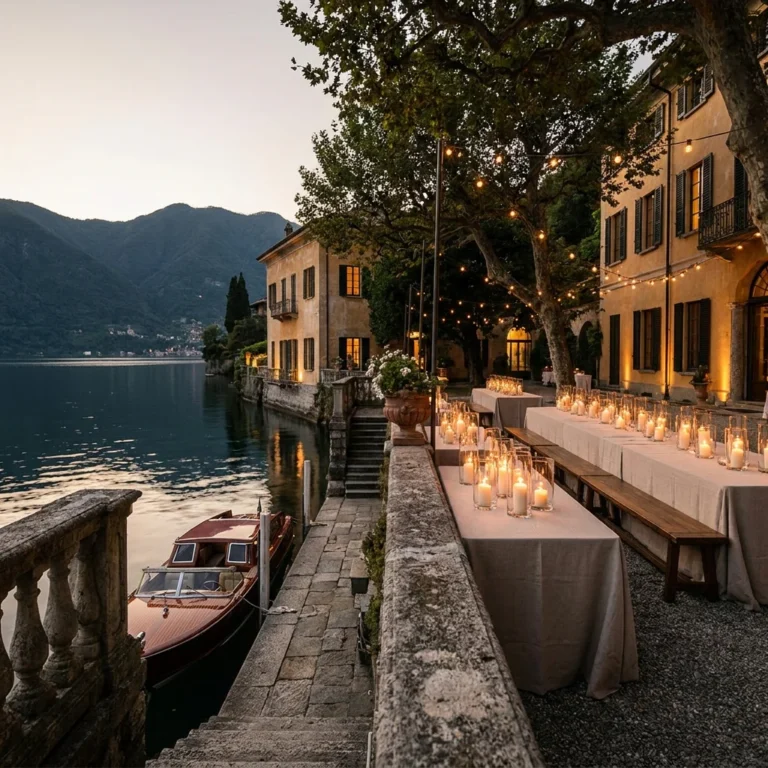
Lake Como Wedding Boat: Private Arrival, Portraits, and Guest Transfers, Curated End to End
The wooden launch you imagine cutting across the water toward a shoreline villa is not a rental decision. It is a scenographic one. Most couples arrive at the question of a Lake Como wedding boat already half-decided on the romance of it — the bride emerging at a stone landing, the guests applauding from a balustraded terrace — but unaware that the dock they want may not legally accept a private vessel, that the timing must align to within minutes with the photographer’s light, and that boarding twelve elderly guests at a shallow private landing is an entirely different operation from a couple’s single elegant arrival.
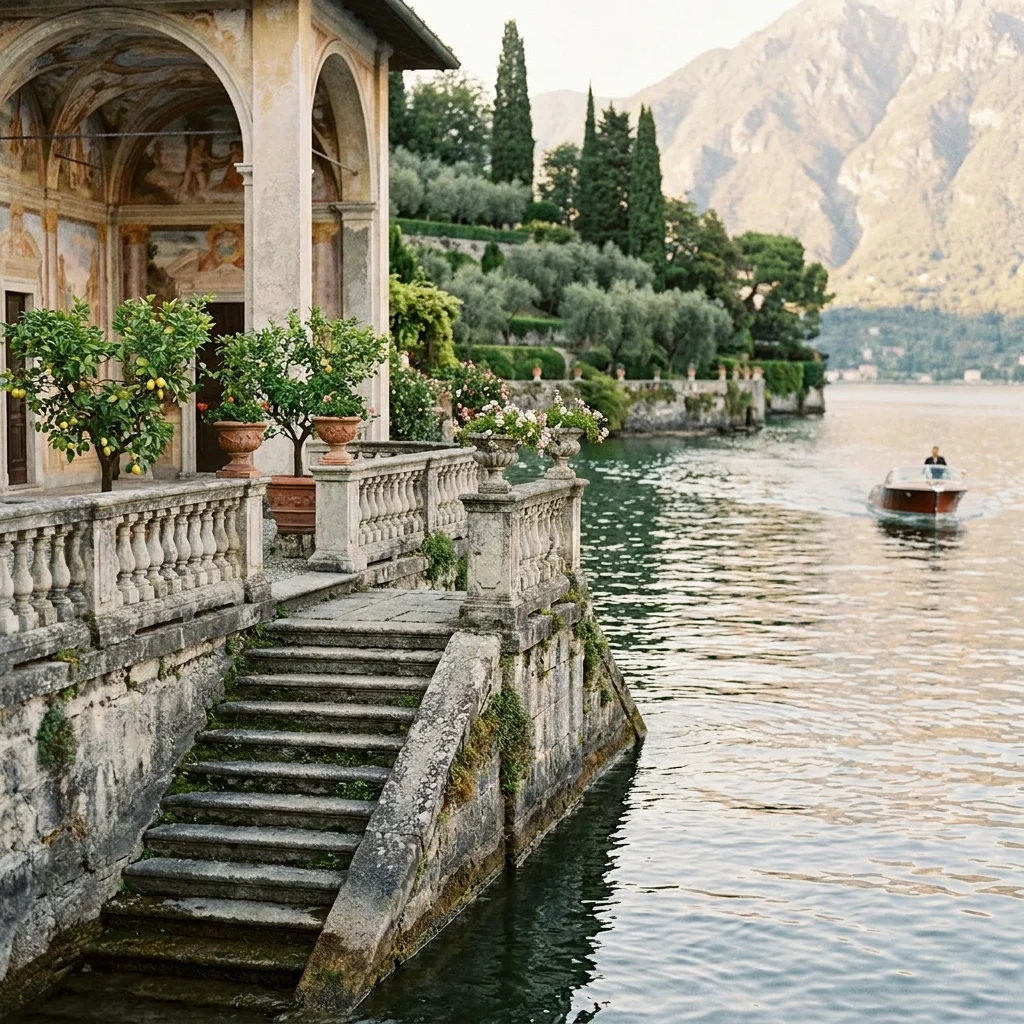
A Lake Como wedding boat is a private vessel — typically a classic mahogany launch or a larger covered cruiser — used to bring the bride to her ceremony, transfer guests between villas, or carry the couple on a portrait cruise during golden hour. Costs range from roughly €600 for a short bridal arrival to €4,500 or more for a full-day chartered cruiser with crew, with the variable being vessel size, hours, and dock access. When curated by a planner, the boat becomes a coordinated element of the wedding day rather than a standalone booking.
Why the Bride’s Arrival by Boat Is a Question of Stone, Not Water
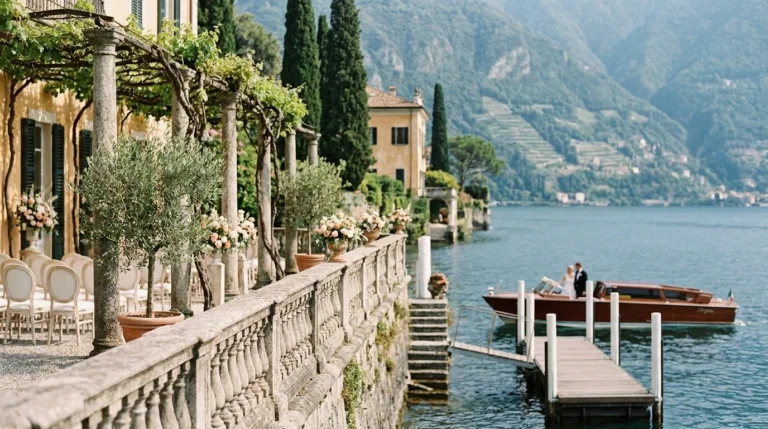
The most cinematic moment a Lake Como wedding can offer is the bride arriving by water. It is also the one most constrained by something invisible from a brochure: the dock itself. Many of the lake’s most photographed villas — including the grand neoclassical estates near Tremezzo and the terraced gardens above Bellagio — possess landing stages that were originally built in the nineteenth century for small rowing tenders, not for a modern launch carrying a bride in a structured gown.
We assess this first. Before any boat is discussed, Kiss Me Italy confirms the exact landing stage, its depth, its mooring rings, and whether the villa’s licence permits a private vessel to dock during ceremony hours. A frescoed loggia overlooking the water means nothing if the bride must then climb fourteen wet stone steps in front of one hundred guests.
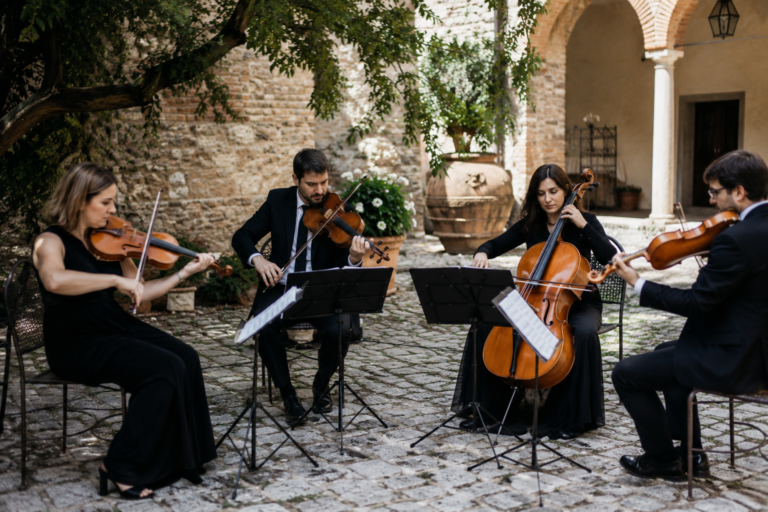
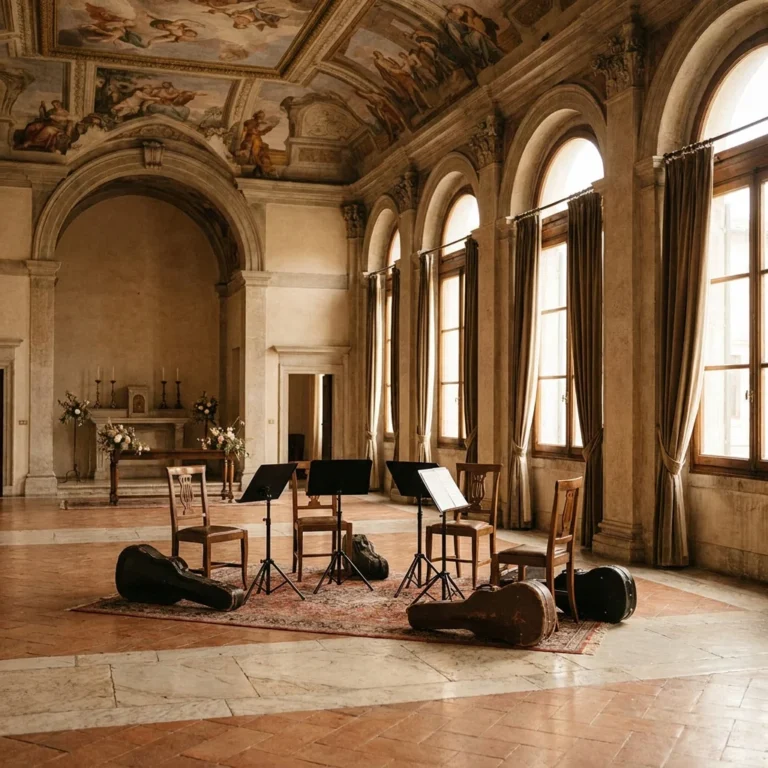
The bridal arrival is a single, controlled gesture. One vessel. One landing. A crew briefed to approach slowly so the wake does not disturb the gown, and a timing window that places the boat at the dock precisely as the string ensemble begins. This is the discipline behind what looks effortless — and it is why our work on a Lake Como wedding begins with the architecture of the shoreline long before the celebration is designed.
The Five Distinct Boat Roles Couples Confuse for One
Couples often say “we want a boat” and mean five different things. We separate them deliberately, because each carries its own vessel, its own crew, and its own pricing logic.
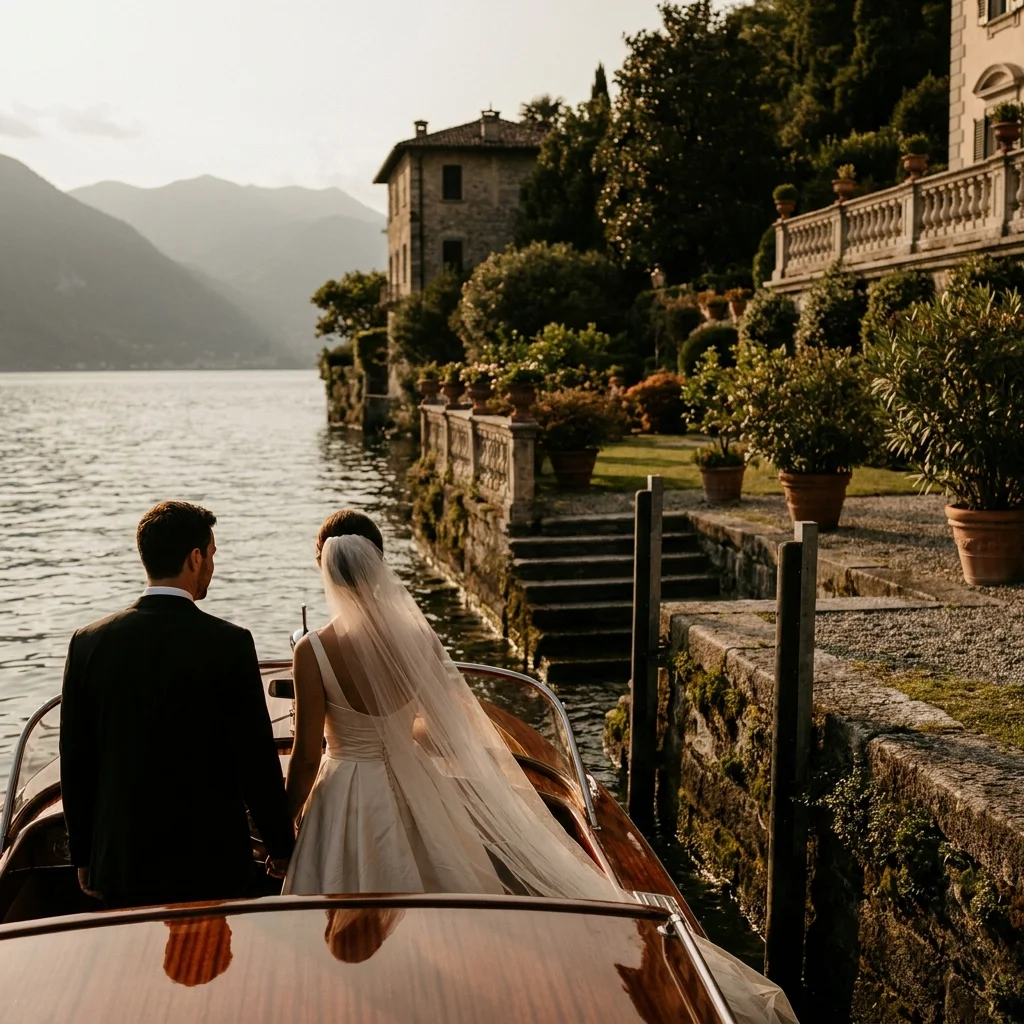
The bridal arrival is the most concentrated: a short transfer of fifteen to thirty minutes, often from the bride’s hotel landing to the ceremony villa, on a classic mahogany launch chosen for its silhouette in photographs. The couple’s portrait cruise follows the ceremony — a private circuit during the lowering sun, where the photographer captures the two of you against the water with the Grigne mountains behind. These are the images couples frame.
Guest transfers are a logistical operation entirely: moving sixty or eighty people between a lakeside ceremony and a separate reception villa, which requires larger covered cruisers, multiple departures, and a coordinator at each dock. The ceremony-adjacent cruise — a symbolic blessing held on the water itself — is rarer and demands a flat, stable vessel and an officiant comfortable afloat. And the post-ceremony aperitivo boat carries the wedding party on a celebratory loop while the reception space is reset, glasses of Franciacorta in hand.
Most luxury Lake Como weddings we design use two or three of these, not all five. The art is in choosing which serve the celebration and which merely complicate it. Our Lake Como planning team maps each one against the day’s timeline before a single vessel is reserved.
What a Private Wedding Boat on Lake Como Actually Costs
Pricing depends on three variables: the class of vessel, the number of hours, and whether the dock requires special access arrangements. A short bridal arrival on a classic launch is the most accessible element. A full-day chartered cruiser with crew, fuel, and aperitivo service is the most substantial.
| Boat Element | Indicative Range | What’s Included / Separate |
|---|---|---|
| Bridal arrival (classic launch, 30 min) | €600–€1,200 | Vessel, skipper, fuel included; dock access fees, photographer coordination, and Italian VAT (IVA/VAT 22%) quoted separately |
| Couple’s portrait cruise (1–1.5 hrs) | €900–€1,800 | Vessel, skipper, route planning included; photographer/videographer time, prosecco service, and Italian VAT (IVA/VAT 22%) separate |
| Post-ceremony aperitivo boat (2 hrs, up to 12 guests) | €1,400–€2,800 | Covered launch, crew, ice and glassware included; catering, drinks, and Italian VAT (IVA/VAT 22%) separate |
| Full-day chartered cruiser (crewed, larger group) | €2,800–€4,500+ | Vessel, crew, fuel included; onboard catering, multiple dock fees, and Italian VAT (IVA/VAT 22%) separate |
Indicative ranges. Contact Kiss Me Italy for a personalized proposal.
The figures couples underestimate are the dock fees. Private landing stages at the great villas frequently levy an access charge — sometimes modest, sometimes considerable when the dock is part of a venue that also hosts the ceremony. We negotiate and itemise these in advance, so the Lake Como wedding boat cost you approve is the cost you pay.
If you are weighing the boat against the wider celebration budget, our transparent overview of what a Lake Como wedding involves places this element in proportion — and you are welcome to share your guest count and shortlist of villas with us for a tailored figure.
Guest Transfers by Boat: The Pricing Most Couples Get Wrong
Moving guests by water is where a romantic idea meets arithmetic. A single launch carrying ten people cannot transfer eighty guests in one departure. It requires a fleet, staggered timings, and a coordinator stationed at each landing — and the cost reflects the operation, not the picture.
| Transfer Scenario | Indicative Range | Notes on Inclusion |
|---|---|---|
| Single launch shuttle (up to 10 guests, return) | €800–€1,500 | Vessel, skipper, fuel included; dock fees and Italian VAT (IVA/VAT 22%) separate |
| Two-vessel coordinated transfer (up to 30 guests) | €2,200–€3,800 | Two crews, dock coordinator included; catering and Italian VAT (IVA/VAT 22%) separate |
| Full guest fleet (60–80 guests, multiple departures) | €5,500–€9,000+ | Fleet, crews, dock staff, scheduling included; weather backup land transfer and Italian VAT (IVA/VAT 22%) separate |
Indicative ranges. Contact Kiss Me Italy for a personalized proposal.
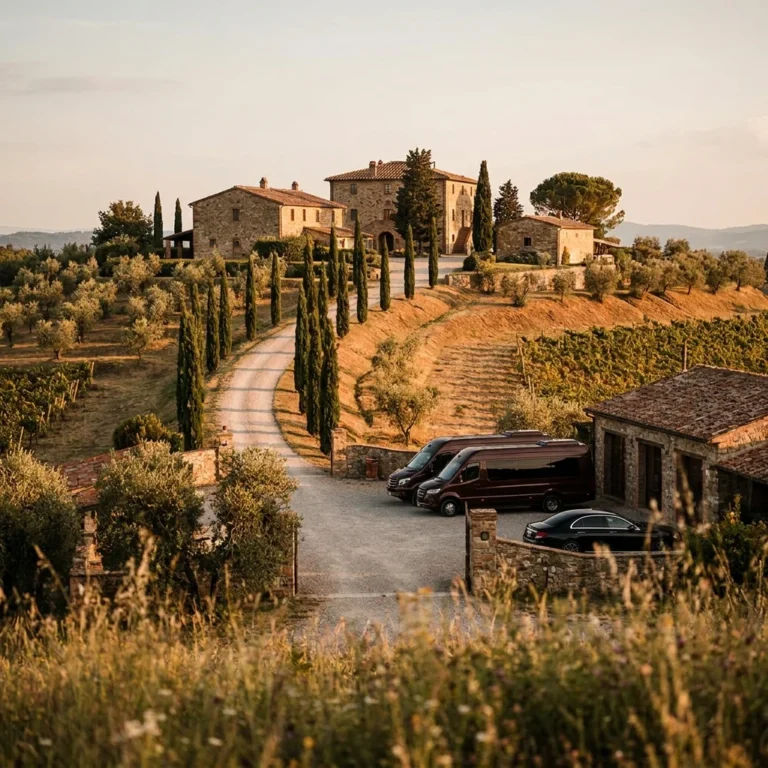
For larger weddings, we frequently pair a boat transfer with a discreet land shuttle so that guests with limited mobility, or those who prefer dry footing, are never made to feel the exception. The seamless choreography of arrivals is something our wider work on an Italy wedding shuttle service addresses in full, and the two operations are designed to interlock. For couples planning accommodation alongside their transfers, our guidance on Lake Como wedding logistics covers how arrival routes and guest stays are coordinated together.
Permits, Boarding Buffers, and the Backup Route Nobody Sees
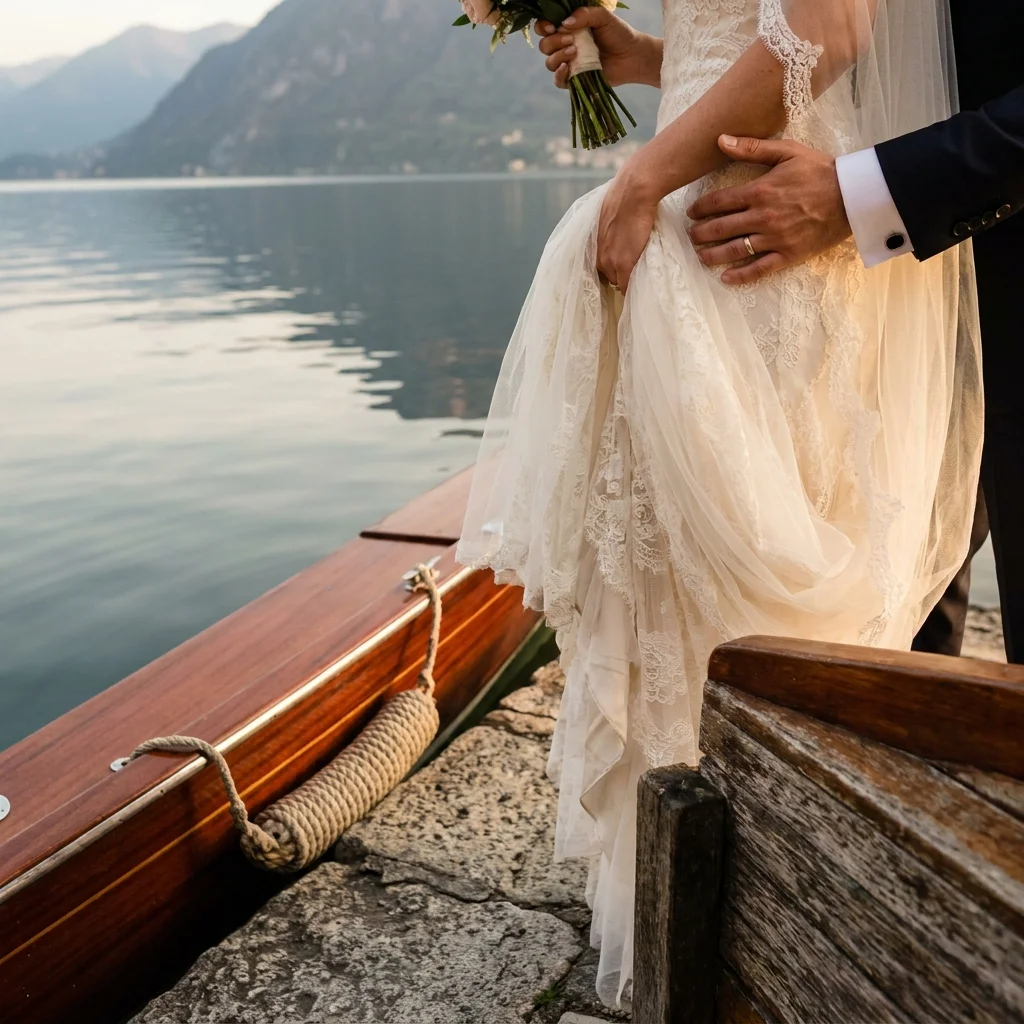
This is the technical heart of the matter, and it deserves a plainer register. A Lake Como wedding boat operation rests on three things: authorised vessels, timing buffers, and a contingency plan that exists before the day begins.
Authorisation. Every vessel carrying paying passengers on Lake Como must hold the correct commercial licence and insurance. We work exclusively with licensed operators — never private boats borrowed for the occasion — because liability for a wedding party is not a place for improvisation.
Boarding buffers. A bride boards differently from a guest. We build a buffer of ten to fifteen minutes around every bridal embarkation, because a gown, a veil, and a single careful step onto a moving deck cannot be rushed. Guest boarding is timed against the ceremony start with a margin that absorbs the inevitable straggler.
The backup route. Lake Como’s afternoon wind — the breva — rises predictably from the south on summer afternoons and can chop the water enough to make a delicate landing unwise. For every water transfer, we hold a parallel land route in reserve, with vehicles and drivers briefed, so that a sudden change in conditions becomes an invisible adjustment rather than a visible crisis. Your guests should never know a contingency was used.
Photography light is part of this equation too. A portrait cruise is scheduled against the sun, not against convenience — and the coordination between skipper and your wedding photographer is something our team manages directly, so the boat is in the right water at the right golden minute. When the wind, the licence, the light, and the gown are all accounted for in advance, the day simply unfolds. Tell us your date and venues and we will model the full water timeline for you. For couples who want to understand how ground transport and water transfers are woven together, our overview of the Italy wedding shuttle service explains how both are managed from a single coordinated plan.
Which Stretches of the Lake Suit a Boat Arrival — and Which Don’t
The lake is not uniform. Its three branches each present a different relationship between villa, dock, and water, and the choice of where you marry shapes whether a boat enhances the day or fights it.
The central basin around Bellagio, Tremezzo, and Varenna is the lake’s grand theatre — deep water, established commercial landings, and villas whose terraced gardens descend dramatically to private stages. This is where the cinematic bridal arrival reaches its full effect, with frescoed villas and Baroque waterfront loggias built to be seen from the water. It is also the most contested for permits, which is why we secure landing slots well ahead of the season.
The southwestern Como arm, closer to the city, offers easier dock access and shorter transfers, suiting weddings where the boat is a guest-transfer convenience rather than a scenographic centrepiece. The quieter eastern shore around Lecco is more sheltered and less trafficked — beautiful, but with fewer villas whose landings accept larger vessels. We match the water role to the geography rather than forcing a boat into a setting that resists it.
For couples weighing Lake Como against other Italian waters, our comparative perspective on a Lake Garda wedding and on the lagoon arrivals of a Venice wedding can clarify which body of water best carries the entrance you imagine.
The Arrival Itself: Ninety Seconds That Justify Everything
Let the logistics fall away for a moment. Picture the actual sequence.
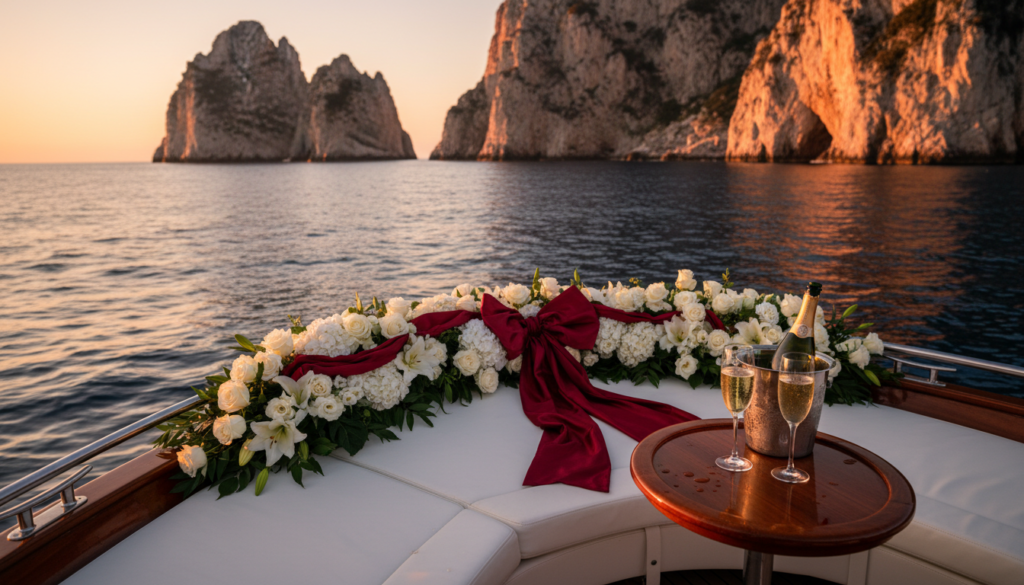
The launch idles offshore. The string ensemble shifts into the processional. On the terrace, ninety faces turn toward the water. The skipper eases forward — slowly, the wake almost nothing — and the polished mahogany hull catches the light as it crosses the last stretch toward the stone landing. The bride stands. A hand is offered. She steps up onto the worn stone of a dock built two centuries ago for exactly this kind of entrance, and the whole shoreline seems to hold its breath.
That is ninety seconds. Everything in this article exists to protect them. And it is the reason we treat the boat not as transport but as the opening scene of the day — a piece of scenography in which the lake, the villa, and the vessel become characters around the couple.
Why a Curated Boat Element Outperforms a Self-Arranged Rental
A couple can, in theory, telephone a boat company and book a launch. What they cannot do from abroad, in another language, is align that vessel with a villa’s docking licence, the photographer’s light, the ceremony’s downbeat, the guests’ mobility, and a weather contingency held in parallel. The vessel is the easy part. The integration is the whole craft.
We curate the Lake Como wedding boat as one thread in a woven day. The skipper knows the photographer. The dock coordinator knows the celebrant. The backup driver knows the timeline. When every element is briefed to the same plan, the romance is free to be entirely unburdened — which is precisely the point of a luxury wedding on this lake. When you are ready to give your arrival the choreography it deserves, begin the conversation with our team.
Frequently Asked Questions
Are there noise restrictions that affect evening boat transfers on Lake Como?
Yes — several municipalities along the lake enforce noise ordinances that apply to vessels operating after a certain hour, typically from 22:00 onward, and some stretches near residential shorelines have earlier restrictions. We check the specific rules for your departure and arrival docks when building the timeline, and where an evening transfer is planned we confirm with the operator that engine and sound levels comply, so there is no last-minute adjustment on the night.
How is luggage handled for guests who arrive at the venue by boat?
Guests travelling by water should carry only what they need for the ceremony and reception; larger bags and suitcases are transferred by road vehicle in parallel, arriving at the venue or hotel before guests disembark. We brief guests in advance through the wedding information pack so nobody arrives at the dock with a rolling suitcase expecting to board a launch with it.
Is a wedding boat suitable for young children, and are there any age or safety restrictions?
Children are welcome on the larger covered cruisers, which offer stable decking, shade, and seating. Smaller classic launches are less suited to very young children or toddlers, and we advise parents accordingly when designing the guest transfer plan. Life jackets in children’s sizes are carried by all licensed operators, and we confirm this requirement with every crew before the day.
How early must a private wedding boat on Lake Como be reserved?
For central-basin landings during the May-to-September peak, we secure vessels and dock slots eight to twelve months ahead, as the established launches and prime landing times book out quickly. Off-peak dates allow shorter lead times, though early reservation always widens the choice of classic vessels.
What should guests wearing formal gowns or suits know about boarding at a public dock?
Public ferry landings are shared spaces, and boarding from them in formal attire requires careful management of crowds, step heights, and gangway angles. Where a public dock is the only option, we station a coordinator there to hold space, assist with gown trains and long hems, and ensure the boarding sequence is unhurried. For bridal arrivals we always prefer a private or semi-private landing stage precisely to avoid this exposure.
Can the boat be decorated with flowers to match the wedding design?
Yes — we dress the launch with arrangements coordinated to your overall floral scheme, secured so they hold against movement and breeze. The floral work on the vessel is quoted within your wider design budget rather than as a separate vessel charge.
Is a symbolic ceremony actually performed on the water permitted?
A symbolic blessing on board is possible on a stable, flat-decked vessel with a celebrant comfortable officiating afloat, though a legally binding civil ceremony must take place in an authorised venue ashore. We design the on-water moment as a symbolic centrepiece and handle the legal ceremony separately.
Can guests who feel seasick or anxious about water opt out gracefully?
Always. We build every boat element so that participation is an offering, not an obligation, with a discreet land alternative running in parallel for any guest who prefers it. Nobody is ever required to board, and the choice is managed quietly on the day.