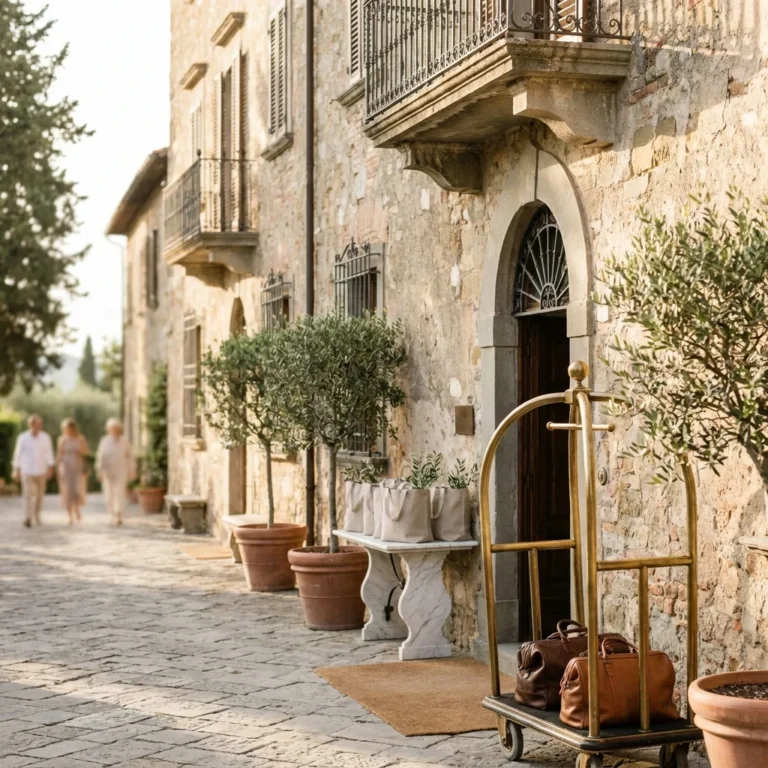
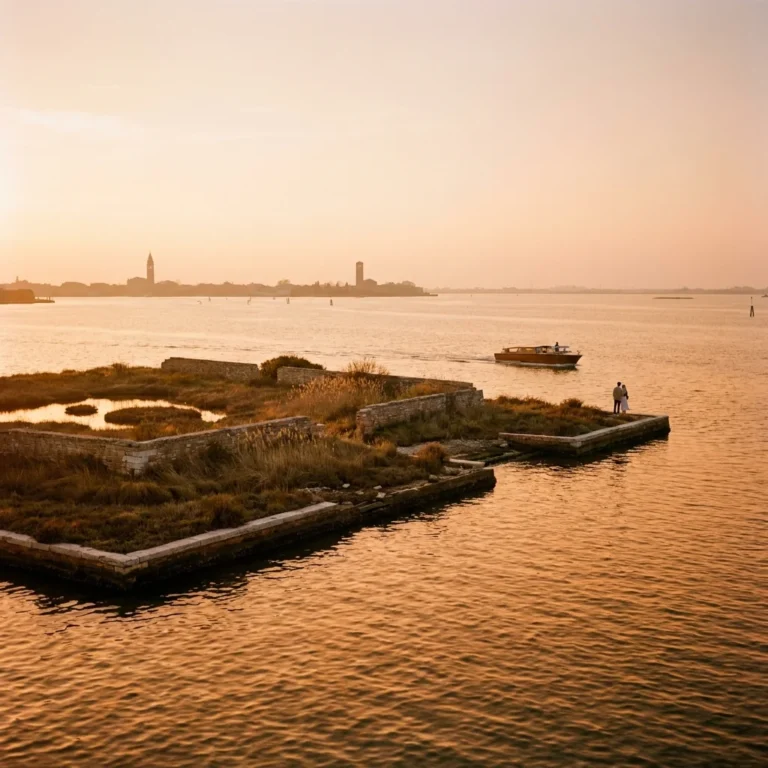
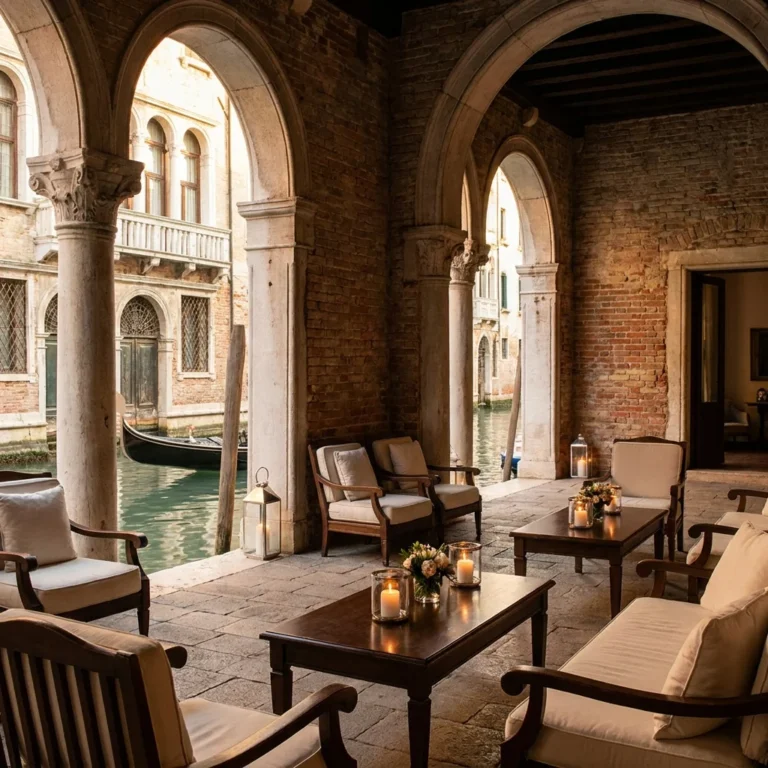
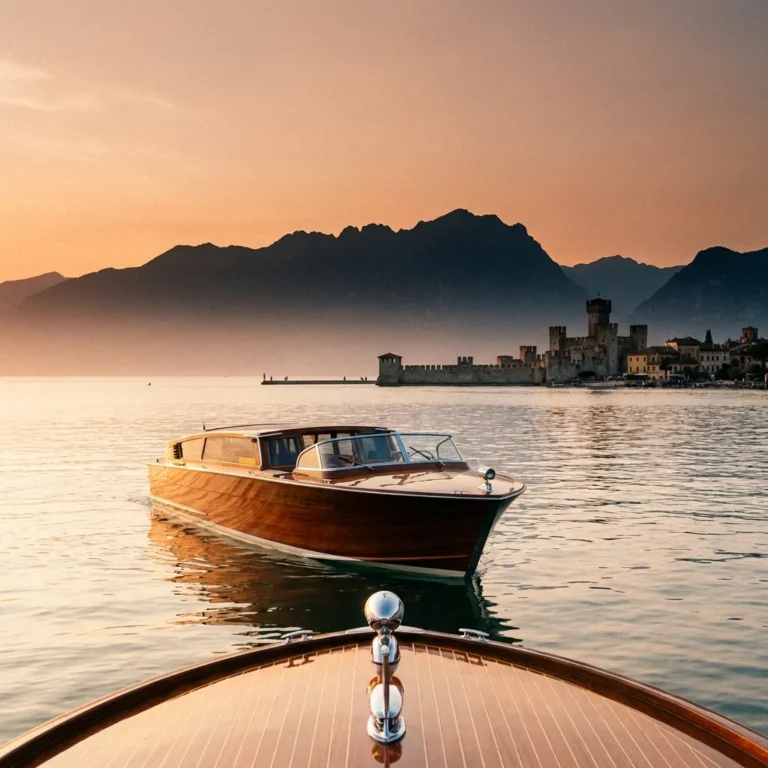
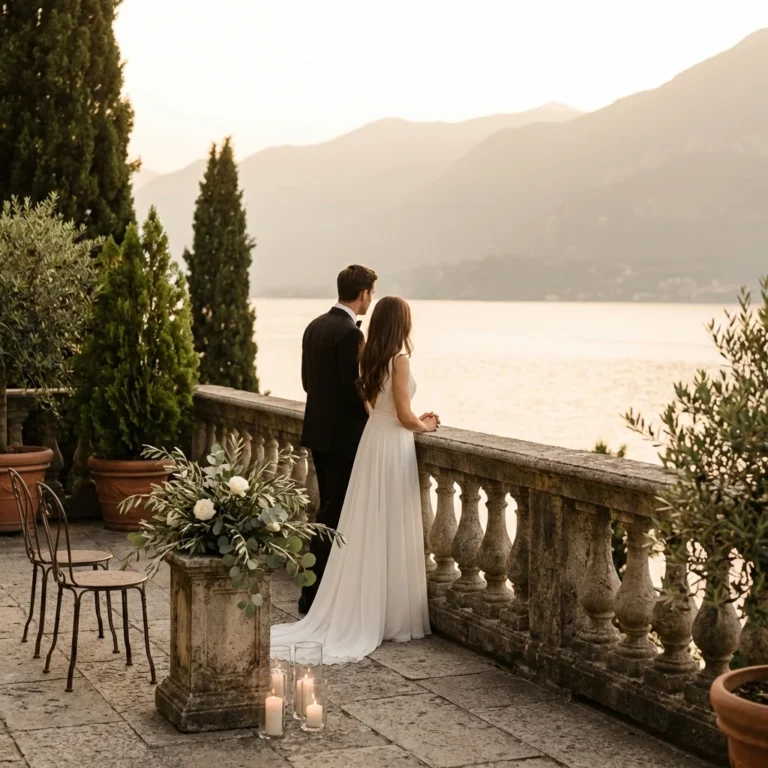
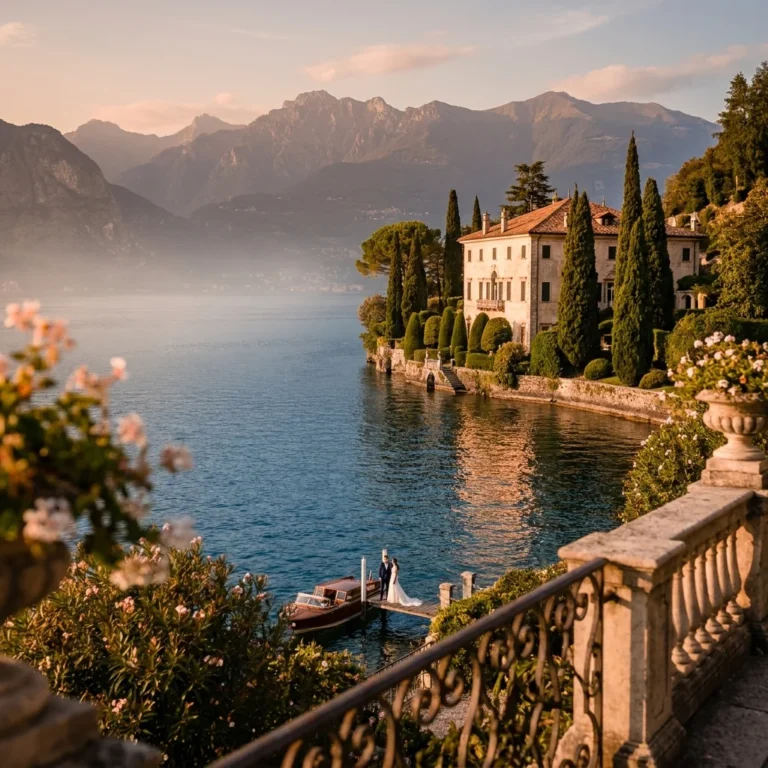
A rustic wedding in Italy costs between €45,000 and €180,000 for 80–120 guests, depending on whether you choose a Tuscan borgo, a Puglian masseria, or a converted castle with overnight accommodation. The term “rustic” spans a wide spectrum in Italy — from raw agricultural estates with limited infrastructure to meticulously restored Renaissance properties where exposed stone and olive groves meet climate-controlled interiors and professional-grade kitchens. Kiss Me Italy curates every rustic celebration along that spectrum, matching the right venue type and region to your comfort expectations, budget realities, and guest experience.
Rustic Wedding in Italy
Most couples searching for a rustic wedding in Italy begin with aesthetic inspiration — golden light through cypress alleys, long tables under pergolas, terracotta and linen. What they rarely see in those photographs is the three-hour transfer from the nearest international airport, the absence of air conditioning in a sixteenth-century granary during a July heatwave, or the 10:30 p.m. noise ordinance that ends the party before the first dance. These are not obstacles. They are decisions — and when they are made early, with the right guidance, the entire weekend feels effortless rather than improvised.
The Three Decisions That Determine Whether a Rustic Venue Actually Works for Your Guests
Before any venue shortlist takes shape, we ask every couple to resolve three structural questions. Each one eliminates roughly half the available properties in a given region, which is precisely the point. A refined shortlist of three is infinitely more useful than a directory of forty.
Decision one: on-site lodging. If your guest list exceeds 50 and you want everyone sleeping under the same roof — or at least within walking distance — you need an estate with a minimum of 25 rooms. In Tuscany’s Chianti zone, properties of that scale are rare and command exclusive-use fees of €15,000–€40,000 for a two-night minimum. In Puglia’s Valle d’Itria, comparable masserie often offer 30–40 rooms at lower rates, but international flight connections add complexity. The lodging question shapes everything: transport budgets, welcome-dinner logistics, morning-after brunch possibilities.
Decision two: noise curfew and music permits. Italian municipalities set their own acoustic limits. Some rural Tuscan comuni enforce a hard stop at 11 p.m. outdoors. Others permit amplified music until 1 a.m. with a sound-limiter installed. A handful of isolated estates — typically those more than 500 metres from the nearest residential structure — face no practical curfew at all. We verify the exact acoustic regulation for every property before it reaches your shortlist, because discovering a 10 p.m. outdoor limit after signing a contract is not a detail; it is the architecture of your evening collapsing.
Decision three: weather contingency. A rustic wedding in Italy almost always means an outdoor ceremony and dinner. “Almost always” is not a plan. We require every venue on our shortlist to offer a credible indoor alternative — not a cramped breakfast room hastily cleared, but a frescoed hall, a restored barn, or a covered loggia that seats your full guest count with dignity. The couples who plan for rain never feel they compromised; the couples who didn’t plan for it always do.
Once these three decisions are resolved, the aesthetic conversation begins — and it begins with architecture, not Pinterest boards. If you would like us to walk through these decisions with your specific guest count and season in mind, a brief conversation with our team is the most efficient starting point: reach out to Kiss Me Italy here.
What “Rustic” Actually Means in Italian Venue Architecture — and Why the Spectrum Matters
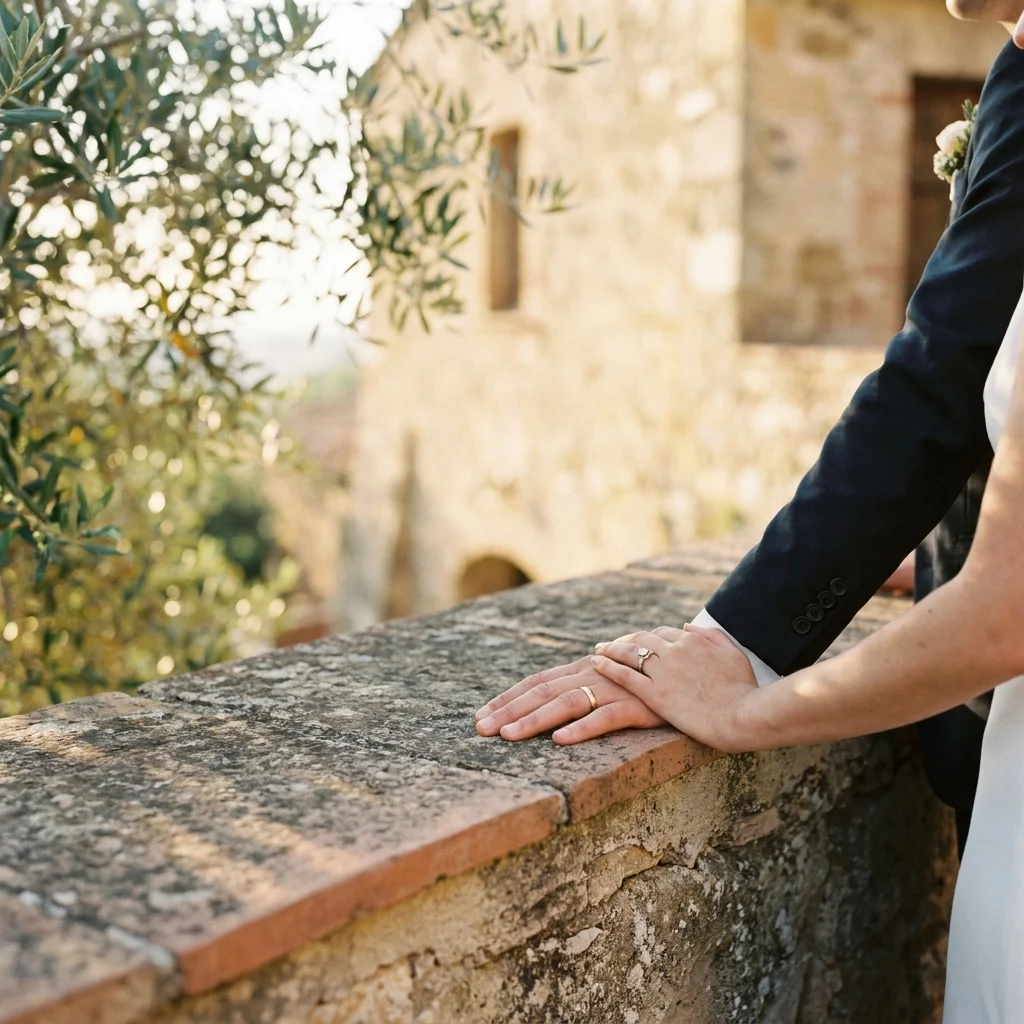
The word “rustico” in Italian architectural grammar refers to a building originally constructed for agricultural use: granaries, farmhouses, olive mills, tobacco-drying barns. Over the past three decades, thousands of these structures have been restored — but the degree of restoration varies enormously, and that variation determines your guest experience far more than any floral arrangement.
At one end of the spectrum sits the raw countryside estate. Stone walls are unplastered. Bedrooms are charming but compact. The kitchen may be adequate for a resident chef but not for a catering team serving 120. Wi-Fi is unreliable. Air conditioning, if present, covers only a few rooms. These properties photograph beautifully. They also require significant infrastructure investment on the day: external catering trucks, portable generators, rented restroom trailers, and shuttle buses from nearby hotels. That infrastructure is invisible in the final images — but it appears very clearly in the budget.
At the other end sits the refined rustic estate: originally built as a working farm, now operating as a boutique hospitality property with professional kitchens, climate control throughout, on-site event management, and rooms that meet four- or five-star standards. The stone, the olive groves, the cypress-lined approach — all present. But the comfort is contemporary. For couples whose guests include elderly relatives, families with young children, or anyone accustomed to hotel-level amenities, this end of the spectrum is where we typically begin.
Neither end is inherently superior. The question is fit. And fit requires honest conversation about who your guests are, what they expect, and how much logistical scaffolding you are willing to fund. Our role at Kiss Me Italy is to present that spectrum clearly, so the choice is yours — informed, not accidental. For a broader view of luxury wedding venues across Italy’s regions, our curated guide offers context beyond the rustic category alone.
Chianti and the Val d’Orcia: Why Tuscany Dominates the Rustic Wedding Imagination
Tuscany accounts for roughly 40% of all rustic wedding in Italy searches — and the reasons are architectural as much as aesthetic. The region’s rural building stock dates predominantly to the fourteenth through sixteenth centuries, when noble families and monastic orders commissioned farmsteads, watchtowers, and fortified hamlets across the rolling hills between Florence and Siena. Many of these structures survive in remarkably complete form, their medieval bones visible beneath careful modern restoration.
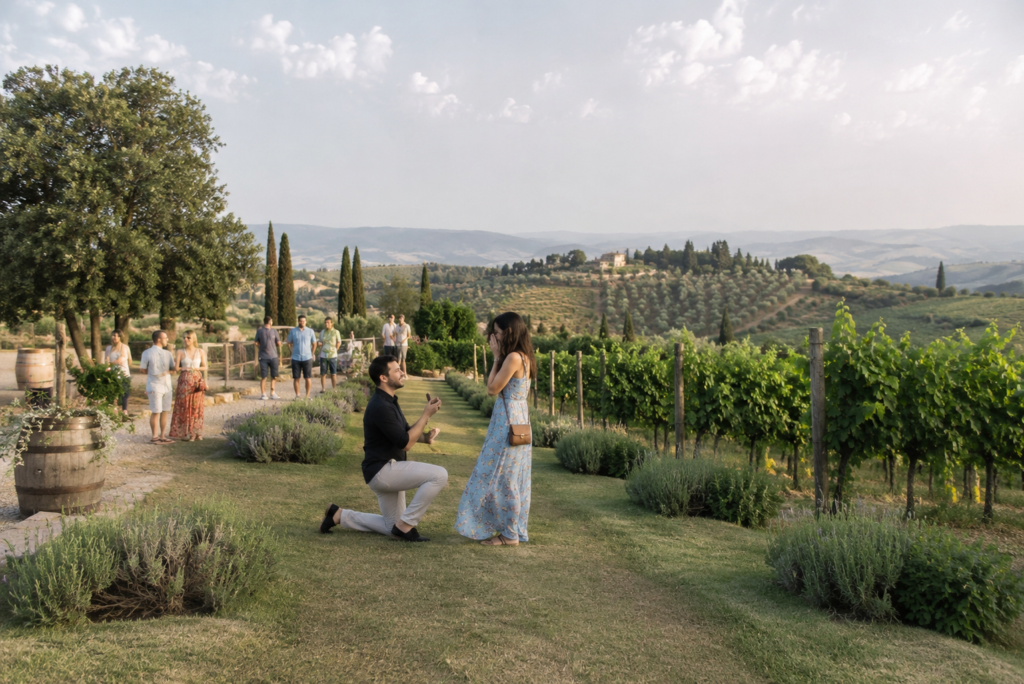
In the Chianti Classico zone, between Greve and Castellina, estates typically sit at 300–500 metres elevation. Summers are warm but not extreme; evening temperatures in late June drop to 18–22°C, which makes outdoor dining comfortable without elaborate cooling. The landscape — vineyards, olive groves, stone walls — provides a natural scenography that requires minimal decoration. A long table set beneath a pergola of wisteria, candlelight reflecting off rough-hewn stone, the Chianti hills dissolving into blue at dusk: this is the image that sells itself.
The Val d’Orcia, further south, offers a different architectural grammar. Properties here tend toward the grander: former monasteries, papal estates, Renaissance villas with formal gardens. The terrain is more dramatic — undulating clay hills, single cypress trees punctuating the horizon. It is cinematic in the most literal sense; Ridley Scott, Anthony Minghella, and Bernardo Bertolucci all filmed here. For couples who want rustic with a sense of epic scale, the Val d’Orcia delivers what Chianti’s more intimate valleys cannot.
Our detailed breakdown of what a Tuscany wedding typically costs addresses seasonal pricing, catering variables, and the real difference between a Chianti estate and a Val d’Orcia property in budgetary terms. For venue-specific guidance within the region, our Tuscany venue guide narrows the field further.
Puglia’s Masserie: Where Baroque Meets Agrarian Austerity — and Why Budgets Stretch Further
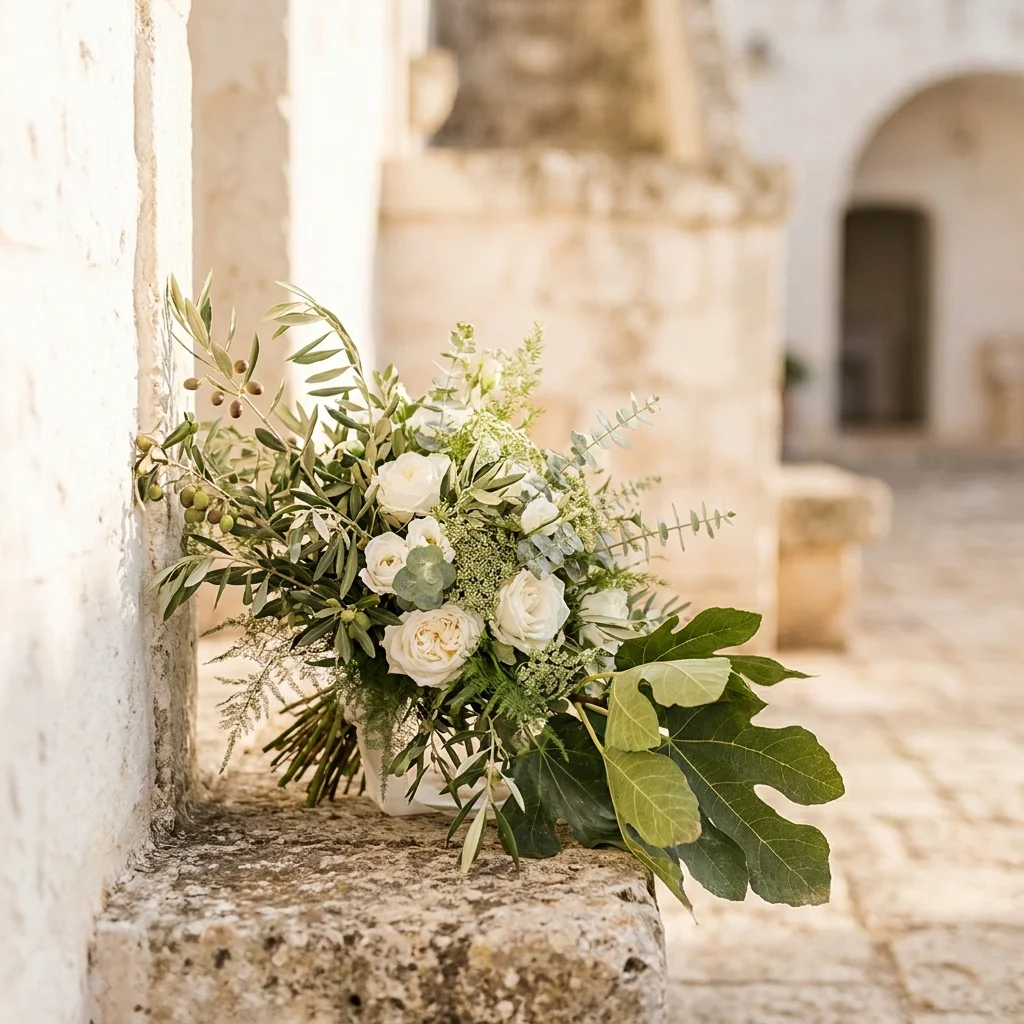
A masseria is, in its simplest definition, a fortified farmhouse of southern Italy. Most date to the seventeenth and eighteenth centuries, commissioned by Baroque-era landowners who needed both a working agricultural centre and a defensible retreat. The architectural result is distinctive: thick limestone walls, internal courtyards, watchtowers, flat roofs, and a luminous whiteness that reflects the Puglian sun rather than absorbing it.
For a rustic wedding in Italy, masserie offer several practical advantages over their Tuscan counterparts. Guest capacity tends to be higher — many converted masserie operate 30–50 rooms, enough to house an entire wedding party without external hotel transfers. Catering infrastructure is often more developed, because these properties function year-round as hospitality businesses rather than seasonal rental estates. And the cost of exclusive use, while significant, generally runs 20–30% below equivalent Tuscan properties for comparable room counts.
The trade-off is access. Bari Karol Wojtyła Airport receives international flights, but connections from the US typically require a layover in Rome or Milan. From the airport, the Itria Valley is a 60–90 minute drive; the Salento coast, 90–120 minutes. We manage these transfers end-to-end, coordinating arrival times across multiple flights so that no guest waits alone at an airport. The logistical complexity is ours to absorb, not yours to worry about.
Climate is another consideration. July and August in Puglia routinely exceed 35°C. We strongly recommend late May, June, or September for outdoor celebrations — and we ensure every masseria on our shortlist has a fully enclosed, air-conditioned reception space capable of seating the full guest count. A Puglian evening in September, with warm air carrying the scent of fig trees and the sound of cicadas fading as dinner begins, is one of the most atmospheric settings in the entire Mediterranean.
Umbria and Northern Lazio: The Borghi That International Couples Rarely Find on Their Own
Between the well-trodden paths of Tuscany and the southern allure of Puglia lies a corridor of medieval hilltop villages — borghi — that represent some of Italy’s most compelling rustic wedding venues. Umbria, often called “the green heart of Italy,” and the northern reaches of Lazio, approaching the Orvieto plateau, contain dozens of restored hamlet-estates where entire stone villages have been converted into single hospitality properties.
A borgo wedding in Italy offers something no standalone villa or masseria can: the feeling of an entire village dedicated to your celebration. Guests wander cobblestone paths between their rooms and the piazzetta where aperitivo is served. The ceremony takes place in a deconsecrated chapel originally built in the twelfth century. Dinner unfolds in what was once the communal threshing floor, now a terrace overlooking the Tiber valley.
These properties are rarely featured on major wedding blogs, partly because they invest minimally in international marketing and partly because their charm resists the flat aesthetics of Instagram. They are discovered through local networks, architectural knowledge, and years of scouting — which is precisely the value our team provides. If you are drawn to the borgo concept, a conversation with Kiss Me Italy will surface options that no amount of online searching will reveal.
Umbrian borghi also carry a practical advantage: proximity to Rome. Fiumicino Airport is 90–120 minutes from most Umbrian wedding venues, making guest logistics significantly more manageable than remote Tuscan or Puglian properties. For couples whose legal ceremony will take place in Italy, the municipal offices in smaller Umbrian comuni tend to be less backlogged than those in Florence or Rome, which can simplify the paperwork timeline.
What a Rustic Wedding in Italy Actually Costs — Venue by Venue Type
Pricing a rustic Italian countryside wedding requires separating the venue fee from the production budget. The venue fee — exclusive use of the property, guest rooms, and basic infrastructure — is one line item. The production budget — catering, florals, music, photography, lighting, transport, and coordination — is everything else. Most published “all-inclusive” prices bundle these together, which makes comparison nearly impossible unless you know exactly what is included.
A well-documented Tuscan castle-estate near Arezzo exemplifies the category: a property recorded since the eleventh century, restored with contemporary comfort, and operating as an exclusive-use wedding venue with published package pricing in the €60,000+ range for a two-night exclusive-use stay at smaller capacities. These figures can include rooms, meals, and basic event coordination — while photography, videography, florals beyond a standard arrangement, live music, and additional transport are typically quoted separately. It is a useful benchmark, but it represents one specific property at one specific scale.
Below, we present indicative ranges across three venue types. These reflect 2025–2026 market conditions for peak season (May–October) and are based on our direct contracting experience.
| Venue Type | Exclusive-Use Fee (2–3 nights) | Typical Guest Rooms | What’s Included | Quoted Separately |
|---|---|---|---|---|
| Tuscan borgo or estate (Chianti / Val d’Orcia) | €15,000–€45,000 | 15–30 rooms | Accommodation, common areas, grounds access, basic furniture | Catering, bar, florals, music, photography, lighting, transport, permits, VAT (IVA 22%) |
| Puglian masseria (Itria Valley / Salento) | €10,000–€35,000 | 20–50 rooms | Accommodation, pool, common areas, often includes welcome dinner catering | Wedding-day catering, florals, music, photography, lighting, transport, permits, VAT (IVA 22%) |
| Umbrian / Lazio borgo | €8,000–€30,000 | 10–25 rooms | Accommodation, chapel or ceremony space, grounds | All production: catering, bar, florals, music, photography, lighting, transport, permits, VAT (IVA 22%) |
Indicative ranges. Contact Kiss Me Italy for a personalized proposal.
The production budget — everything beyond the venue fee — is where the real variation occurs. Below is a breakdown of major production categories for a rustic wedding in Italy with 80–100 guests.
| Category | Typical Range (80–100 guests) | Included in Range | Quoted Separately |
|---|---|---|---|
| Catering & bar | €18,000–€40,000 | Welcome dinner, wedding-day aperitivo, seated dinner, open bar, late-night snack; staffing and tableware | Wine upgrades beyond house selection, specialty cocktail bars, VAT (IVA 22%) |
| Photography | €4,500–€9,000 | Full-day coverage, single shooter, travel within region, digital gallery delivery | Second shooter (+€1,200–€2,500), albums and prints, engagement session, photographer accommodation if venue is remote, post-production rush delivery |
| Videography | €5,000–€12,000 | Full-day coverage, highlight film (3–5 min), travel within region | Feature-length edit, drone footage (permit-dependent), second operator, raw footage delivery, VAT (IVA 22%) |
| Florals & décor | €6,000–€18,000 | Ceremony arch or installation, bridal bouquet, 2 bridesmaids’ bouquets, table centrepieces, venue entrance arrangement | Additional installations, hanging florals, aisle décor, boutonnieres beyond groom, delivery to remote venues, breakdown/cleanup |
| Live music & DJ | €3,000–€8,000 | Ceremony musicians (duo or trio), DJ for reception (4–5 hours), sound system | Full band, additional hours, generator rental for off-grid venues, SIAE music licensing fees, VAT (IVA 22%) |
Indicative ranges. Contact Kiss Me Italy for a personalized proposal.
For a comprehensive view of how these costs compare to other Italian regions — including the Amalfi Coast, Venice, and Lake Como — our guide to what a wedding in Italy actually costs provides the broader context. Couples considering a Tuscan celebration specifically will find our Tuscany cost breakdown useful for benchmarking.
What Your Guests Actually Experience: The Multi-Day Arc We Design and Manage
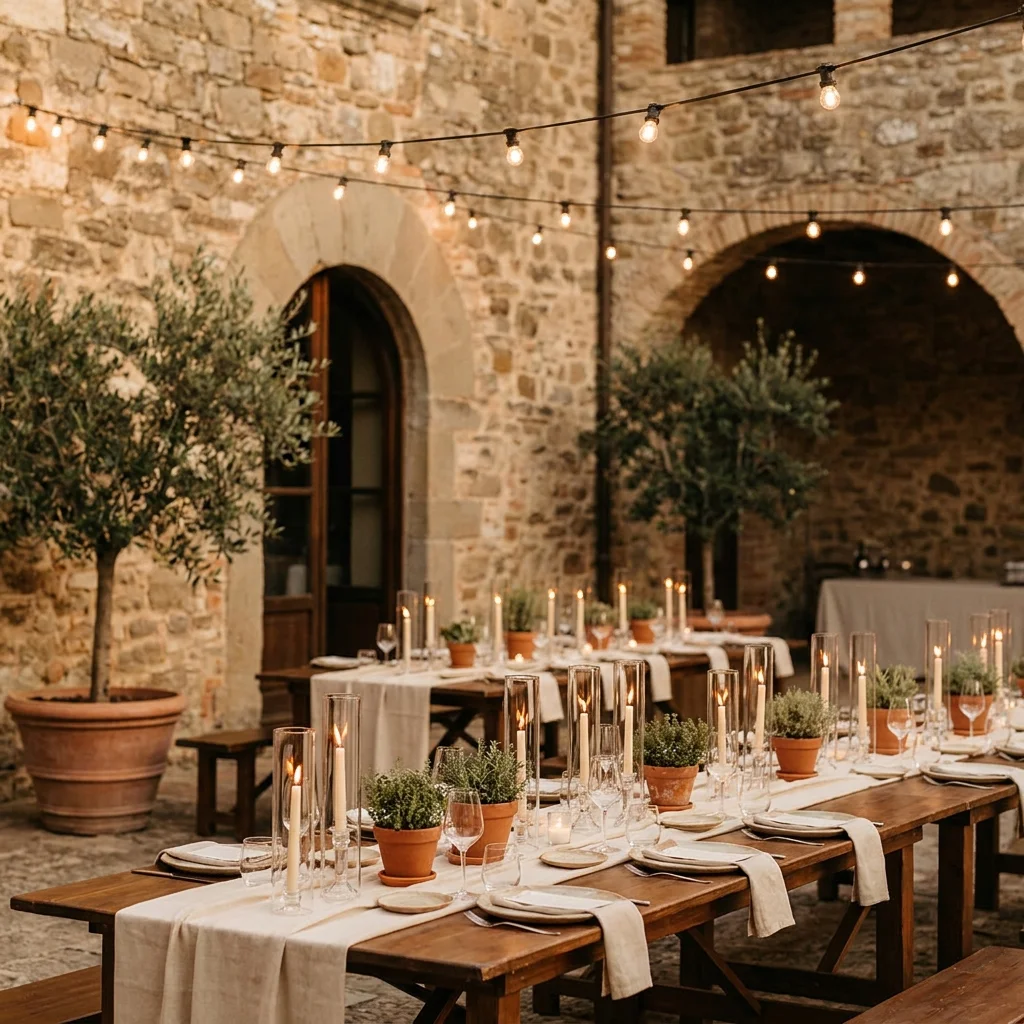
A rustic wedding in Italy is never a single evening. It is a weekend — sometimes three days — and the guest experience across that arc determines whether your celebration feels curated or chaotic. Here is the journey we design, stage by stage.
Arrival and transfer. Guests land at different times, on different airlines, at different airports. We build a transfer matrix — not a single shuttle, but a staggered schedule of private vehicles that collects each group within 30 minutes of landing and delivers them to the estate. No one waits. No one navigates rural roads with a rental car and a dying phone battery.
Welcome evening. The night before the wedding is not a rehearsal dinner in the American sense; it is an Italian welcome — relaxed, abundant, informal. At a Puglian masseria, this might be a seafood grill around the pool. At a Tuscan borgo, a long-table dinner in the courtyard with local salumi, handmade pici, and wines from the estate’s own vineyard. Our guide to Italian wedding menu ideas explores how regional cuisine shapes each course.
Wedding day: ceremony. In a countryside setting, the ceremony typically takes place outdoors — a garden terrace, an olive grove, a hilltop clearing with panoramic views. We position the altar so that the late-afternoon light falls on the couple’s faces rather than in their eyes, a detail that matters enormously for photography and for the emotional quality of the moment. For guidance on choosing the right person to lead your ceremony, our overview of wedding officiants in Italy covers legal, symbolic, and religious options. See also: forest wedding venues in Italy.
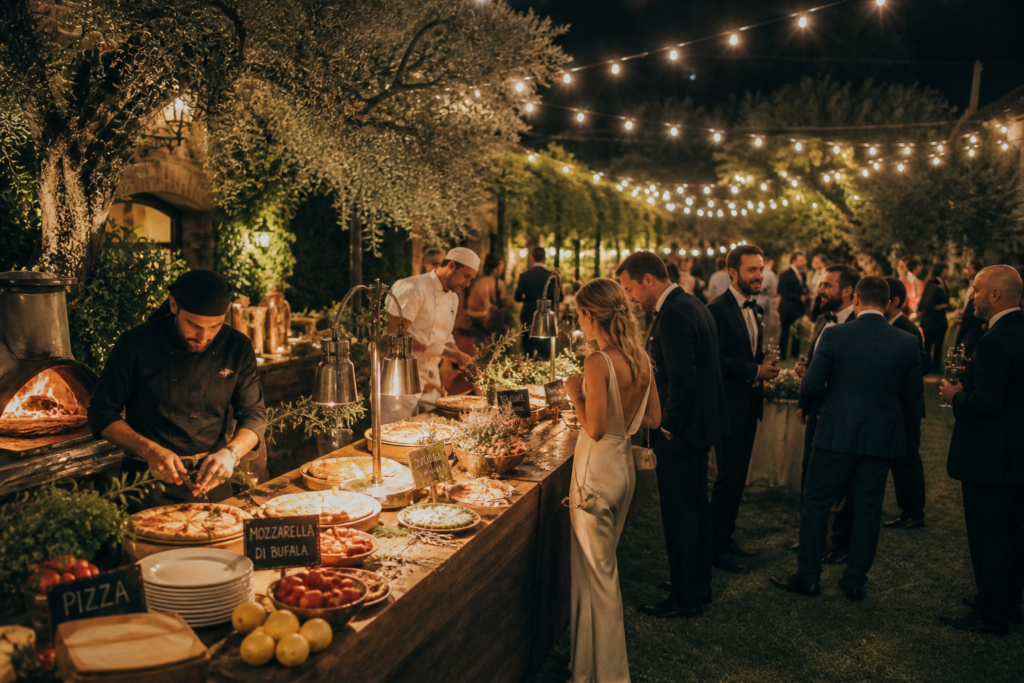
Aperitivo. The transition from ceremony to dinner is not a gap to fill; it is a scene in itself. Guests move to a different area of the estate — a walled garden, a pool terrace, a frescoed loggia — where cocktails, canapés, and live acoustic music create a distinct atmosphere. This is where the scenography of the venue earns its investment: the golden hour light, the ancient stone, the first glass of Franciacorta.
Dinner and celebration. Long tables, candlelight, courses that unfold over two to three hours. The traditional Italian wedding food sequence — antipasto, primo, secondo, dolce — is not a rigid formula but a rhythm we adapt to each couple’s preferences and their guests’ dietary landscape. After dinner, the party begins: DJ, dancing, a late-night station of local street food. At venues without curfew constraints, this continues until 2 or 3 a.m.
Morning after. A leisurely brunch at the estate, goodbyes over espresso, and coordinated transfers back to the airport. The weekend closes as it opened: managed, calm, unhurried.
Heat, Wi-Fi, and Gravel Roads: The Comfort Realities We Solve Before You Arrive
This section is deliberately practical. Rustic venues, by definition, sit outside urban infrastructure. That distance is the source of their beauty — and the source of logistical challenges that must be anticipated, not discovered.
Heat management. Interior Tuscany and Puglia can exceed 38°C in July and August. We do not recommend outdoor ceremonies between noon and 4 p.m. in those months. For summer celebrations, we schedule ceremonies at 5:30 p.m. or later and ensure that all pre-ceremony preparation spaces are air-conditioned. Portable cooling units are specified in our production plans for any outdoor dining area where ambient temperature may exceed 30°C at sunset.
Connectivity. Many rural estates have limited or unreliable Wi-Fi. For guests who need connectivity — and for vendors who rely on cloud-based tools — we arrange temporary mobile signal boosters and dedicated Wi-Fi hotspots. This is a line item in our production budget, not an afterthought.
Access roads. Unpaved roads, narrow lanes, and steep gradients are common approaches to countryside estates. We conduct a site visit specifically to assess vehicle access, confirming that catering trucks, guest shuttles, and emergency vehicles can navigate the route safely. For properties with particularly challenging access, we arrange smaller transfer vehicles and stage larger deliveries the day before.
Restroom capacity. Historic properties were not designed for 120 guests. We calculate restroom requirements based on guest count and supplement the venue’s facilities with luxury portable units — climate-controlled, fully plumbed, and finished to a standard that guests will not distinguish from permanent fixtures.
None of these details is glamorous. All of them are essential. And all of them are managed by our production team long before your first guest arrives. Couples who want to understand the broader seasonal calendar for Italian weddings — including how climate patterns vary by month and region — will find our dedicated guide invaluable for choosing the right dates.
Castle Wedding Venues in Rural Italy: When Medieval Architecture Becomes the Centrepiece
Italy contains more castles than any other country in Europe — an estimated 45,000, of which several hundred are licensed for private events. A castle wedding venue in Italy occupies a particular place on the rustic spectrum: the setting is undeniably countryside, but the architecture carries a grandeur that elevates the celebration beyond farmhouse charm.
The most compelling castle venues for weddings share three qualities. First, they retain significant original fabric — medieval walls, Renaissance-era courtyards, Baroque additions — rather than being nineteenth-century reconstructions dressed in historical costume. Second, they offer sufficient indoor space for a full reception, which means a great hall, a ballroom, or a series of interconnected rooms that can seat 80–150 guests. Third, they provide overnight accommodation, either within the castle itself or in converted outbuildings on the estate.
A well-documented Tuscan castle-estate near Arezzo exemplifies the category: a property recorded since the eleventh century, restored with contemporary comfort, and operating as an exclusive-use wedding venue with published package pricing. But it is one of hundreds. In Umbria, near Todi, a thirteenth-century fortress originally built to guard a river crossing now hosts only a limited number of weddings per year, its chapel seating around 80 beneath vaulted ceilings. In Piedmont, a countryside castle with Savoy-era heritage offers ceremony spaces in both its medieval tower and its eighteenth-century garden wing.
We do not present castle venues as a generic category. Each one is a character — with a history, an architectural personality, and a set of practical constraints that must be understood before any contract is signed. For couples drawn to the idea of a castle celebration beyond the rustic context, our 2026 venue guide includes castle properties across multiple regions.
The Agriturismo Option: Why Working Farms Offer Authenticity That Restored Estates Cannot
An agriturismo — a working agricultural property licensed to receive guests — represents the most genuinely rustic option for a countryside wedding in Italy. These are not museum properties. They produce wine, olive oil, cheese, or grain. The animals are real. The harvest calendar shapes the property’s rhythms. And the food served at your wedding may include ingredients grown within sight of your dinner table.
The trade-off is infrastructure. Agriturismi typically offer 8–15 rooms, which means supplementary hotel accommodation for larger guest lists. Event spaces may be informal: a courtyard, a barn, a terrace. Catering is often handled by the property’s own kitchen, which limits menu flexibility but guarantees an authenticity that no external caterer can replicate.
For intimate celebrations of 30–60 guests — what we often describe as a micro wedding in Italy — an agriturismo can be the ideal vessel. The scale is human. The setting is honest. And the experience your guests carry home is not of a “wedding venue” but of a place — a real, working, living place where a celebration happened to unfold.
We scout agriturismi personally, evaluating not only the physical space but the temperament of the owners, the quality of the kitchen, and the willingness to accommodate the production requirements of a curated event. Not every working farm welcomes a wedding. The ones that do, and do it well, are among the most memorable venues in our portfolio.
Why Rustic Venues Demand a Different Photographic Approach — and How We Brief the Team
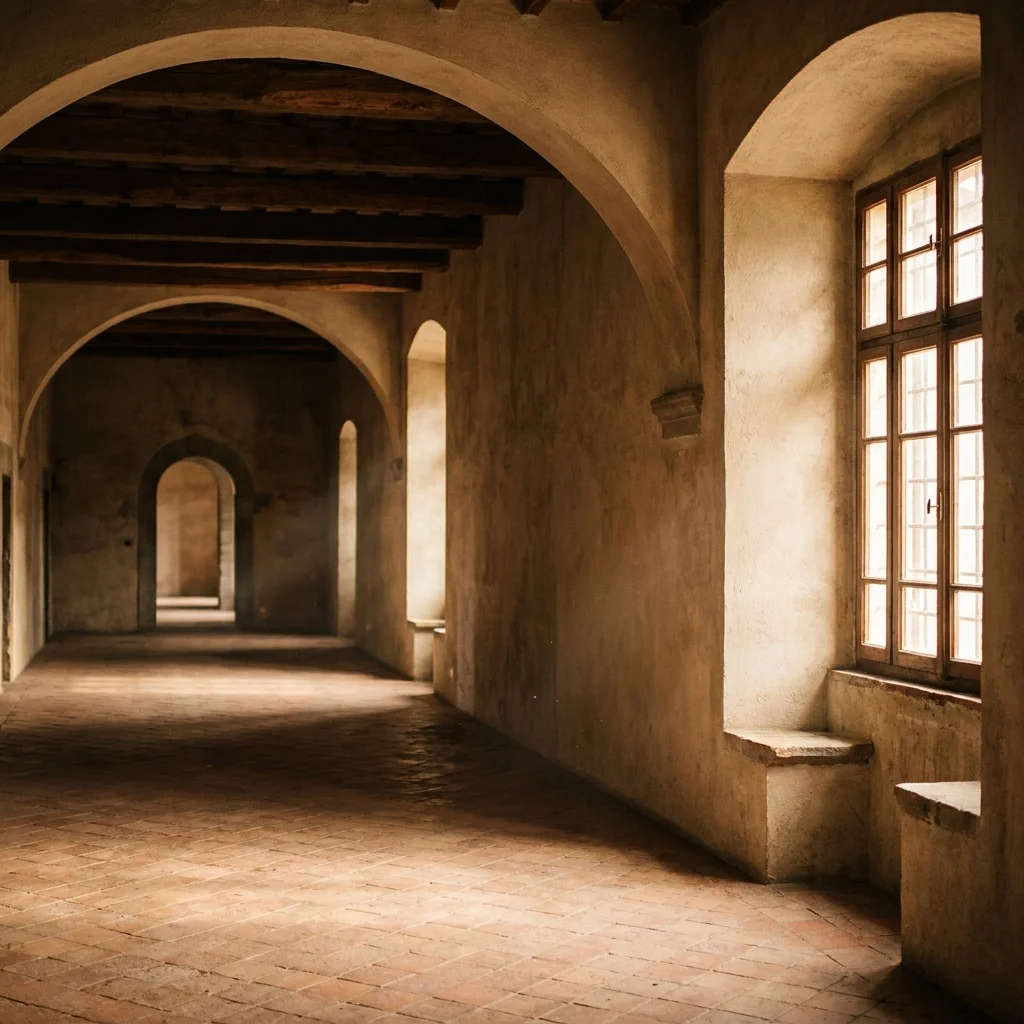
The light inside a sixteenth-century stone farmhouse behaves nothing like the light in a modern hotel ballroom. It enters through small, deep-set windows. It pools on terracotta floors. It creates contrasts that challenge auto-exposure and reward photographers who understand how to work with shadow rather than against it.
For every rustic wedding in Italy, our team conducts a photographic site survey — typically during the same season and time of day as the planned celebration. We document the light conditions in every key space: the preparation room, the ceremony site, the aperitivo terrace, the dinner area. This survey becomes a brief that we share with the photographer and videographer, ensuring they arrive not just with the right equipment but with a spatial understanding of where the light will be at each moment of the day.
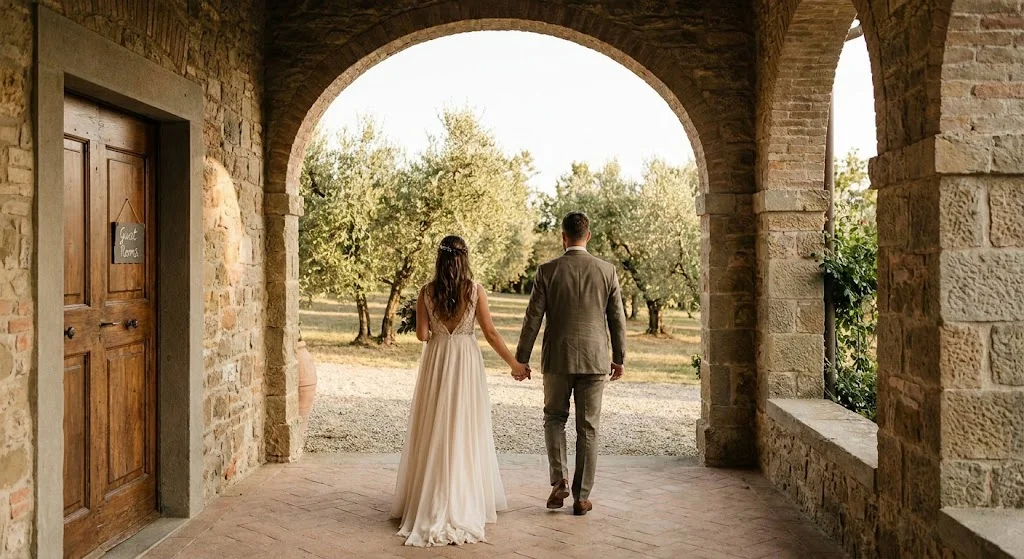
Rustic settings also reward a specific editorial style: natural light, minimal flash, wide compositions that include the architecture as a narrative element. The couple becomes part of the landscape rather than isolated from it. Silhouettes in doorways. A hand trailing along a stone wall. The long table seen from above, candles flickering against the darkening sky. This is the imagery that defines a countryside celebration — and it requires a photographer who has worked in these environments before.
Our curated approach to wedding photography in Italy ensures that the visual team is not merely talented but specifically matched to the venue’s character. For couples planning a Tuscan celebration with a strong cinematic vision, our Tuscany videography guide addresses film style, equipment, and the coordination between still and motion teams.
Villa Wedding or Rustic Estate: How to Know Which Category Fits Your Vision
The line between a villa wedding in Italy and a rustic estate wedding is not always obvious — and the confusion costs couples time. Here is the distinction as we draw it.
A villa, in Italian architectural tradition, is a residence designed for leisure and display. It has formal gardens, symmetrical facades, reception rooms scaled for entertaining. A rustic estate — whether borgo, masseria, agriturismo, or converted castle — was originally built for work: agriculture, defence, monastic life. The bones are different. The proportions are different. The emotional register is different.
Villas tend to suit couples who want elegance as the dominant note, with the countryside as a backdrop. Rustic estates suit couples who want the countryside itself — the texture of stone, the imperfection of ancient walls, the intimacy of spaces designed for living rather than performing — as the dominant note, with elegance layered in through design, lighting, and curation.
Neither is better. But choosing the wrong category leads to a celebration that feels slightly off — too polished for the setting, or too rough for the guest experience. We help couples navigate this distinction early, often during the first consultation, so that every venue we present is already aligned with their instinct.
The Countryside Is Not a Backdrop — It Is the Architecture of Your Celebration
A rustic wedding in Italy, done well, is not a theme applied to a neutral space. It is a collaboration with centuries of architectural history — with the stone, the land, the light, and the rhythms of a place that existed long before your celebration and will endure long after. The role of our team is to ensure that collaboration is harmonious: that the venue’s character and your vision reinforce each other at every turn.
From the first conversation about lodging capacity and noise curfews to the final morning-after brunch, Kiss Me Italy’s bespoke approach treats the venue as a character in your story — not merely a location pin on a map. Every logistical decision, every design choice, every coordination step serves a single purpose: to let the countryside speak, while ensuring your guests hear only beauty, never friction.
If you are beginning to imagine your own rustic celebration in Italy — or if you have already started and feel the complexity mounting — we welcome the conversation. Contact Kiss Me Italy to begin.
Frequently Asked Questions About Rustic Weddings in Italy
Can we hold a legal civil ceremony at a rural estate, or must we marry at a town hall?
Italian law requires civil ceremonies to take place in a location authorized by the local comune. Some rural estates have obtained this authorization, but many have not — in which case the legal ceremony occurs at the nearest municipal office (often a brief, private formality), and the symbolic celebration takes place at the venue. We confirm the legal status of every property before it reaches your shortlist.
How far in advance should we book a rustic venue for peak season?
For June through September dates, the most sought-after Tuscan and Puglian estates book 14–18 months in advance. Umbrian borghi and lesser-known properties may have availability at 10–12 months. We recommend beginning the venue conversation at least 15 months before your preferred date to ensure a meaningful shortlist.
Is it possible to use our own caterer instead of the venue’s in-house kitchen?
Some estates — particularly agriturismi — require the use of their own kitchen and chef as a condition of the rental contract. Others permit external catering but may charge a kitchen-use fee (typically €1,500–€4,000). We negotiate these terms during the contracting phase and present only options that align with your culinary vision.
What happens if severe weather forces the entire celebration indoors?
Every venue on our shortlist includes a credible indoor alternative that seats your full guest count. We develop a complete “Plan B” layout — including furniture placement, lighting adjustments, and revised ceremony positioning — so that the indoor version of your celebration feels intentional, not improvised. The decision to move indoors is made by our on-site coordinator, typically by early afternoon on the wedding day.
Are there additional municipal permits required for outdoor music at a rural property?
Yes. Most Italian comuni require a SCIA or equivalent notification for amplified outdoor music, and some mandate the installation of a sound-level limiter (limitatore acustico). The SIAE license for copyrighted music is a separate requirement. Our team files all necessary permits and coordinates equipment installation as part of the production plan.
Historic properties often have uneven surfaces, steps, and gravel paths. When accessibility is a concern, we prioritize venues with ground-floor ceremony and dining spaces, paved pathways, and accessible restroom facilities. We also arrange golf-cart transfers within larger estates to ensure every guest can move between spaces without difficulty.
Do rustic venues in Italy typically include tables, chairs, and linens, or must we rent everything?
It varies significantly. Established wedding estates often include wooden farm tables, cross-back chairs, and basic linen as part of the venue fee. Working agriturismi and less-developed properties may provide nothing beyond the space itself, requiring full rental of furniture, tableware, and linens — a cost that typically ranges from €4,000 to €12,000 depending on guest count and design specifications.
Is VAT (IVA) included in the venue prices we see quoted online?
In most cases, no. Italian VAT (IVA) is 22% on event services and 10% on accommodation. Published venue prices frequently exclude IVA, which can add a substantial amount to the final invoice. We present all costs inclusive of applicable taxes so there are no surprises at settlement.
What is the typical minimum stay requirement for exclusive-use rustic venues?
Most exclusive-use estates in Tuscany, Puglia, and Umbria require a minimum booking of two nights (Friday–Sunday), with some premium properties requiring a full week during peak season (late June through mid-September). We negotiate stay requirements as part of the contracting process and can often secure three-night minimums even at properties that typically require a week.
Related on the Kiss Me Italy blog: Lake Como Elopement Photography: Curated Talent, Calm Direction, Beautiful Light.