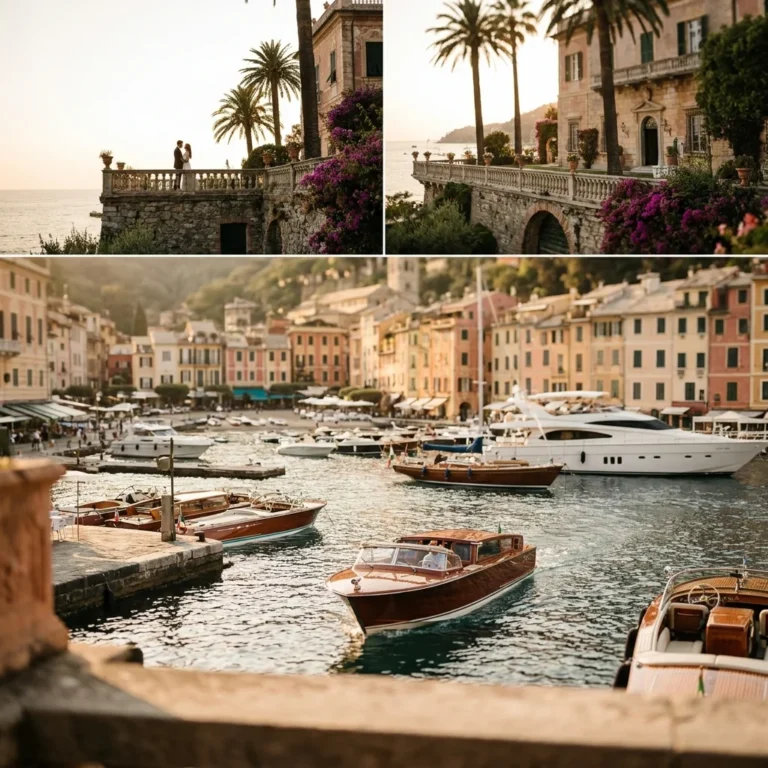
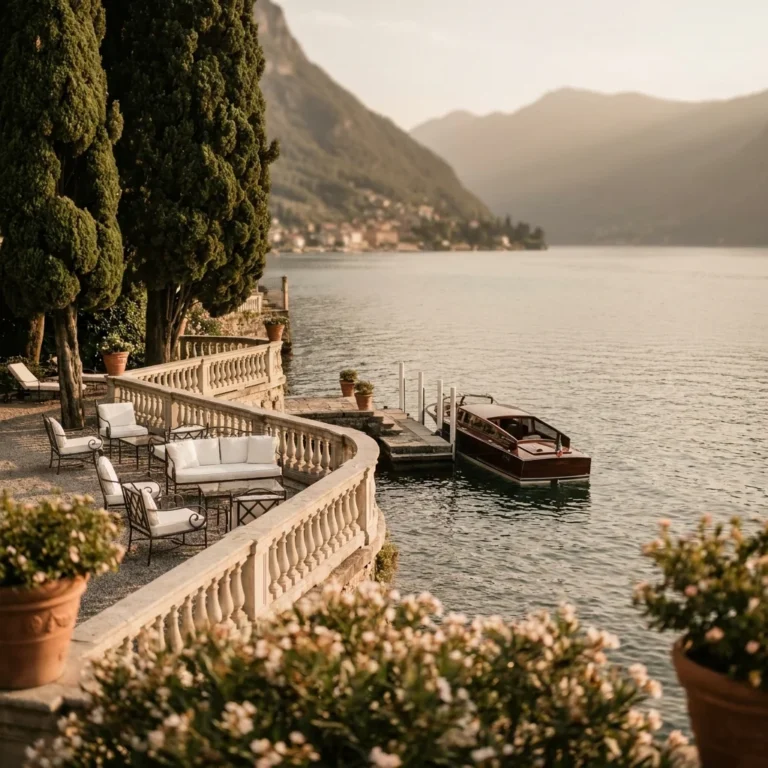
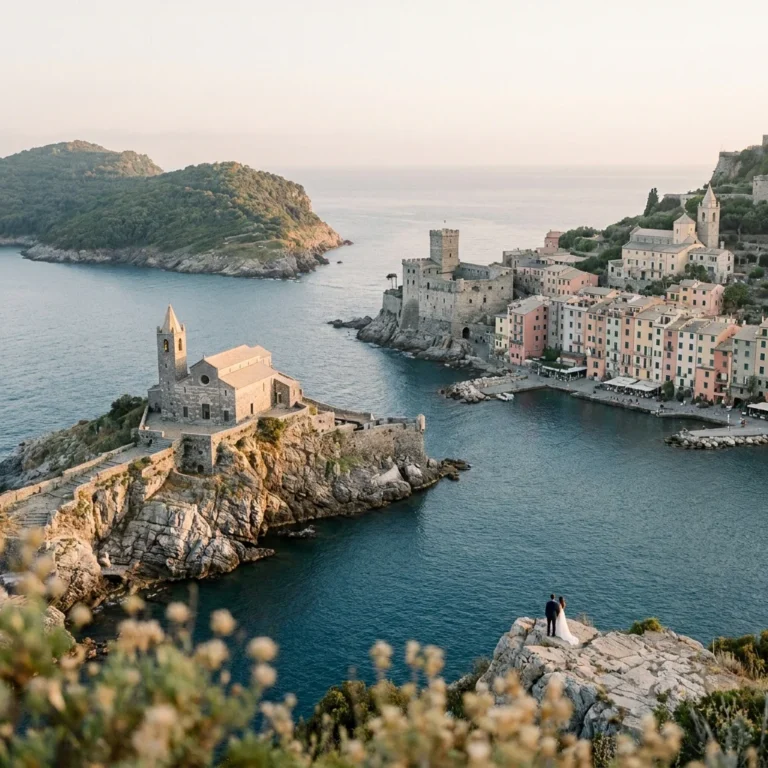
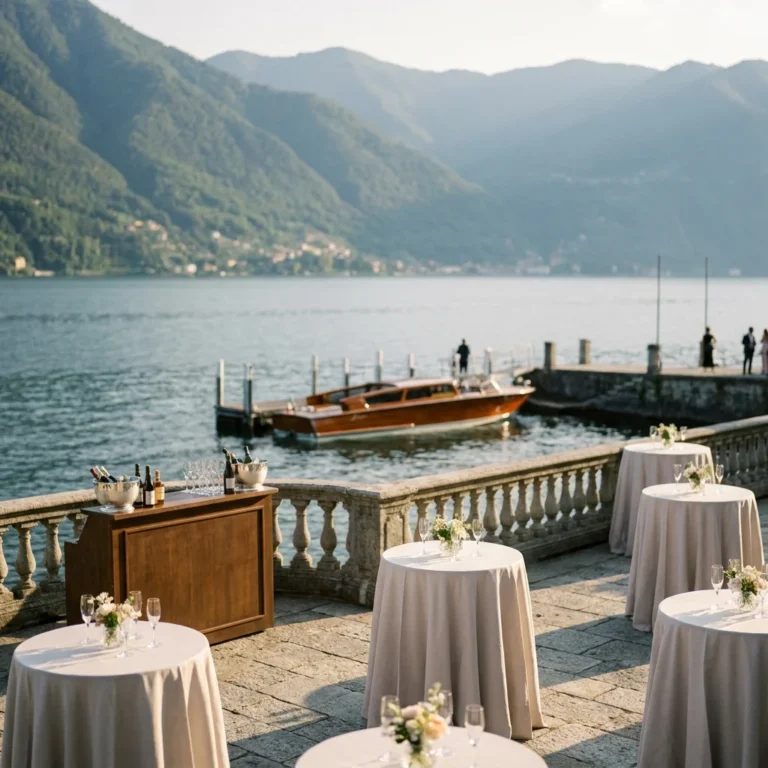
An Italian Renaissance wedding theme translates the art, proportion, and material richness of 15th- and 16th-century Italy into a modern, editorial celebration — using seasonal botanicals, period-informed textiles, and historically resonant venues rather than theatrical costumes. When curated at a luxury level in Italy by Kiss Me Italy, this theme typically ranges from €60,000 to €250,000+ for 80–150 guests, depending on venue exclusivity, custom stationery, textile design, and floral volume. The result is a celebration that feels rooted in art history yet entirely contemporary.
Italian Renaissance Wedding Theme
Most couples arrive at the idea of a Renaissance-inspired wedding in Italy with a folder of Botticelli references and Palazzo Pitti interiors — and then discover that the distance between a Pinterest moodboard and a guest-ready celebration is enormous. The challenge is not finding inspiration; it is editing it. A cassone panel, a Ghirlandaio fresco, a bolt of Venetian silk damask — each suggests a different century, a different region, a different emotional register. Without a design framework that connects those references to a specific venue, a specific season, and a specific quality of Italian light, the result risks reading as a Renaissance fair rather than a refined wedding. This is the tension we resolve. We translate art-historical references into a coherent sensory experience — one that photographs beautifully, feels luxurious to inhabit, and never asks your guests to pretend they have traveled back in time.
Why Your First Renaissance Reference Image Tells Us More Than You Think — The Initial Inquiry
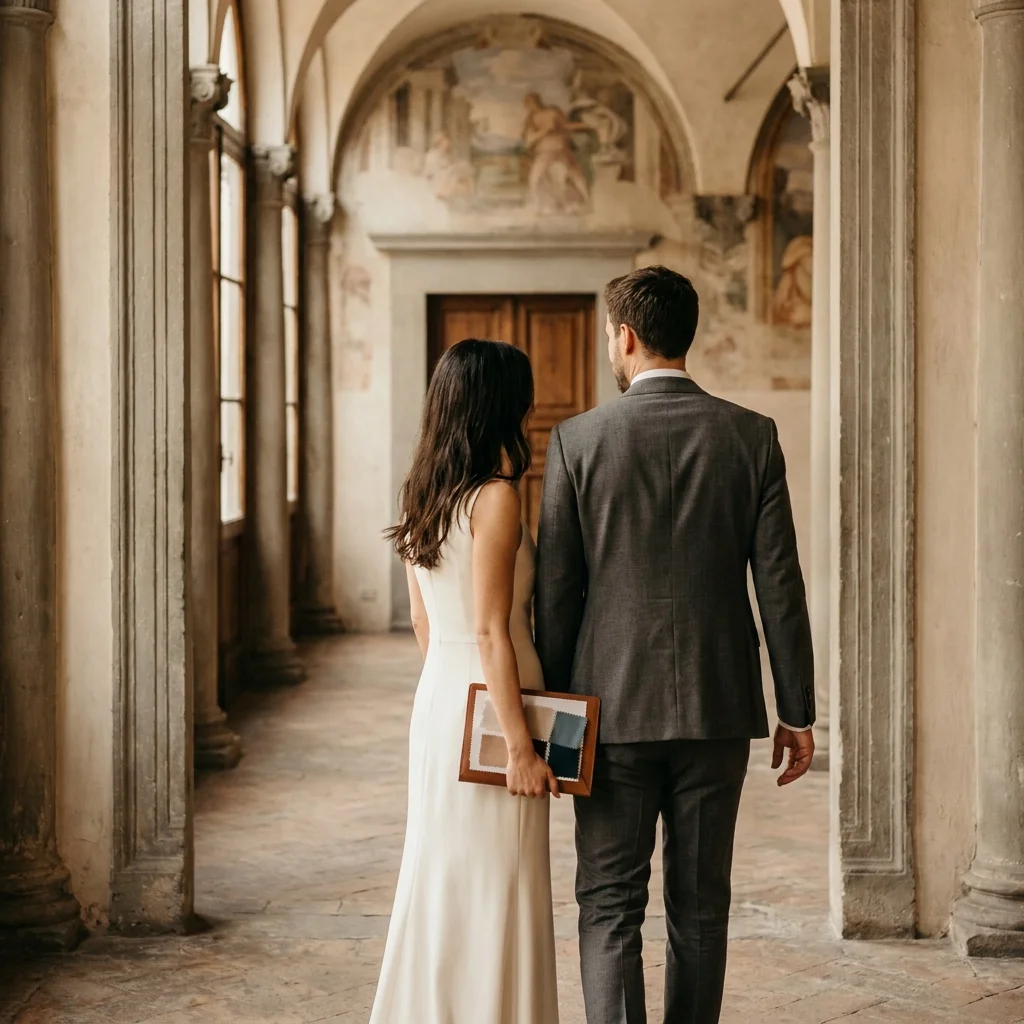
The first image a couple sends us is diagnostic. A detail from Botticelli’s Primavera suggests a late-spring Tuscan palette — muted greens, pale coral, gold — and a preference for botanical abundance over architectural formality. A photograph of a frescoed ceiling in a Florentine palazzo tells us the couple is drawn to the atmosphere of enclosed, painted spaces, which means we begin sourcing venues with intact Renaissance interiors rather than open-air gardens. A swatch of deep burgundy velvet points toward autumn, toward candlelight, toward a particular shade of garnet that only reads correctly after sunset.
This is where our design process begins. Not with a venue search, but with a visual interview. We ask couples to share five to eight images — not necessarily of weddings — that capture the Renaissance quality they respond to. From this, we identify which sub-era and which artistic tradition will anchor the design. Early Renaissance (think Masaccio, Brunelleschi) is spare, geometric, warm-toned. High Renaissance (Raphael, Leonardo) is balanced, idealized, rich in sfumato softness. Late Renaissance and Mannerist references (Pontormo, Bronzino) are cooler, more theatrical, more saturated. Each demands different textiles, different floral choices, different venue architecture.
We then build a material palette — not a color palette alone, but a tactile vocabulary: linen or silk? Matte ceramic or polished gold? Foraged greenery or cultivated garden roses? These decisions happen before any vendor is contacted. They shape everything that follows. If you are beginning to imagine your own Renaissance-inspired wedding in Italy, a conversation with our design team is the natural first step.
Booking a Frescoed Palazzo in Tuscany or Florence Requires 12–18 Months and a Design-First Strategy
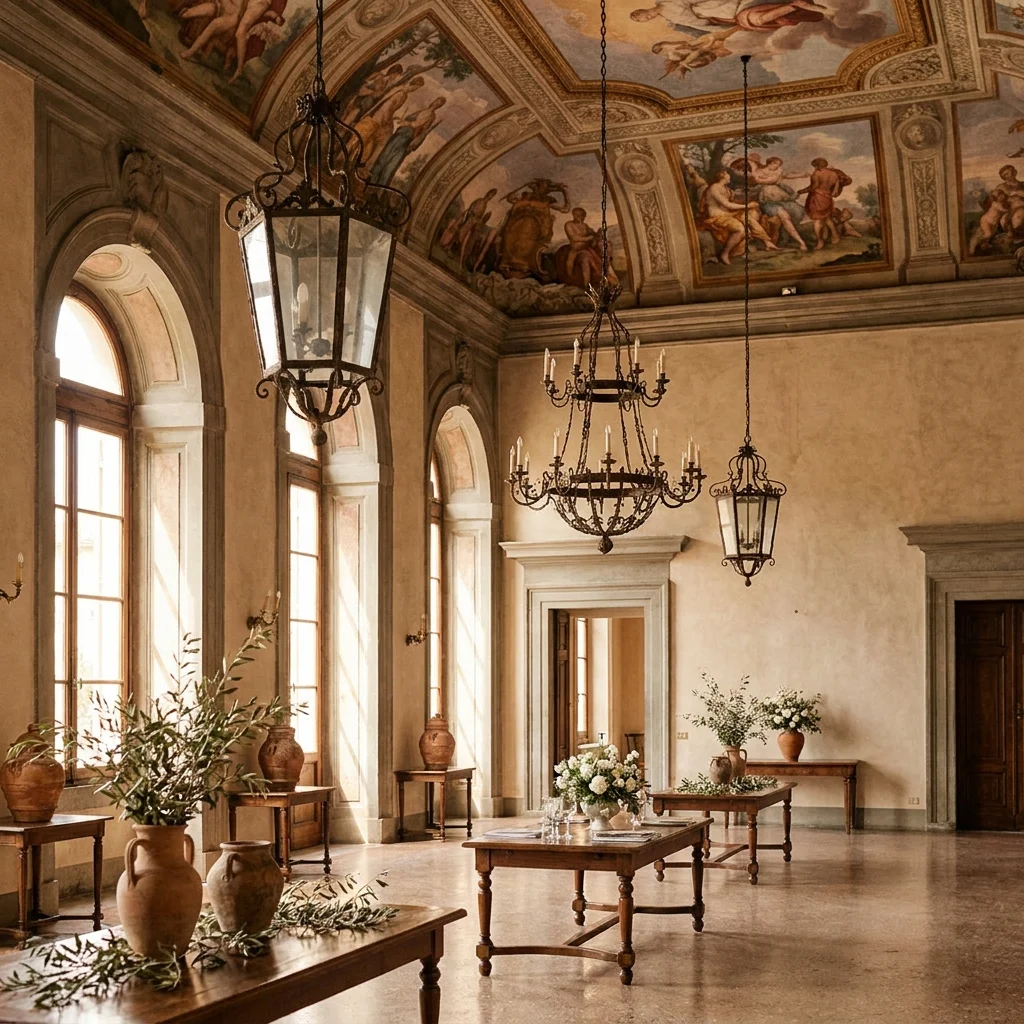
Italy has no shortage of Renaissance architecture. But a venue with intact frescoes, period proportions, and the operational infrastructure to host a luxury wedding? That list is short. In Florence, the most sought-after wedding venues with original 15th- or 16th-century painted interiors require booking 12 to 18 months in advance for peak-season dates (May, June, September, October). Some privately owned palazzi accept only four to six events per year.
We guide couples toward venues where the architecture does the thematic work. A room with original grottesche ceiling paintings needs almost no additional décor — the Renaissance is already present. What it needs is lighting design that reveals the frescoes without competing with them, and floral arrangements scaled to the room’s proportions. A spray of white garden roses that looks generous in a modern loft disappears in a salone with five-meter ceilings. We design for the room, not for the table.
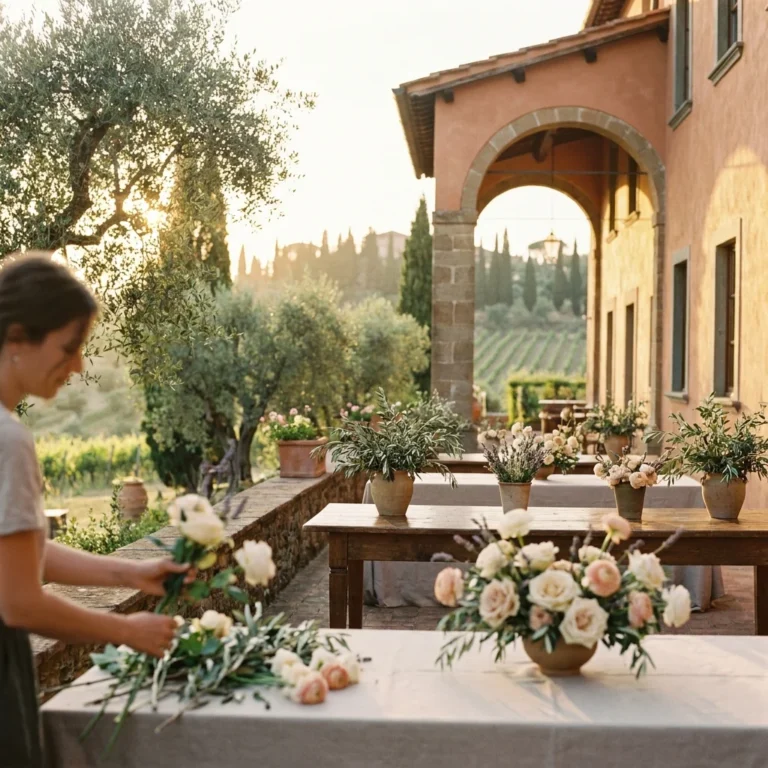
For couples drawn to the Tuscan countryside, we source estates in Tuscany where the exterior architecture — pietra serena columns, loggia proportions, cypress-lined approaches — establishes the Renaissance tone, while the interiors offer flexibility for custom scenic installations. In Venice, certain Grand Canal palazzi with original terrazzo floors and Murano glass chandeliers provide a Venetian Renaissance setting that no amount of décor could replicate. The cost of a Venice wedding reflects this exclusivity — venue hire alone for a canal-side palazzo ranges from €15,000 to €45,000 depending on season and capacity.
We never recommend a venue that requires heavy theming to read as Renaissance. If the bones are not there, the investment is better placed elsewhere.
The Permit and Heritage Restrictions That Shape Renaissance Venue Design — What Gets Approved and What Does Not
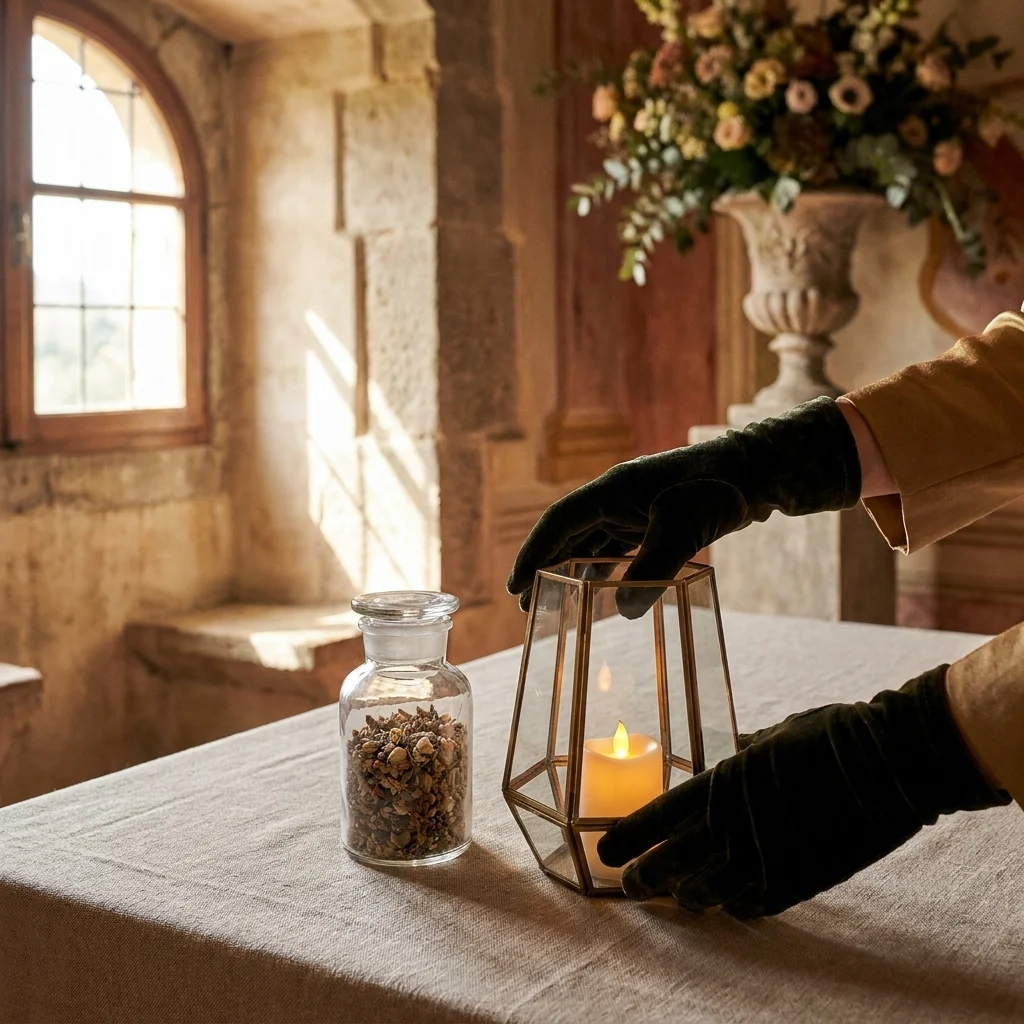
This section is deliberately direct. Heritage-listed venues in Italy — and most buildings with intact Renaissance frescoes carry Soprintendenza protection — impose restrictions that directly affect your design. Understanding these early prevents costly redesigns later.
Structural installations: No drilling, no adhesive mounting, no suspended structures attached to walls or ceilings. Every floral arch, fabric draping, or lighting rig must be freestanding. This is non-negotiable.
Candle use: Many frescoed rooms prohibit open flame entirely. Others allow enclosed candle holders with specific clearance distances from painted surfaces. We work with LED candle systems that replicate warm, flickering light — the technology has reached a point where even in photographs, the difference is nearly invisible.
Floral water and staining: Arrangements placed near historic surfaces must use sealed vessels. No oasis foam against stone. No pollen-heavy blooms near textile wall coverings. We design with these constraints as creative parameters, not obstacles.
Sound levels: Some palazzo venues in Florence and Rome enforce decibel limits after 23:00. Live music — a string ensemble, a vocalist — works beautifully within these limits. A DJ set may need to relocate to an interior room or a courtyard with sound buffering.
For couples marrying legally in Italy, the documentation process for foreign nationals runs parallel to the design timeline. We coordinate both simultaneously so that neither creates a bottleneck. If you have questions about how heritage permits interact with your specific venue vision, our team can clarify the timeline in an initial consultation.
Why Seasonal Mediterranean Botanicals Define a Renaissance Arrangement More Honestly Than Imported Hothouse Roses
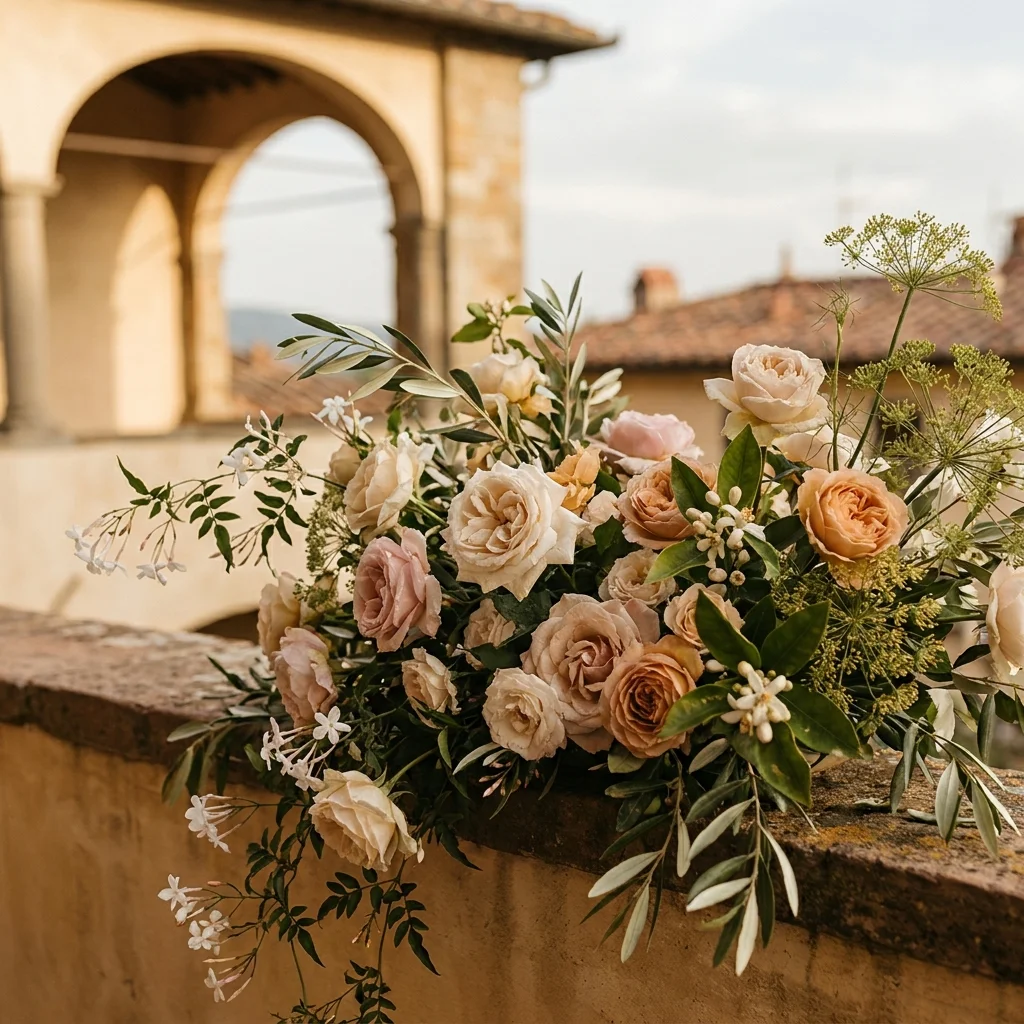
In the weeks before the wedding, the floral design moves from concept to material reality. This is where our design approach becomes most visible. A Renaissance-inspired arrangement is not a modern bouquet with a gold ribbon. It is a botanical composition rooted in what actually grew in Italian Renaissance gardens — and, crucially, in what is available in the Mediterranean season of your wedding.
A May wedding in Tuscany gives us garden roses just opening, jasmine beginning its first flush, citrus blossom still fragrant on the branch, wild fennel fronds, and the soft grey-green of olive foliage. These are the materials Botticelli painted. They are also the materials that photograph with the most natural texture in Tuscan light — because they belong there.
An October celebration shifts the palette entirely. We work with late-season dahlias in burnt umber and deep wine, persimmon branches, pomegranates (a symbol of fertility that appears constantly in Renaissance painting), dried seed heads, and foraged autumn grasses. The arrangements become denser, more architectural. The tactile quality changes — from the soft, dewy openness of spring to something richer, more velvet.
We avoid importing flowers that have no relationship to the Italian landscape or the season. A Renaissance wedding theme built on peonies flown from the Netherlands in August is aesthetically incoherent. It may look beautiful in isolation, but it will not feel integrated with the venue, the light, or the season. The atmosphere of a truly Renaissance-informed celebration comes from material honesty — using what the land offers, as Renaissance artists themselves did.
Renaissance-Inspired Stationery: Gilding, Letterpress, and the Symbolism You Choose to Keep or Leave Behind
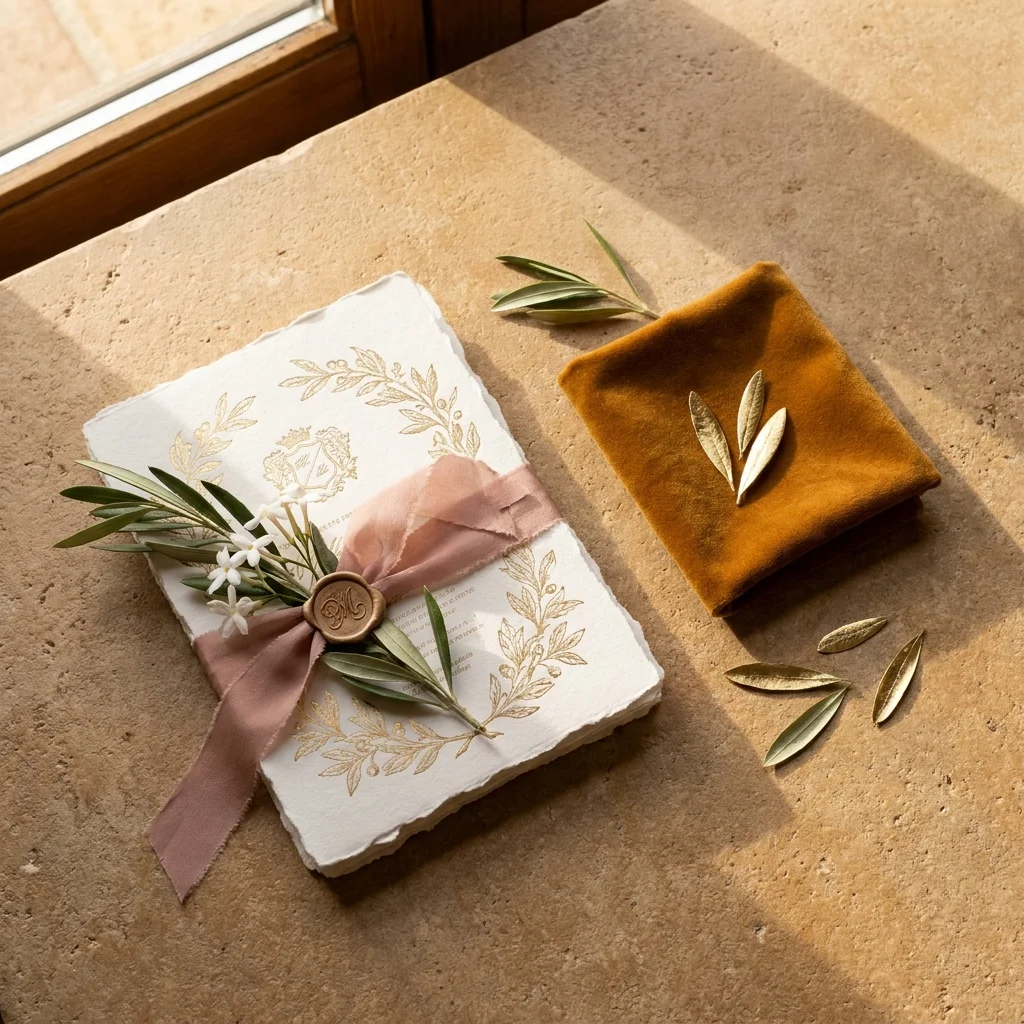
Renaissance wedding stationery is one of the most expressive design elements — and one of the most misunderstood. The danger is pastiche: slapping a Medici crest onto a save-the-date and calling it done. The opportunity is to use the graphic vocabulary of the period — illuminated borders, classical typography, heraldic motifs, botanical engravings — with editorial restraint and personal meaning.
We work with artisan printers in Florence and the Veneto who specialize in letterpress on handmade cotton paper, hot-foil gilding, and hand-torn edges. A typical suite for a Renaissance-inspired wedding includes a save-the-date, formal invitation, details card, RSVP card, and day-of materials (ceremony program, menu cards, escort cards). The paper itself matters enormously — its weight, its texture, the way light catches a gilded edge.
Symbolism requires thoughtful curation. Renaissance visual culture is rich with motifs — the pomegranate, the laurel wreath, the impresa (a personal emblem combining image and motto). We help couples select or create a personal motif that threads through the stationery, the wax seals, the menu cards, and even the welcome gifts. This is not about historical accuracy; it is about creating a visual language that feels intentional and cohesive.
One note on cultural sensitivity: some Renaissance marriage imagery carries patriarchal symbolism — the cassone panels depicting a bride’s journey to her husband’s house, for example, or the emphasis on obedience in period wedding sermons. We acknowledge this history and help couples draw from the aesthetic tradition while leaving behind the social narratives that no longer serve them. The result is stationery — and a broader design — that honors the beauty of the period without importing its values uncritically.
| Stationery Element | Indicative Range (80–120 guests) | Includes | Quoted Separately |
|---|---|---|---|
| Full invitation suite (letterpress + hot-foil gilding on handmade paper) | €3,500–€9,500 | Design, proofing, printing, hand-assembly, envelopes, wax seals | Calligraphy addressing, international postage, VAT (IVA 22%) |
| Day-of paper (ceremony programs, menu cards, escort cards, table numbers) | €2,000–€7,000 | Design, printing, assembly | Custom illustration, additional items (welcome booklets, itineraries), VAT (IVA 22%) |
| Custom monogram or impresa design | €800–€4,500 | Concept development, three rounds of revision, final digital and print-ready files | Application to additional items (napkins, wax seals, welcome gifts), VAT (IVA 22%) |
Indicative ranges. Contact Kiss Me Italy for a personalized proposal.
Renaissance Bridal Silhouettes Reinterpreted: What a Modern Bride Can Borrow from the Fifteenth Century
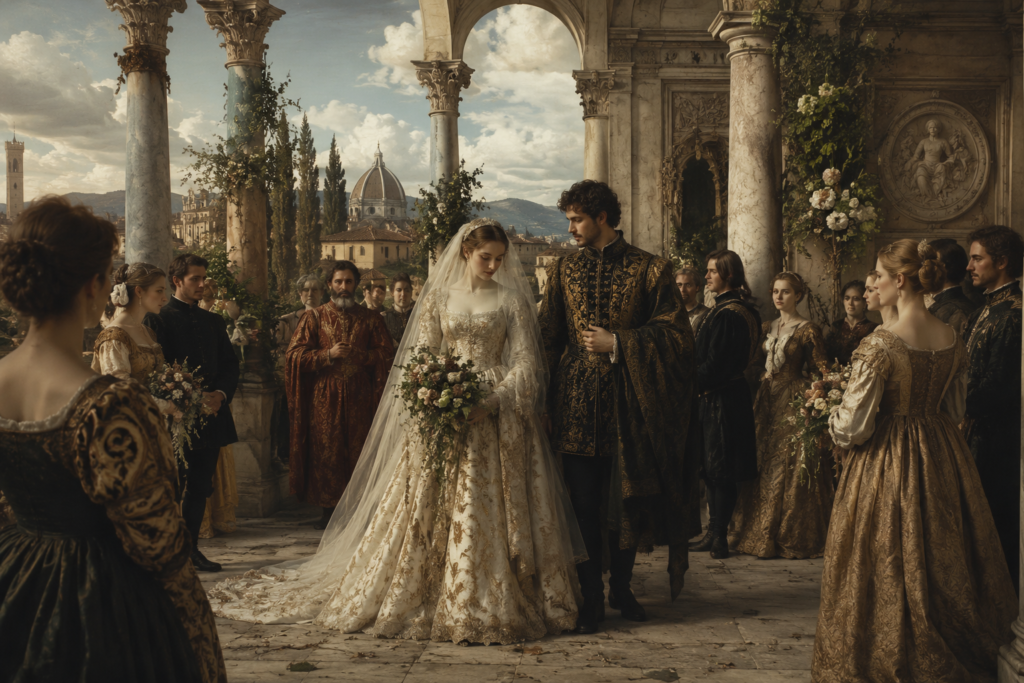
The Renaissance bride did not wear white. She wore richly dyed fabrics — crimson, deep blue, forest green — in heavy silk brocades and velvets, with high waistlines, wide sleeves, and elaborate headpieces. The silhouette was columnar and structured, the emphasis on fabric quality rather than skin exposure.
For a modern Italian Renaissance wedding theme, we do not suggest replicating period dress. We suggest borrowing its principles. A gown in heavy silk mikado with architectural sleeves. A cape in ivory wool crepe that catches the light as you move through a loggia. A headpiece inspired by the balzo — the padded, jeweled headdress of the late fifteenth century — reinterpreted as a sculptural gold hairpiece. A particular shade of champagne or warm ivory that reads closer to Renaissance cream than modern bright white.
The groom’s wardrobe benefits from the same approach. Renaissance men’s dress was as richly textured as women’s — doublets in brocade, mantles in velvet. A modern translation might be a midnight-blue velvet dinner jacket, a brocade waistcoat, or a silk pocket square in a color drawn from the wedding’s botanical palette.
We connect couples with Italian ateliers and international designers who understand this vocabulary. The fitting timeline typically begins 8–10 months before the wedding, with final alterations completed 4–6 weeks prior. For brides considering a custom gown from a Florentine atelier, two to three fittings in Italy are standard — which we coordinate around venue visits and vendor tastings to minimize travel.
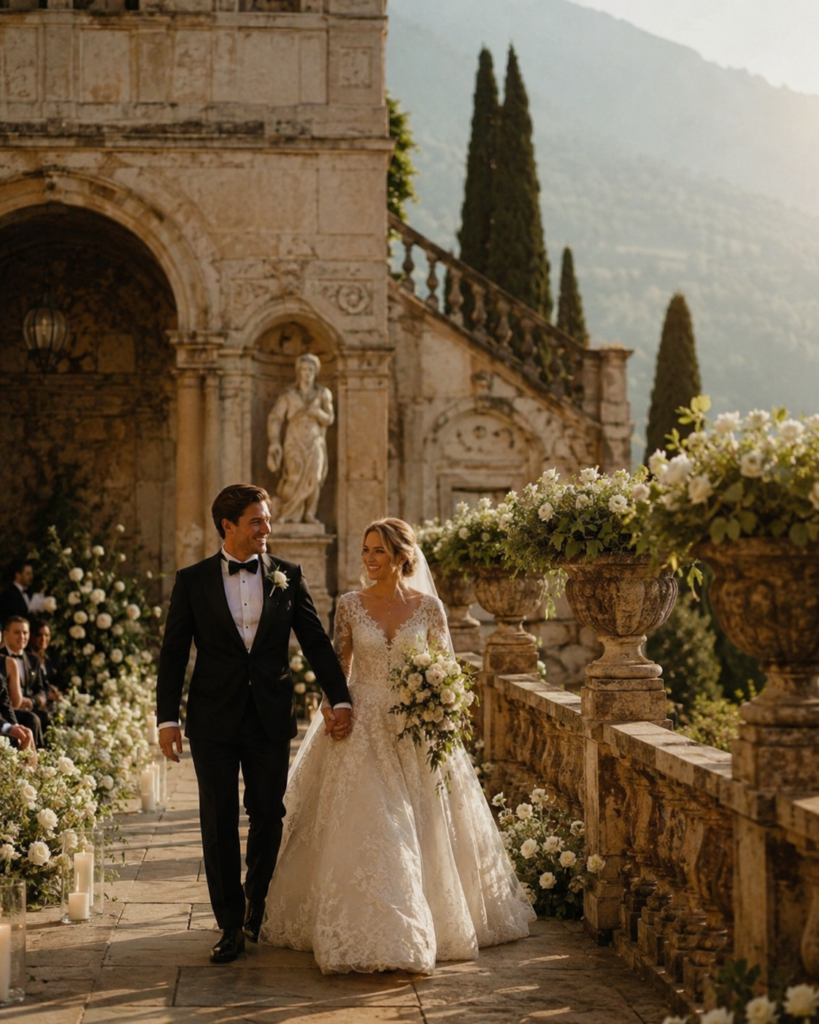
The Cassone as Design Motif: Escort Cards, Gifting, and Lounge Vignettes Rooted in Renaissance Tradition
The cassone — the painted marriage chest — was the centerpiece of a Renaissance wedding procession. Commissioned by the groom’s family, it traveled through the streets filled with the bride’s trousseau, its painted panels depicting mythological or biblical scenes of love and virtue. It was public art, private gift, and logistical object all at once.
We translate this tradition into contemporary wedding design in several ways. As an escort card display: a hand-painted wooden chest, opened to reveal calligraphed escort cards nestled in silk, each card bearing the guest’s name and table assignment alongside a small botanical illustration. The chest itself becomes a keepsake — a piece of furniture the couple takes home.
As a welcome gift presentation: smaller cassone-inspired boxes, crafted by Italian woodworkers, containing curated welcome gifts — local olive oil, artisan biscotti, a hand-bound booklet describing the wedding weekend itinerary. The exterior might carry the couple’s custom impresa in gold leaf.
As a lounge vignette: a vintage or reproduction cassone placed in a reception lounge area, styled with velvet cushions, stacked art books, and a foraged arrangement. It anchors the space with a tactile, historically resonant object that guests can actually touch — a rare quality in a celebration that might otherwise feel too precious to inhabit. Read next: vintage Italian wedding.
These details are what distinguish a Renaissance wedding theme executed at the luxury level from one assembled from rental catalogs. They require lead time — typically 3–5 months for custom woodwork and painting — and they require a designer who understands both the historical reference and the practical function.
Ceremony Day: How Renaissance Light, Floral Scale, and Music Create an Atmosphere That Cannot Be Photographed, Only Lived
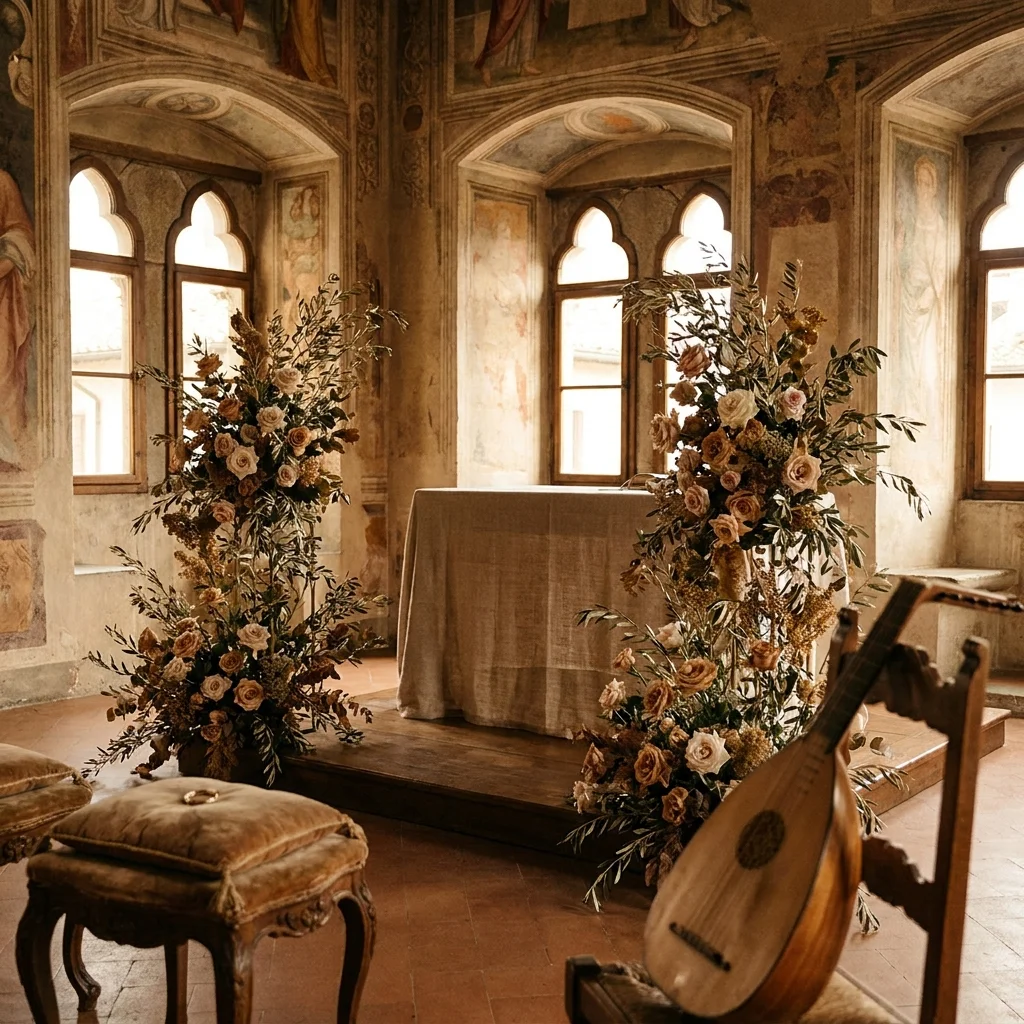
The morning of a Renaissance-themed ceremony in a Tuscan villa begins with light. Not the bright, overhead light of midday, but the low, golden, almost amber light that enters through stone-framed windows at an angle — the same light that Piero della Francesca painted. We time ceremonies to coincide with this quality of illumination, which in central Tuscany during September means a start time between 16:30 and 17:30.
The floral installations are in place by early afternoon. In a frescoed salone, we might position two monumental arrangements flanking the ceremony space — each over a meter wide, built on hidden armatures, composed of late-summer garden roses, trailing jasmine, fig branches with fruit still attached, and wild grasses foraged that morning from the estate’s surrounding fields. The scent is immediate. Guests notice it before they notice the flowers themselves.
Music is integral. A live ensemble performing Renaissance-era compositions — a lute and soprano pairing, or a small consort of viols — creates a sonic texture that grounds the experience in the period without feeling like a museum demonstration. We curate repertoire that balances historical authenticity with emotional accessibility: a Monteverdi madrigal, a Dowland lute song, a Palestrina motet. The sound should feel intimate, not performative.
The ceremony itself, whether civil, symbolic, or religious, unfolds within this sensory architecture. Every material decision — the linen of the altar cloth, the weight of the rings on their velvet cushion, the particular shade of green in the foliage against warm stone — has been considered. The atmosphere of the room is the design. Not any single object within it.
Reception Design: Renaissance Color Palettes That Photograph in Natural Italian Light
A Renaissance wedding color palette is not a mood board grid of five swatches. It is a relationship between pigment, material, and light — and it changes depending on the hour, the venue, and the season. The deep Venetian reds that glow in candlelight can look muddy in midday sun. The pale sage and gold that photograph exquisitely in a Florentine courtyard at 18:00 may wash out entirely under tent lighting at 22:00.
We design palettes that are tested against the actual light conditions of the venue. For couples who have explored our broader approach to personalized wedding design, this level of specificity will feel familiar. For a Renaissance-inspired celebration, we typically work within one of three tonal families:
- The Florentine Palette: Warm ivory, terracotta, sage green, antique gold. Best suited to stone interiors and autumn light. Textiles: raw linen, matte ceramic, brushed brass.
- The Venetian Palette: Deep garnet, midnight blue, emerald, gold leaf. Best suited to painted interiors and candlelight. Textiles: silk velvet, polished glass, lacquered wood.
- The Botanical Palette: Soft green, cream, blush, copper. Best suited to garden settings and late-afternoon spring light. Textiles: cotton voile, unglazed terracotta, natural wood.
Each palette is then translated into specific vendor briefs — for the florist, the linen supplier, the stationer, the lighting designer, the caterer (yes, food presentation is part of the color story). This is the coordination work that transforms a theme into a lived experience. For couples considering a villa wedding in Italy, the palette must also account for exterior spaces — garden terraces, poolside aperitivo areas — where natural light is uncontrolled and the surrounding landscape becomes part of the composition.
| Design Element | Indicative Range (80–120 guests) | Includes | Quoted Separately |
|---|---|---|---|
| Floral design (ceremony + reception + personal flowers) | €8,000–€25,000 | Design concept, sourcing, installation, breakdown; seasonal Mediterranean botanicals | Imported specialty blooms, venue delivery outside 50km radius, VAT (IVA 22%) |
| Textile and linen design (custom tablecloths, napkins, runners, ceremony draping) | €3,000–€12,000 | Fabric sourcing, custom dyeing/printing where applicable, pressing, installation | Purchase of specialty fabrics (velvet, silk brocade), VAT (IVA 22%) |
| Lighting design (ceremony + reception) | €4,000–€15,000 | Design, equipment rental, installation, on-site technician, breakdown | Generator hire for off-grid venues, permits for exterior installations, VAT (IVA 22%) |
| Scenic installations (arches, lounge vignettes, cassone displays) | €5,000–€20,000 | Design, fabrication, transport, installation, breakdown | Custom woodwork or painting (3–5 month lead time), VAT (IVA 22%) |
Indicative ranges. Contact Kiss Me Italy for a personalized proposal.
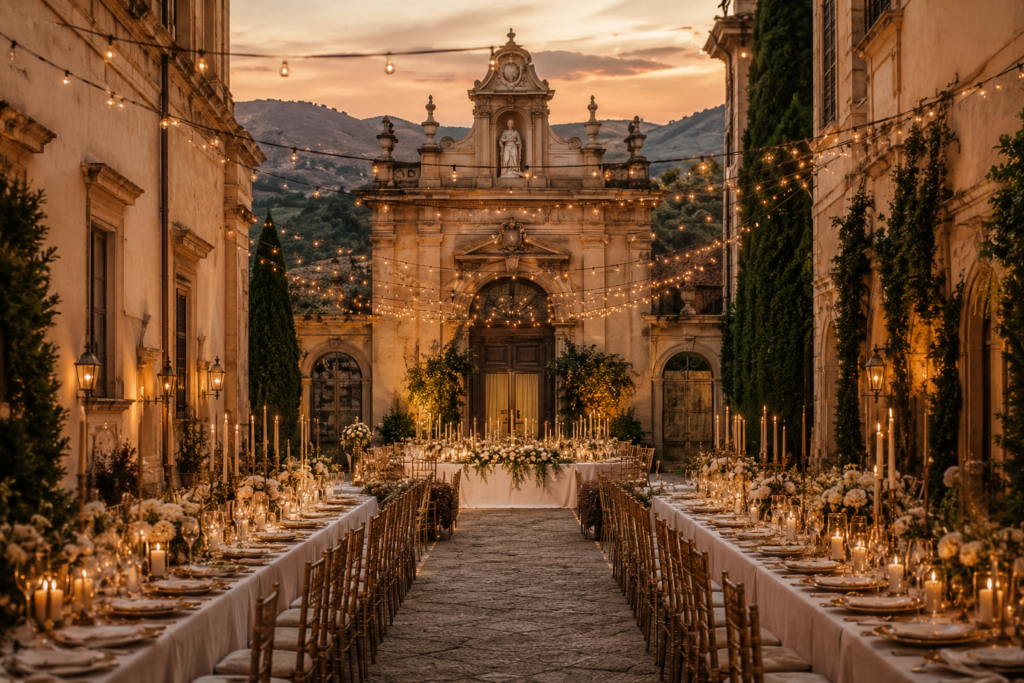
Ensuring the Theme Reads in Editorial Photography — Not Just in Person
A Renaissance-inspired wedding can be breathtaking in person and disappointing in photographs. The reason is almost always light management. Heavy velvet in a dark room, gold details that flash rather than glow, floral arrangements that read as a dark mass against a painted wall — these are design choices that require photographic testing before the wedding day.
We coordinate a pre-wedding walkthrough with the photographer and lighting designer, typically 4–8 weeks before the celebration. During this visit, we test how key design elements — the ceremony backdrop, the reception tablescape, the entrance installation — render under the actual light conditions of the venue at the planned hour. Adjustments are made: a reflector panel positioned to bounce warm light onto the ceremony space, a table runner shifted from matte to semi-sheen to catch candlelight, a floral palette brightened by one degree to ensure it reads against a dark frescoed wall.
For couples investing in videography in Tuscany, this coordination extends to movement — how the bride’s gown catches light as she walks through a colonnade, how the camera will track through the reception space. Renaissance interiors are designed for the human eye, not the camera lens. Our role is to bridge that gap.
| Photography & Videography | Indicative Range | Includes | Quoted Separately |
|---|---|---|---|
| Lead photographer (full day, 10–12 hours) | €5,000–€12,000 | Pre-wedding consultation, full-day coverage, single shooter; travel within Tuscany/Lazio/Veneto included | Second shooter (€1,500–€3,000), albums and prints, post-production and delivery (8–16 weeks), accommodation for multi-day events, VAT (IVA 22%) |
| Cinematographer (full day, highlight film + feature) | €6,000–€18,000 | Pre-wedding consultation, full-day coverage, highlight film (3–5 min), feature film (20–40 min); travel within region included | Drone coverage (permit-dependent), raw footage delivery, additional edits, accommodation, VAT (IVA 22%) |
Indicative ranges. Contact Kiss Me Italy for a personalized proposal.
After the Last Dance: Renaissance-Inspired Farewell Gifts and the Morning-After Brunch That Extends the Story
A Renaissance celebration was never a single evening. It unfolded over days — processions, feasts, entertainments, gift exchanges. We translate this expansive spirit into a modern multi-day itinerary that feels generous without becoming exhausting.
The farewell gift is the final tactile impression. We design departure gifts that echo the wedding’s material language: a small hand-bound book of Renaissance poetry, printed on the same paper stock as the invitation suite. A jar of honey from the estate’s own hives, sealed with the couple’s custom wax emblem. A linen pouch of foraged lavender and dried citrus, fragrant and portable — something guests will open at home and be transported back to the salone, the garden, the candlelight.
For couples hosting a morning-after gathering, the design shifts register. The Renaissance opulence of the evening gives way to something lighter, more pastoral — a long table under a pergola, seasonal fruit, fresh ricotta, simple ceramic vessels, wildflowers in terracotta pitchers. The atmosphere of the morning after should feel like waking up inside a Renaissance still life: abundant, sun-warmed, unhurried.
We coordinate the full arc — from the first inquiry to the final departure — as a single, coherent composition. Every material, every seasonal choice, every vendor brief connects to the same design intention. This is what we mean when we say we curate a celebration, not a collection of services. If this approach resonates with how you imagine your own Italian Renaissance wedding theme, we would be glad to begin the conversation. Reach out to our design team to start.
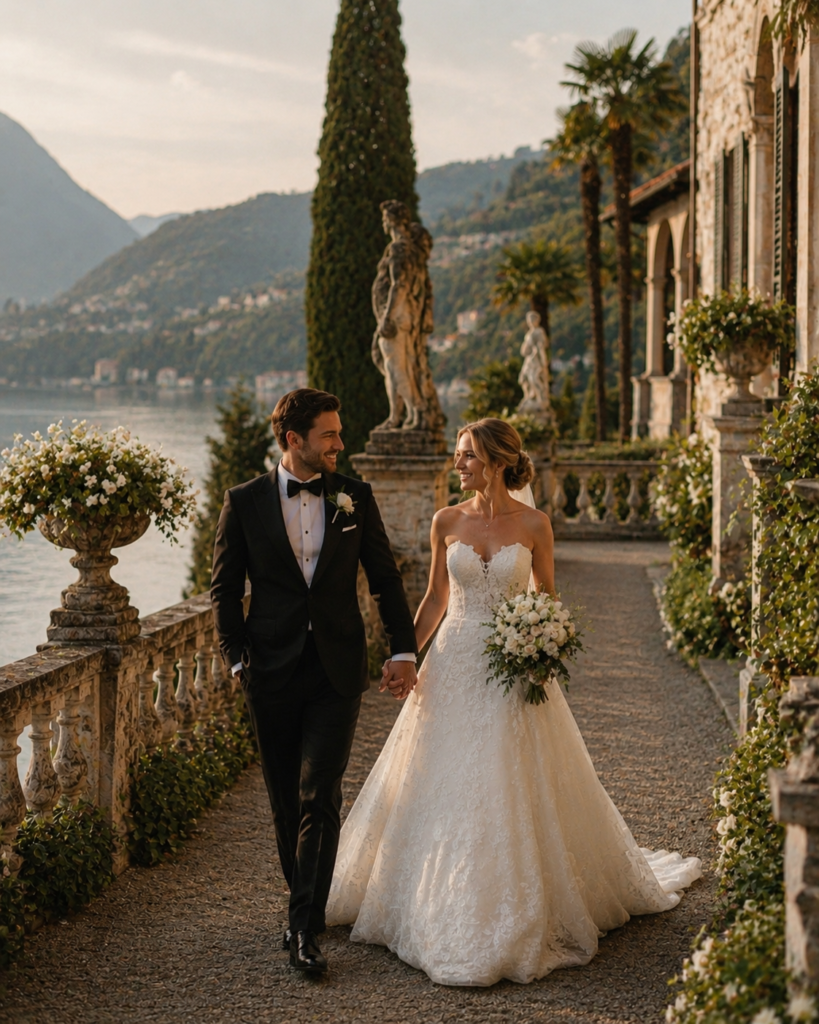
What Shapes the Total Investment in a Renaissance-Inspired Luxury Wedding in Italy
The cost of an Italian Renaissance wedding theme at the luxury level is driven by three primary factors: venue exclusivity, custom fabrication, and seasonal floral volume. A frescoed palazzo in Florence that accepts only a handful of weddings per year commands a premium that a modern hotel ballroom does not. Custom stationery on handmade paper with gold-leaf details costs more than digitally printed alternatives — but it also feels different in the hand, and that tactile difference is the entire point.
For couples exploring broader Italy wedding costs, the Renaissance theme adds a design layer that typically increases the overall investment by 15–30% compared to a contemporary-styled wedding of equivalent guest count and venue quality. The increase comes from custom scenic elements, specialty textiles, artisan stationery, and the additional coordination hours required to manage heritage-venue restrictions.
A Tuscany wedding with a Renaissance design direction for 100 guests, including venue, catering, full floral and scenic design, photography, videography, entertainment, stationery, and planning coordination, typically falls between €80,000 and €180,000 before VAT. Comparable celebrations at a Portofino venue or in Venice may range higher due to logistical complexity and venue scarcity.
We provide fully itemized proposals after an initial design consultation, so couples understand exactly where each investment is directed. There are no ambiguities, no hidden additions. Begin with a conversation, and we will build a proposal that reflects your specific vision, guest count, and season.
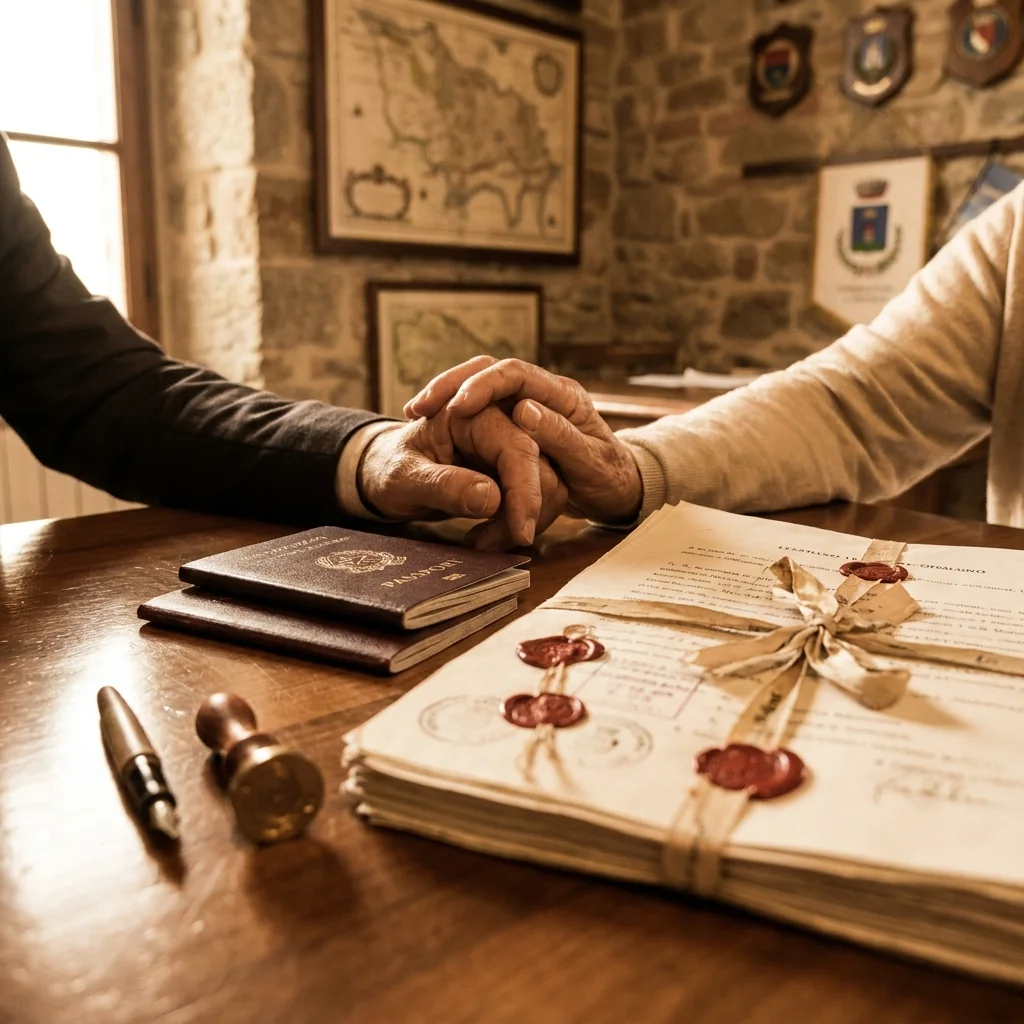
A Renaissance Wedding in Italy Is Not a Theme Party — It Is a Way of Seeing
The Italian Renaissance was, at its core, a revolution in how people looked at the world — at light, at the human body, at the relationship between beauty and meaning. A wedding inspired by this tradition should feel the same way: not decorated, but designed. Not historical, but historically informed. Not a spectacle, but a space where every surface, every scent, every sound has been considered with the same care a painter brings to a panel.
This is the work we do at Kiss Me Italy. We begin with your references, your instincts, your sense of what beauty feels like — and we translate that into a celebration that is materially rich, seasonally rooted, and logistically seamless. The Renaissance is not a costume. It is a lens. And through it, your wedding in Italy becomes something no one has seen before — because it has been composed, not copied.
Frequently Asked Questions About an Italian Renaissance Wedding Theme
Can we incorporate Renaissance design elements into a religious Catholic ceremony in Italy?
Yes, though the degree of customization depends on the specific church. Some historic churches in Florence and Rome already feature Renaissance architecture and frescoes, which means the setting itself provides the aesthetic context. Custom floral installations, ceremony programs on handmade paper, and musical selections from the Renaissance repertoire are typically permitted, but each parish has its own guidelines regarding altar décor and candle use, which we confirm directly with the officiant.
Is it possible to host a Renaissance-inspired wedding for fewer than 50 guests without the design feeling oversized?
Absolutely — in fact, smaller celebrations often allow for more refined detail. A micro wedding in Italy with Renaissance references might focus on an intimate frescoed room, a single monumental floral arrangement, and hand-calligraphed place settings rather than large-scale scenic installations. The design is scaled to the guest count and the room, never inflated for effect.
Renaissance-era Italian cuisine was already diverse — abundant in vegetables, grains, fish, and seasonal fruit. Our catering partners draw from period-informed recipes while accommodating modern dietary needs (vegetarian, vegan, gluten-free, kosher) without compromising the culinary narrative. A tasting session, typically held 6–8 weeks before the wedding, allows couples to finalize the menu with full dietary clarity. Our guide to Italian wedding menu ideas explores this further.
What if our preferred venue does not have original Renaissance interiors — can the theme still work?
It can, provided the architecture has sympathetic proportions — high ceilings, stone or plaster walls, arched doorways. We use scenic installations, custom textiles, and lighting design to create a Renaissance atmosphere within a structurally compatible space. However, we are transparent when a venue’s modern finishes would require so much intervention that the investment is better redirected toward a more suitable location.
Do you source Renaissance-period antiques for the wedding, and what happens to them afterward?
We source vintage and reproduction pieces through Italian antique dealers and artisan workshops. Rental arrangements are standard for larger furniture pieces. Smaller commissioned items — cassone-inspired gift boxes, custom ceramics, hand-painted panels — are designed as keepsakes for the couple. We manage all sourcing, transport, and return logistics so that no coordination falls to you.
How early should we book if we want a specific frescoed venue in peak season?
For September and October dates at the most exclusive heritage venues in Florence, Rome, or Venice, we recommend beginning the inquiry process 16–18 months in advance. For May and June, 14–16 months is typically sufficient. Off-peak months (November through March) offer more flexibility, often with 10–12 months’ lead time, and the winter light in a frescoed room — low, warm, dramatic — can be extraordinarily beautiful.
Can guests participate in a Renaissance-themed experience during the wedding weekend without it feeling like a costume event?
Yes, and the key is curation. A private guided visit to a Renaissance art collection, a calligraphy workshop using period techniques, or a curated wine tasting featuring historic Tuscan grape varieties — these experiences immerse guests in the cultural context without asking them to dress up or role-play. We design weekend itineraries that educate and delight without crossing into theatricality.
What is the minimum lead time for custom Renaissance-inspired stationery?
For a full letterpress suite with hot-foil gilding on handmade paper, we recommend a minimum of 5–6 months from design kickoff to delivery. This allows for concept development, proofing, printing, hand-assembly, and international shipping if save-the-dates need to reach guests abroad. Rush timelines (3–4 months) are sometimes possible but limit paper and technique options.
You may also enjoy reading Jewish Wedding in Italy: An Extraordinary Celebration, Flawlessly Orchestrated.