A professional live band for an Italian wedding typically costs between €3,000 and €12,000 for a full evening performance, with pricing shaped by ensemble size, travel logistics, playing time, and whether the engagement includes a ceremony set. Kiss Me Italy manages the full entertainment arc—from scouting and contracting to technical riders and on-the-day coordination—so international couples receive a seamless musical experience without navigating Italian vendor contracts, SIAE licensing, or venue-specific power constraints on their own.
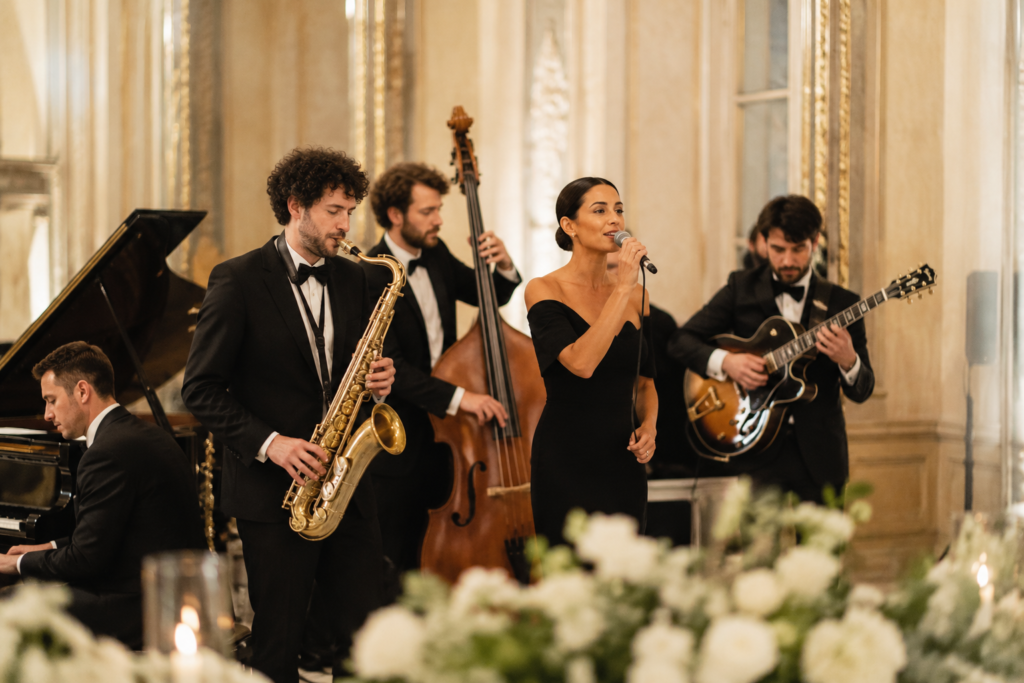
Wedding Band Italy
Most of our U.S. clients typically assume that hiring a wedding band in Italy works the same way it does in New York or Los Angeles: browse a directory, watch a few demo reels, sign a contract. The practical reality is different. Italian performance contracts are governed by local labor norms, licensing through SIAE (the Italian society of authors and publishers), and venue-specific curfew and decibel restrictions that vary not just by region but by individual municipality. A lakeside estate outside Bellagio may enforce a hard 11 p.m. sound stop, while a rural Tuscan property might allow amplified music until 1 a.m. These details shape every decision about ensemble size, set structure, and whether a DJ handover makes sense for the after-party. At Kiss Me Italy, we bridge these regulatory and logistical realities with the creative vision couples bring from abroad—so the music feels spontaneous even though every minute has been coordinated.
Chianti and Val d’Orcia: Why Rolling Hills Create Specific Sound Challenges
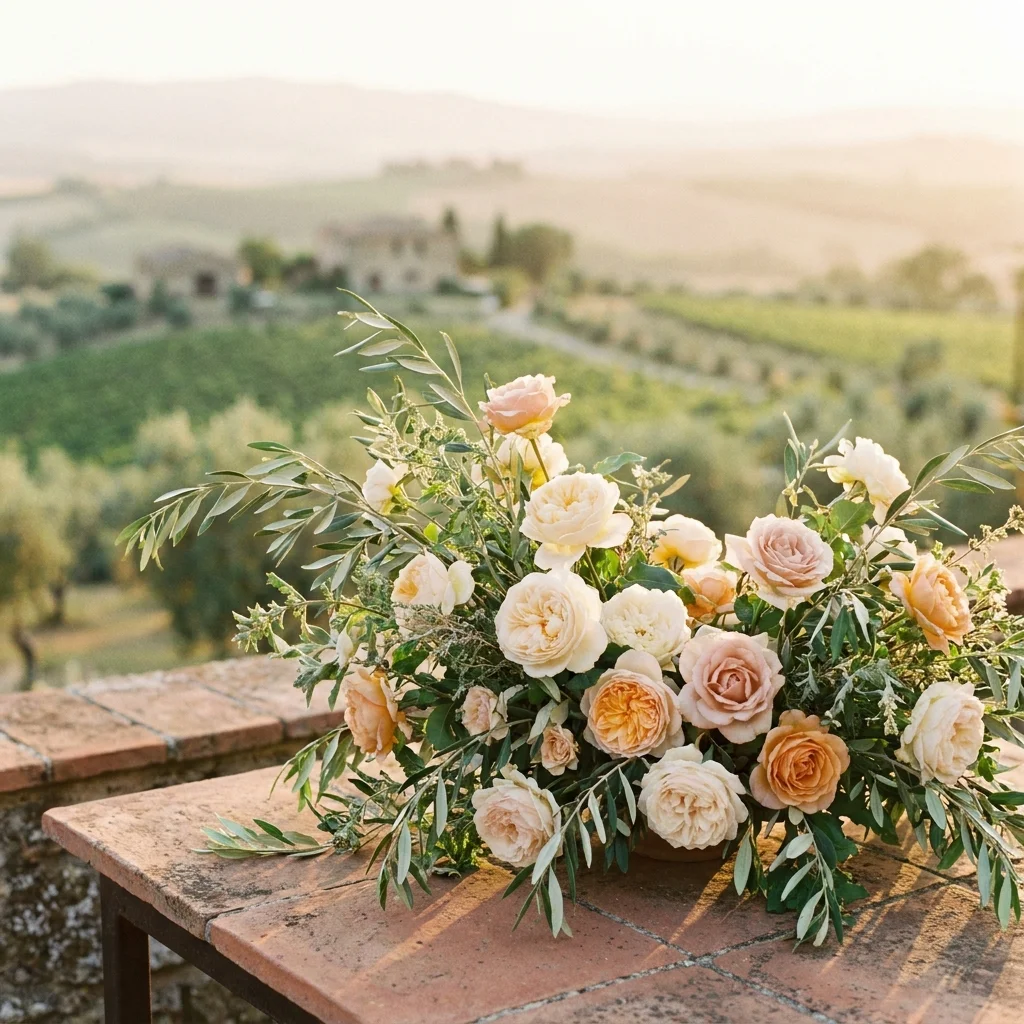
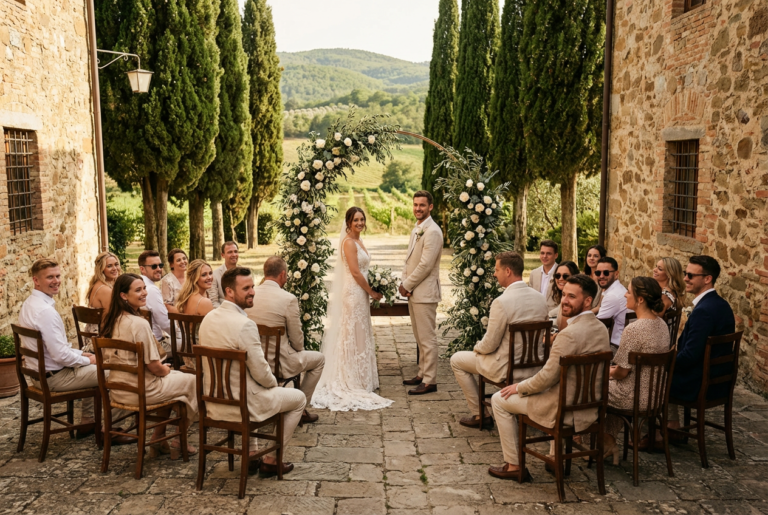
Southern Tuscany is among the most requested regions for destination weddings, and the landscape itself introduces acoustic considerations that directly affect your live music setup. Open-air receptions on hilltop estates mean sound disperses quickly. Without natural walls or enclosed courtyards, a four-piece band that fills a Venetian ballroom may feel thin across a Val d’Orcia terrace seating 120 guests.
We address this in two ways. First, we match ensemble size to the venue’s acoustic profile—often recommending a six- or seven-piece band with dedicated sound engineering for exposed hilltop settings. Second, we conduct a site-specific sound check the afternoon before the event, adjusting speaker placement and monitor levels for the exact configuration of tables, dance floor, and surrounding terrain. Many estates in the Chianti hills also sit within protected landscape zones where municipal noise ordinances are enforced by local vigili; our team confirms curfew times and decibel thresholds with the comune weeks before the wedding date.
Couples exploring wedding venues in Tuscany often discover that the venue contract itself says nothing about amplified music limits. That’s a gap we fill during the coordination phase, contacting the municipality directly and documenting the restrictions in writing so the band’s technical rider aligns perfectly. For a deeper look at overall investment in this region, our Tuscany wedding cost guide breaks down every major category.
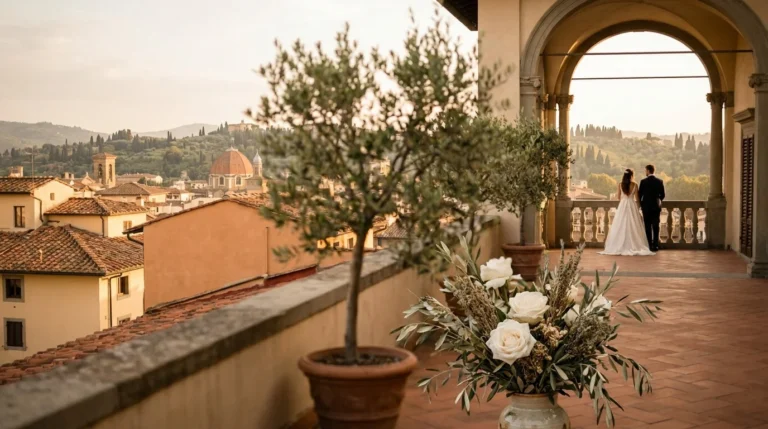
Florence: Indoor Acoustics, Historic Venue Restrictions, and the 10 p.m. Question
Florence is a UNESCO World Heritage site. That designation means something concrete for live music: many historic venues within the centro storico enforce amplified sound curfews as early as 10 p.m., and some prohibit external amplification entirely. Live music in Italy’s most celebrated Renaissance city requires careful venue-music pairing, not just artistic taste.
We typically recommend Florence for couples who want a refined ceremony-and-dinner soundtrack—string ensembles, jazz trios, vocal-piano duos—transitioning to a DJ set or acoustic after-party in a separate, sound-insulated room. Several privately owned palazzi along the Arno offer exactly this configuration: a frescoed reception hall for dinner with live music, and a lower-level lounge with independent sound infrastructure for dancing past midnight.
The coordination matters here because the transition between live band and DJ must be invisible to guests. Our team writes a minute-by-minute handover into the production timeline, syncing the band’s final number with the DJ’s opening track and the catering team’s dessert service. Couples considering a Florence wedding should know that this level of integration is standard in our planning process, not an add-on.
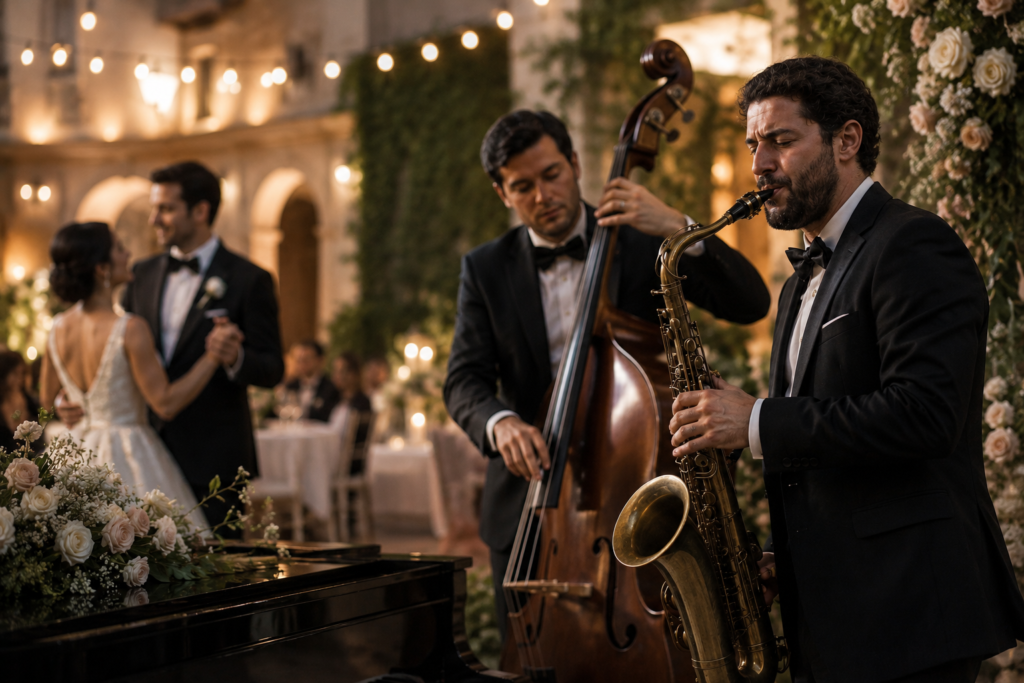
Lake Como: Waterside Venues, Boat Logistics for Musicians, and Late-Night Sound Ordinances
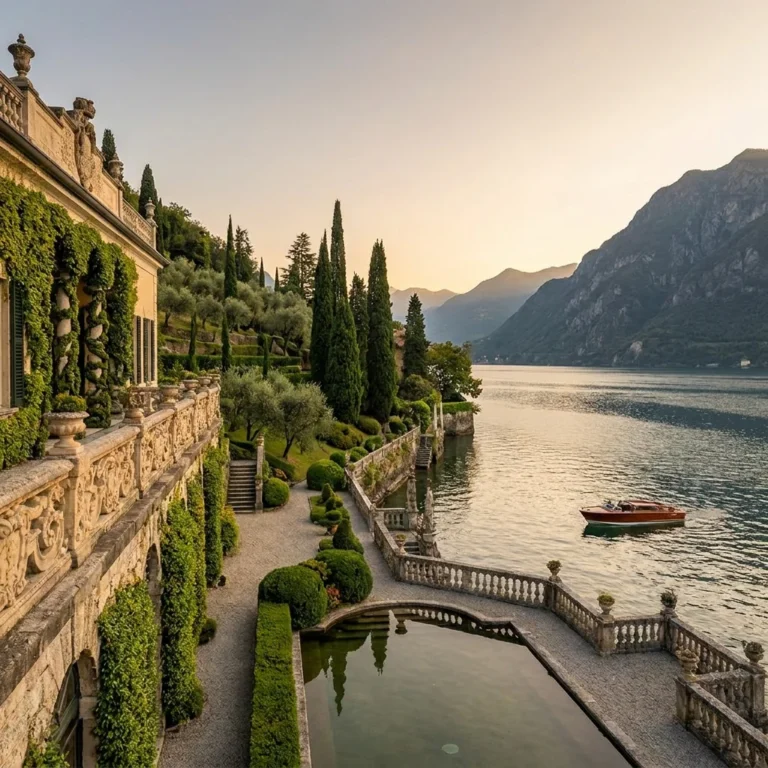
Lake Como weddings carry a specific logistical layer for entertainment: many of the most desirable venues are accessible only by private boat. That means the band’s equipment—amplifiers, drum kit, keyboard rigs, monitor speakers—must be loaded onto a vessel, transported across the lake, and unloaded at a private dock, sometimes hours before the ceremony begins. This is not a detail that appears in a Spotify playlist brief.
Our team at Kiss Me Italy manages the equipment transport timeline as a standalone logistics block, coordinating boat schedules with the venue’s load-in window and the band’s setup requirements. A typical six-piece band needs 90 to 120 minutes for full setup and sound check; on Lake Como, we add an additional hour for waterborne transport and dock-side unloading.
Sound ordinances along the lake vary by municipality. Cernobbio, Bellagio, and Varenna each enforce different curfew times, and enforcement has tightened in recent years. We confirm these restrictions directly with the local administration and build the band’s set list timing around them—ensuring the final dance ends on a high note rather than a municipal warning. Our Lake Como wedding guide covers the broader planning framework, including how entertainment integrates with catering and guest transport.
Venice: Where SIAE Permits and Palazzo Power Grids Shape Every Musical Decision
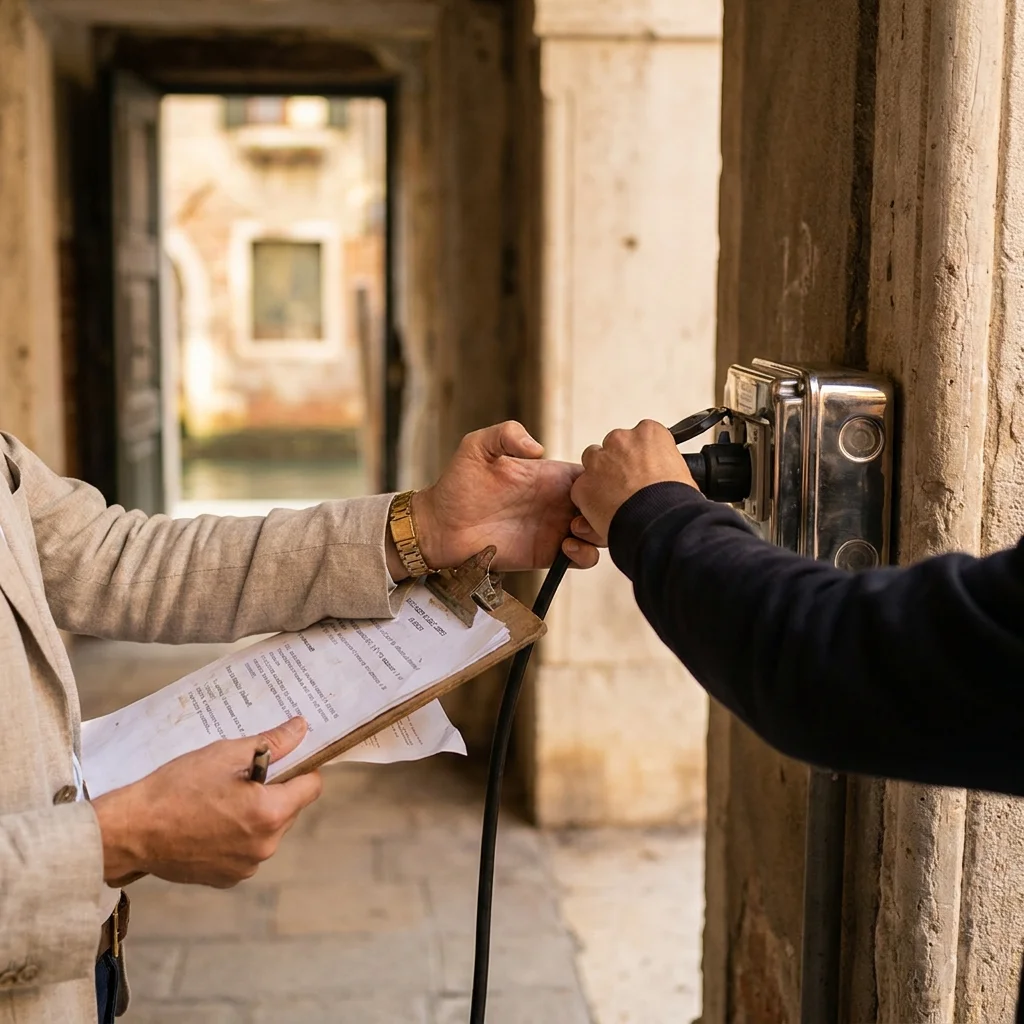
Venice is extraordinary—and technically demanding. Historic palazzi often run on aging electrical systems that cannot support a full band’s power draw without a dedicated generator. We assess power capacity during the venue walkthrough, typically four to six months before the wedding, and arrange generator rental and placement when needed. The generator must be positioned far enough from the reception to remain inaudible, which in Venice means creative placement in a courtyard, on a moored barge, or in an adjacent service corridor.
SIAE licensing is another coordination layer. Any public or semi-public performance of copyrighted music in Italy requires SIAE authorization. For a wedding band in Italy performing at a private venue, the obligation technically falls on the event organizer—which, in our model, means we handle the filing, fee payment, and documentation on behalf of the couple. The cost is modest (typically €270 –€580 depending on guest count and venue classification), but the paperwork must be submitted in Italian and processed before the event date.
Couples drawn to a Venice wedding often envision a string quartet on a terrace overlooking the Grand Canal during the aperitivo, transitioning to a full band for dinner and dancing. We design this arc routinely, but the logistics of moving musicians and equipment between floors or across water-level entrances require precise scheduling. Our Venice wedding cost overview contextualizes entertainment within the broader investment picture.
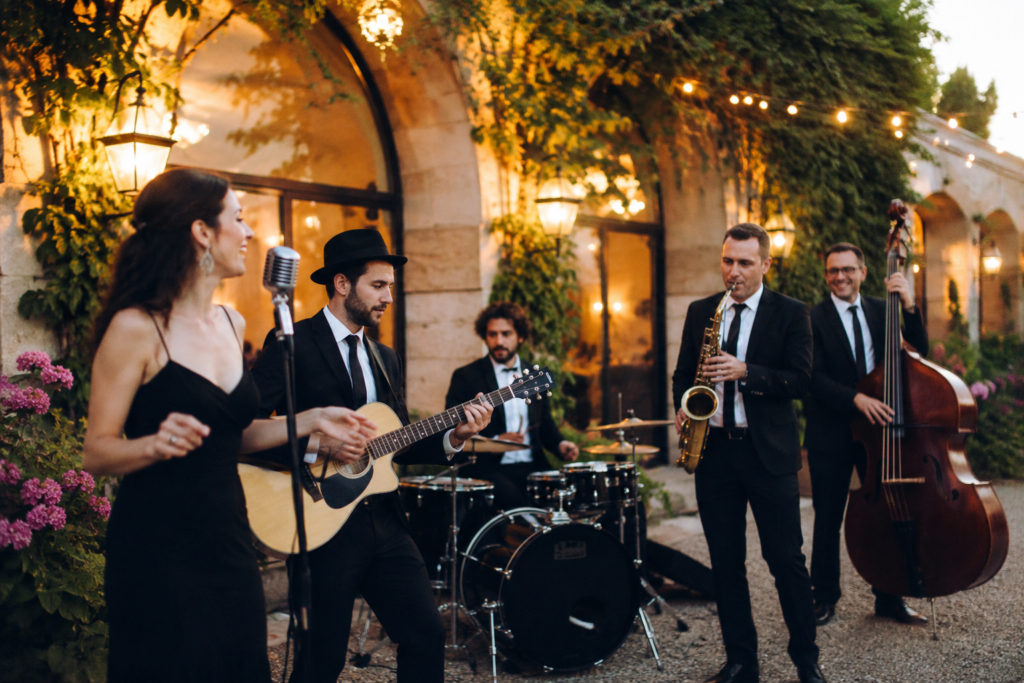
Amalfi Coast: Terraced Venues, Narrow Access Roads, and the Reality of Sound After Dark
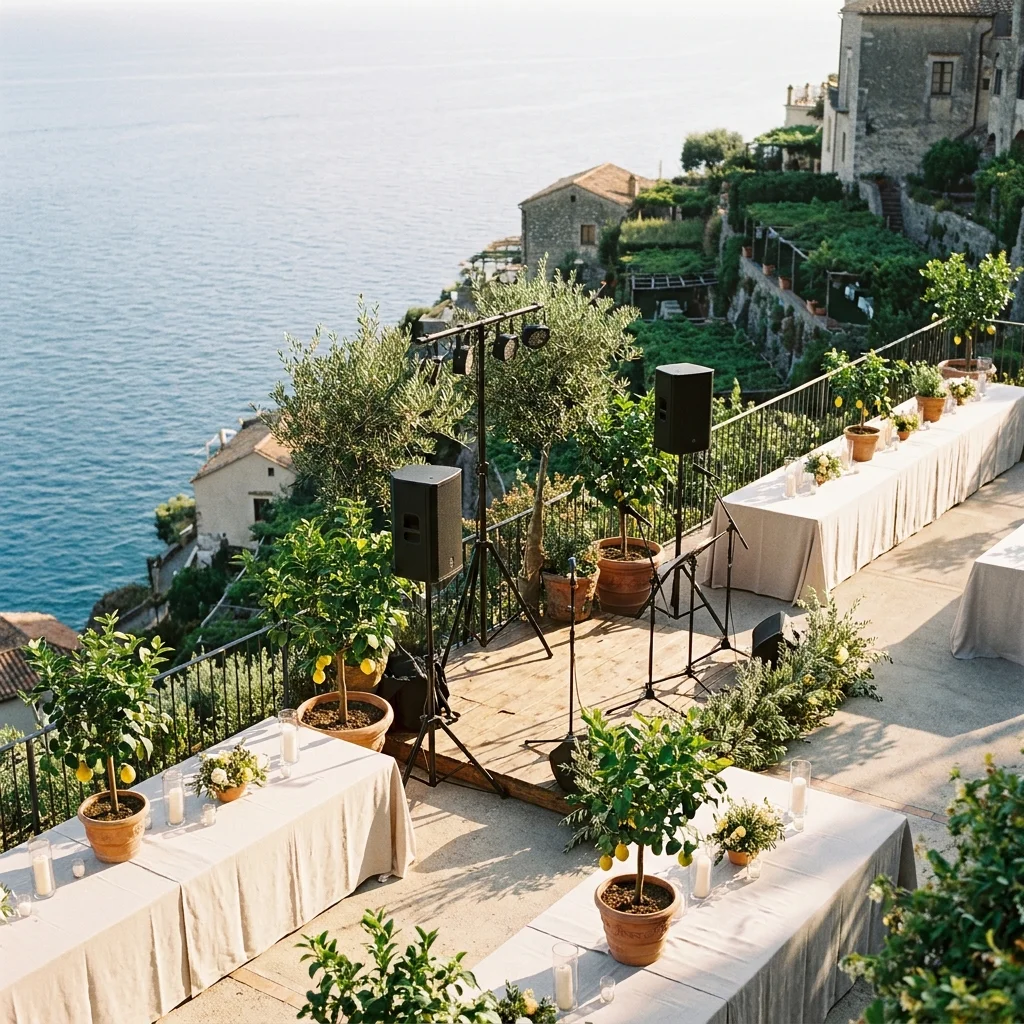
The Amalfi Coast presents a paradox for wedding entertainment. The setting is visually dramatic—cliffside terraces, lemon groves, the Tyrrhenian Sea below—but the physical infrastructure is constrained. Access roads to many Ravello and Positano venues are too narrow for standard equipment vans, requiring smaller vehicles or manual carry from a staging point. We coordinate this with the band’s road crew weeks in advance, sometimes arranging for equipment to arrive the day before and be stored on-site.
Noise restrictions along the Costiera are among the strictest in Italy. Several well-known venues in Ravello enforce a 10:30 p.m. hard stop for amplified music, with fines levied directly against the venue owner for violations. This is non-negotiable. We structure the entertainment timeline so that the band’s peak energy—the hora, the first dance, the high-tempo set—lands between 9 and 10 p.m., with a smooth transition to an acoustic duo or silent-disco option afterward.
For couples weighing the full financial picture, our Amalfi Coast wedding cost guide details how entertainment, catering, and venue fees interact in this region. The Amalfi Coast venue guide also addresses which properties offer the most flexibility for live music.
What a Wedding Band in Italy Actually Costs: Ensemble Size, Playing Time, and What’s Included
Pricing for wedding bands in Italy varies significantly based on the number of musicians, total playing time, and whether travel or accommodation is required. The tables below reflect the ranges we see across our coordination work at Kiss Me Italy, drawn from actual vendor agreements in 2025–2026. These are not directory averages—they represent the quality tier our clients expect.
Scope note: Unlike photography, live entertainment proposals do not include post-production, second shooters, or albums. Where permits apply, they are typically limited to SIAE licensing and any venue-required municipal documentation—both itemized in our proposals.
| Ensemble Size | Typical Cost Range | Included | Quoted Separately |
|---|---|---|---|
| Duo or Trio (ceremony + aperitivo) | €1,500–€3,500 | Up to 2 hours of live performance; basic PA system; repertoire consultation | Travel outside home region; accommodation; additional sets; VAT (IVA 22%) |
| 4–5 Piece Band (dinner + first dance) | €3,500–€7,000 | Up to 3 hours of live performance; full PA and monitoring; 1 planning meeting; set list customization | Travel and accommodation outside home region; equipment transport by boat (Lake Como, Venice); generator rental; SIAE fees; VAT (IVA 22%) |
| 6–8 Piece Band (full evening: aperitivo through after-party) | €6,000–€12,000 | Up to 4–5 hours of live performance across multiple sets; full PA, monitoring, and lighting rig; dedicated sound engineer; 2 planning meetings; set list customization | Travel and accommodation outside home region; equipment transport logistics; generator rental; SIAE fees; VAT (IVA 22%) |
Indicative ranges. Contact Kiss Me Italy for a personalized proposal.
| Entertainment Format | Typical Cost Range | Included | Quoted Separately |
|---|---|---|---|
| Professional Wedding DJ (evening set) | €1,200–€3,500 | Up to 4 hours; professional sound system; lighting; music consultation | Travel outside home region; accommodation; extended hours; VAT (IVA 22%) |
| Hybrid: Band + DJ Handover | €5,000–€14,000 | Band set (3–4 hours) + DJ set (2–3 hours); coordinated handover; shared PA where feasible; dedicated sound engineer for band | Travel and accommodation; equipment transport; generator rental; SIAE fees; VAT (IVA 22%) |
| Band + Live Instrumentalist Overlay (e.g., saxophone or violin over DJ tracks) | €6,500–€15,000 | Full band evening set; DJ after-party set with live instrumentalist; coordinated production timeline; sound engineering | Travel and accommodation; equipment transport; generator rental; SIAE fees; VAT (IVA 22%) |
Indicative ranges. Contact Kiss Me Italy for a personalized proposal.
A note on VAT (IVA at 22%): Italian performance invoices carry this tax, and it is rarely included in the quoted fee. We ensure every proposal our clients receive breaks out IVA clearly so there are no surprises at final settlement. For couples building a comprehensive budget, our Italy wedding cost overview contextualizes entertainment within the full investment.
Live Band vs. DJ vs. Hybrid: Why the “Best” Option Depends on Your Venue and Timeline
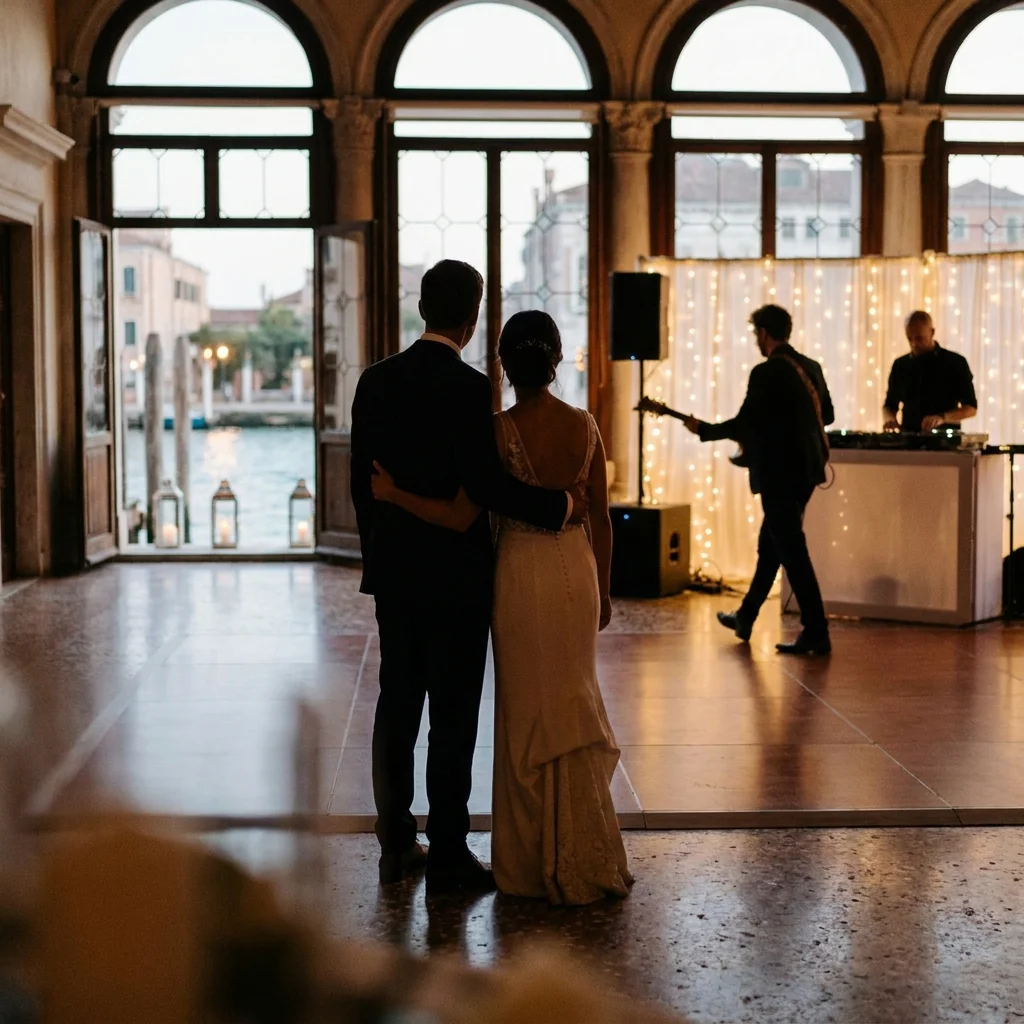
The question we hear most often from international couples is straightforward: should we book a live band or a DJ? The honest answer is that the decision is less about personal preference and more about venue infrastructure, curfew constraints, and the pacing of your specific day.
A live band excels during dinner and the first two hours of dancing. The energy is immediate, physical, and communal. But bands need breaks—typically 15 to 20 minutes every 45 to 60 minutes—and their repertoire, however broad, has limits. A DJ fills gaps seamlessly, never pauses, and can pivot from Motown to Italian pop to Afrobeats in seconds.
The hybrid model is what we recommend most often for luxury destination weddings. It works like this: a smaller ensemble (duo or trio) covers the ceremony and aperitivo. A full band takes over for dinner and the first dance set. Then, at a pre-agreed moment—usually around 10:30 or 11 p.m.—the DJ assumes control, sometimes with a live saxophonist or percussionist layering over the tracks. The handover is scripted into the production timeline and rehearsed during sound check. Guests experience it as one continuous wave of music, not a vendor swap.
This integrated approach is central to how we design luxury wedding entertainment in Italy. It reduces risk, eliminates dead air, and gives the couple a richer sonic palette across the full celebration.
Contract Riders, Power Requirements, and the Italian Paperwork Most Couples Never See
This section is deliberately more technical. It reflects the coordination layer that separates a managed experience from a self-booked one.
Technical riders. Every professional wedding band in Italy submits a technical rider—a document specifying power requirements (typically 30–60 amps for a full band with PA), stage dimensions, load-in access, and backline needs. Italian riders are written in Italian. We translate, review, and cross-reference every rider against the venue’s actual infrastructure before countersigning. If the venue’s electrical panel cannot support the draw, we arrange a silent generator, position it according to the venue’s site plan, and run cabling that meets Italian safety standards (CEI norms).
SIAE licensing. As noted, any performance of copyrighted music at an event in Italy requires SIAE authorization. The filing includes the event date, venue address, estimated guest count, and a preliminary set list. We handle this entirely. The fee is modest, but the administrative process is conducted in Italian with specific deadlines.
Contracts. Italian musician contracts follow different conventions than U.S. or U.K. entertainment agreements. Payment terms, cancellation clauses, and force majeure provisions are governed by Italian civil code. We review every contract clause, negotiate terms that protect our clients, and manage the payment schedule—typically a 30% deposit at signing and the balance 14 days before the event.
This is the documentation and coordination work Kiss Me Italy provides as part of the bespoke wedding planning process. It is invisible to guests on the day. That is the point.
How We Structure the Full Soundtrack: Ceremony Through After-Party, Minute by Minute
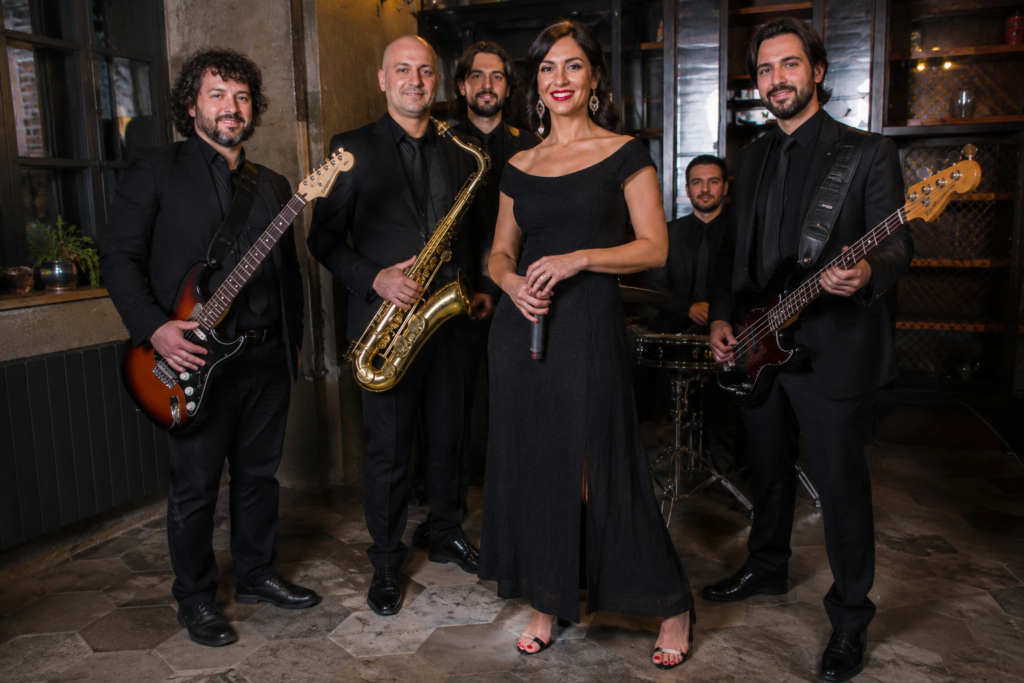
A luxury Italian wedding unfolds across four to five distinct phases, each with its own energy, spatial configuration, and acoustic needs. We design what we call the entertainment architecture—a production timeline that maps every musical transition to the event’s logistical flow.
Ceremony (30–45 minutes). Typically a string duo, solo harpist, or vocalist-pianist pair. Repertoire includes the processional, one or two interlude pieces, the recessional, and—if the ceremony is symbolic—background music during readings. Volume is low, positioning is close to the officiant, and the musicians exit discreetly before the cocktail transition.
Aperitivo (60–90 minutes). A jazz trio or acoustic ensemble provides background energy as guests move to the cocktail area. This set is designed to encourage conversation, not command attention. We position musicians where they complement the Italian wedding food experience rather than compete with it.
Dinner (90–120 minutes). The full band begins during the second or third course, building gradually. The first dance typically falls between the main course and dessert, though we adjust based on the couple’s preference and the venue’s service rhythm.
Party set (60–120 minutes). Peak energy. The band plays continuous high-tempo sets with minimal breaks, often incorporating crowd-interaction moments the couple has pre-approved.
After-party (60–120+ minutes). DJ-led, often with a live instrumentalist overlay. This phase runs until the venue’s curfew or until the couple decides to close. In regions with early sound stops, we sometimes arrange a silent disco option—wireless headphones for guests—that allows dancing to continue without amplified sound.
Liguria and the Italian Riviera: Compact Venues, Coastal Acoustics, and the Portofino Premium
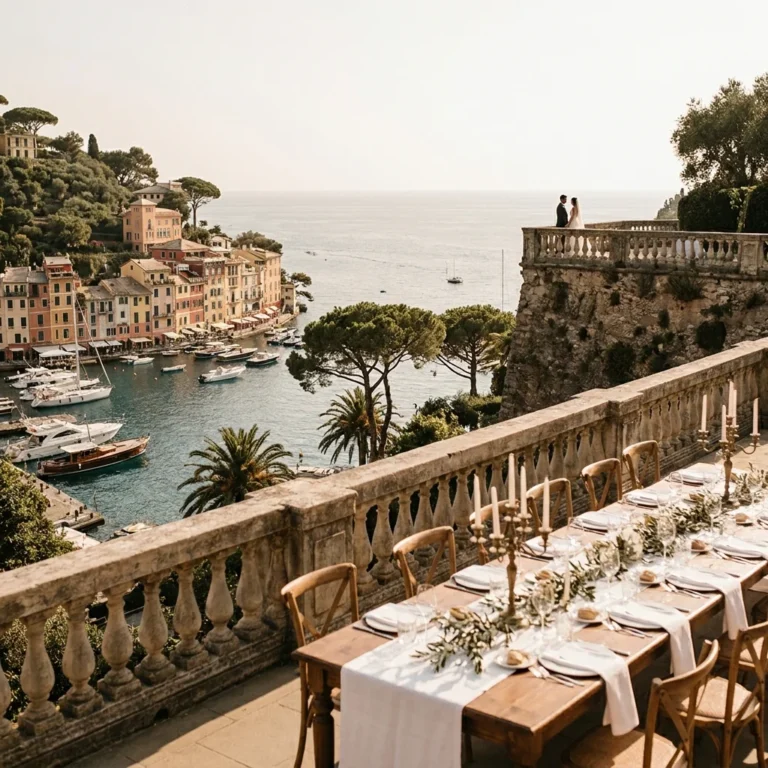
Liguria’s coastline—from the Cinque Terre villages to Portofino and Santa Margherita Ligure—offers intimate, visually stunning wedding settings. But the venues are compact. Terraces are narrow. Load-in paths wind through medieval alleyways. A Riviera wedding band must be selected partly on the basis of how their equipment fits the space, not just how they sound.
We often recommend smaller ensembles for Ligurian weddings—quartets or quintets—supplemented by a DJ for the after-party. The acoustic properties of stone-walled terraces overlooking the sea actually favor smaller groups; the natural reverberation adds warmth without requiring heavy amplification.
The Portofino premium is real. Musician fees for performances in Portofino typically run 15–25% higher than equivalent bookings in Genoa or La Spezia, reflecting both the prestige of the location and the logistical complexity of access. Our Portofino wedding cost breakdown addresses this in detail. Couples considering nearby alternatives may also explore a broader Ligurian wedding framework.
Why Curation Replaces the Directory: How We Select, Vet, and Manage Wedding Musicians in Italy
For couples who want to see how this fits into the wider production of a destination weekend, explore our wedding planner in Italy overview and our luxury destination wedding framework.
Open directories list dozens of acts with demo videos and star ratings. They serve a purpose. But for an international couple investing €50,000 to €250,000 in a destination wedding, a directory creates decision fatigue, not clarity.
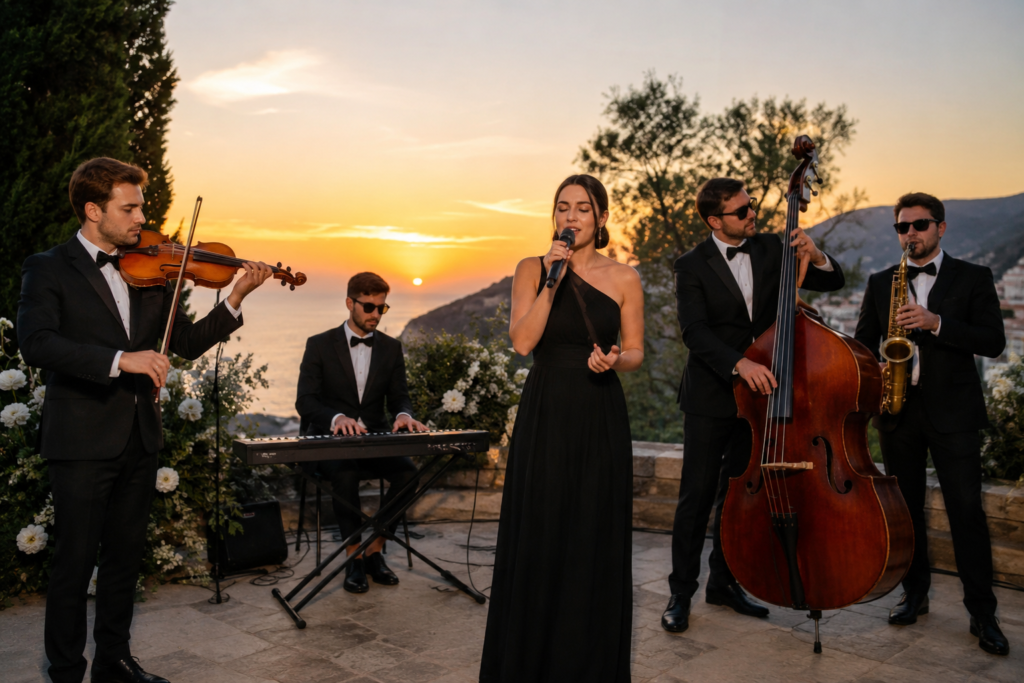
Our approach at Kiss Me Italy is different. We maintain a curated roster of vetted musicians and bands across Italy’s primary wedding regions—Tuscany, the Lakes, Venice, the Amalfi Coast, Liguria, and Rome. Each act on our roster has been evaluated through live performance attendance (not just video review), technical reliability over multiple events, and responsiveness to multilingual coordination. We do not publish this roster as a public directory. Instead, we present two to three options tailored to the couple’s musical taste, venue constraints, and budget—accompanied by private video links and detailed profiles.
This is not gatekeeping. It is quality control. A band that performs brilliantly in a Milan club may lack the flexibility to adapt to the pacing of a five-hour Italian wedding. A DJ who excels at corporate events may not read a wedding crowd. We know the difference because we’ve managed both scenarios.
Couples who want to understand our broader planning philosophy can explore our personalized wedding approach, which details how every vendor relationship—entertainment included—is integrated into a single coordination framework. More in our guide: opera singer for a wedding in Italy.
What Your Guests Remember (and Why We Engineer It)
They won’t remember the rider, the generator placement, or the SIAE receipt. They’ll remember the first chord as you enter, the way the room lifts at the first dance, and how the energy never drops between sets. That continuity is engineered—quietly—by our team.
The Sound of a Wedding That Feels Effortless
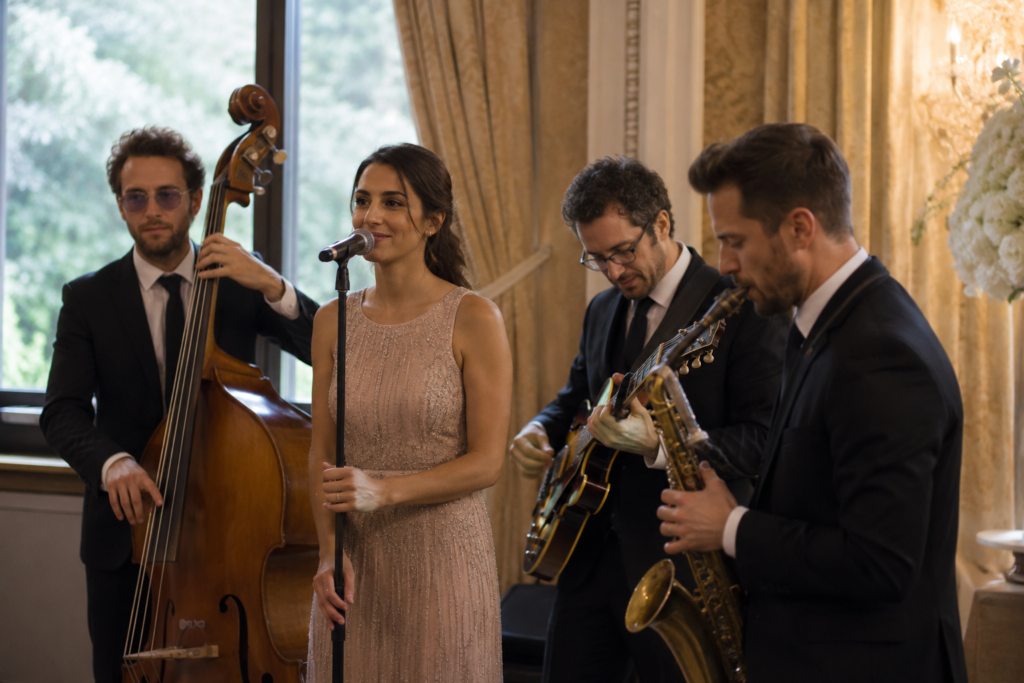
Live music is not a line item on a spreadsheet. It is the emotional throughline of the entire day—the piece that guests remember when the flowers have faded and the venue has closed for the season. But making that throughline feel natural requires coordination that spans contracts, power grids, municipal regulations, boat schedules, and the precise moment when the band’s last note gives way to the DJ’s first beat.
That is what we do. At Kiss Me Italy, we manage the full entertainment arc so that the only thing couples feel on the day is the music itself. If you’re beginning to shape the soundtrack of your Italian celebration, reach out to our team—we’ll start with your vision and handle every logistical layer from there.
Frequently Asked Questions: Wedding Bands in Italy
Can we request specific songs that aren’t in the band’s standard repertoire?
Yes. Most professional wedding bands in Italy accept custom song requests when submitted at least six to eight weeks before the event. We coordinate the request process, confirm feasibility with the band leader, and ensure rehearsal time is factored into the timeline. Highly complex arrangements (e.g., a specific orchestral version of a pop song) may incur an additional arrangement fee, which we clarify upfront.
What happens if our preferred band is already booked for our wedding date?
We maintain relationships with multiple acts in each region specifically for this reason. If your first-choice band is unavailable, we present alternative options matched to the same style, ensemble size, and energy level—along with private performance videos. Peak-season dates (June through September) in Tuscany and the Lakes book earliest, so we recommend confirming entertainment eight to twelve months in advance.
Do Italian wedding bands perform in English, or primarily in Italian?
The bands on our curated roster perform primarily in English, with the ability to include Italian classics, French chanson, or other languages upon request. We vet vocalists for pronunciation quality in English specifically because our client base is predominantly American, British, and Australian. Multilingual sets are common and can be structured to reflect both partners’ cultural backgrounds.
Is it possible to have the band learn our “first dance” song if it’s obscure?
In most cases, yes. We share the track with the band leader during the planning phase and confirm whether a live arrangement is feasible. For particularly unusual or complex pieces, the band may suggest a recorded intro that transitions into live performance—a hybrid approach that preserves the emotional impact while respecting the musicians’ strengths.
How do overtime charges work if we want the band to play longer than contracted?
Overtime is typically billed in 30-minute increments at a rate specified in the original contract—usually 20–30% above the per-hour base rate. We include overtime provisions in every contract we negotiate so the option is pre-agreed and transparent. On the night, the couple simply confirms with our coordinator, and we handle the communication with the band leader in real time.
Can we bring a band or DJ from our home country instead of hiring locally?
You can, though it introduces additional logistics: international equipment shipping or rental, work permit considerations for non-EU performers, and the need for a local sound engineer familiar with the venue’s infrastructure. We’ve coordinated imported acts alongside local musicians and can manage the full process, but couples should expect the total cost to be significantly higher than hiring a comparable Italian-based act.
Do we need to provide meals and a changing area for the band?
Yes—most professional contracts require a hot meal per musician and a private space to change and store personal items. We align these requirements with the venue and catering team in advance so service remains discreet and the band is ready on time for each set.
How much space does a band need, and can we reduce the footprint in historic venues?
A typical 5-piece band performs comfortably on a 4m x 3m stage area, while 7–8 pieces often need 6m x 4m plus space for PA and lighting. In historic venues, we can reduce footprint by selecting compact backline, using in-ear monitoring, and relocating speakers to architectural “dead zones” identified during the site check.
What is the rain plan for outdoor performances in Tuscany, Lake Como, or the Amalfi Coast?
We require a covered performance area (or an indoor alternative) that protects instruments, power connections, and guests. If the venue’s Plan B changes the room layout, we adjust speaker placement and set timing accordingly—so the atmosphere remains intentional rather than improvised.
Planning something special in Italy? Read also our guide: Jewish Wedding in Italy: An Extraordinary Celebration, Flawlessly Orchestrated.