
Lake Como weddings have become synonymous with Italian romance, celebrity glamour, and breathtaking lakeside ceremonies. But behind the Instagram-perfect images lies a complex reality of logistics, legal requirements, and significant financial investment that most online guides fail to address honestly.
Lake Como wedding packages, with real prices
Our wedding packages on Lake Como. Swipe to compare, tap a package to see everything included.
-
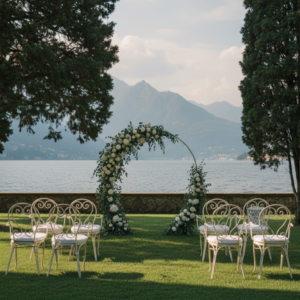
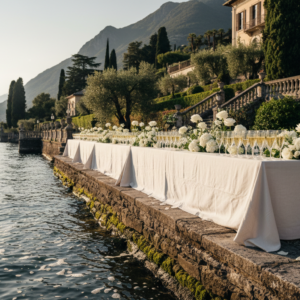
Intimate Lake Como Marriage — Villa Pizzo Micro Wedding
Price range: €13.000 through €19.000Select options This product has multiple variants. The options may be chosen on the product page -
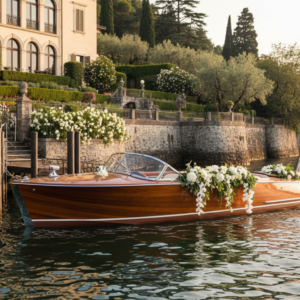
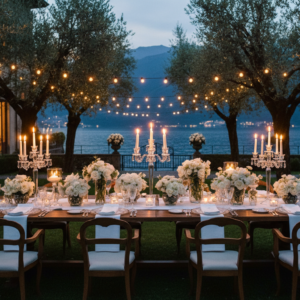
The Intimate Villa Noseda Wedding — Lake Como
Price range: €33.000 through €38.000Select options This product has multiple variants. The options may be chosen on the product page -
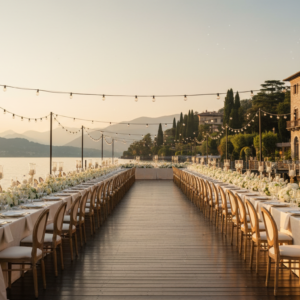
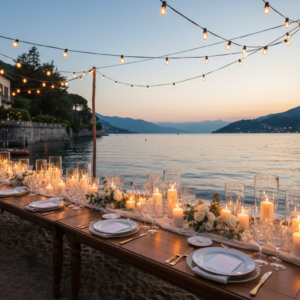
The Boutique Lakefront Hotel Wedding — Hotel Filario, Lake Como
Price range: €39.000 through €52.000Select options This product has multiple variants. The options may be chosen on the product page -
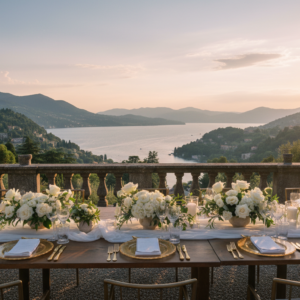
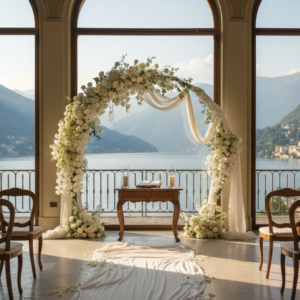
The Terraced Lakefront Wedding — Villa Giulia, Lake Como
Price range: €44.000 through €55.000Select options This product has multiple variants. The options may be chosen on the product page -
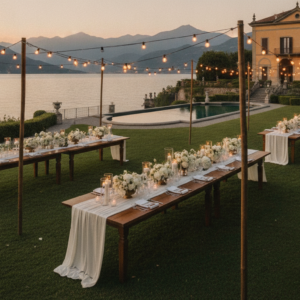
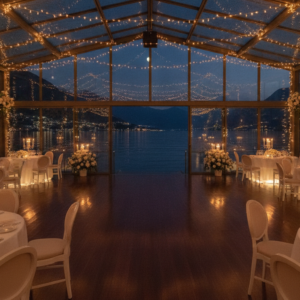
The Lakefront Estate Wedding — Villa Sardegna, Lake Como
Price range: €45.000 through €79.000Select options This product has multiple variants. The options may be chosen on the product page -
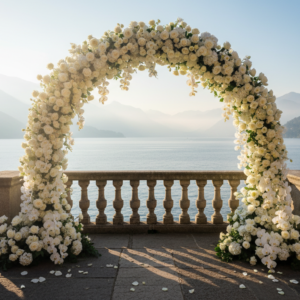
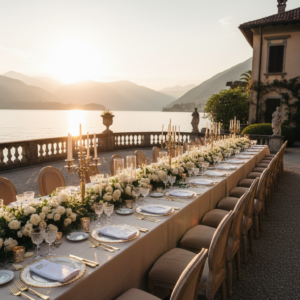
-
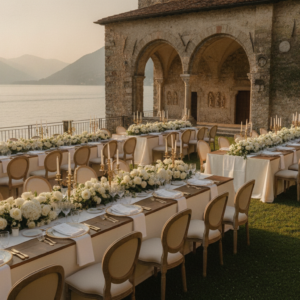
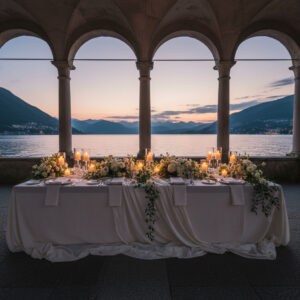
The Historic Lakefront Palazzo Wedding — Monastero Pax, Lake Como
Price range: €59.000 through €96.000Select options This product has multiple variants. The options may be chosen on the product page -
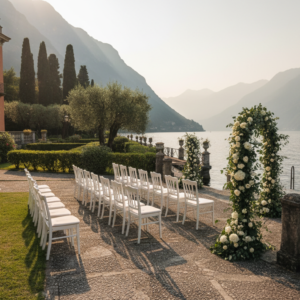
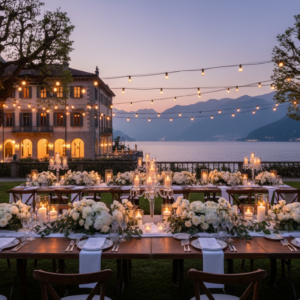
The Lake Como Villa Wedding — Villa Regina Teodolinda
Price range: €59.000 through €75.000Select options This product has multiple variants. The options may be chosen on the product page -
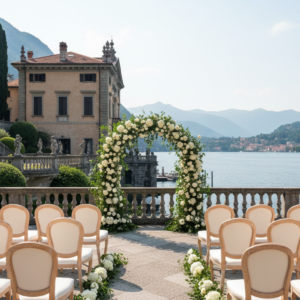
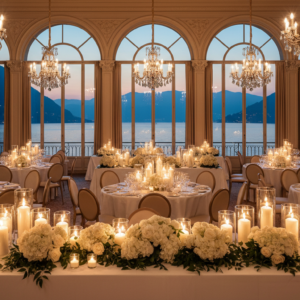
The Lakeside Ceremony Lake Como Wedding — Villa Flori
Price range: €69.000 through €129.000Select options This product has multiple variants. The options may be chosen on the product page -
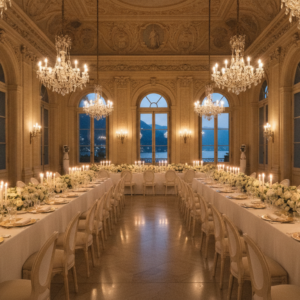
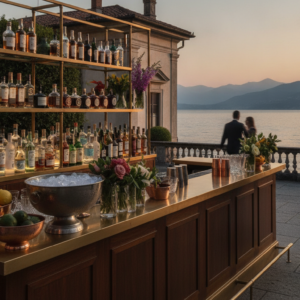
The Grand Lake Como Villa Wedding
Price range: €72.000 through €84.000Select options This product has multiple variants. The options may be chosen on the product page -
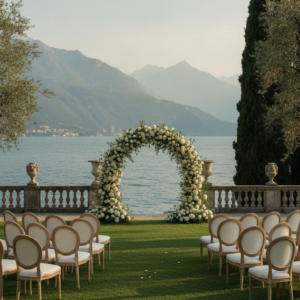
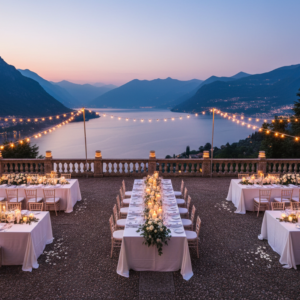
Timeless Villa Wedding on The Lake — Villa Pizzo
Price range: €74.000 through €115.000Select options This product has multiple variants. The options may be chosen on the product page -
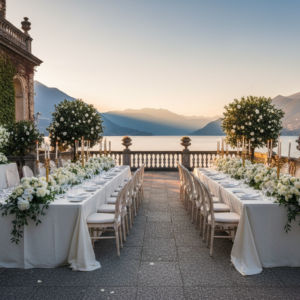
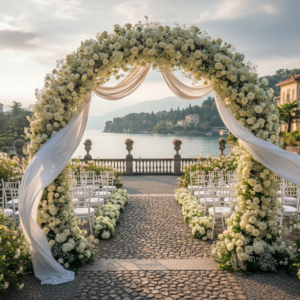
The Botanical Garden Wedding — Villa Carlotta, Lake Como
Price range: €75.000 through €95.000Select options This product has multiple variants. The options may be chosen on the product page
In short: A comprehensive Lake Como wedding for 60-100 guests typically costs €70,000-150,000 and requires 18-24 months of planning. Most couples choose symbolic ceremonies (complete flexibility) over civil ceremonies (4-6 months of Italian paperwork). September-early October offers the best weather reliability, while May-June provides beautiful spring conditions at slightly lower rates.
This comprehensive guide provides the transparent, practical information you actually need to plan a wedding on Lake Como. Drawing on three decades of experience planning luxury weddings across Italy, we’ll walk you through the real costs, legal requirements, venue selection process, guest logistics, and critical decision points that determine whether a Lake Como wedding is right for you.
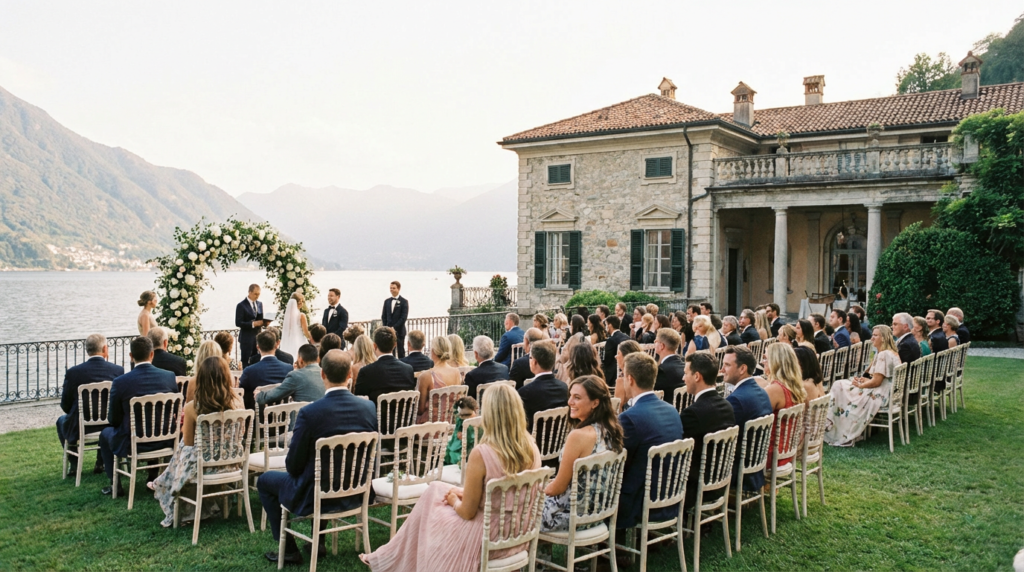
Lake Como weddings with Kissmeitaly
Whether you’re considering an intimate elopement or a grand celebration with 150 guests, this guide delivers the operational details, realistic timelines, and honest trade-offs that the typical promotional content glosses over.
Why Choose Lake Como for Your Wedding (Reality vs Instagram)
Getting married on Lake Como offers an undeniably stunning backdrop: dramatic Alpine peaks plunging into crystalline water, Belle Époque villas with centuries of history, and that distinctive northern Italian light that photographers dream about. The reality, however, is more nuanced than the curated social media feeds suggest.
Many couples come to the lake for the question before they come back for the wedding. If you are still at that stage, our guide to where to propose on Lake Como covers the eleven settings we can reserve, with published prices.
The genuine advantages of a Lake Como wedding include unparalleled natural beauty, world-class hospitality infrastructure, proximity to Milan’s international airport (just 45-60 minutes), and a concentration of historic venues available for private events. The microclimate creates lush gardens even at altitude, and the lake’s distinctive Y-shape provides varied scenery within a compact geographic area.
The honest challenges include premium pricing (often 40-60% higher than comparable wedding venues in Tuscany), complex logistics for multi-day events, strict noise ordinances (most outdoor music must end by 11 PM), and highly seasonal availability. Unlike more remote Italian elopement destinations, Lake Como attracts significant tourist traffic during peak season, which impacts privacy, venue availability, and guest experience.
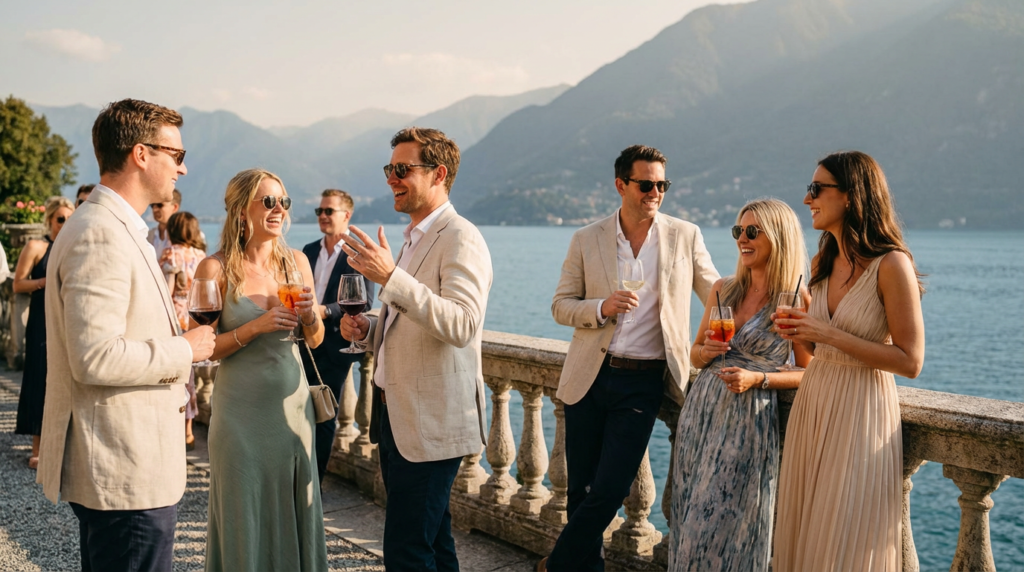
The Instagram aesthetic is achievable, but it requires substantial investment in professional photography, strategic timing to avoid crowds, and often multiple venue fees to capture those iconic shots at different locations. Many of the most-photographed spots—Villa del Balbianello’s loggia, Varenna’s colorful waterfront, Bellagio’s cobblestone streets—are public spaces or require separate location fees beyond your venue rental.
For couples considering Lake Como specifically because of social media imagery, it’s essential to understand that those perfect shots often involve 5 AM photography sessions, exclusivity fees to clear tourists from frame, or post-processing that doesn’t reflect the actual guest experience. This doesn’t diminish Lake Como’s genuine beauty, but it does mean your expectations should align with logistical reality rather than curated content.
How a Lake Como Wedding Really Works (Before You Start Planning)
Planning a bespoke luxury wedding in Italy requires understanding how Italian wedding infrastructure differs from Anglo-American systems. Lake Como operates within this framework with additional regional specificities.
The venue-centric model means your venue selection drives nearly every other decision. Unlike North American weddings where you might book a ceremony location, separate reception venue, and coordinate various spaces, Italian destination weddings typically occur at a single property that provides ceremony space, reception areas, and often accommodation. Your venue choice determines not only aesthetics but also your vendor options, guest capacity, legal ceremony possibilities, and budget floor.
Vendor relationships work differently here. Many premium Lake Como venues have exclusive arrangements with specific caterers, florists, lighting companies, and entertainment providers. This isn’t typically a commission-based markup scheme—it reflects the reality that these vendors understand the property’s infrastructure, have necessary permits, and have proven reliability. However, it does limit your flexibility and can increase costs compared to open-vendor policies.
Seasonality impacts everything beyond just weather. Peak season (May-September) means not only higher pricing but also limited venue availability (often booked 18-24 months ahead), crowded public spaces, ferry wait times, and staffing constraints across the hospitality sector. Shoulder season (April, October) offers better value and more intimate atmosphere, but comes with weather unpredictability that requires robust contingency planning.
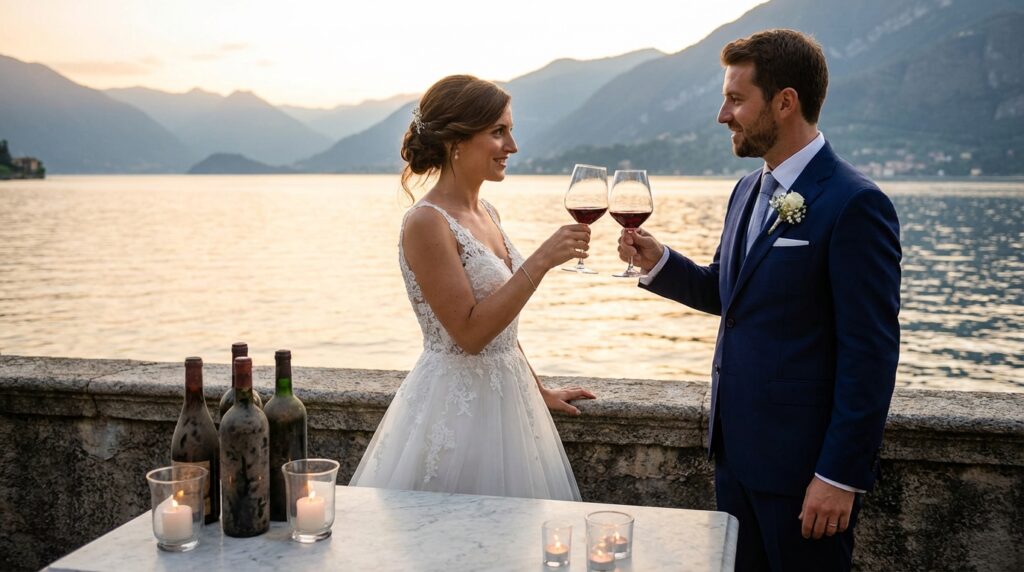
The three-day structure is nearly universal for Lake Como destination weddings. Day one typically includes guest arrival, welcome drinks or dinner, and orientation to the area. Day two is the wedding itself. Day three features a recovery brunch or lunch before departure. This structure isn’t optional—it’s a practical response to the logistics of getting international guests to a specific lake location and providing meaningful celebration time that justifies their travel investment.
Language and cultural differences matter more than many couples anticipate. While larger venues and established wedding planners operate fluently in English, many artisan vendors, municipal officials handling paperwork, and service staff speak limited English. This creates potential for miscommunication on critical details unless you have professional translation support or work with experienced Italian wedding planners.
Legal Requirements to Get Married on Lake Como (Clear & Practical)
Short answer: Foreign nationals need a Certificate of No Impediment from their home country, translated into Italian with Apostille authentication, submitted 4-6 months before the ceremony. The process requires in-person appearance at the municipality 1-2 days before your wedding. Most couples find symbolic ceremonies simpler and choose to marry legally at home.
The legal framework for marrying in Italy as foreign nationals is standardized nationally but executed at the municipal level, creating variation in interpretation and processing times. Here’s the transparent breakdown that most wedding websites avoid providing.
For a legally binding civil ceremony in Italy, you must complete several steps beginning approximately 6 months before your wedding date. First, obtain a Certificate of No Impediment (CNI) or Affidavit of Freedom to Marry from your home country. US citizens do not get this document from their county: they sign a sworn declaration, the Dichiarazione Giurata (often called the Nulla Osta), in front of a US consular officer in Italy (for Lake Como, at the US Consulate General in Milan), and it is then legalized at the Prefettura. They also need an Atto Notorio, sworn with two witnesses at an Italian consulate in the United States or at a court in Italy. Our guide on getting married in Italy as a US citizen explains every step. UK citizens obtain their certificate from their registry office; Australian citizens from the Department of Foreign Affairs.
All documents require official translation into Italian by a certified translator (not Google Translate, not your bilingual friend) and must be authenticated with an Apostille stamp according to the Hague Convention. The translation-plus-Apostille process typically costs €150-300 per document and takes 2-4 weeks if expedited. Budget more time if using standard processing.
Publication of banns (Pubblicazioni) must occur at the municipality where you’ll marry, typically 2-4 weeks before the ceremony date. This requires either traveling to Lake Como in advance or designating a legal representative (usually your wedding planner) with power of attorney to complete the posting on your behalf. The banns remain posted for 8-10 days to allow any legal objections to be raised.
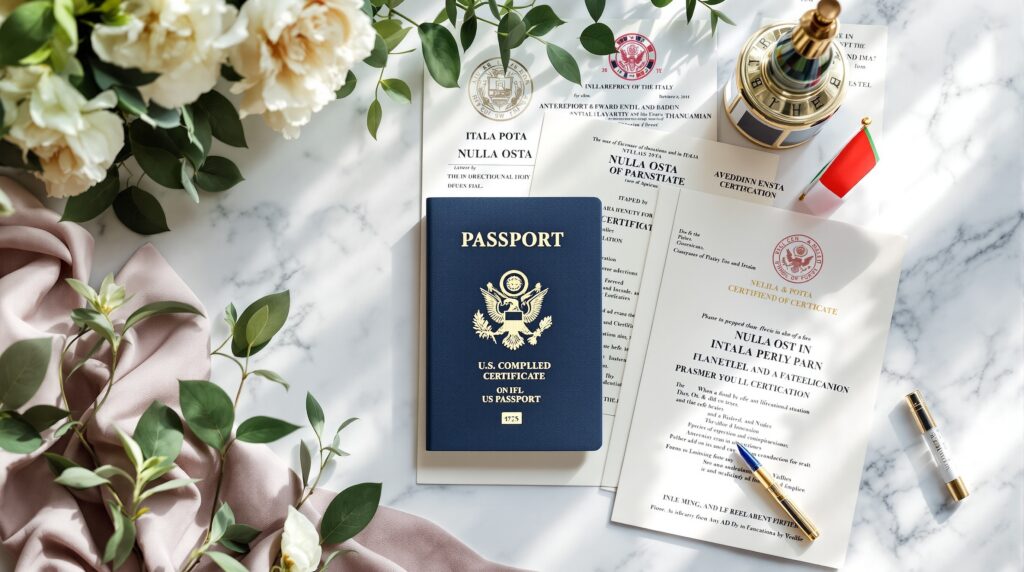
Additional documentation varies by nationality but commonly includes: valid passports, birth certificates (issued within 6 months of wedding date), proof of residence, divorce decrees or death certificates if previously married, and sometimes a declaration of intent to marry. Each municipality’s commune office (Comune) has slightly different requirements, and the official you deal with may interpret rules differently than their colleague would.
Processing at the Comune requires in-person appearance, usually 1-2 days before your ceremony, to review documents, confirm your intent, and receive permission to marry. This appointment must be scheduled months in advance and cannot be delegated. Plan to arrive at Lake Como at least 48-72 hours before your ceremony date to complete this step, allowing buffer time for any document issues.
Cost for legal paperwork typically ranges €500-1,200 when handled professionally, including translator fees, courier services, local representative fees, and commune processing charges. Attempting to manage this yourself from abroad saves money but creates significant stress and high risk of errors that can prevent your ceremony from proceeding legally.
Critical timeline reality: The entire legal process from initiating paperwork to ceremony date requires 4-6 months minimum, with 6-8 months strongly recommended to accommodate inevitable delays. If your planning timeline is shorter, a symbolic ceremony (detailed in the next section) is likely your only viable option unless you marry legally in your home country before your Italian celebration.
Symbolic vs Civil Wedding on Lake Como: Real Differences
Short answer: Symbolic ceremonies offer complete freedom in location, timing, and content but have no legal validity. Civil ceremonies are legally binding but require months of Italian paperwork and restrict you to authorized venues. Most international couples marry legally at home and celebrate symbolically in Italy for maximum flexibility.
The distinction between symbolic and civil ceremonies on Lake Como is more than legal technicality—it fundamentally impacts your planning timeline, venue options, costs, and guest experience. Understanding these differences helps you make an informed decision rather than discovering limitations after you’ve committed financially.
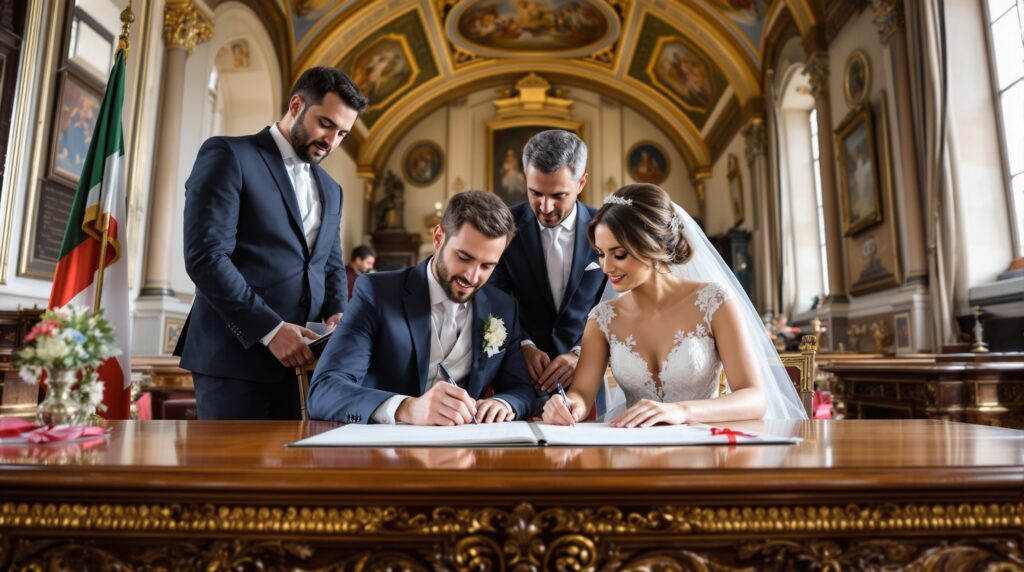
A civil ceremony is legally binding in Italy and recognized internationally. It must occur at an approved civil ceremony location (usually the Comune or a venue with specific authorization), requires a civil official (Ufficiale di Stato Civile) to officiate, follows prescribed Italian legal language, and generates an official marriage certificate. Civil ceremonies are more constrained in timing, location flexibility, and personalization. You cannot write your own vows in a legal civil ceremony, though you can add symbolic elements before or after the official proceedings.
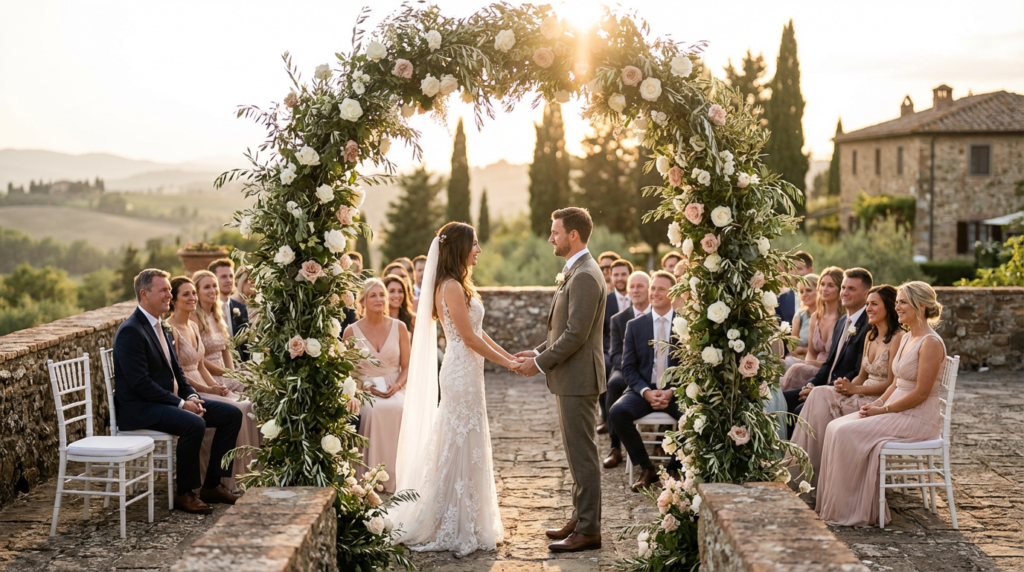
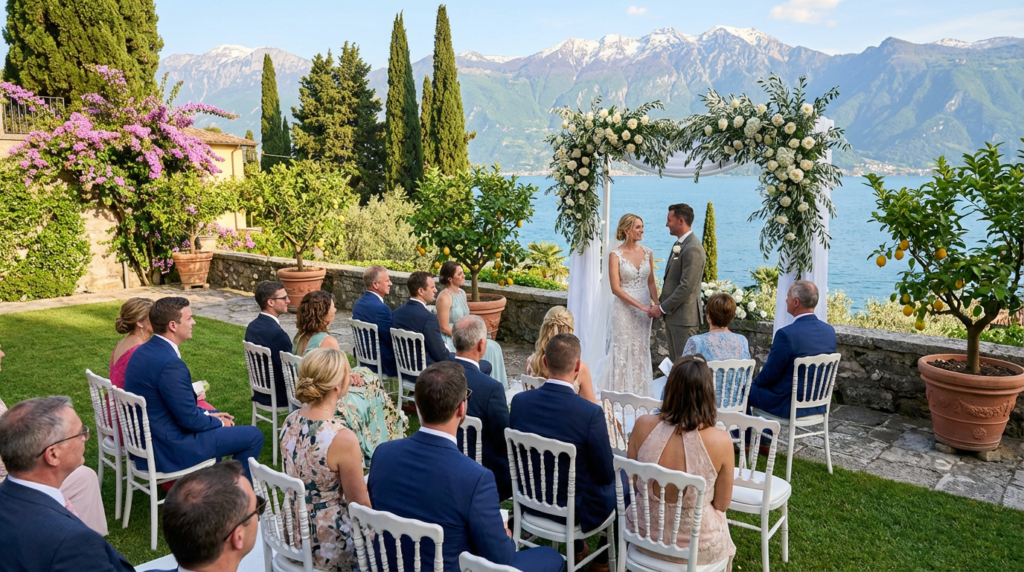
A symbolic ceremony has no legal validity but offers complete freedom in every aspect. You can have anyone officiate (friend, family member, professional celebrant), customize the entire ceremony content and language, hold it anywhere your venue permits, schedule it at any time, and incorporate religious or cultural elements without restriction. Most couples choosing symbolic ceremonies complete their legal marriage privately at home (typically a courthouse or registry office ceremony weeks or months before the Italy event) and treat the Lake Como celebration as their “real” wedding experience.
Venue implications are significant. Civil ceremonies require venues that have obtained specific authorization from local authorities to host legal marriages, and these venues are relatively limited on Lake Como. Many of the most beautiful private villas, gardens, and historical properties can only host symbolic ceremonies. If having your ceremony in a specific iconic location is non-negotiable for you, that location likely limits you to symbolic ceremony unless it’s among the authorized civil ceremony venues.
Cost differences are substantial. Civil ceremonies include mandatory fees for the official (€500-1,000), required witness fees, additional document processing, and often limitation on ceremony location that may necessitate transporting guests between ceremony and reception sites. Symbolic ceremonies incur celebrant fees (€800-2,500 for experienced professionals) but avoid official government fees and provide more venue flexibility that can reduce overall transportation and logistics costs.
Timeline advantage is the symbolic ceremony’s most significant practical benefit. Because you’re not navigating Italian bureaucratic requirements, you can plan a symbolic ceremony in as little as 3-4 months if necessary. This flexibility also eliminates the stress of document issues potentially derailing your entire event. Many experienced wedding planners recommend the symbolic ceremony route specifically because it removes the legal proceedings as a potential point of failure.
Guest perception varies culturally. American and British couples often feel no hesitation about legal-at-home, symbolic-in-Italy arrangements, viewing the Italian event as their authentic celebration. Some European couples prefer the legal ceremony occur during their destination event for family or personal reasons. There is no universal right answer, but transparency with your families about the legal status of your Italian ceremony prevents uncomfortable surprises.
Our professional recommendation based on three decades planning destination weddings is that symbolic ceremonies provide better overall experience for the majority of couples, particularly when you’re investing significantly in the destination event. The flexibility, reduced stress, expanded venue options, and ability to fully personalize your ceremony typically outweigh the symbolic nature of the proceedings, especially when your legal marriage is handled efficiently at home.
How Much a Lake Como Wedding Really Costs (True Total Cost)
Short answer: Expect €70,000-120,000 for 60-80 guests at mid-tier venues, or €150,000-250,000 for luxury celebrations with 100-150 guests. Venue rental is only 20-30% of total costs—catering, florals, photography, planning, and guest logistics comprise the majority of your budget. Add 15-20% contingency for hidden fees and inevitable overruns.
Lake Como wedding costs are consistently misrepresented online, with most sources citing only venue fees or providing ranges so broad they’re functionally useless. Here’s the transparent financial breakdown based on actual vendor pricing, mandatory minimums, and hidden costs that emerge during real planning processes.
1. Venue Costs
Venue rental fees are your budget foundation but represent only 20-35% of total wedding costs. Premium famous properties (Villa del Balbianello, Villa Balbiano, Villa Pizzo) charge €30,000-60,000 for venue access alone. Mid-tier established venues with lake access range €12,000-25,000. Lesser-known properties or those slightly inland from the shore range €6,000-12,000. Budget venues (primarily restaurants with event space or small family-run accommodations) start around €2,500-5,000. All venues charge higher rates May-September, with many offering 20-30% discounts for April or October dates.
2. Catering & Beverage
Catering represents your single largest expense category at 30-40% of total budget. Lake Como catering minimums are typically €150-350 per person for full wedding service including welcome drinks, aperitivo, multi-course dinner, premium open bar, and late-night provisions. This per-person rate multiplied by your guest count often exceeds your venue rental fee. Budget €180-220 per person at mid-range venues, €250-350 at premium properties. These figures include mandatory 10% VAT on food and beverage but not service charges (typically 15-20% added to final catering bills).
3. Florals & Design
Floral and décor costs are routinely underestimated. Basic ceremony flowers and reception centerpieces start at €5,000 for 50-person weddings. Elaborate installations, ceremony arches, statement pieces, and abundant florals for larger weddings easily reach €15,000-30,000. Premium florists working exclusively with top venues charge accordingly. These figures include 22% VAT on services.
4. Photography & Video
Photography and videography from professionals experienced in Lake Como’s specific lighting, locations, and logistics typically cost €4,000-8,000 for photography (full-day coverage) and €3,500-7,000 for videography (full-day coverage with edited film). Lower-cost providers exist but often lack familiarity with venue restrictions, optimal shooting locations, and backup plans for weather issues—critical factors in destination wedding documentation.
Entertainment and technical production is another consistently underestimated category. Basic DJ services start around €1,500; live bands range €4,000-8,000; ceremony musicians add €800-1,500. Lighting design for dinner and dancing spaces (nearly essential for proper ambiance in historic venues with limited electrical infrastructure) costs €2,500-6,000. Sound system rental for ceremony and reception adds €1,000-2,500. These figures include 22% VAT on services.
Hair and makeup for bride and bridal party averages €800-1,500 for the bride, plus €80-150 per additional person. Most professional wedding hair and makeup artists require booking multiple people to justify travel to Lake Como locations.
5. Planning & Logistics
Wedding planning fees range dramatically based on service level. Day-of coordination starts around €3,000-4,000. Partial planning (6 months of support, vendor recommendations, logistics coordination) costs €6,000-10,000. Full-service planning (12-18 months of comprehensive support including venue selection, design, vendor management, guest services, and on-site coordination) ranges €12,000-25,000 depending on wedding complexity and guest count.
Guest transportation and logistics easily add €5,000-15,000 to your budget. Airport transfers for 50-100 guests cost €3,000-6,000 depending on distance and vehicle types. Boat transportation for wedding activities (highly recommended for authentic Lake Como experience) costs €2,000-5,000. Guest accommodation blocks require coordination but aren’t typically paid directly by couples unless you’re covering rooms as gifts.
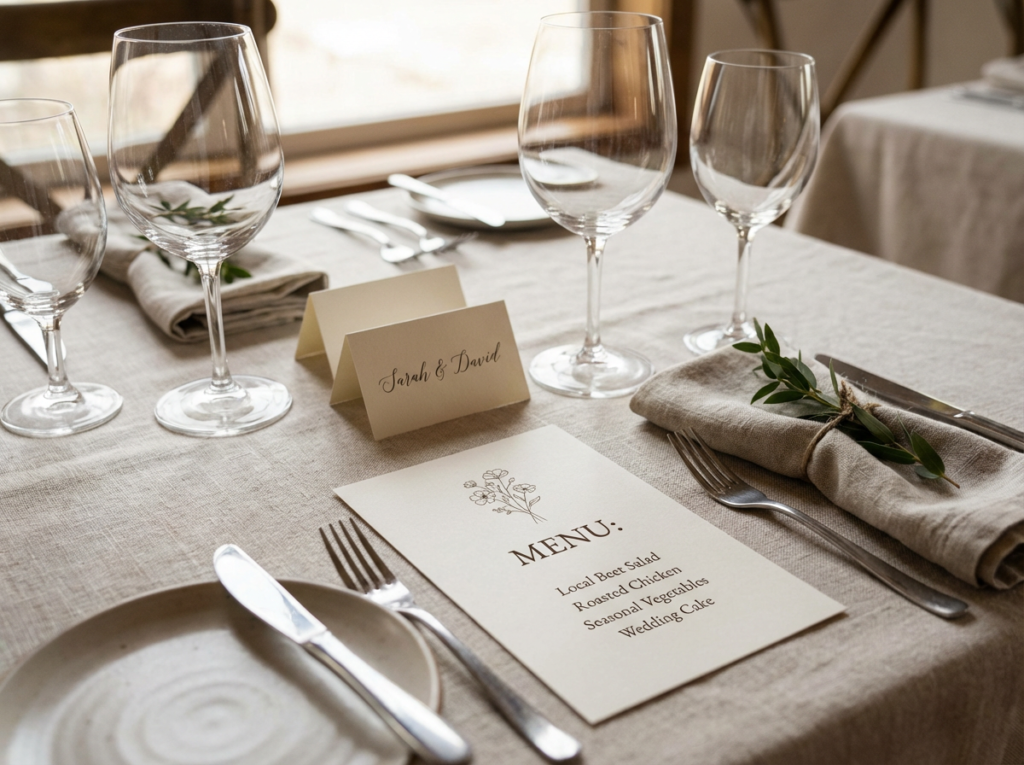
Wedding favors, welcome bags, stationery, and miscellaneous costs add up quickly. Budget €2,000-5,000 for these elements for a 50-80 person wedding. Custom invitations suites (save-the-dates, formal invitations, day-of materials) cost €800-2,000 from professional designers. Welcome bags with local products run €40-80 per guest room.

6. Hidden & Extra Costs
Hidden costs and fees that emerge during planning include: Exclusivity fees for private use of venues (€2,000-8,000 beyond base rental), overtime fees beyond contracted hours (€500-1,500 per hour), permits for specific photography locations (€200-800), cake cutting fees if using external baker (€3-8 per person), corkage fees if bringing specific wines (€15-35 per bottle), vendor meal requirements (€30-50 per vendor), and mandatory gratuities that may not be clearly disclosed upfront (10-15% of service costs).
Insurance and contingency should represent 5-10% of your total budget. Wedding insurance covering cancellation, vendor no-shows, and weather issues costs €300-800 for comprehensive policies. Maintaining a contingency budget for inevitable overruns, last-minute additions, and unexpected costs is essential financial planning.
True Total Investment by Guest Count
| Guest Count | Total Budget Range | Key Investment Areas |
|---|---|---|
| 25-35 guests (intimate) | €40,000-60,000 | Smaller venue with accommodation, quality photography, partial planning, basic florals |
| 50-70 guests (mid-size) | €75,000-120,000 | Established venue, full planning, comprehensive photography/video, substantial florals, live entertainment |
| 100-130 guests (luxury) | €150,000-200,000 | Premium venue, complete production, abundant florals/lighting, top-tier vendors, white-glove guest services |
| 150+ guests (ultra-luxury) | €250,000+ | Iconic venues, celebrity-level teams, multi-day programming, comprehensive guest accommodation |
For comparison, similar-scale celebrations at Lake Garda wedding venues typically cost 15-25% less, while Portofino weddings cost approximately the same or slightly more depending on specific venue selection.
Lake Como Wedding Budget Breakdown (By Budget Range)
Understanding how your total budget translates into actual wedding experience helps set realistic expectations and guides where to allocate resources for maximum impact. These breakdowns reflect real vendor pricing and mandatory minimums.
Budget Range: €40,000-60,000 (Intimate Wedding, 25-35 Guests)
Venue and Accommodation: €8,000-12,000 for properties like Villa Carminati Resta or Villa Relais Vittoria where venue rental includes limited on-site accommodation. This provides intimate setting with direct lake access.
Catering and Beverage: €8,000-12,000 total (€250-300 per person all-inclusive). At this guest count, you’re paying for service infrastructure as much as food, driving per-person costs higher than larger events.
Photography: €4,500-6,000 for full-day professional coverage. Non-negotiable at this budget level for quality documentation.
Planning Coordination: €4,000-6,000 for partial planning services. Essential for navigating logistics, vendor communication, and legal requirements remotely.
Florals and Décor: €3,000-5,000 for ceremony arrangements, reception centerpieces, and basic venue enhancement.
Hair, Makeup, Entertainment: €3,000-5,000 combined for bridal beauty, ceremony musician, and reception DJ or small band.
Transportation, Welcome Elements, Miscellaneous: €3,000-5,000 for airport transfers, boat experience, welcome bags, and contingency.
Trade-offs at this level: Limited floral abundance, likely symbolic ceremony only, basic entertainment, minimal lighting production, no videography unless you sacrifice another category.
Budget Range: €75,000-100,000 (Mid-Size Wedding, 50-70 Guests)
Venue: €15,000-20,000 for well-appointed properties with strong infrastructure but not top-tier famous villas. Options include Villa Regina Teodolinda, Grand Hotel Tremezzo garden spaces, or Castello di Rossino.
Catering: €15,000-21,000 (€200-250 per person). Better economy of scale brings per-person costs down while maintaining quality.
Photography and Videography: €10,000-12,000 combined for comprehensive professional documentation of both disciplines.
Planning: €8,000-12,000 for full-service planning. At this budget level and guest count, professional planning is highly recommended rather than optional.
Florals and Décor: €8,000-12,000 for substantial ceremony installation, elevated reception florals, and professional lighting design.
Entertainment: €5,000-7,000 for live band or premium DJ plus ceremony musicians.
Hair, Makeup: €2,000-3,000 for bride and bridal party.
Guest Logistics: €6,000-9,000 for transportation, boat tours, and multi-day activity coordination.
Welcome Elements, Favors, Stationery, Contingency: €4,000-6,000.
What this budget achieves: Proper Lake Como destination wedding experience with professional execution across all categories, authentic venue with character, good food and wine, professional entertainment, beautiful flowers, complete documentation. This is the realistic minimum for a “full” Lake Como wedding that delivers on the destination’s promise.
Budget Range: €150,000-200,000 (Luxury Wedding, 100-130 Guests)
Venue: €25,000-35,000 for premium properties with iconic status, exceptional infrastructure, and either lakefront accommodation or exclusive villa rental. Villa Erba, portions of Villa del Balbianello, or exclusive use of boutique properties.
Catering: €30,000-45,000 (€250-300 per person with premium wine selections, specialized menu, late-night provisions).
Photography and Videography: €14,000-18,000 for top professionals including second shooters, multi-day coverage, albums, and premium editing.
Planning and Design: €18,000-25,000 for comprehensive full-service planning with design direction, extensive vendor management, guest services, and on-site team.
Florals, Décor, and Lighting: €20,000-30,000 for abundant installations, statement pieces, complete lighting design, specialty rentals.
Entertainment: €10,000-15,000 for premium live band, ceremony ensemble, cocktail musicians, DJ for late night, complete technical production.
Hair, Makeup, Beauty: €4,000-6,000 for bride, bridal party, and family members across multiple days.
Guest Experience: €15,000-20,000 for comprehensive transportation including boat tours, welcome event production, day-after brunch, concierge services.
Stationery, Favors, Welcome Production: €6,000-8,000 for custom design suite, luxury welcome bags, premium favors, signage, day-of materials.
Contingency and Insurance: €8,000-12,000.
What this budget delivers: Complete luxury Lake Como wedding at a premier venue with no meaningful compromises. Abundant beautiful flowers, exceptional food and wine, professional entertainment, comprehensive guest care, and the caliber of execution that creates truly memorable experiences.
Budget Range: €250,000+ (Ultra-Luxury, 100-150+ Guests)
At this investment level, you’re accessing the absolute top tier of Lake Como wedding possibilities: exclusive use of Villa Balbiano or Villa del Balbianello complete venues, celebrity-level vendor teams, elaborate multi-day programming, luxury accommodation for all guests, extraordinary floral and production design, and white-glove guest services throughout. This is the level of celebrations that generates the iconic imagery associated with Lake Como.
Investment at this scale should include experienced luxury wedding planning from initial concept through execution. The complexity and vendor coordination required makes professional planning non-negotiable rather than recommended.
Choosing the Right Wedding Venue on Lake Como (How to Decide)
Your venue selection is the single most consequential decision in Lake Como wedding planning, impacting budget, guest experience, photography, weather contingency, vendor options, and overall celebration feel. Most couples approach this decision backward—falling in love with imagery before understanding how venue characteristics align with their practical priorities.
Start with capacity requirements. Lake Como venues have firm maximum capacities driven by municipal permits, safety regulations, and physical space limitations. Many historic villas beautifully accommodate 40-60 guests but become uncomfortable at 80+. Other properties shine with larger groups but feel cavernous for intimate celebrations. Determine your realistic guest count first (accounting for international travel attrition of 15-25% from initial invite list), then identify venues appropriately sized for that number.
Assess accommodation integration. Venues fall into three categories: no on-site accommodation (day rental only), limited accommodation (6-20 rooms, typically for bride, groom, and VIP guests), or full accommodation (ability to house all guests). Each model has implications. Day-rental-only venues require coordinating external hotel blocks and guest transportation, but offer pure event spaces with best views. Limited accommodation provides convenience for your closest people while guests stay nearby at hotels. Full accommodation creates resort-like experience but limits venue options significantly and typically increases costs.
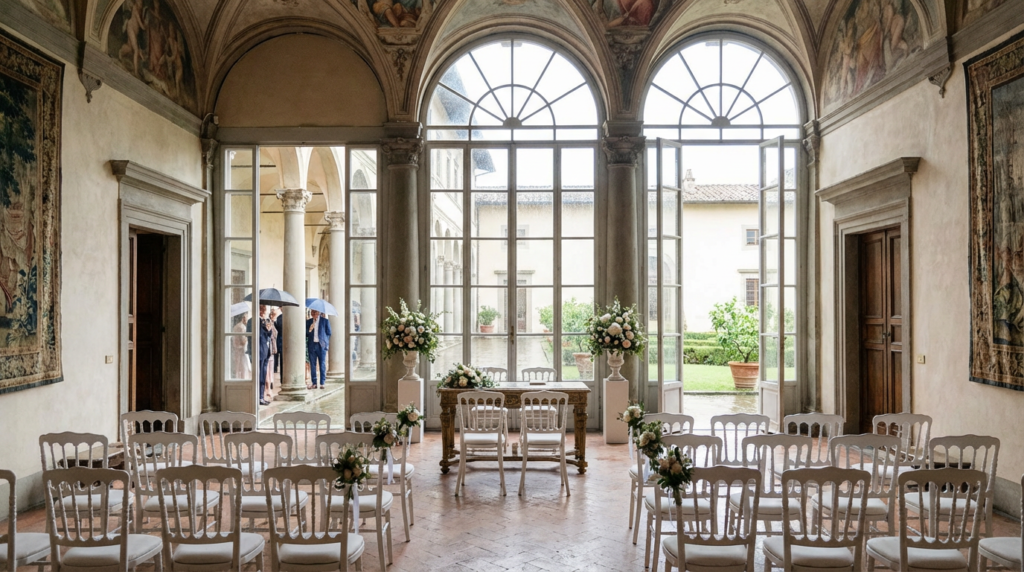
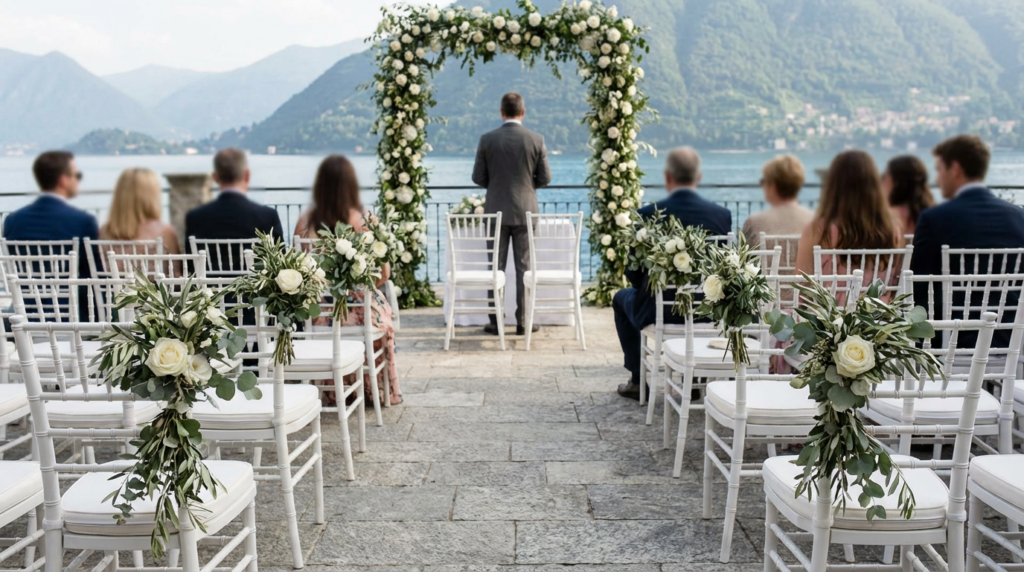
Evaluate weather contingency infrastructure. Most Lake Como ceremonies are planned outdoors because the views are the venue’s primary asset. However, May-September weather includes regular thunderstorms, high heat, and occasional multi-day rain systems. Venues with elegant covered alternatives (substantial loggias, historic interior rooms with character, or professional tent infrastructure already in place) provide essential backup that doesn’t compromise your wedding feel. Venues without proper indoor alternatives put your entire event at risk of weather-driven disaster. This single factor should eliminate venues from consideration, regardless of their fair-weather beauty.
Understand vendor flexibility vs. exclusivity. Some venues mandate exclusive vendor relationships for catering, florals, entertainment, and technical production. Others allow outside vendors with coordination fees. Still others operate completely open policies. Exclusive arrangements limit flexibility but can simplify planning with established teams. Open policies provide cost control and personalization but require more intensive vendor vetting and coordination. Neither approach is inherently better, but the policy must align with your planning style and budget strategy.
Consider guest experience holistically. Venues with challenging access (narrow roads, limited parking, boat-only access) create logistical complexity for guests unfamiliar with the area. Properties in busy tourist centers provide easy amenities but sacrifice privacy and tranquility. Remote locations offer exclusivity but increase transportation costs and limit guests’ independent exploration. Hotels provide convenience but institutional atmosphere. There is no perfect solution—only trade-offs that matter more or less depending on your guest demographics and priorities.
Evaluate ceremony and reception flow. The physical relationship between ceremony space, cocktail area, and reception location dramatically impacts guest experience and event pacing. Ideal venues provide these spaces in natural proximity without requiring transportation but with enough separation that setup transitions don’t disrupt the celebration. Venues requiring guest transportation between ceremony and reception add complexity, cost, and energy loss in your event flow.
Assess noise and time restrictions carefully. Municipal noise ordinances across Lake Como typically prohibit amplified music after 11 PM outdoors, with some areas enforcing 10 PM limits. Indoor extensions may allow music until 1-2 AM at additional cost. If dancing and late-night celebration are priorities, confirm specific restrictions and indoor alternatives at each venue under consideration. Some properties have established relationships with local authorities providing slightly more flexibility; others face strict enforcement.
Visit venues in person if possible. Photos and videos cannot convey spatial reality, sight lines, acoustics, natural light quality, or the intangible feel of a property. If your budget allows a venue-scouting trip to Lake Como, the investment (typically €2,000-4,000 for flights, 2-3 nights, meals) provides critical information that prevents expensive mistakes. Schedule appointments at 4-6 properties over 2-3 days, bringing your key decision-making partner or family member whose opinion matters.
When in-person visits aren’t feasible, work with experienced planners who know properties intimately and can conduct detailed virtual tours addressing your specific questions. Requesting additional photos and videos from venues (beyond their marketing materials) showing the property in different weather, lighting, and setup configurations provides crucial information.
For couples also considering other Italian destinations, comparing Lake Como characteristics with venues in Portofino, Venice weddings, or Lake Garda celebrations helps clarify whether Lake Como’s specific attributes align with your priorities or whether another location might better serve your vision.
Famous Villas vs Lesser-Known Venues: Real Trade-Offs
The marketing around Lake Como weddings emphasizes a handful of iconic properties—Villa del Balbianello, Villa Balbiano, Villa Pizzo, Villa d’Este—creating the impression that these venues are necessary to achieve authentic Lake Como experience. The reality is more nuanced, with significant trade-offs between famous properties and lesser-known alternatives.
Villa del Balbianello is Lake Como’s most photographed venue, featuring the iconic loggia with vine-covered columns framing lake views. Its genuine advantages include extraordinary maintained gardens, instant recognizability, and exceptional photography potential. The challenges include extremely limited availability (books 18-24 months ahead), high cost (€30,000-40,000 venue fee alone), restricted ceremony times, prohibition on amplified music, limited reception space requiring guests to sit/stand in gardens, no accommodation on-site, complex booking procedures through FAI (the Italian cultural foundation managing the property), and crowds of daily tourists visiting until 5 PM. Balbianello works beautifully for couples prioritizing iconic photography and willing to structure their entire event around the property’s constraints, budget permitting.
Villa Balbiano represents ultra-luxury Lake Como experience with its private pier, grand interior rooms, and exclusive atmosphere. Advantages include comprehensive on-site facilities, true privacy, stunning interiors, and ability to host large events with complete control. The investment required (€50,000-60,000 venue fee plus minimum spending requirements) places this firmly in €250,000+ total budget territory. For couples with budget flexibility prioritizing uncompromising luxury and complete privacy, Balbiano delivers. For those seeking value optimization, the premium doesn’t translate proportionally to guest experience compared to venues at half the cost.
Lesser-known venues like Villa Carminati Resta, Villa Regina Teodolinda, Relais Villa Vittoria, or Castello di Rossino provide excellent Lake Como wedding experiences at substantially lower investment. These properties offer authentic lake access, charming character, professional event infrastructure, and genuine Italian atmosphere without the tourist crowds or celebrity pricing. The trade-off is lack of instant recognizability and somewhat less dramatic photography locations compared to famous properties.
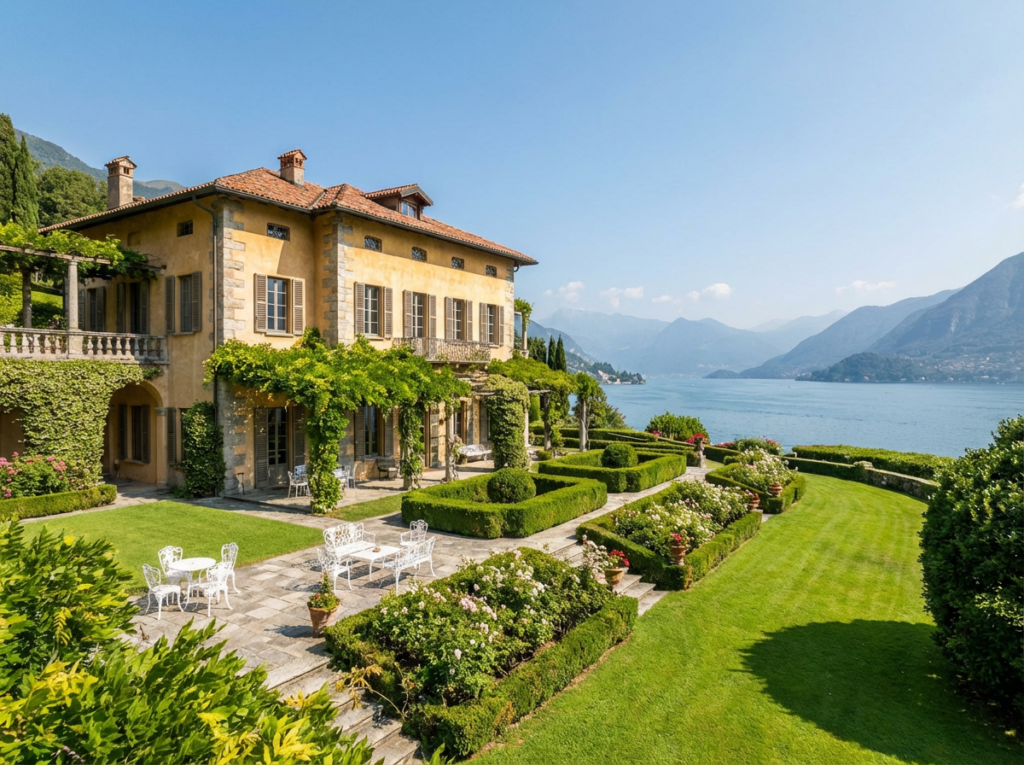
The honest assessment from three decades planning destination weddings: Your guests won’t know (and likely won’t care) whether your ceremony occurred at the €40,000 famous villa or the €12,000 beautiful lesser-known property. They will notice and remember exceptional food, comfortable logistics, warm hospitality, beautiful flowers, and genuine celebration atmosphere—elements that have nothing to do with venue fame and everything to do with budget allocation and planning execution.
Photography considerations are legitimate. If you’ve always envisioned your ceremony photos at Balbianello specifically, that’s a valid priority that justifies the investment. However, stunning Lake Como wedding photography is absolutely achievable at any lakefront venue with skilled photographers who know the location intimately. Many lesser-known properties provide more flexible photography access, better lighting at key times, and fewer restrictions than the famous villas.
Social media validation motivates some couples toward famous venues specifically for recognizable Instagram content. This is honest self-awareness rather than judgment—destination weddings do function as experiences to share as well as events to live. If this matters significantly to you, the investment in a recognizable venue may align with your values. Just ensure you’re consciously choosing this priority rather than unconsciously assuming famous venues are necessary for quality celebration.
Our professional recommendation: Visit or extensively research 2-3 famous properties and 3-4 lesser-known alternatives in your budget range. Compare not just aesthetics but practical factors: guest capacity, weather alternatives, vendor flexibility, accommodation integration, and total cost impact. Most couples find that lesser-known venues provide better overall value and experience, with budget savings redirected to elements that more directly impact guest enjoyment.
For broader perspective on Italian destination wedding venues, exploring premier event destinations across Italy provides context for how Lake Como properties compare to exceptional venues in other regions.
When to Get Married on Lake Como (Weather, Prices, Experience)
Short answer: September-early October offers the most reliable weather and optimal guest experience. Mid-May through June provides beautiful spring conditions at 10-20% lower pricing. Peak summer (July-August) has warmest weather but maximum crowds and premium rates. Shoulder months (April, late October) offer 25-35% cost savings but weather unpredictability.
Lake Como’s northern Italian location creates distinct seasonal characteristics that impact weather reliability, pricing, tourist density, and overall wedding experience. Timing decisions require balancing multiple factors rather than simply choosing “best weather” months.
| Season | Weather | Pricing | Crowds | Best For |
|---|---|---|---|---|
| Sep-Early Oct | Most reliable, 65-75°F, spectacular light | High (but worth it) | Moderate | Couples prioritizing weather reliability |
| May-June | Spring blooms, 65-75°F, occasional rain | Medium-High | Moderate | Balance of value and conditions |
| July-August | Warmest (75-85°F), thunderstorm risk | Highest (+20-30%) | Maximum tourists | Only if dates are inflexible |
| April/Late Oct | Unpredictable, 55-70°F | Lowest (-25-35%) | Light | Budget-conscious with weather flexibility |
Peak season (June-August) offers reliable warm weather with average temperatures 75-85°F, long daylight hours (sunset around 9 PM in midsummer), and lush garden vegetation. However, this period also brings maximum tourist crowds, premium pricing (20-30% higher than shoulder season), high humidity, occasional severe thunderstorms, intense competition for venue dates (requiring 18-24 months advance booking), and limited accommodation availability in desirable lakefront hotels. Many experienced planners actually counsel against peak summer specifically because tourist crowds impact photography, restaurant availability, and guest experience of the destination.
Shoulder season (May and September-early October) is widely considered optimal timing by wedding professionals. May features spring gardens in full bloom, comfortable temperatures (65-75°F), relatively uncrowded venues and towns, and more reasonable pricing. September-early October provides the most reliable weather of the entire year, spectacular light for photography, harvest season atmosphere, and good value pricing. Both months book quickly but with less competition than mid-summer. The main consideration is somewhat shorter daylight hours compared to midsummer, impacting ceremony timing for optimal photography light.
April and late October represent true shoulder season with advantages and challenges. Weather becomes less predictable with occasional cool days, rain probability increases, some tourist infrastructure operates reduced hours, but pricing drops significantly (25-35% below peak) and venues have much better availability. Couples comfortable with weather risk and prioritizing value find these months attractive. Robust contingency planning for indoor alternatives becomes non-negotiable.
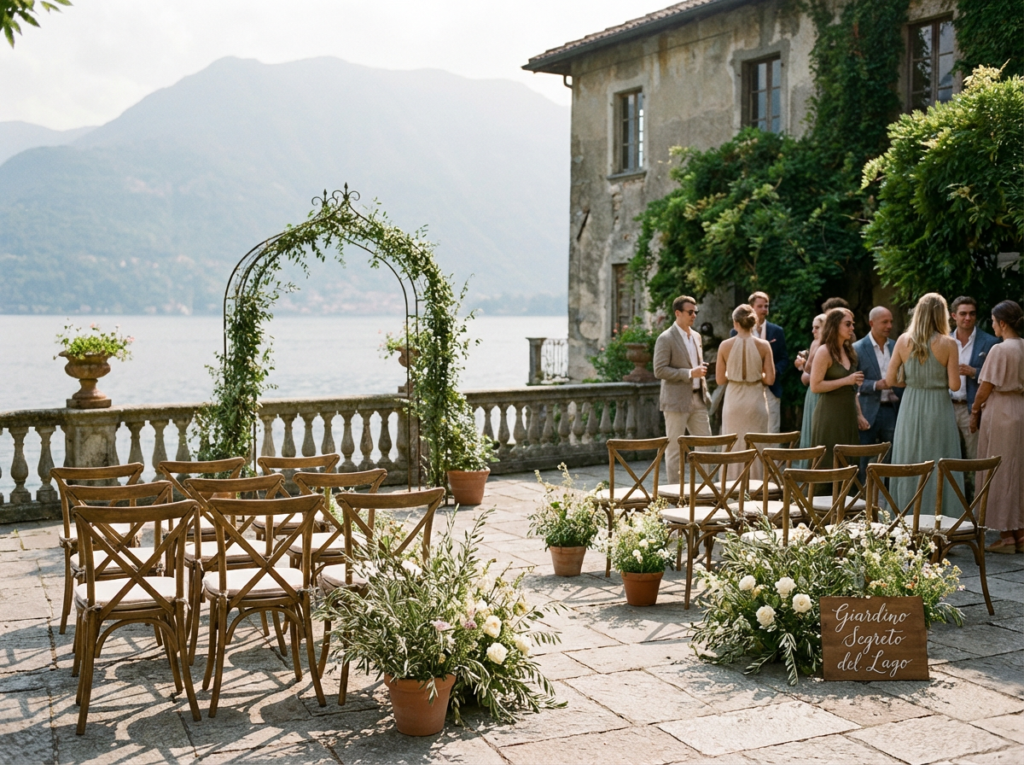
November-March is considered off-season when most Lake Como wedding venues don’t operate events due to cold weather, limited daylight, and closed tourist infrastructure. A few properties with substantial indoor facilities do host winter weddings, typically at steep discounts (40-50% below peak pricing), appealing to couples specifically desiring intimate indoor celebration or willing to trade optimal conditions for significant budget savings.
Weather patterns to understand: Lake Como experiences afternoon thunderstorms 1-2 times weekly throughout summer. These typically pass within 1-2 hours but can arrive suddenly and violently. September-early October has the lowest rainfall probability of the entire year. May is generally dry but with occasional extended rain systems. Spring comes late to the Alps—early April can still feel cool and wintry. Fall color peaks in late October but brings increasing cold and wet weather.
Holiday weekends and Italian festivals impact availability and pricing. Avoiding Ferragosto (mid-August Italian national holiday), Easter weekend, and long Italian holiday weekends provides better vendor availability and more attentive service from venues operating at reasonable rather than maximum capacity.
Consider that different Italian destinations have different optimal seasons—Portofino wedding timing follows similar seasonal patterns, while Venice ceremonies and southern regions have different considerations.
What Happens If It Rains? (Realistic Plan B)
Weather contingency planning for Lake Como weddings is non-negotiable rather than optional. The Alpine location, afternoon thunderstorm patterns, and outdoor-centric venue designs mean every couple needs a comprehensive, realistic backup plan developed during initial planning rather than scrambled together when forecasts turn unfavorable.
Understanding weather probability: Even in September (the driest month), rainfall occurs approximately 6-7 days out of 30. Summer months see 8-10 rainfall days monthly, often as afternoon thunderstorms. Early/late season brings 10-15 potential rain days per month. These statistics mean you have approximately 75-80% probability of dry weather on any given September date, dropping to 65-70% in summer and 50-60% in shoulder months. These are not negligible risks—proper contingency planning is essential.
Venue infrastructure matters enormously. Properties with substantial covered loggias, elegant indoor ballrooms, or historic interior spaces that maintain atmospheric quality provide genuine backup options. Simple tents or utilitarian indoor spaces that lack character require extensive decoration investment to achieve acceptable ambiance. Venues with no proper covered alternatives put your celebration at serious risk.
Tent solutions sound straightforward but involve significant complexity and cost. Proper clear-span tents with flooring, lighting, climate control, and elegant installation cost €8,000-15,000 depending on size. Setup requires 1-2 days advance installation and generates significant environmental impact at historic properties (driving stakes, protecting lawns and gardens). Many Lake Como venues prohibit or restrict tent installation, particularly at protected historic sites. Tent permitting through local municipalities can require months of advance approval. This option works at some properties but is far from universal solution.
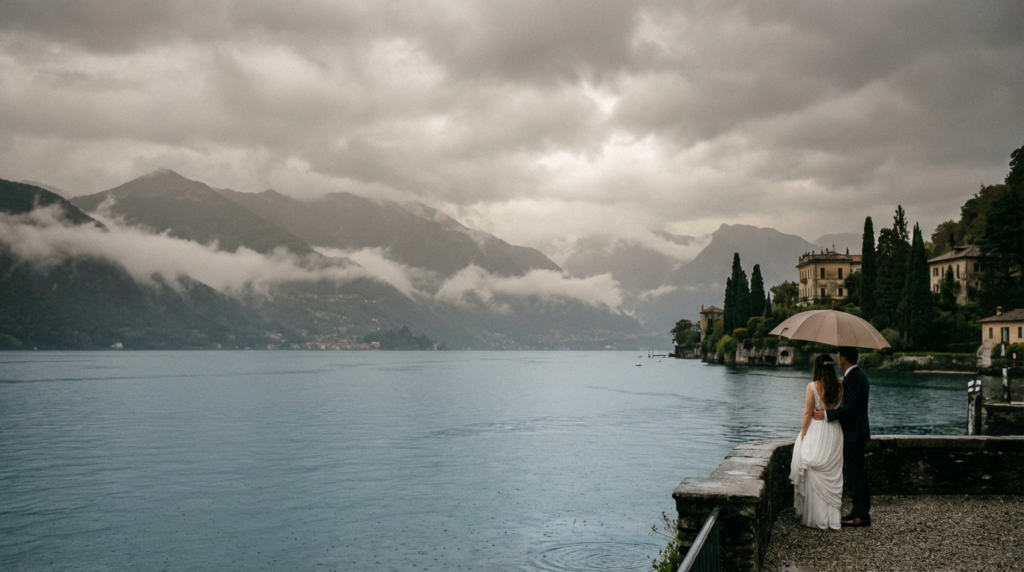
Timeline for contingency decisions needs establishment upfront. Most venues require final ceremony location decision (outdoor vs indoor backup) 48-72 hours before the event. Waiting until morning-of creates unacceptable pressure on vendor teams and setup logistics. Monitor weather forecasts starting 7-10 days before your date, make preliminary indoor/outdoor call at 5 days out, confirm final decision 2-3 days ahead. This timeline allows proper vendor preparation while using reasonably accurate forecast data.
Partial rain scenarios complicate planning. Intermittent showers, overcast skies, or brief morning rain followed by afternoon clearing require real-time adaptation. Establish decision protocols with your planner and venue: what conditions trigger moving ceremony indoors, what rainfall level requires covering cocktail space, when do we implement full indoor reception. Having these thresholds defined prevents stress-driven decision paralysis on your wedding day.
Guest comfort in marginal weather: Cool temperatures, wind, or threatening skies without actual rain require consideration. Providing elegant blankets, pashminas, or hand warmers for cool evenings demonstrates thoughtful hospitality. Having umbrellas available for light rain allows ceremony to proceed. Establishing covered cocktail areas protects against sun as well as potential rain.
Photography adaptations: Rain and overcast conditions create different but not inferior photography opportunities. Overcast light is actually superior for portraits, eliminating harsh shadows and squinting. Dramatic stormy skies with dark clouds and illuminated lake create moody, romantic imagery. Discuss rainy-day photography plans with your photographer during initial consultations—professionals experienced in Lake Como have extensive wet-weather expertise and location alternatives.
Realistic contingency costs should be budgeted at 5-8% of total wedding budget. This covers potential tent installation, additional décor for indoor spaces, umbrella/comfort item rental, extended vendor time for setup adaptations, and flexibility for last-minute adjustments. Couples who skip contingency budgeting find themselves making compromised decisions under pressure when weather challenges emerge.
Mindset and expectations: Accept that outdoor elements are inherently unpredictable and that adaptability is part of destination wedding experience. The most successful Lake Como weddings include couples who plan thoroughly for weather alternatives then release attachment to specific outcomes, trusting their team to create beautiful experience regardless of conditions.
For perspective on weather considerations at other Italian destinations, planning in Liguria (Portofino region) faces similar patterns while more southern locations have different climate factors.
Guest Logistics on Lake Como (Hotels, Transport, Multi-Day Events)
Managing 50-150 international guests traveling to a specific Lake Como location for 3-4 days of celebration requires sophisticated logistics planning that most couples significantly underestimate in complexity and cost.
Accommodation
Hotel accommodation strategy begins with understanding Lake Como’s accommodation landscape. The region offers luxury hotels (Grand Hotel Tremezzo, Villa d’Este, CastaDiva), mid-range properties (Hotel Belvedere Bellagio, Relais Villa Vittoria), and budget options (small family-run hotels and B&Bs). Room rates vary dramatically: €300-1,200/night at luxury hotels, €150-300/night at mid-range properties, €80-150/night at budget accommodations. Most destination wedding guests stay 2-3 nights minimum.
Negotiating hotel blocks requires starting 12-15 months before your wedding. Properties want guaranteed room commitments but couples can’t confirm precise guest count that far ahead. Negotiate courtesy blocks (held without financial commitment until 3-6 months out, then converted to guaranteed rooms) or tiered commitment structures (guarantee 50% of rooms, courtesy hold the remainder). Many hotels require minimum 10-15 room commitment for block rates and concessions.
Geographic distribution matters. Spreading guests across multiple towns (some in Bellagio, others Varenna, others Como) creates transportation complexity. Concentrating everyone in one location simplifies logistics but limits accommodation variety and may not provide enough rooms. Most weddings with 50+ guests require 2-3 different properties to accommodate everyone appropriately.
Transportation
Transportation coordination is your most complex logistical challenge. Guests need transport from Milan airports to Lake Como (45-90 minutes depending on destination), between their hotels and your venue for all events, and potentially between towns for multi-day activities. Options include:
Private coach buses (€1,200-2,500 per day) work well for large groups staying at consolidated hotels, transporting everyone together. This creates structured timing that some guests appreciate and others find constraining.
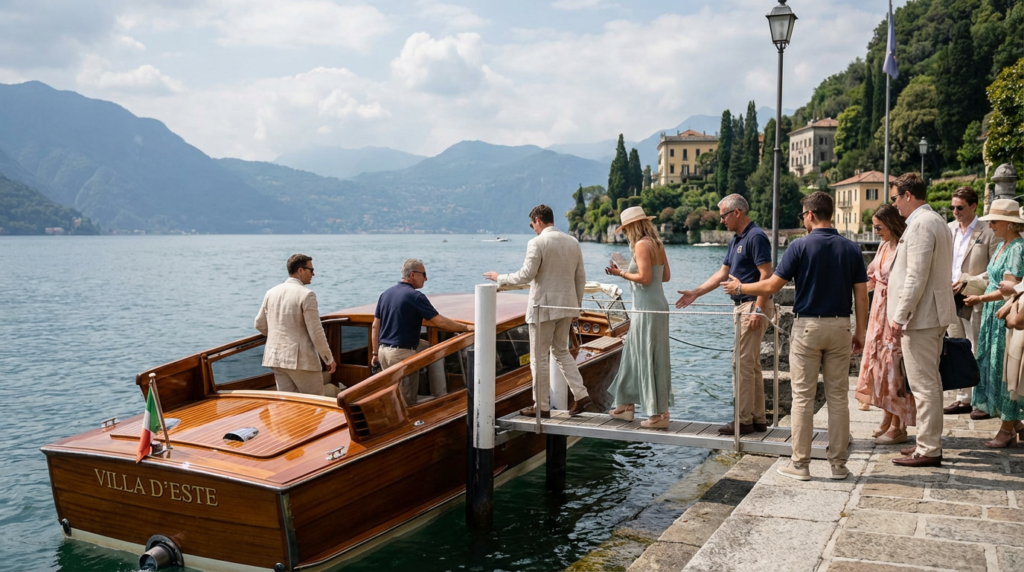
Private car services (€80-150 per transfer per vehicle) provide flexibility but multiply costs quickly. Twenty vehicles for 60 guests for 3 round-trip transfers equals €7,200-9,000.
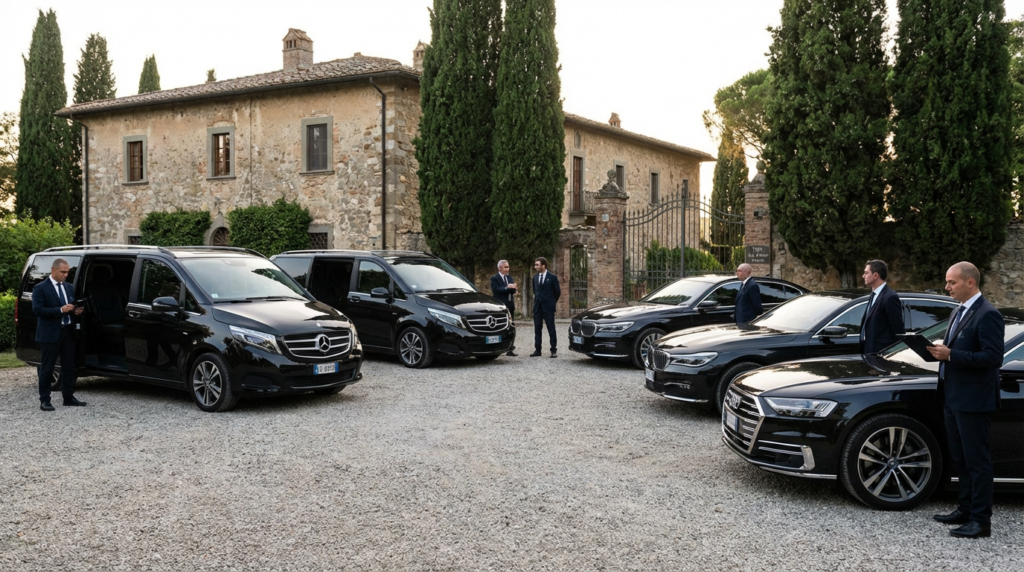
Ferry services are Lake Como’s most authentic and scenic transportation but require careful planning. Public ferries operate on published schedules (often hourly, less frequent evenings) and can accommodate groups but don’t provide privacy or timing control. Private boat charters (€400-1,200 per boat per hour, typically holding 10-20 passengers) deliver authentic experience with logistical control. Most weddings incorporate at least one private boat experience for its experiential value.
Taxi and ride-share options exist but are limited in Lake Como’s smaller towns. Don’t rely on guests independently arranging transportation—many towns have only 2-3 taxis and no Uber/Lyft presence.
Multi-Day Events
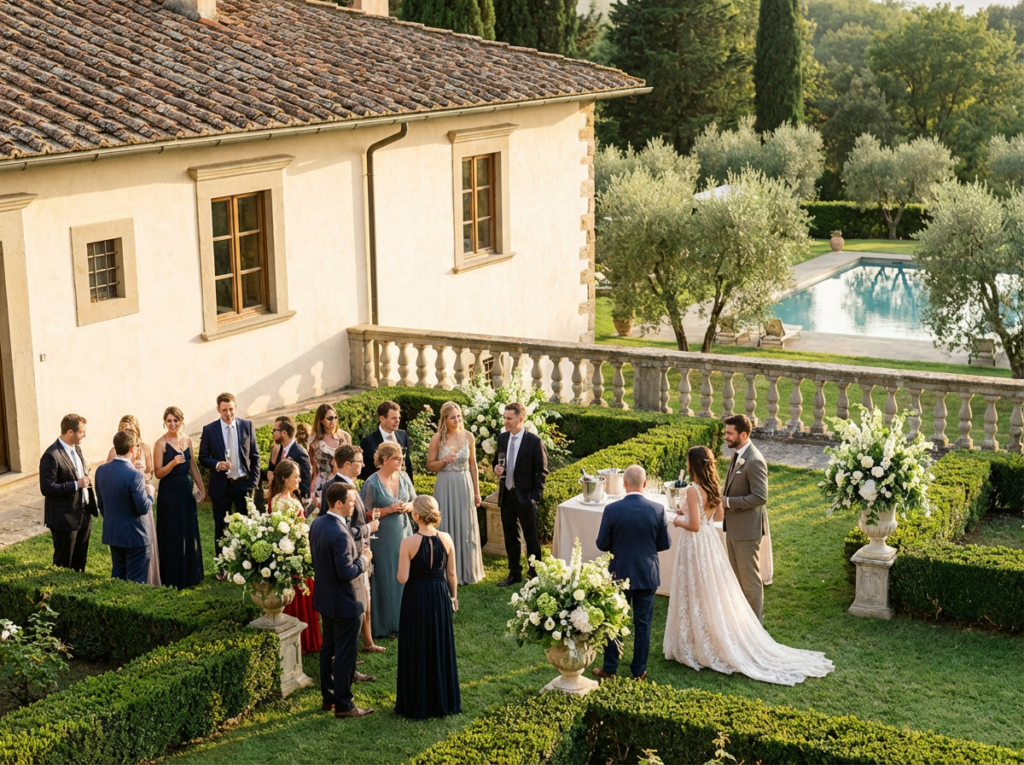
Multi-day event structure typically includes: Welcome evening (Day 1), Wedding ceremony and reception (Day 2), Recovery brunch or lunch (Day 3). Some couples add additional programming: boat tour for early arrivals, rehearsal dinner for family and wedding party, post-wedding pool party or casual gathering. Each additional event multiplies logistical complexity.
Welcome events serve both social and practical functions: helping guests acclimate to the destination, providing orientation information, introducing guests who don’t know each other, and creating first-night community that elevates the entire weekend atmosphere. Budget €80-150 per guest for welcome cocktails and substantial appetizers, or €150-220 per person for full dinner. Location can be your wedding venue (if available the day before), guests’ hotel, or a characteristic restaurant with private space.
Day-after events require careful energy management—many guests (and you) will be exhausted after a full wedding celebration. Casual daytime gatherings (poolside lunch, lakeside café, relaxed garden brunch) work better than elaborate productions. Budget €50-100 per guest for hosted daytime meal.
Guest Communication
Communication systems for multi-day destination celebrations are essential. Create a simple wedding website with: detailed schedule including specific times and locations, transportation information (which bus, which dock, which time), accommodation recommendations with booking links, area information and suggested activities, packing guidance specific to your venues and season, and emergency contact information for day-of coordination team. Send 2-3 targeted emails at strategic intervals: save-the-date with preliminary information, formal invitation with accommodation details and RSVP instructions, and final details email 3-4 weeks before the wedding with complete schedule and specific logistics.
Welcome bags or packets in guests’ hotel rooms provide tangible information resource: printed schedule cards, local area maps, restaurant recommendations, emergency contact information, small welcome gifts, and any items specifically useful for your events (sunscreen for outdoor ceremony, pashminas for cool evening, hangover recovery kit for morning-after brunch).
Guest assistance services: For weddings exceeding 80-100 guests, having a dedicated guest services coordinator (separate from wedding day coordination) to handle accommodation questions, transportation issues, activity recommendations, and logistics troubleshooting provides valuable support. This role costs €1,500-3,000 but significantly improves guest experience and reduces stress on you and your families.
The logistical complexity of managing destination wedding guests is a primary reason professional wedding planning becomes essential beyond a certain guest count—this isn’t about flowers and aesthetic decisions but operational execution that determines whether your celebration flows smoothly or devolves into stressful chaos.
How Wedding Planning on Lake Como Really Works (Timeline)
The timeline for Lake Como wedding planning differs significantly from planning domestic hometown weddings, driven by destination logistics, international vendor coordination, legal requirements, and venue availability patterns.
18-24 months before wedding is optimal timing to begin planning, particularly for peak season dates (May-September). At this stage: establish overall budget and guest count estimate, research Lake Como as destination (vs. other Italian locations), begin venue research and outreach, consider whether to engage wedding planner for full-service support, and review legal requirements for marrying in Italy.
15-18 months out: Make venue selection and secure date with deposit (typically 25-30% of venue fee). Simultaneously consider engaging wedding planner if doing full-service planning—this is the optimal time for planner involvement to provide maximum value throughout the process. Begin researching photographer and videographer, as top professionals book 12-18 months ahead.
12-15 months before: Confirm photographer and videographer with contracts and deposits. Begin legal paperwork process if pursuing civil ceremony in Italy (this timeline is why many couples choose symbolic ceremonies). Finalize guest list to reasonable accuracy. Research and reach out to accommodation properties to establish hotel blocks. Book key vendors with longer lead times: florist, entertainment, hair and makeup professionals.
9-12 months out: Finalize catering details and menu selections with venue or caterer. Confirm entertainment specifics: ceremony musicians, cocktail music, reception band or DJ. Begin developing décor concepts and rental requirements (specialty furniture, linens, lighting). Order custom wedding attire (wedding dress, groom’s suit) allowing time for fittings and alterations. Send save-the-dates to guests, particularly important for destination weddings requiring travel planning.
6-9 months before: Finalize ceremony details: civil, symbolic, or religious; officiant selection; vows and ceremony structure. Confirm all vendor contracts and deposits. Work on invitation design and printing (destination wedding invitations should mail 12-14 weeks before wedding for adequate RSVP time). Develop detailed timeline for wedding day and multi-day event flow. Begin planning welcome event and day-after gathering specifics.
3-6 months out: Mail formal invitations. Track RSVPs and manage guest count fluctuations. Confirm final hotel room blocks and guest accommodation needs. Coordinate transportation logistics for all events. Conduct planning meetings (virtual or in-person) with key vendors to review timelines, logistics, and specific requirements. Finalize floral designs and décor plans. Complete legal paperwork process for civil ceremony if applicable. Purchase wedding rings. Schedule final dress fittings.
1-3 months before: Confirm final guest count with venue and caterer. Create detailed seating arrangements accounting for family dynamics and guest relationships. Finalize music selections (ceremony processional/recessional, first dance, parent dances, reception playlist preferences). Confirm final timeline with all vendors. Prepare welcome bags and day-of materials. Create photography shot list of must-have family combinations and key moments. Conduct final planning meetings reviewing every detail and contingency plan. Apply for any required permits (special photography locations, extended music hours, etc.). Confirm weather contingency protocols with venue and planner.
2-4 weeks before: Final payments to vendors (most require payment 2-3 weeks before event). Conduct final reviews of all contracts and commitments. Provide final timeline and contact information to all vendors. Pack for Italy including wedding attire, accessories, rings, any personal items for ceremony, and essential documents. Prepare final tip envelopes for vendor team (though many Italian vendors build service charges into fees, personal tips for exceptional service are appreciated).
1 week before: Travel to Lake Como. Conduct in-person venue walkthrough and vendor meetings if possible. Review setup plans and spatial arrangements. Attend civil ceremony appointment at Comune if applicable (typically 1-2 days before wedding). Conduct rehearsal with ceremony officiant, wedding party, and key family members. Deliver welcome bags to hotels. Host welcome event. Get good rest before your wedding day.
Wedding day: Trust your planning and vendor team to execute while you focus on experiencing the celebration. Your job on wedding day is to be present, enjoy the moment, and trust that the extensive planning you’ve completed will unfold as intended
After the wedding: Many couples underestimate post-wedding administrative tasks. These include: reviewing and approving final vendor deliverables (photos, video), managing any outstanding payment or tip issues, writing vendor reviews, handling legal marriage documentation if you had civil ceremony, sending thank-you notes to guests and vendors, and organizing photos and memorabilia.
Critical timeline factors: This 18-24 month timeline is recommended, not mandatory. Couples planning in 8-12 months can execute successful Lake Como weddings with more limited venue selection, higher planner costs for compressed timeline, less vendor availability, and increased stress. Planning in less than 6 months is possible only with symbolic ceremony, significant budget flexibility to accommodate limited availability, and professional planning support to compress normal processes.
For couples considering multiple Italian destinations, similar planning timelines apply to celebrations in other regions, though specific legal and vendor landscapes vary by location.
Do You Really Need a Wedding Planner on Lake Como?
Short answer: Professional planning is highly recommended (often essential) for celebrations over 50-60 guests, legal civil ceremonies, couples with limited Italian language capability, and compressed timelines under 12 months. Smaller intimate weddings (under 30-40 guests) with symbolic ceremonies can potentially be self-planned by highly organized couples with 18+ months timeline.
The question of whether professional planning is necessary for Lake Como weddings generates strong opinions based on individual experiences, budget constraints, and personal planning capabilities. The honest answer is nuanced rather than universal.
Situations where planning is essentially mandatory: Guest counts over 80 people create logistical complexity that overwhelms most couples managing remotely. Legal civil ceremonies with full Italian paperwork requirements benefit enormously from professional handling. Couples with limited Italian language ability face substantial barriers communicating with local vendors. Very short planning timelines (under 8 months) require professional expertise to compress normal processes. Ultra-luxury celebrations at top-tier venues demand the vendor relationships and production expertise that established planners provide.
Situations where couples can consider self-planning (with significant caveats): Small intimate celebrations under 30-40 guests reduce logistical complexity. Symbolic ceremonies eliminate legal paperwork stress. Couples with substantial event planning experience translate those skills to wedding context. Generous timelines (18+ months) allow learning curve and research time. Venue selections at properties with strong internal coordination (full-service hotels, all-inclusive venues) reduce vendor management burden. Some language capability in Italian or confidence navigating language barriers helps significantly.
What wedding planners actually do (beyond the marketing language of “bringing your vision to life”): Venue identification and objective assessment based on your priorities rather than commission relationships. Vendor recommendations from established professional networks with known quality and reliability. Contract review and negotiation protecting your interests on deposits, cancellation policies, payment schedules, and liability. Detailed logistics planning including guest transportation, accommodation blocks, multi-day event flow, and timeline development. Vendor coordination and communication in Italian, managing the dozens of emails, calls, and meetings required. Budget management and tracking preventing overruns and identifying cost savings. Legal paperwork guidance for civil ceremonies, including document preparation, translation coordination, and Comune procedures. Design direction translating your aesthetic preferences into specific vendor briefs. Problem-solving when inevitable issues arise with vendors, venues, or logistics. Day-of coordination managing vendor arrivals, setup supervision, timeline execution, and real-time troubleshooting. Guest services support answering questions, managing special requests, and ensuring everyone has positive experience.
Cost-benefit analysis: Full-service planning costs €12,000-25,000 depending on wedding scale and complexity. This represents 12-20% of typical Lake Como wedding budgets. The value delivered includes stress reduction, time savings (planning consumes 150-250 hours for complex destination weddings), expertise preventing costly mistakes, vendor relationship access, language services, and significantly higher probability of smooth execution. For many couples, this represents excellent value. For others with tight budgets, that €15,000 could alternatively fund upgraded catering, better photography, or extended guest experience elements.
Partial planning alternatives: Day-of coordination only (€3,000-4,500) provides professional execution of plans you’ve developed but no advance planning support. This works for highly organized couples comfortable with independent research and vendor management but wanting professional oversight on the wedding day itself. Partial planning (€6,000-10,000 for 6-8 months of support) provides venue selection guidance, vendor recommendations, and logistics coordination while you manage design decisions and direct vendor relationships. This middle ground offers professional expertise on most complex elements while controlling costs.
The honest self-assessment questions: Are you comfortable operating in some uncertainty and ambiguity, or do you need clear answers and established processes? Can you commit 10-15 hours weekly over 12-18 months to wedding planning research, vendor communication, and logistics coordination? Are you confident negotiating contracts and managing multiple professional relationships simultaneously? Can you handle stress when problems arise without professional support to manage solutions? Are you willing to accept higher risk of planning mistakes, vendor miscommunications, and logistical challenges in exchange for budget savings? Do you have Italian language capability or confidence working through translation tools and language barriers?
Our professional perspective after three decades creating celebrations across Italy: Most couples benefit significantly from professional planning for Lake Como weddings, particularly for celebrations over 50-60 guests. The destination’s specific challenges—language, logistics, complex vendor landscape, legal requirements, distance from home—create elevated planning complexity compared to hometown weddings. The investment in planning typically proves among the highest-value expenditures in your budget by preventing mistakes, reducing stress, and enabling you to actually enjoy your engagement period and wedding experience rather than drowning in operational details.
That assessment doesn’t mean DIY planning is impossible or always wrong—it means entering that path with realistic understanding of the commitment, challenges, and trade-offs involved rather than underestimating what’s required and discovering mid-planning that you’re overwhelmed.
What a Lake Como Wedding Planner Actually Does (Not Marketing)
Understanding planning services clearly—stripped of marketing language—helps couples make informed decisions about whether to engage professional support and what service level makes sense for their situation.
Initial Planning Phase
Initial consultation and venue selection (20-30 hours of work): Understanding your priorities, budget, aesthetic preferences, and logistical requirements. Researching appropriate venues matching your criteria. Conducting venue outreach, obtaining detailed proposals, and negotiating preliminary terms. Arranging and potentially conducting venue visits or virtual tours. Providing objective assessments of venue pros/cons relative to your priorities. Guiding venue decision and facilitating contract execution.
Vendor team assembly (30-40 hours): Identifying vendors across all categories (catering if separate from venue, photography, videography, florals, entertainment, hair/makeup, transportation, rentals) matching your quality expectations and budget parameters. Providing curated recommendations rather than exhaustive lists. Facilitating vendor introductions and initial consultations. Managing RFP process for complex categories like catering and florals. Reviewing vendor proposals for completeness and fair pricing. Negotiating vendor contracts on your behalf. Coordinating vendor deposits and payment schedules.
Design and Logistics Development
Design development and décor planning (25-35 hours): Translating your aesthetic vision into specific design direction. Developing color palettes, material selections, and styling concepts. Creating floral design briefs with specific arrangements, varieties, and installations. Coordinating rental needs (specialty furniture, unique table settings, lounge areas, ceremony elements). Managing lighting design concepts and technical requirements. Developing stationery direction if providing that service. Creating visual design presentations (mood boards, inspiration images) for your review and approval.
Logistics coordination and timeline development (40-50 hours): Establishing comprehensive timelines for multi-day event flow. Coordinating guest accommodation blocks across multiple properties. Planning transportation logistics for all events and guest movements. Developing welcome event and day-after gathering concepts and execution plans. Creating detailed wedding day timeline accounting for setup, photography, ceremony, cocktails, reception flow, and vendor schedules. Coordinating vendor load-in and setup sequences. Managing delivery and pickup schedules for rentals and florals. Developing contingency protocols for weather and potential issues.
Legal and administrative support for civil ceremonies (15-25 hours if applicable): Explaining Italian legal marriage requirements and documentation needed. Coordinating with municipality (Comune) for ceremony arrangements. Managing document translation and Apostille processes. Scheduling required appointments and potentially attending as legal representative. Following up on paperwork processing and status. Ensuring all legal requirements are satisfied before ceremony date.

Pre-Wedding and Execution
Guest services and communication (15-25 hours): Developing wedding website content with logistics information. Creating welcome bag contents and arranging delivery. Managing guest questions about accommodations, area activities, and logistics. Coordinating any special guest needs (accessibility requirements, dietary restrictions, family logistics). Providing area guides and recommendations.
Budget management and tracking (10-15 hours ongoing): Maintaining detailed budget spreadsheets tracking estimates vs. actuals across all categories. Monitoring for potential overruns and identifying cost-saving opportunities. Managing vendor payment schedules and ensuring timely payments. Tracking deposits, installment payments, and final balances. Providing regular budget status updates.
Pre-wedding coordination (20-30 hours in final 4-6 weeks): Conducting detailed planning meetings reviewing all elements and confirming readiness. Finalizing seating arrangements and meal selections. Creating day-of materials (timeline documents, vendor contact sheets, setup diagrams, seating charts). Conducting final vendor coordination confirming deliveries, timing, and specific requirements. Managing final payments to vendor team. Preparing tip envelopes and vendor gifts if applicable. Conducting rehearsal coordination.
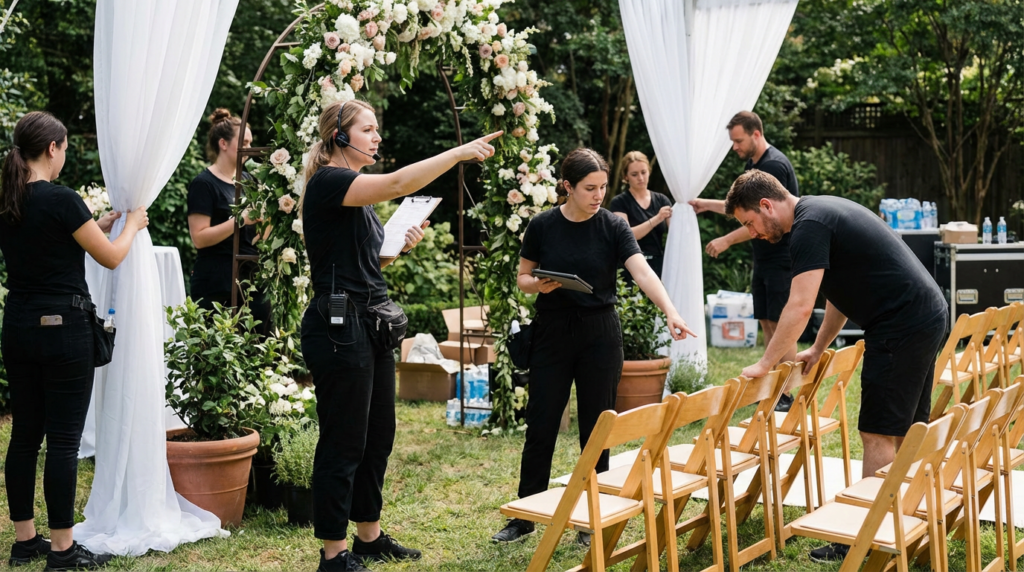
Wedding day coordination (12-16 hours on-site): Overseeing all vendor arrivals and setup. Problem-solving any issues that arise. Managing timeline execution keeping all elements on schedule. Coordinating wedding party and family for ceremony processional. Liaising with venue staff throughout the event. Managing subtle details (bustling dress, directing guests, protecting timeline). Troubleshooting technical issues, weather challenges, or vendor problems. Ensuring smooth teardown and proper handling of personal items, gifts, and rentals.
Post-wedding follow-up (3-5 hours): Managing any final vendor payments or tips. Addressing any vendor issues or concerns. Coordinating delivery of final elements (photo previews, vendor review requests). Providing recap of expenses vs. budget.
Total professional planning time investment: 200-300 hours for full-service planning of a comprehensive Lake Como wedding. This time investment distributed over 12-18 months transforms complex destination wedding planning from overwhelming to manageable for couples balancing full-time careers and life commitments.
What planning services explicitly do NOT typically include (clarifying common misconceptions): Shopping for or purchasing your wedding attire. Handling your personal travel arrangements. Managing your pre-wedding beauty appointments beyond the wedding day. Creating or managing your wedding website (they provide content, you maintain the platform). Designing or printing your invitations unless separately contracted. Attending or planning your engagement party, bridal shower, or bachelorette celebration. Providing day-to-day emotional support or wedding therapy. Making decisions on your behalf—planners facilitate, provide expertise, and execute, but you maintain decision authority throughout.
Understanding this realistic scope helps clarify whether planning services provide value proportional to investment for your specific situation.
Cultural, Dietary & International Guest Considerations
Lake Como destination weddings bring together guests from diverse backgrounds, cultures, and locations, each with specific needs and expectations that thoughtful planning should address rather than overlook.
Dietary requirements extend well beyond basic vegetarian options. Modern wedding planning should accommodate: vegan requirements (no animal products whatsoever including honey and dairy), kosher observance (complex requirements including supervision, preparation, and sourcing), halal requirements (specific meat preparation and alcohol avoidance), severe allergies (nuts, shellfish, gluten), and medical dietary restrictions (diabetes-appropriate options, low-sodium needs). Italian cuisine gracefully accommodates most dietary needs, but requires proactive communication with caterers rather than assuming accommodation. Request detailed ingredient lists for dishes, ensure clear labeling at buffet stations, and provide discreet service of alternative plates for guests with restrictions.
Cultural and religious considerations for ceremony content and reception elements demonstrate respect for your guests’ backgrounds and beliefs. Interfaith or multicultural couples should consider: incorporating meaningful traditions from both backgrounds, consulting with family members about elements that honor their heritage, potentially engaging religious officiant(s) along with celebrant for symbolic ceremony, being thoughtful about prayer or blessing language that respects diverse beliefs, and considering cultural reception traditions like hora dancing, tea ceremonies, or other meaningful rituals. Lake Como’s Catholic heritage means many venues are comfortable with Christian elements, but couples from other traditions should discuss plans explicitly with venues to ensure comfort and appropriate accommodation.
Language accessibility affects guest experience significantly when many attendees don’t speak English or when your wedding party speaks multiple languages. Consider: bilingual ceremony programs with key elements translated, multilingual welcome materials explaining logistics and schedule, signage at reception in relevant languages, potentially bilingual toasts or translations of key speeches, and ensuring key vendors and venue staff have language capability to assist non-English-speaking guests.
Guest mobility and accessibility should be planned for rather than discovered as an issue upon arrival. Lake Como’s historic venues, cobblestone streets, and hillside locations create genuine accessibility challenges. When selecting venues, explicitly ask about: accessibility from parking to venue entrance, availability of ramps or elevator access to ceremony and reception spaces, accessible restroom facilities, seating options at ceremony (not everyone can stand comfortably for 30-minute ceremonies), and whether challenging terrain exists between ceremony and reception locations. Proactively arrange transportation assistance for guests with mobility limitations and communicate accessibility information clearly so guests can plan appropriately.
Family composition diversity includes children, elderly guests, and guests attending solo without plus-ones. For children, consider: whether your celebration is adults-only or family-friendly (clearly communicate on invitations), providing childcare services if having family-friendly wedding at a location where local childcare isn’t accessible, and creating age-appropriate meal options and activities if including children. For elderly guests, consider: comfortable seating throughout the day, accessible transportation without steps or steep inclines, consideration of event duration (lengthy 12-hour celebrations may be exhausting), and earlier event start times that don’t have elderly guests out late. For solo guests, ensure thoughtful seating that doesn’t isolate people attending alone and consider whether they’d appreciate connection with other singles vs. placement with couples they know.
International guest experience affects how your celebration is perceived. Guests traveling internationally invest substantial time and money attending your wedding—average international airfare, hotels for 3-4 nights, meals, and incidentals easily reach $2,000-4,000 per couple. Demonstrate appreciation for this investment through: well-organized logistics that minimize guest stress and confusion, thoughtful welcome event that makes everyone feel included, perhaps partial subsidy of some elements like welcome dinner or transportation, genuine hospitality toward their presence rather than expectation of attendance, and maximizing their overall Italy experience through recommendations and perhaps organized optional activities.
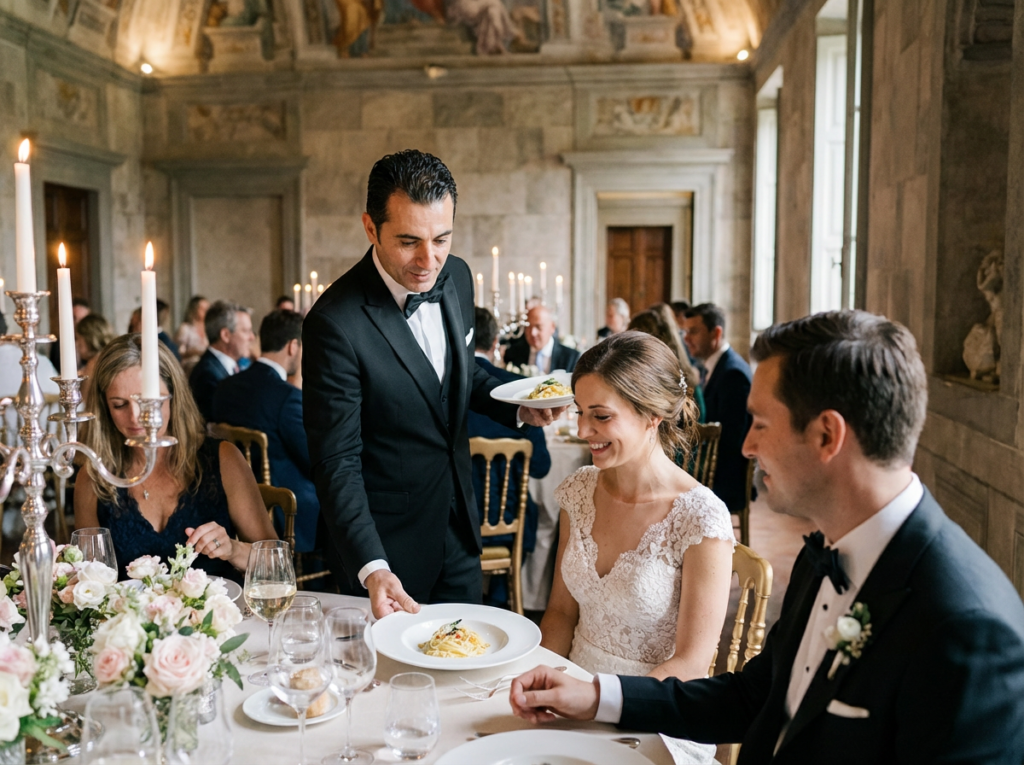
Italian wedding cultural norms differ from Anglo-American traditions in ways worth understanding: Italian weddings often run longer (6-8 hours is normal), multi-course meals are expected rather than brief dinner service, open bars with substantial alcohol provision are standard rather than specialty, late-night food service is traditional (pizza, arancini, or other substantial offerings around 11 PM-midnight), formal speeches are less prominent than in US/UK traditions (sometimes only brief welcome remarks), and gift registries are less common (monetary gifts in decorative envelopes are traditional).
Thoughtful attention to diverse guest needs transforms your wedding from an event centered solely on couple preferences to a celebration that honors everyone who invested in being present for your commitment.
Common Mistakes Couples Make (And How to Avoid Them)
Three decades planning destination weddings in Italy provides clear perspective on preventable mistakes that create unnecessary stress, budget overruns, and compromised experiences.
Underestimating true total costs by focusing on venue fees without accounting for the additional 70-75% of budget required for catering, photography, florals, entertainment, planning, logistics, and miscellaneous expenses. Avoid this by: developing comprehensive budget spreadsheets covering all categories before committing to venues, adding 15-20% contingency to your estimated budget, and being honest about what you can genuinely afford rather than stretching beyond means expecting costs to somehow work out.
Selecting venues based solely on photography without considering practical factors like guest capacity, weather alternatives, vendor restrictions, accessibility, and true guest comfort. Avoid this by: visiting venues in person when possible, requesting detailed information about restrictions and practical considerations, considering guest experience holistically rather than just ceremony photo backdrop, and trusting professional planner guidance about venue practicality even when it conflicts with your Instagram vision.
Inadequate weather contingency planning including venues without proper indoor alternatives, no budget allocation for contingencies, or waiting until days before the wedding to develop backup plans. Avoid this by: making weather contingency a primary venue selection criterion, budgeting explicitly for potential tent or indoor setup costs, establishing weather decision timelines and protocols during planning phase, and emotionally accepting that weather may require adaptations so you’re prepared psychologically.
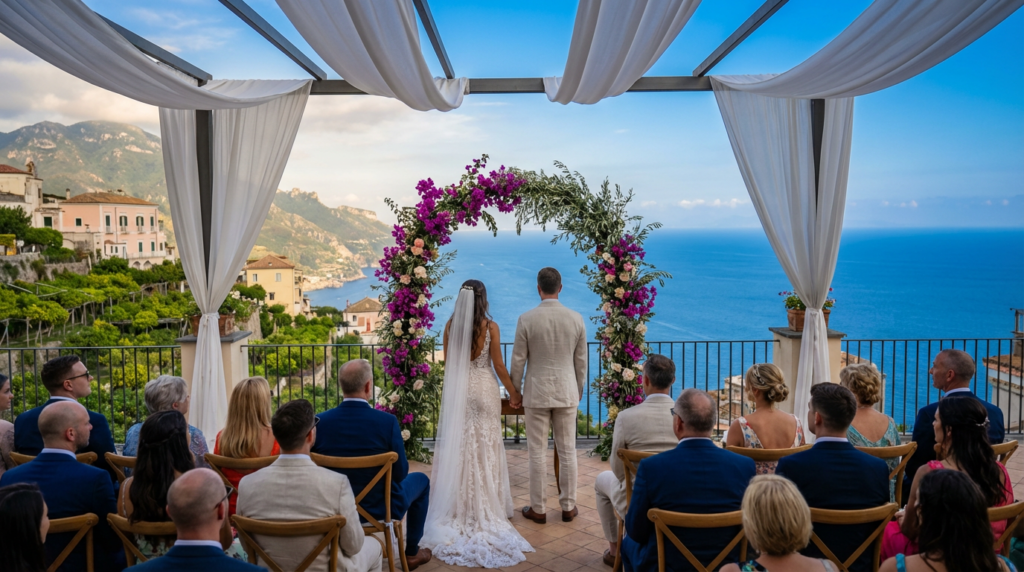
Over-inviting initially then struggling when 80% of invitees confirm attendance instead of anticipated 60-70% destination wedding attrition rate. Avoid this by: being realistic about who truly will (and should) make the international trip, considering that COVID-era pent-up travel demand increased destination wedding attendance rates compared to historical norms, budgeting and planning for higher-than-expected guest counts, and being selective about invitations rather than feeling obligated to invite extended networks who won’t realistically attend.
Underestimating planning time investment and attempting DIY coordination while working full-time demanding careers, then becoming overwhelmed 6-8 months before the wedding. Avoid this by: honestly assessing your available time and planning capabilities during early planning phase, engaging professional support from the beginning if your situation warrants it rather than waiting until you’re drowning, and building planning tasks into regular weekly schedules rather than intermittent intensive efforts that create inconsistent progress.
Poor vendor communication and expectation setting including assuming vendors understand your vision without clear direction, not requesting detailed proposals in writing, or inadequate contract review. Avoid this by: over-communicating your priorities and concerns rather than assuming understanding, requesting comprehensive written proposals before making decisions, having all vendor agreements formalized in clear contracts, reviewing contracts carefully (or having planner review) before signing, and maintaining organized records of all vendor communications and commitments.
Neglecting guest experience elements by investing disproportionately in aesthetic elements while providing poor logistics information, complicated transportation, or inadequate hospitality. Avoid this by: allocating budget to guest services (welcome events, transportation, clear communication, welcome bags) as priority rather than afterthought, viewing your wedding through guest perspective rather than just couple experience, providing thorough logistics information well in advance, and considering whether each spending decision improves guest experience or just photographic outcome.
Attempting to replicate specific influencer or celebrity weddings without understanding the budget, planning support, or specific circumstances that created those outcomes. Avoid this by: using inspiration images as starting points rather than literal blueprints, being transparent with vendors about inspiration but requesting their professional recommendations, trusting that your wedding can be beautiful and personal without replicating someone else’s celebration, and focusing on elements meaningful to you rather than trends.
Leaving legal requirements until too late for couples wanting civil ceremonies, creating stress and potential inability to legally marry as planned. Avoid this by: understanding legal requirements immediately when beginning planning, initiating paperwork processes 6-8 months before your date, working with professional planner to manage Italian bureaucracy, or consciously choosing symbolic ceremony specifically to avoid legal complexity.
Over-optimistic timeline expectations including attempting to plan comprehensive Lake Como weddings in 6-8 months or expecting vendor availability at short notice during peak season. Avoid this by: beginning planning 18-24 months ahead for peak season dates, being realistic about limited options when planning on compressed timelines, and potentially adjusting expectations or dates when timeline doesn’t allow for comprehensive planning.
Inadequate vendor vetting including booking vendors based solely on Instagram aesthetic without checking reviews, verifying insurance and credentials, or conducting proper reference checks. Avoid this by: requesting and actually checking vendor references, verifying professional credentials and insurance coverage, reading reviews from multiple sources, meeting vendors via video call before committing, and trusting established vendor relationships provided by professional planners.
Forgetting to enjoy the process and the day by becoming so consumed with details, budget stress, or executing perfect vision that you lose sight of why you’re doing this—celebrating your relationship surrounded by people you love. Avoid this by: maintaining perspective throughout planning that the wedding is one day in your lifetime together, building in stress-reduction practices and support, delegating detail management to professional team rather than trying to control everything, and consciously choosing to be present and joyful on your wedding day rather than performing.
Learning from others’ mistakes is more efficient than making them all yourself—these insights from extensive professional experience can help you navigate Lake Como wedding planning more successfully.
Is a Lake Como Wedding Really Worth It?
This question deserves honest reflection rather than reflexive romantic affirmation. The answer depends entirely on your specific priorities, resources, and what constitutes meaningful celebration for you as a couple.
Lake Como weddings represent significant investment—typically €70,000-150,000 for comprehensive celebrations with 60-100 guests, plus guest travel costs of €2,000-4,000 per couple. This same investment could alternatively fund: house down payments, extended honeymoon experiences, investment in business ventures, financial security cushions, or hometown weddings plus significant savings. There’s no objectively “right” choice—only alignment with your values and circumstances.
The genuine value propositions include: unforgettable experience in one of the world’s most beautiful locations, creating intensive shared memory with your closest people, celebrating in a way that reflects your travel values and appreciation for Italian culture, high-quality photography documenting this chapter of your life, and potentially once-in-lifetime opportunity for the specific experience. For couples who genuinely value travel, cultural experiences, and celebratory investment, Lake Como weddings can represent money well spent on priorities that matter to them.
The honest limitations include: significant budget requirement that may create financial stress or trade-offs with other goals, planning complexity requiring substantial time or professional planning expense, guest list limitations (many people you’d invite to hometown weddings won’t travel internationally), reduced ability to incorporate local community and relationships that exist at home, and potential family tension around destination choices or guest expectations.
Guest experience considerations: Your guests invest substantially to attend—not just money but also vacation time, complex travel logistics, and potentially sacrifice of other priorities to be present. This creates both appreciation (they’re demonstrating significant commitment to your relationship) and responsibility (ensuring their investment yields positive memorable experience rather than stressful expensive obligation).
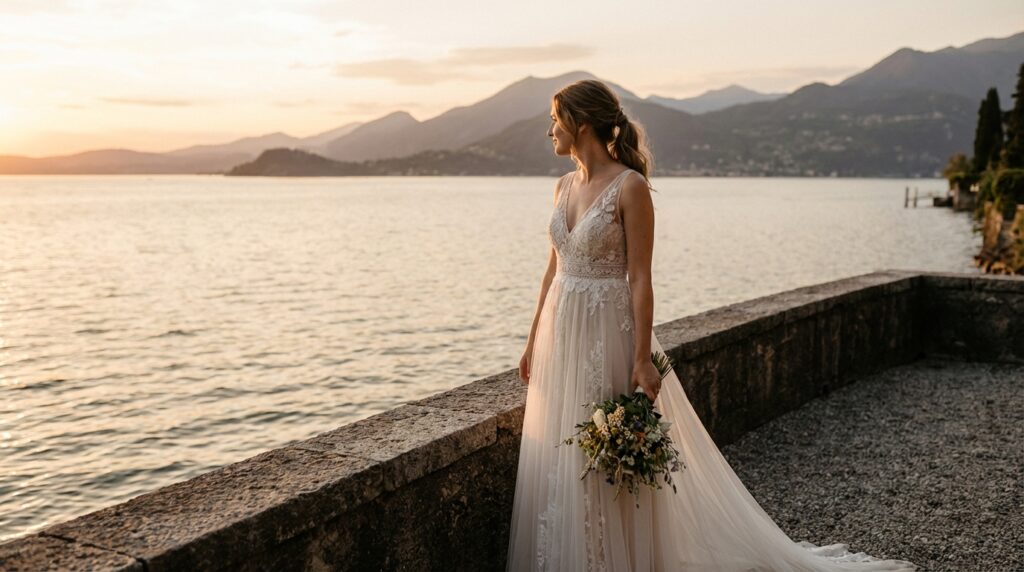
Alternative approaches worth considering: Intimate Lake Como elopements (10-20 people) with €25,000-40,000 total budgets capture the destination beauty with less complexity and cost, while larger hometown reception afterward includes broader community. Symbolic ceremony in Italy following legal marriage at home provides authentic experience without legal complexity. Micro-weddings (30-40 guests) at lesser-known Lake Como properties optimize value while maintaining destination experience. Other Italian wedding destinations like Lake Garda or coastal Liguria provide similar romantic Italian experience at potentially lower investment.
The self-assessment questions to ask honestly: Does the specific experience of Lake Como wedding align with our core values and relationship, or are we drawn to it primarily because of social media influence? Can we afford the true total investment without creating financial stress that undermines the experience? Are we genuinely excited about the planning process and logistics, or do we feel overwhelmed by complexity? Do our most important relationships—the people whose presence matters most—have reasonable ability to attend a destination event? Are we making this choice because WE want this experience, or because we feel pressure from external expectations?
Our professional perspective: Lake Como weddings deliver extraordinary experiences for couples who consciously choose them aligned with their genuine priorities, have realistic budget capacity without creating undue strain, appreciate the destination beyond just aesthetic appearance, and are excited about (or willing to invest in professional handling of) the planning complexity. They are not inherently “better” than other wedding choices—they’re a specific type of celebration appropriate for specific couples in specific circumstances.
The couples who report highest satisfaction with their Lake Como wedding investment are those who made the choice deliberately rather than reflexively, planned thoroughly with realistic expectations, worked with experienced professionals, and approached the experience focused on celebration and guest connections rather than perfectionist execution of aesthetic vision.
If after honest reflection you determine Lake Como destination wedding aligns with your values, resources, and priorities, then yes—it’s absolutely worth it. If you’re uncertain or feeling pressure toward a choice that doesn’t authentically reflect your preferences, exploring alternatives or different celebration structures may serve you better.
Frequently Asked Questions (FAQ)
How much does a Lake Como wedding cost?
Comprehensive Lake Como weddings typically cost €70,000-150,000 for 60-100 guests, including venue (€12,000-25,000), catering (€15,000-30,000), planning (€10,000-20,000), photography and videography (€10,000-15,000), florals and décor (€10,000-20,000), entertainment (€5,000-10,000), and logistics (€8,000-15,000). Intimate weddings (25-35 guests) can be executed for €40,000-60,000, while ultra-luxury celebrations exceed €250,000.
What documents do I need to get married legally in Italy?
Certificate of No Impediment (CNI) from your home country, birth certificates (issued within 6 months), passports, proof of residence, divorce decrees or death certificates if previously married, all translated into Italian by certified translator and authenticated with Apostille. Documentation must be submitted to the municipality (Comune) where you’ll marry, with banns posted 8-10 days before the ceremony.
What is the best time of year for Lake Como weddings?
September through early October provides the most reliable weather, beautiful lighting, and optimal guest experience. Mid-May through June offers spring beauty with good weather and reasonable pricing. Peak summer (July-August) has warmest weather but maximum crowds and premium pricing. April and late October provide significant cost savings but weather unpredictability.
Do I need a wedding planner for Lake Como?
Professional planning is highly recommended for celebrations over 50-60 guests, legal civil ceremonies, couples with limited Italian language capability, and compressed timelines. Full-service planning (€12,000-25,000) provides comprehensive support from venue selection through day-of coordination. Smaller intimate weddings under 30-40 guests with symbolic ceremonies can potentially be self-planned by highly organized couples with adequate time.
Can I have a legal ceremony or just symbolic?
Both are possible. Legal civil ceremonies require 4-6 months advance paperwork, occur at authorized locations, and include prescribed Italian official language. Symbolic ceremonies offer complete flexibility in location, timing, content, and personalization but have no legal validity. Most couples marry legally at home and celebrate symbolically in Italy for optimal flexibility.
Can US citizens get legally married on Lake Como?
Yes. US citizens can marry legally in Italy with a civil ceremony celebrated by the municipality (Comune) where the wedding takes place, including the lakeside town halls and authorised venues on Lake Como. You will need valid passports, birth certificates with Apostille and certified Italian translation, and sworn declarations confirming you are free to marry, signed before a US consular officer and an Italian official. Our step-by-step guide on how to get married in Italy as a US citizen explains every document and the timeline.
How far in advance should I book Lake Como wedding venues?
Peak season dates (May-September) at desirable venues should be secured 18-24 months ahead. Shoulder season (April, October) offers more flexibility with 12-15 months typically sufficient. Last-minute bookings (6-8 months) are possible but with limited venue selection and higher planner costs.
What happens if it rains on my wedding day?
Venues with substantial covered loggias, elegant indoor ballrooms, or professional tent infrastructure provide essential backup options. Weather decisions should be made 48-72 hours before the event based on forecasts. Budget 5-8% of total wedding costs for weather contingency including potential tent installation, additional indoor décor, and setup adaptations.
How do I coordinate guest transportation and accommodation?
Hotel blocks should be negotiated 12-15 months ahead at 2-3 properties to accommodate varied budgets. Transportation requires private coach buses (€1,200-2,500/day), private car services (€80-150 per transfer), or private boat charters (€400-1,200/hour). Budget €5,000-15,000 for comprehensive guest transportation across multi-day events.
What are the noise restrictions and music curfews?
Most Lake Como municipalities prohibit amplified outdoor music after 11 PM, with some areas enforcing 10 PM limits. Indoor music may continue until 1-2 AM with venue permission and additional fees. Confirm specific restrictions at your venue and plan reception timeline accordingly.
Can I bring my own vendors or must I use venue-preferred vendors?
This varies by venue. Many premium properties have exclusive arrangements with specific caterers, florists, and entertainment providers. Some venues allow outside vendors with coordination fees. Others operate open policies. Clarify vendor flexibility early in venue selection process as it significantly impacts budget control and personalization options.
How do I handle guests with dietary restrictions or cultural requirements?
Communicate all dietary needs to caterers early in planning, requesting detailed ingredient lists and specific accommodation plans. Italian cuisine adapts well to vegetarian, vegan, gluten-free, and most religious requirements. Ensure clear menu labeling and potentially discreet service of alternative plates. For significant cultural or religious considerations, discuss explicitly with venue and catering teams.
Is Lake Como more expensive than other Italian wedding destinations?
Yes, typically 20-40% higher than comparable Tuscany venues and 15-25% higher than Lake Garda. Only Amalfi Coast and Portofino rival Lake Como pricing. The premium reflects high demand, limited venue supply, and established luxury positioning.
Should I consider other Italian locations instead?
Lake Garda offers similar Italian lakes experience at lower investment. Tuscany provides rolling hills and vineyard settings with easier logistics. Portofino delivers Ligurian coastal beauty with intimate atmosphere. Venice creates completely unique historic city experience. The right choice depends on your specific priorities, budget, and aesthetic preferences. For comparison of Italian destinations, reviewing premier event destinations across Italy provides helpful context.
Can we visit Lake Como before booking to see venues?
Yes, and we recommend it if budget allows. Venue-scouting trips (2-3 days visiting 4-6 properties) typically cost €2,000-4,000 for flights, accommodation, and meals. The investment provides critical firsthand assessment preventing expensive mistakes. Schedule venue appointments in advance and consider working with a planner to coordinate efficient visit logistics.
About KissMeItaly: Experience That Makes the Difference
KissMeItaly brings three decades of experience creating exceptional celebrations across Italy. Founded by Alessandra Ferretti in 1994, our multidisciplinary approach integrates event planning, design, sophisticated logistics, and production capabilities.
Alessandra’s background combines scenography and event design training with extensive logistics coordination experience and specialized security management knowledge for high-profile celebrations. This means we approach weddings as comprehensive productions requiring operational excellence alongside aesthetic vision.
Our work spans Lake Como, Lake Garda, Portofino, Venice, and throughout Italy—from intimate elopements to celebrations for 150+ guests.
Three decades of Lake Como experience means understanding venue subtleties invisible in photographs, knowing consistently reliable vendors, managing municipality relationships for civil ceremonies, and developing contingency protocols that work when challenges arise.
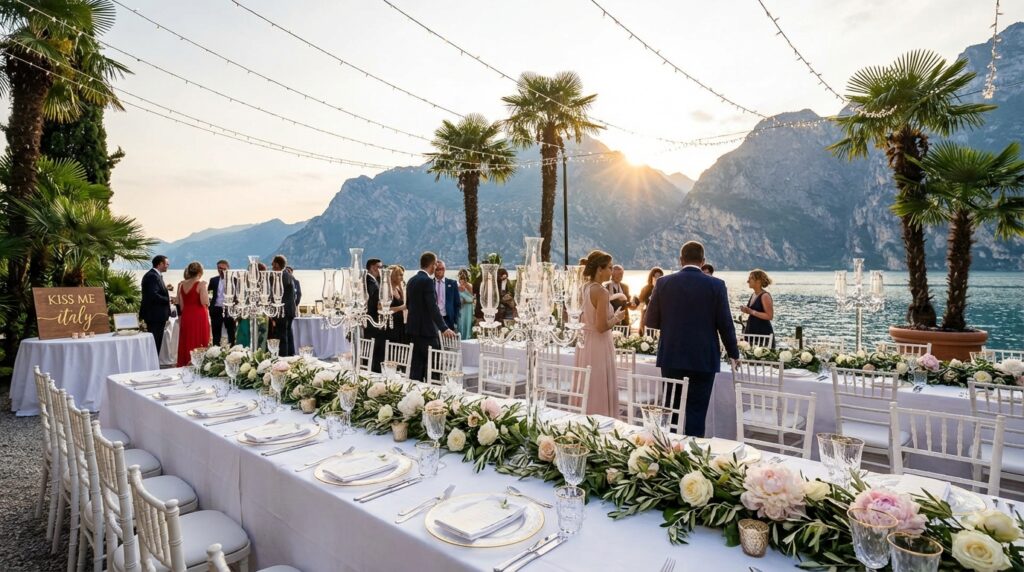
We share insights through our planning resources, including guidance for US citizens marrying in Italy and Italian wedding traditions.
Our commitment is transparent guidance rather than marketing promises. Couples deserve honest information about Lake Como weddings—the investment, complexity, and extraordinary experience possible with comprehensive planning.
If you’re considering getting married on Lake Como, we invite you to contact us for consultation. We’ll provide honest assessment of alignment with your priorities, transparent budget guidance, and explanation of our approach informed by 30 years of experience
For couples exploring other romantic Italian options, discover our proposal services in Venice or complete wedding services across Italy.