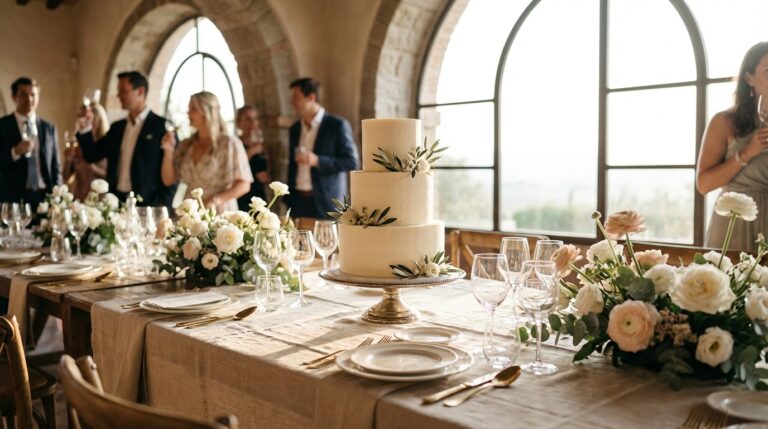
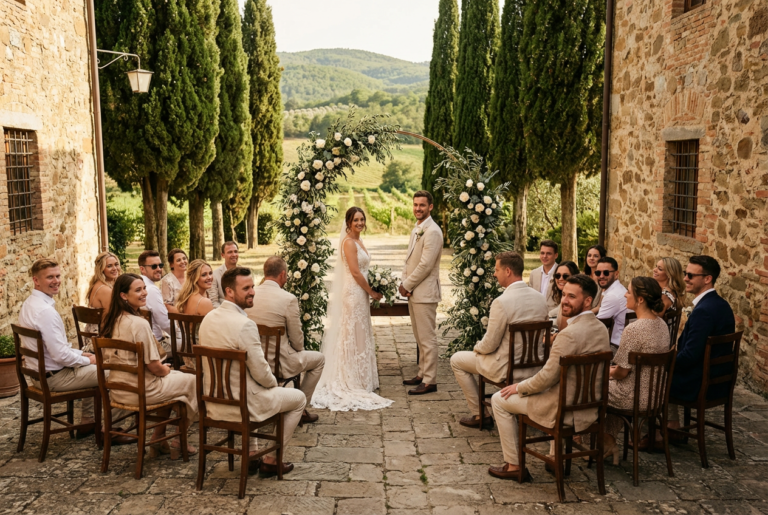
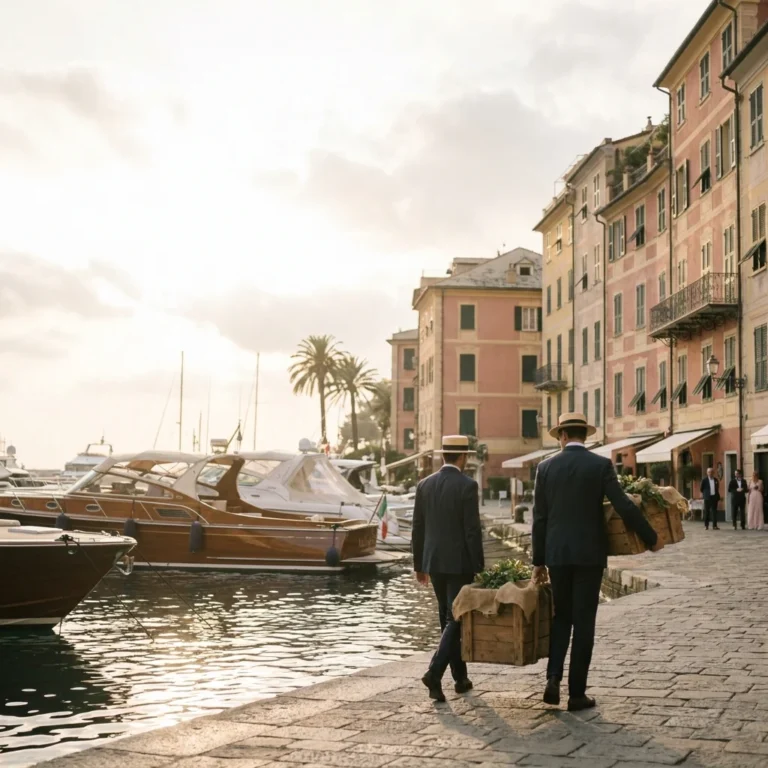
Hiring an opera singer for a wedding in Italy typically costs between €1,200 and €6,500 for a curated solo performance, depending on the singer’s profile, repertoire complexity, and venue logistics. Kiss Me Italy manages the full arc—from voice selection and acoustic assessment to rehearsal scheduling and day-of coordination—so the performance integrates seamlessly into the ceremony, aperitivo, or dinner without a single visible seam.
Opera Singer for a Wedding in Italy
The question most high-profile couples raise before any other is not about repertoire. It is about control. Specifically: who will know the performer’s identity before the event, who will see the sound check, and how the singer’s arrival and departure can be managed so that no uninvited lens captures the moment. These are not paranoid concerns. They are the quiet reality of planning a destination wedding in Italy when the guest list includes recognizable names—or when the couple themselves prefer that their celebration remains entirely theirs. An opera singer wedding in Italy, done properly, is not a booking. It is a confidential production, and the difference between the two defines everything that follows.
Why Exclusive-Use Venues Determine the Opera Experience More Than the Singer’s Résumé
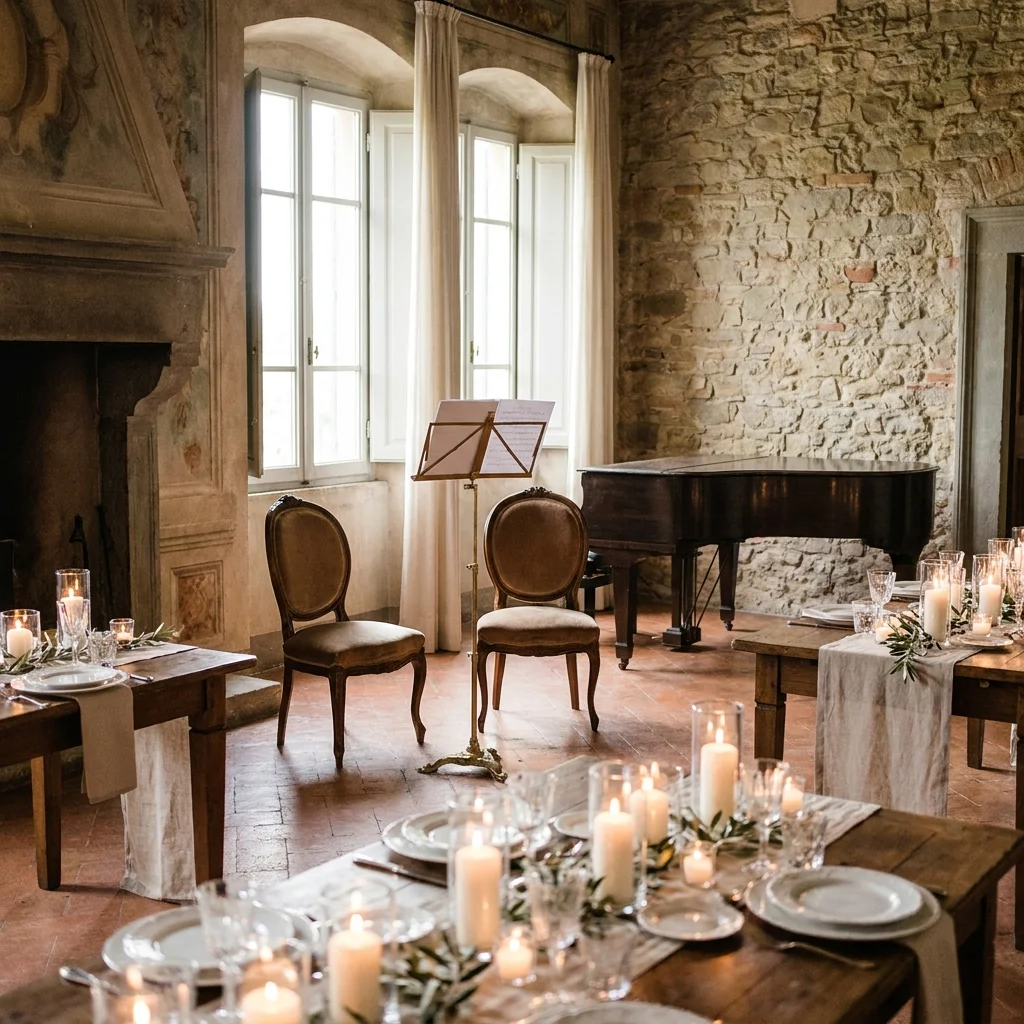
A tenor performing Nessun Dorma in a Tuscan chapel with a nine-second natural reverb produces an entirely different emotional effect than the same aria delivered in a lakeside garden where wind off the water competes with every sustained note. The venue is not a backdrop. It is, acoustically and logistically, the instrument that shapes the performance.
This is why our team begins every opera singer wedding Italy engagement with a venue assessment, not a performer shortlist. We evaluate ceiling height, wall material, ambient noise windows (boat traffic on Lake Como peaks between 11:00 and 15:00 in summer; a ceremony at 17:30 is quieter by roughly 12 dB), and the sightline geometry that determines where a singer can stand without blocking the officiant or the photographer’s key angles.
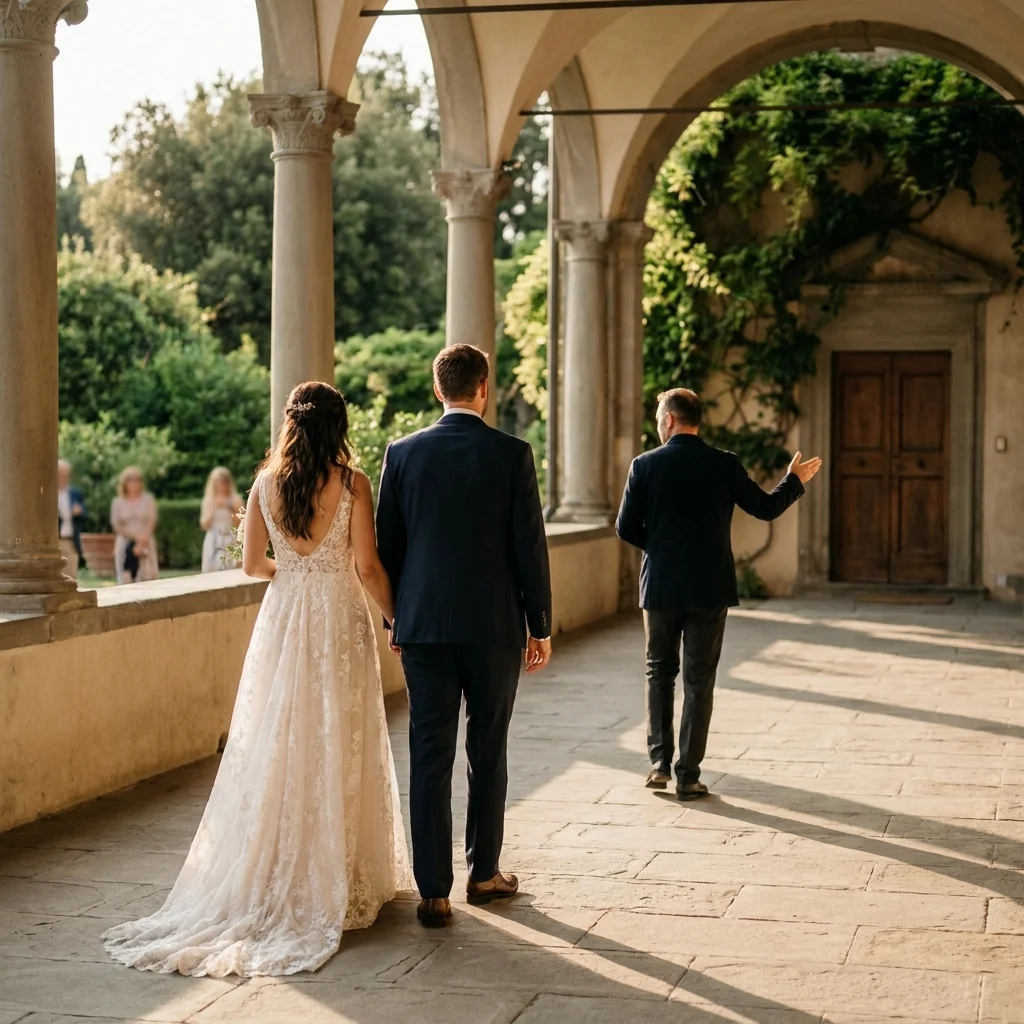
Exclusive-use properties—whether a private villa in the hills above Lucca or a protected palazzo along the Venetian lagoon—offer something no shared venue can: total control over sound bleed, rehearsal timing, and access. When a soprano rehearses at 08:00 in a space that belongs entirely to the couple for the weekend, there is no hotel guest complaint, no restaurant manager negotiation, no compromise. The rehearsal is protected. The surprise, if the couple intends one for guests, remains intact.
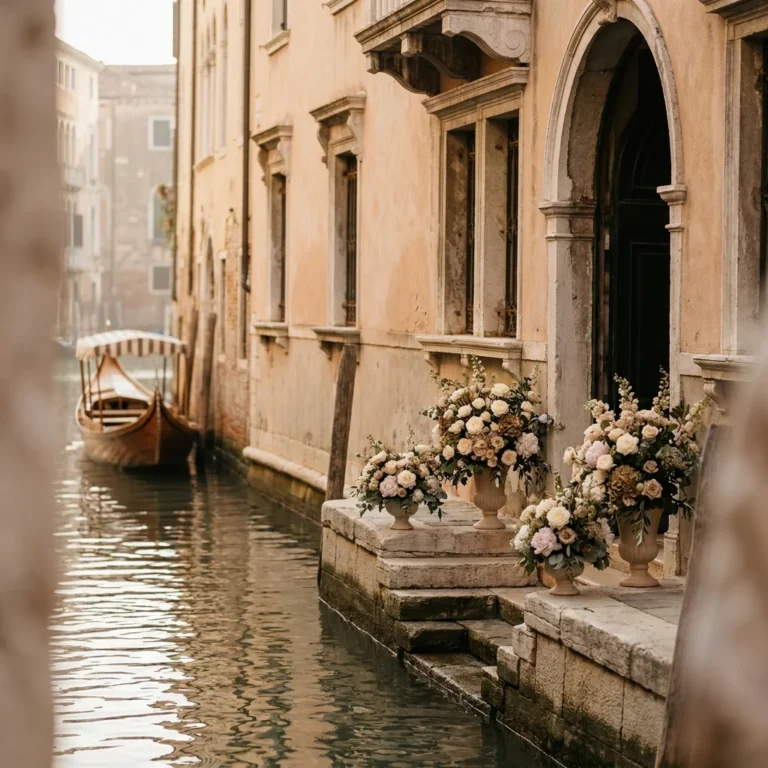
For couples considering a Venice wedding venue, we quietly coordinate with venue custodians to confirm that amplification restrictions—common in heritage-listed buildings—align with the chosen voice type. A lyric soprano projects differently than a dramatic tenor; matching the voice to the room is a technical decision our team manages long before the wedding weekend begins.
Tenor, Soprano, or Duo: How Voice Type Shapes the Ceremony’s Emotional Architecture
Directory sites list performers alphabetically. We work differently. The selection of a wedding tenor in Italy or a wedding soprano in Italy begins with the emotional arc of the ceremony itself—where the couple wants silence, where they want transcendence, and where they want intimacy.
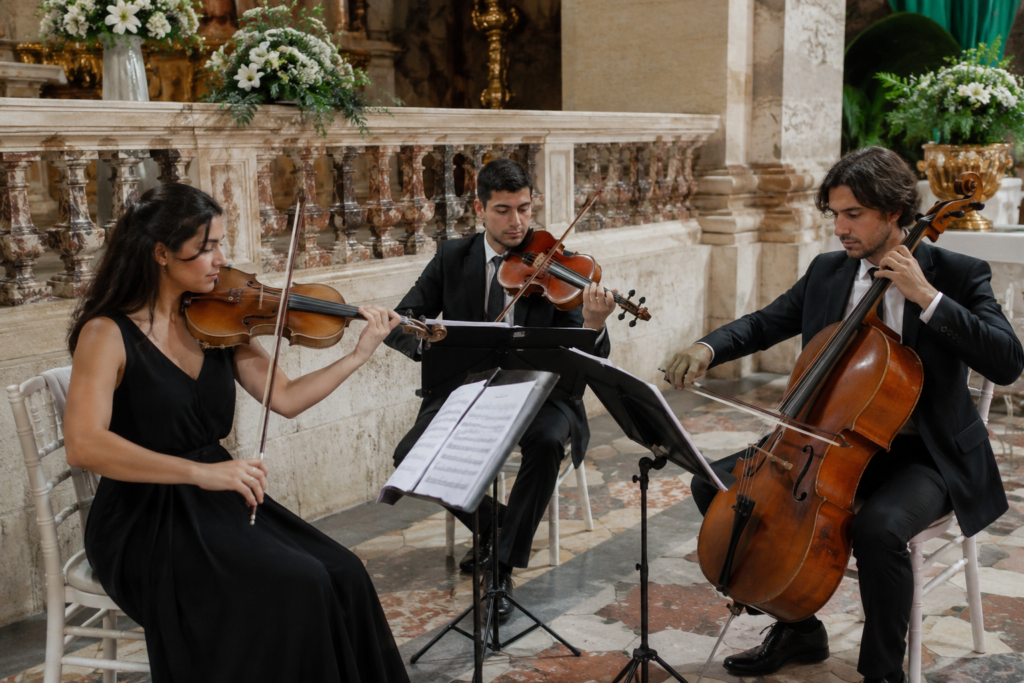
A solo tenor suits processional moments. The voice carries weight, fills vertical space, and signals arrival. A soprano excels at the signing moment or the recession—lighter, more luminous, capable of holding a pianissimo that makes a hundred guests forget to breathe. A tenor and soprano duo wedding Italy arrangement is most effective when the ceremony includes a longer musical interlude, perhaps during a unity ritual or a reading, where the interplay of voices creates a narrative without words.
We curate performers who understand that a wedding is not a recital. The singer must read the room—adjusting dynamics if a bride is emotional, holding a phrase slightly longer if the photographer signals for one more frame. This kind of sensitivity is not listed on a booking platform. It is developed through experience, and it is the reason our team auditions and rehearses with every performer we recommend.
For couples whose celebration extends beyond the ceremony into a full evening of curated entertainment, the opera performance can be designed as a standalone moment—a surprise interlude between courses, for instance—rather than a ceremony-only feature. The pacing is everything.
Repertoire Selection Is Not a Playlist—It Is a Privacy-Sensitive Design Decision
Certain arias carry cultural weight that resonates differently depending on the guest demographic. Con Te Partirò is universally recognized; O Mio Babbino Caro is beloved but risks feeling expected. Our team works with couples to build a repertoire that reflects their story without defaulting to the predictable.
There is also a discretion dimension to repertoire. High-profile couples sometimes request that the specific programme remain confidential until the moment of performance—no printed programmes listing the arias, no social media previews from vendors. We manage this through a guest list protocol that extends to all creative vendors: the repertoire is shared on a need-to-know basis, with the sound engineer and celebrant informed but not the wider vendor team.
Sacred repertoire—Schubert’s Ave Maria, Franck’s Panis Angelicus—is appropriate for Florence’s historic churches and other consecrated spaces, but some venues restrict secular music during religious ceremonies. We confirm these constraints months in advance, ensuring the couple’s preferred programme is approved by the parish or venue authority without last-minute substitutions.
What an Opera Singer for a Wedding in Italy Actually Costs—And What Each Tier Includes
Pricing for an Italian wedding opera singer varies based on the performer’s career profile, the duration of the engagement, travel requirements, and whether amplification or accompaniment is needed. The tables below reflect the ranges our team works within across Italy’s principal wedding regions. All figures are net of VAT (IVA at 22%), which is quoted separately on every proposal.
| Performance Format | Indicative Range (excl. VAT) | Included | Quoted Separately |
|---|---|---|---|
| Solo tenor or soprano — ceremony only (3–4 pieces, ~30 min) | €1,200–€2,800 | Repertoire consultation, one on-site rehearsal, performance | Accompanist, amplification, travel beyond 80 km from performer’s base, VAT (22%) |
| Solo tenor or soprano — ceremony + aperitivo (5–7 pieces, ~60 min) | €2,200–€4,200 | Repertoire consultation, two rehearsals (one remote, one on-site), performance across two moments | Accompanist, amplification, travel beyond 80 km, accommodation if overnight required, VAT (22%) |
| Tenor and soprano duo — ceremony + one additional moment (~75 min) | €3,500–€6,500 | Joint repertoire design, one on-site rehearsal, coordinated performance across two wedding moments | Accompanist (pianist or string player), amplification, travel, accommodation, VAT (22%) |
Indicative ranges. Contact Kiss Me Italy for a personalized proposal.
| Add-On Service | Indicative Range (excl. VAT) | Notes |
|---|---|---|
| Professional pianist accompanist | €600–€1,500 | Includes instrument hire if venue lacks a piano; tuning fee included |
| Portable amplification system (discreet, wireless) | €400–€900 | Sound technician included; setup and removal managed by our team |
| Travel and accommodation (performer + accompanist) | €300–€1,200 | Varies by region; Amalfi Coast and island venues at upper range |
| Extended performance — dinner interlude (2–3 additional pieces) | €500–€1,200 | Requires separate rehearsal; timing coordinated with kitchen and service team |
Indicative ranges. Contact Kiss Me Italy for a personalized proposal.
| Cost Element | Applicable to Opera Singer Booking? | Status |
|---|---|---|
| Photographer/videographer travel and accommodation | Not applicable | Covered under separate photography contract |
| Post-production / editing / delivery timeline | Not applicable | Relevant to wedding photography and videography only |
| Second shooter | Not applicable | — |
| Albums and prints | Not applicable | — |
| Permits and legal fees | Yes — if venue requires a performance permit | Quoted separately; our team handles submission |
| VAT (IVA 22%) | Yes | Always quoted separately on all performer invoices |
Indicative ranges. Contact Kiss Me Italy for a personalized proposal.
The Access Control Protocols That Keep a Surprise Performance Truly Confidential
When a groom arranges an opera singer as a surprise for the bride—or when the couple together plans a surprise interlude for guests—the logistics of confidentiality become a genuine operational challenge. The singer must arrive, warm up, and position without being seen. The sound engineer must set levels without a full public check. The photographer must know the exact moment to reposition.
Our team manages this through a layered access protocol. The performer is assigned a private preparation room, separate from the bridal suite and the main guest flow. Warm-up happens during a structured window—typically while guests are occupied with a cocktail moment or a transfer between locations. The sound check is conducted using recorded reference tracks at the actual performance position, with the singer joining only for a brief, final confirmation when the space is clear.
For couples whose wedding budget supports a larger production, we have coordinated scenarios where the singer appears among the guests—disguised, if you will, as a fellow attendee—before stepping forward to perform. This requires precise timing with the videography team, whose positioning must be adjusted without alerting the room. It is theatrical, yes. But when managed with discretion, it is also irreplaceable.
How Italy’s Regions Shape the Opera Singer Decision: Acoustics, Wind, and Timing Windows
Italy is not one acoustic environment. It is dozens. The stone-walled refectory of a former monastery in Umbria behaves like a concert hall. A cliffside terrace above Positano, with the Tyrrhenian Sea forty metres below, behaves like an open field with a constant low-frequency rumble.
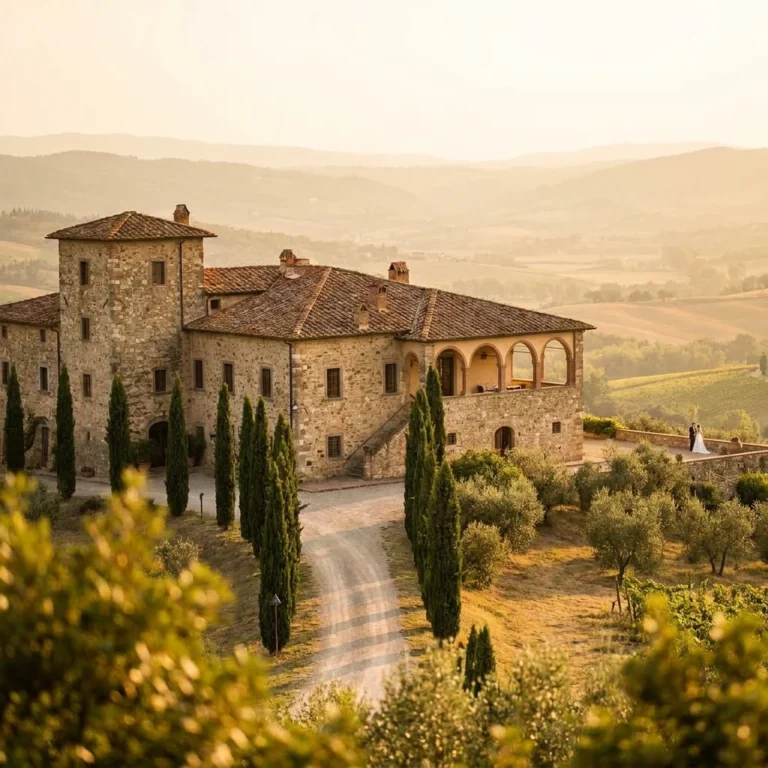
Tuscany. Hilltop estates between Siena and Montalcino offer enclosed courtyards with excellent natural amplification. Evening ceremonies after 18:00 in late June benefit from cooling air that settles sound downward. Our team often recommends unamplified performances here, which preserves the intimacy that defines a luxury Tuscan wedding.
Lake Como. The lake creates a natural amphitheatre effect, but afternoon breezes off the water can carry sound away from the audience. We position singers with their backs to the lake, projecting toward the seated guests and the villa’s stone façade, which acts as a reflective surface. Couples planning a Lake Como wedding receive a detailed acoustic brief as part of the entertainment design.
Venice. Interior spaces dominate. The cost structure of a Venetian celebration often includes a heritage-listed venue where amplification is restricted or prohibited. A lyric soprano—lighter, more agile—tends to suit these rooms better than a heavier dramatic voice, which can overwhelm a low-ceilinged salon.
Amalfi Coast. Outdoor terraces are the signature setting, but the Amalfi Coast’s cost realities include sound permits that must be secured from the local comune. Our team files these applications eight to twelve weeks before the event, specifying decibel limits and performance duration. Without this step, a venue manager may halt the performance mid-ceremony—a scenario we have never allowed to occur.
Lake Garda. The eastern shore offers sheltered positions where a Lake Garda wedding can include an outdoor opera moment with minimal wind interference, particularly in the hour before sunset when thermal winds subside.
What It Sounds Like When Everything Is Managed: A Single Moment, Uninterrupted
Allow me a departure from logistics.
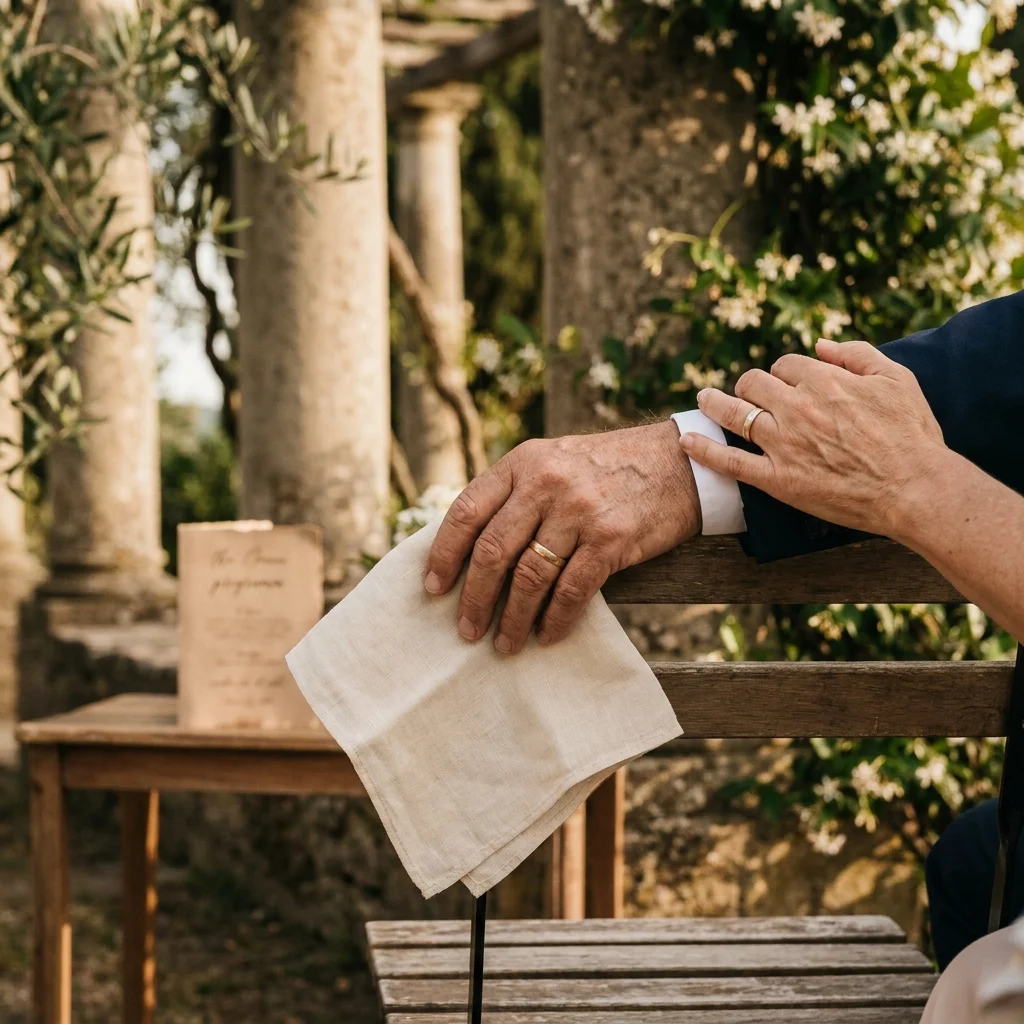
Last September, at a protected estate south of Orvieto, the bride’s father—who had never heard live opera—sat in the front row of a ceremony for sixty guests. The couple had requested a single aria after the vows: Che Gelida Manina, performed by a tenor standing beneath a centuries-old pergola, accompanied only by a cellist positioned behind a stone column to preserve the visual simplicity of the scene.
The father wept. Quietly, without performance of his own. The photographer, who had been briefed on the moment’s significance, captured it from a discreet angle—thirty metres away, using a long lens, invisible to the man. The tenor held the final note for precisely the duration we had rehearsed: long enough to let the emotion land, short enough to leave space for the silence that followed.
No guest posted the moment. The couple had requested a device-free ceremony, and our team had managed the announcement—printed cards at each seat, a gentle verbal reminder from the celebrant—so that the request felt like an invitation to presence rather than a restriction. The father’s tears belonged to the family. They still do.
This is what an opera singer for a destination wedding in Italy can be, when every variable is managed by a team that understands the weight of the moment.
Coordinating the Opera Performance with Photography and Videography Timelines
A live opera performance creates some of the most emotionally charged imagery of a wedding day. But only if the photographer knows exactly when the first note will sound, where the singer will stand, and which direction the light falls at that hour.
Our team provides the photography and videography vendors with a confidential performance brief forty-eight hours before the event. This document includes:
- The exact start time of each musical moment, with a ±3-minute buffer
- The singer’s position and facing direction
- The couple’s preferred framing (wide establishing shot, or intimate close-up of reactions)
- Any restrictions on flash, shutter sound, or drone use during the performance
- The designated photographer positions that avoid appearing in the videographer’s frame
This coordination is invisible to guests. It is the architecture beneath the moment. And it is the reason the images from an opera performance managed by our team look effortless rather than accidental.
Weather, Illness, and Timing Shifts: The Contingency Layer Luxury Clients Quietly Require
What happens if it rains thirty minutes before an outdoor ceremony that includes a live soprano? What if the performer develops a vocal issue the morning of the wedding?
These are the questions our high-profile clients ask privately, and they deserve direct answers.
Weather. Every outdoor opera singer wedding Italy engagement includes a confirmed indoor fallback position. We rehearse the performer in both locations. The sound engineer prepares two setups. The transition, if needed, takes under fifteen minutes—executed while guests are guided to a holding area with drinks, managed by our hospitality coordinator.
Performer illness. For weddings with a budget that permits it, we maintain a confirmed understudy—a second performer of comparable calibre who is available on the wedding date and has rehearsed the same repertoire. For more intimate engagements, we hold a shortlist of three vetted alternatives within the region, any of whom can step in with twenty-four hours’ notice. This is not a theoretical safeguard. It is a contractual provision in every performer agreement we manage.
Timing shifts. Italian weddings rarely run precisely to schedule. A ceremony that starts twelve minutes late compresses the gap before dinner. Our team builds a fifteen-minute buffer around every musical moment, and the performer is briefed to adjust—shortening an interlude by one piece, or extending a cocktail-hour set by two songs—without the couple needing to make a single decision in the moment.
Performance Permits, Noise Ordinances, and the Paperwork That Protects the Celebration
In many Italian comuni, a live musical performance at a private event requires a nulla osta—a clearance from the local authority confirming that the performance complies with noise regulations. The specifics vary by municipality. In some Ligurian coastal towns, amplified music must end by 23:00. In certain Florentine heritage zones, any amplification requires a separate permit filed at least sixty days in advance.
Our team handles every filing. The couple sees none of the paperwork. But the paperwork exists, and ignoring it creates risk—not just of fines, but of a venue manager or neighbour intervening during the ceremony itself. For couples exploring the legal landscape of marrying in Italy as foreigners, we integrate the performance permit timeline into the broader document coordination so that nothing is managed in isolation.
Why a Curated Approach Replaces Directory Listings for Couples Who Value Discretion
Online directories offer convenience. They also offer exposure. A performer booked through a marketplace knows the couple’s names, the venue, the date—and the platform itself may retain and display this data. For couples who require privacy, this model is incompatible with their expectations.
When Kiss Me Italy curates a bespoke celebration, the performer signs a confidentiality agreement before receiving any event details. The venue name is disclosed only after the agreement is executed. The couple’s identity, if they are public figures, may be withheld entirely—replaced by a project code that the performer and accompanist use in all communications.
This is not theatrical secrecy. It is standard practice for the calibre of client we serve. And it is the reason our couples return to us for vow renewals, milestone anniversaries, and every celebration that follows.
The Performance That Belongs Only to You
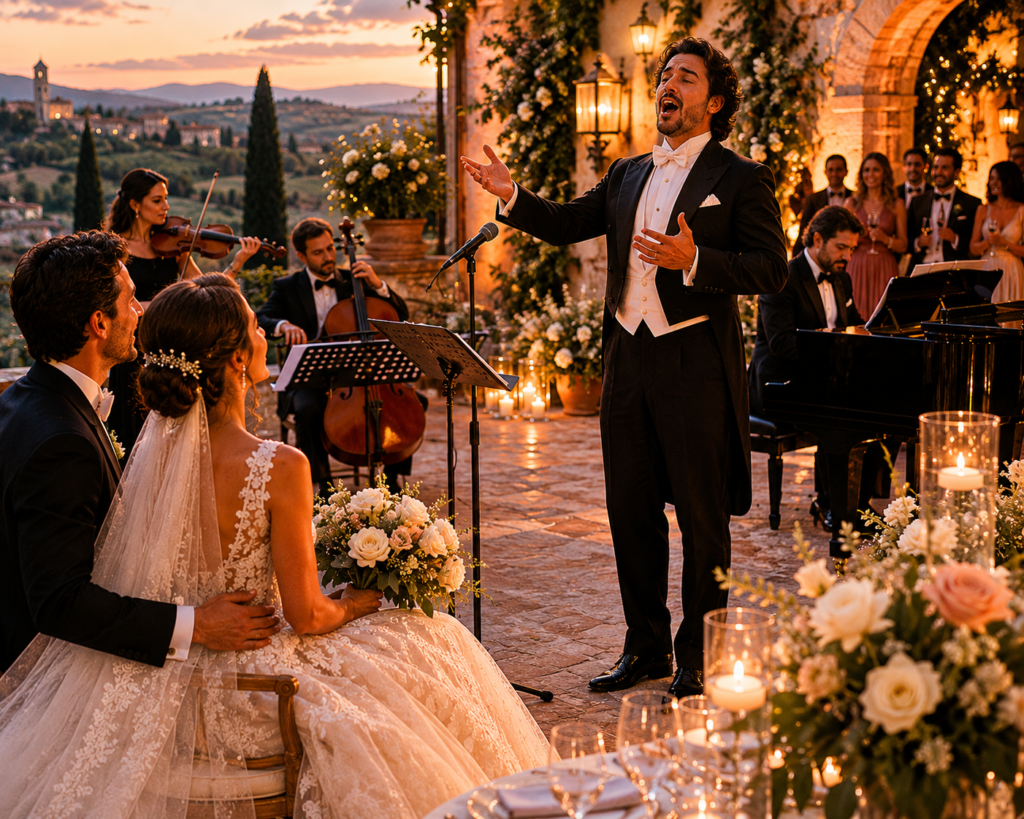
An opera singer at a wedding in Italy is not entertainment in the conventional sense. It is a moment of transcendence—engineered quietly, delivered without visible effort, and protected so completely that it belongs only to the people in the room. Our team manages every dimension: the voice, the venue acoustics, the repertoire, the permits, the photography coordination, the weather contingency, and the confidentiality that high-profile couples require without compromise.
If you are beginning to imagine what this might sound like at your own celebration, we welcome the conversation. Reach out to Kiss Me Italy and let us design the moment together.
Frequently Asked Questions: Opera Singer for a Wedding in Italy
Can we request a specific aria that isn’t part of the standard Italian opera repertoire?
Yes. Our performers regularly prepare non-standard selections, including Neapolitan songs, sacred motets, and crossover pieces from musical theatre. We confirm feasibility with the singer during the repertoire consultation phase, typically eight to ten weeks before the wedding, to allow adequate rehearsal time.
Is it possible to have the opera singer perform in a language other than Italian?
Absolutely. Many arias in the standard repertoire are in French, German, or Latin, and our performers are trained in multiple languages. If you have a piece in English or another language that holds personal significance, we will assess it for vocal suitability and acoustic fit with the venue.
How far in advance should we book an opera singer for a summer wedding in Italy?
For peak season weddings between June and September, we recommend confirming the performer at least six months in advance. Italy’s top wedding tenors and sopranos are often engaged for opera festival seasons during these months, and early commitment secures the calibre of voice that matches a luxury celebration.
Can the opera singer perform during the dinner rather than the ceremony?
This is one of the most effective configurations we manage. A surprise interlude between courses—often after the primo and before the secondo—creates a moment of collective stillness that resets the energy of the evening. We coordinate the timing with the kitchen and service director to ensure the performance does not interrupt plating or service flow.
Do we need to provide a piano at the venue, or does your team arrange instruments?
Our team arranges all instruments. If the venue has a resident piano, we assess its condition and arrange professional tuning the day before the event. If no piano is available, we source a portable digital concert piano or coordinate a string accompanist instead, depending on the acoustic profile of the space.
What if our venue is on an island or a location with difficult transport access?
Island and remote-access venues—Capri, the Aeolian Islands, certain Sardinian estates—require additional logistical planning for performer and equipment transport. We manage private boat or helicopter transfers where necessary, and these costs are quoted transparently as a separate line item in the proposal.
Can the opera performance be kept secret from all guests, not just the bride or groom?
Yes, and we manage this regularly. The performer’s arrival, warm-up, and positioning are handled through a separate access route. The printed programme, if one exists, omits the musical interlude. Even the celebrant is briefed only on the cue, not the full context, to preserve the surprise for the room.
Is it possible to hear the singer perform before we commit?
We provide private audio and video recordings of each recommended performer, recorded in comparable acoustic settings. For high-profile engagements, we can arrange a private audition—either in person at a location in Italy or via a live video session—so the couple can assess the voice, presence, and temperament of the singer before confirming.
How does the opera singer coordinate with a live band or DJ later in the evening?
Our production timeline separates the opera performance from the evening entertainment with a deliberate transition—often a toast, a dessert service, or a brief pause. This prevents tonal collision between the classical moment and the party energy. The sound engineer adjusts the system between sets, and no equipment changeover is visible to guests.
Are there venues in Italy where live opera performance is not permitted?
Some heritage-classified interiors and certain municipal parks prohibit amplified music entirely, while others restrict performance hours. We verify every restriction during the venue assessment phase and, where necessary, secure the required clearances. If a venue’s restrictions are incompatible with a meaningful opera moment, we advise the couple honestly and suggest alternatives that serve the vision without compromise.
Related on the Kiss Me Italy blog: A Luxury Cinque Terre Proposal: Editorial Photos, Quiet Moments, Expert Coordination.