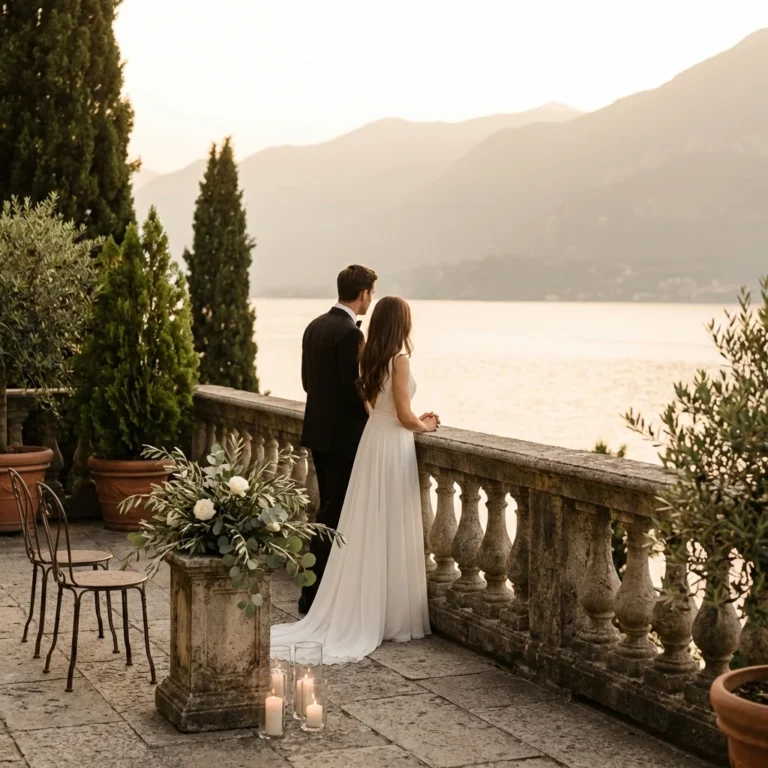
An Italian wedding cocktail hour is the 60-to-90-minute aperitivo window between ceremony and seated dinner, orchestrated to welcome guests with hand-selected drinks, grazing stations, and live atmosphere while the couple completes portraits. At Kiss Me Italy, we design this moment as a fully managed guest experience — regionally inspired, beautifully paced, and coordinated across bar, kitchen, venue, and photography timeline so that nothing feels like a gap and everything feels like a celebration already underway.
The Italian Wedding Cocktail Hour
Most international couples arrive in our studio knowing they want an aperitivo. What they don’t yet realize is how much coordination sits behind one. The bar setup alone involves staffing ratios, glassware logistics, ice delivery schedules, and — in venues without permanent bar infrastructure — the construction of a temporary station that must be assembled and struck within a tight window. After thirty years of managing these details across every major Italian wedding region, I can tell you that the cocktail hour is where the entire reception tempo is set. Get it right and the evening flows. Get it wrong and guests feel stranded.
How the Italian Wedding Cocktail Hour Sets the Pace for Everything That Follows
In a traditional Italian reception, the sequence is precise: ceremony, cocktail hour (aperitivo), seated dinner (antipasto through dolce), cake, and open bar with dancing. The cocktail hour isn’t filler. It’s the hinge. It gives the kitchen final plating time, allows the couple to step away for editorial portraits, and — most critically — it sets the emotional register for the evening. Guests who are well-fed and unhurried during aperitivo arrive at the table relaxed. Guests who waited forty minutes with nothing in hand arrive irritated.
In our experience, the ideal Italian wedding cocktail hour runs between 60 and 75 minutes. Shorter than 50 minutes and the photographer loses portrait flexibility. Longer than 90 and energy dissipates, especially in warm months when guests are standing outdoors. We build the timeline backward from the kitchen’s first-course plating window, then layer in the couple’s portrait needs, sunset timing, and any venue-specific logistics — like the 15-minute transfer by boat that certain Lake Como properties require between ceremony terrace and reception garden.
The couples we work with often ask whether cocktail hour replaces the antipasto course. It does not. In the Italian wedding sequence, aperitivo is lighter — think finger food, small bites, cured meats, and cheese — while antipasto is the formal first plate at the table. Conflating the two is what most planners miss, and it leads to either over-feeding guests before they sit or under-serving during the standing hour. We calibrate the volume carefully: roughly 8 to 10 bite-size pieces per guest during aperitivo, leaving appetite intact for the traditional Italian wedding food courses that follow.
Tuscan Estates: Why Chianti and Val d’Orcia Aperitivi Look and Taste Completely Different
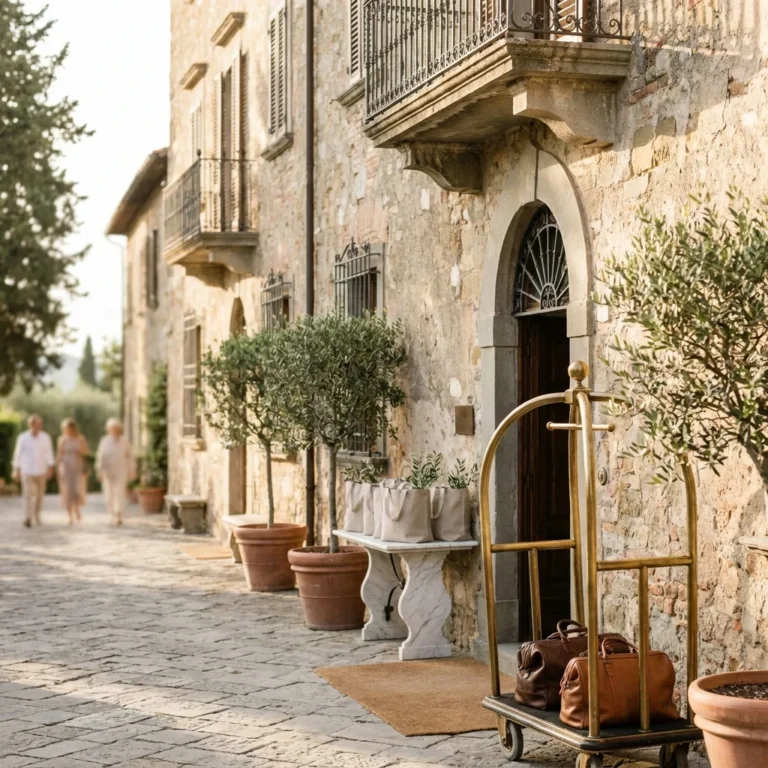
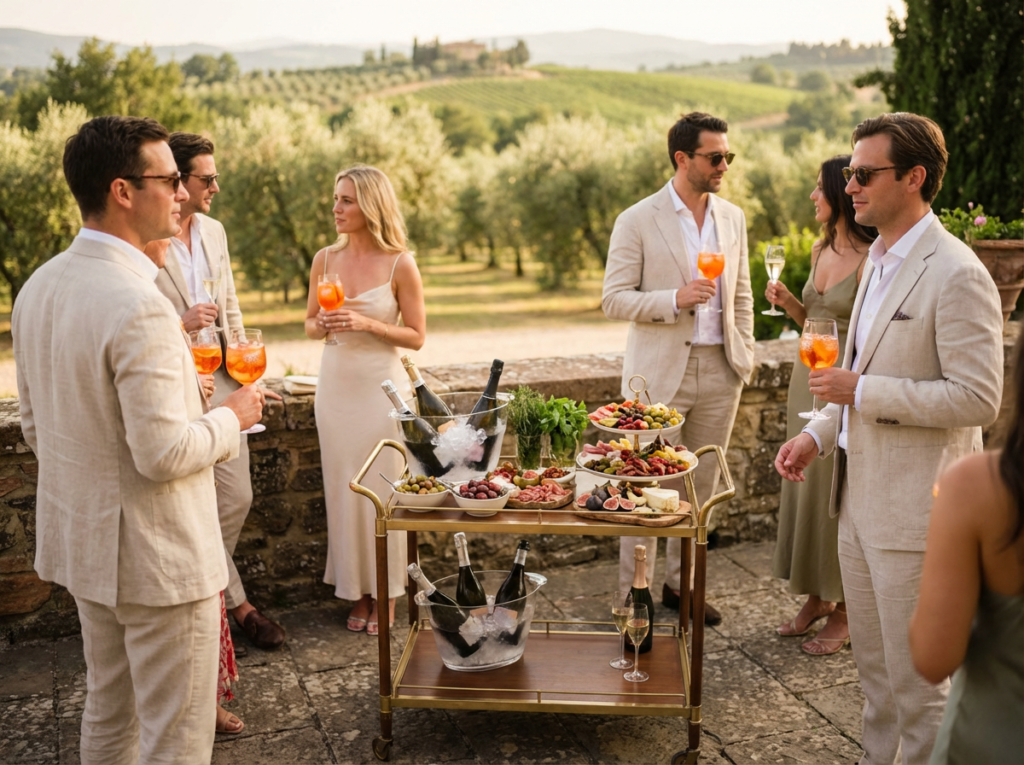
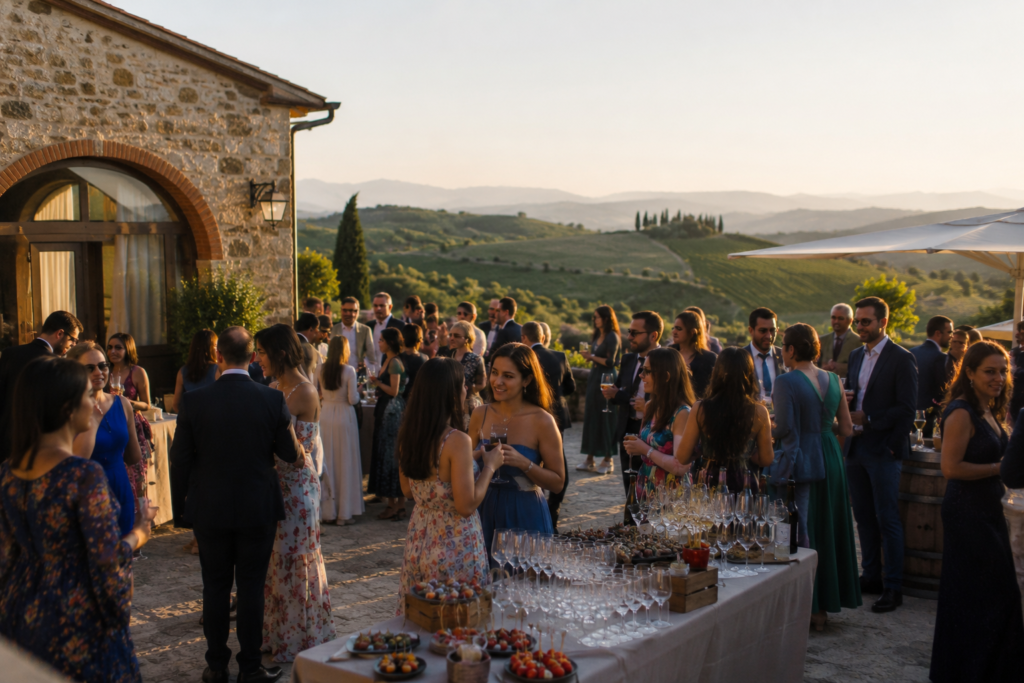
Tuscany is not one place. It’s a collection of micro-climates, culinary traditions, and venue typologies, and the Italian wedding cocktail hour you’ll experience in Chianti bears little resemblance to one in Val d’Orcia. In Chianti, where vineyard estates often have shaded loggia or olive-grove terraces, we set aperitivo stations among the vines — bruschetta with fresh tomato and basil, pecorino crostini, local salumi, and a signature cocktail built around the estate’s own wine or vin santo. The landscape does the decorating. What we manage is flow: where guests enter, how they circulate, and where the bar sits relative to the food stations so that no single area becomes a bottleneck.
Val d’Orcia is different. The terrain is open, the light is golden, and the estates tend to be more isolated. Wind is a genuine factor from late afternoon onward, which means cocktail stations need weight — stone platters, low arrangements, anchored linens. The food leans earthier: cinta senese prosciutto, ribollita shooters, pici crisps. We often position the bar inside a converted farmhouse room while food stations remain outdoors, creating a natural circulation loop that keeps guests moving without herding them.
If you’re exploring wedding venues in Tuscany, understanding this distinction matters. A cocktail hour designed for a Chianti courtyard will not translate to a hilltop in Val d’Orcia. We adapt every element — from glassware weight to cocktail temperature — based on the specific property and the month. For a deeper look at what a Tuscan celebration involves financially, our Tuscany wedding cost guide breaks down the full picture.
Amalfi Coast Aperitivo: Managing Heat, Elevation, and the 45-Minute Kitchen Window
Between June and September, the Amalfi Coast presents a specific challenge: temperatures at aperitivo hour (typically 5:30 to 7:00 PM) still hover around 28–32°C. Cheese sweats. Butter-based canapés soften. Ice melts faster than bartenders can replenish it. After thirty years of working this coastline, we’ve developed a precise protocol: cold stations are refreshed every 20 minutes, cocktails are batched in insulated vessels, and we favor seafood-forward bites — crudo di pesce, marinated anchovies, lemon-dressed octopus — that actually improve at warm temperatures rather than deteriorating.
Elevation adds another layer. Many Ravello venues sit 350 meters above sea level, which means supplies travel narrow, winding roads. The bar setup — ice, glassware, backup spirits — must arrive hours before the event. We coordinate this with military precision because there is no second delivery window once the road fills with evening traffic. Couples choosing the Amalfi Coast for their destination wedding benefit from our long-standing relationships with local caterers who understand these constraints intimately.
The 45-minute kitchen window refers to the gap most Amalfi Coast venue kitchens need between cocktail-hour service ending and the first seated course arriving. We build this into every timeline. It’s invisible to guests but essential to quality.
Lakeside Cocktail Hours on Como and Garda: Terraces, Timing, and What the Venue Fee Doesn’t Cover
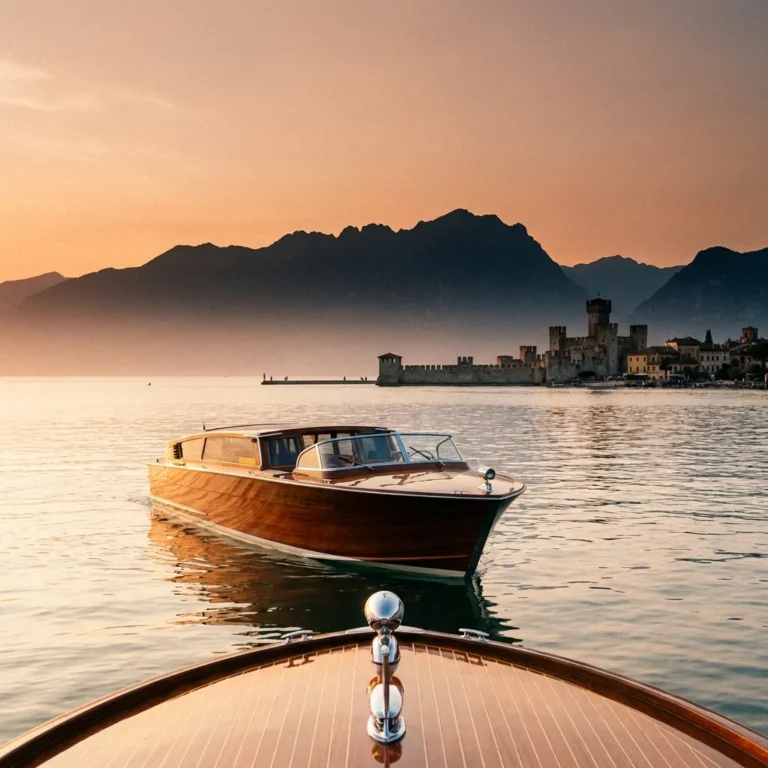
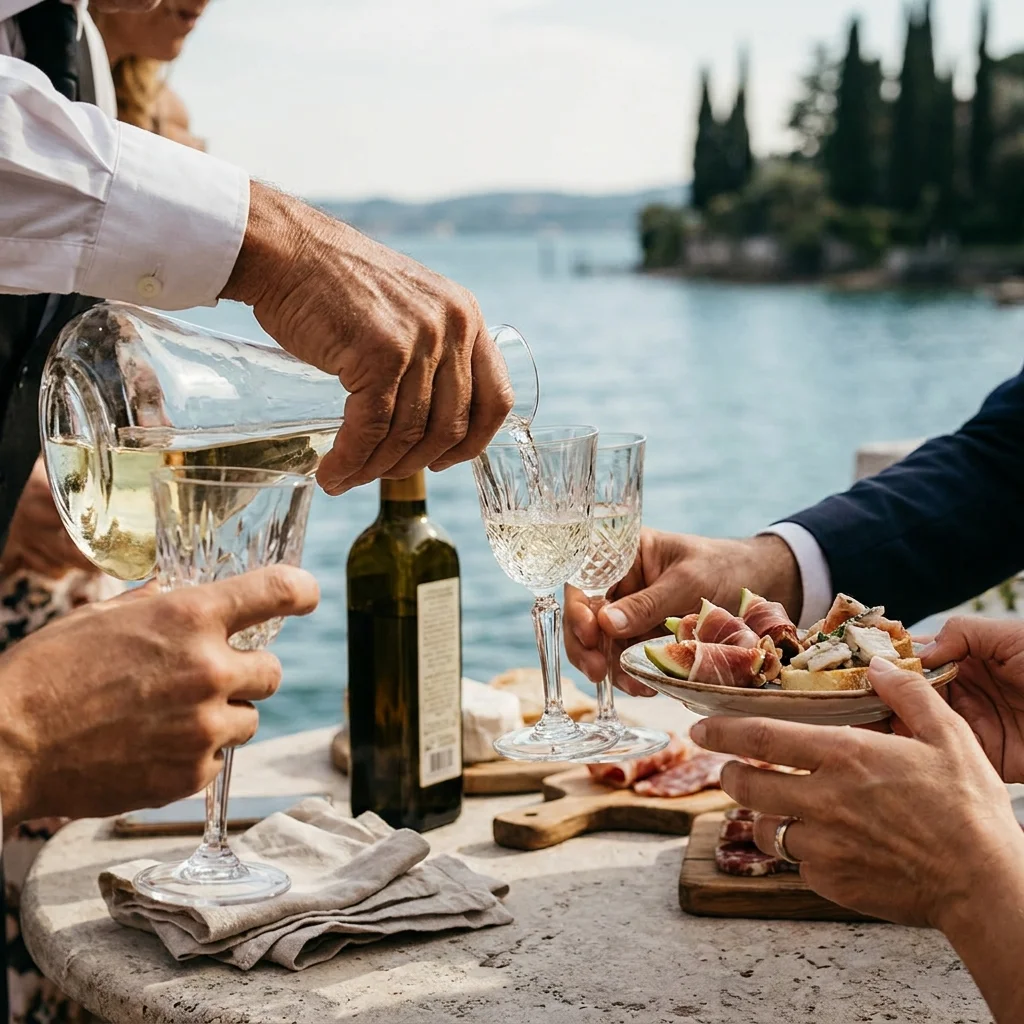
A terrace aperitivo on Lake Como — the sun dropping behind the mountains, prosecco catching the last light — is one of the most photographed moments in any Italian wedding cocktail hour. It’s also one of the most logistically dense. Most lakeside villas charge a venue fee that covers the space and basic furniture. It does not cover bar infrastructure, additional staffing, glassware beyond standard allocation, or the floral installation that transforms a bare terrace into a curated welcome area.
On Lake Como, we typically recommend a 70-minute aperitivo because the transfer logistics — often involving boats or narrow private roads — eat into the portrait window. The couple departs for photos immediately after the ceremony while guests move to the terrace. Our team manages both streams simultaneously: one coordinator with the couple and photographer, another directing guest flow, a third liaising with the kitchen on timing.
Lake Garda presents different opportunities. The eastern shore, with its wider terraces and more temperate evening breezes, allows for longer cocktail hours — up to 90 minutes in July and August without guest fatigue. Food here draws from the Veneto and Trentino traditions: sopressa, Monte Veronese cheese, lake fish carpaccio. Couples planning a wedding on Lake Garda often discover that the aperitivo becomes the most relaxed, social segment of their entire evening.
Venice: Where a Floating Cocktail Hour Requires Permits Most Couples Have Never Heard Of
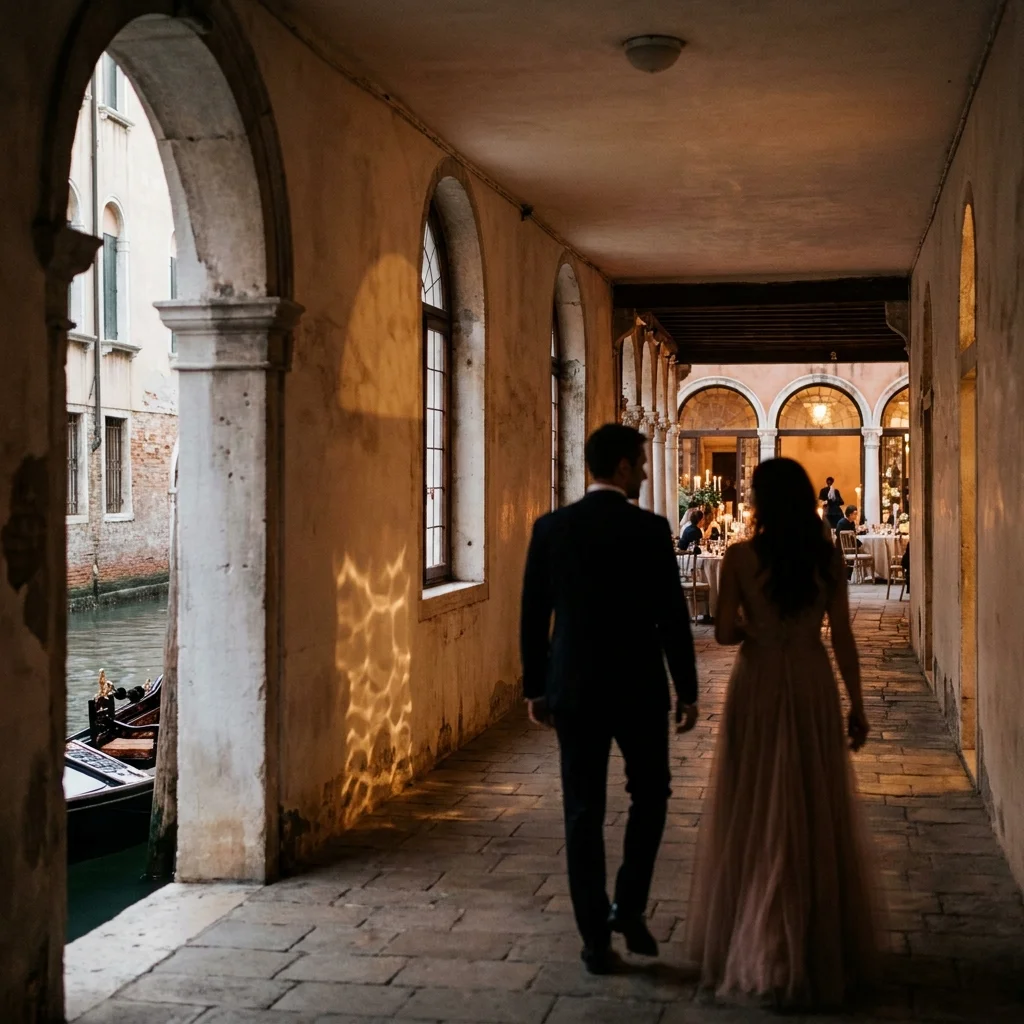
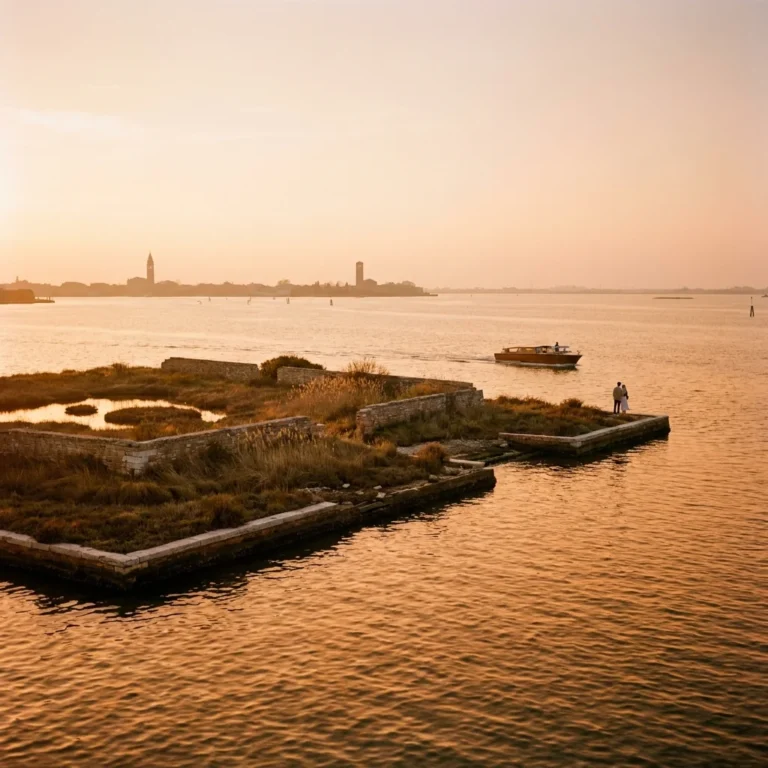
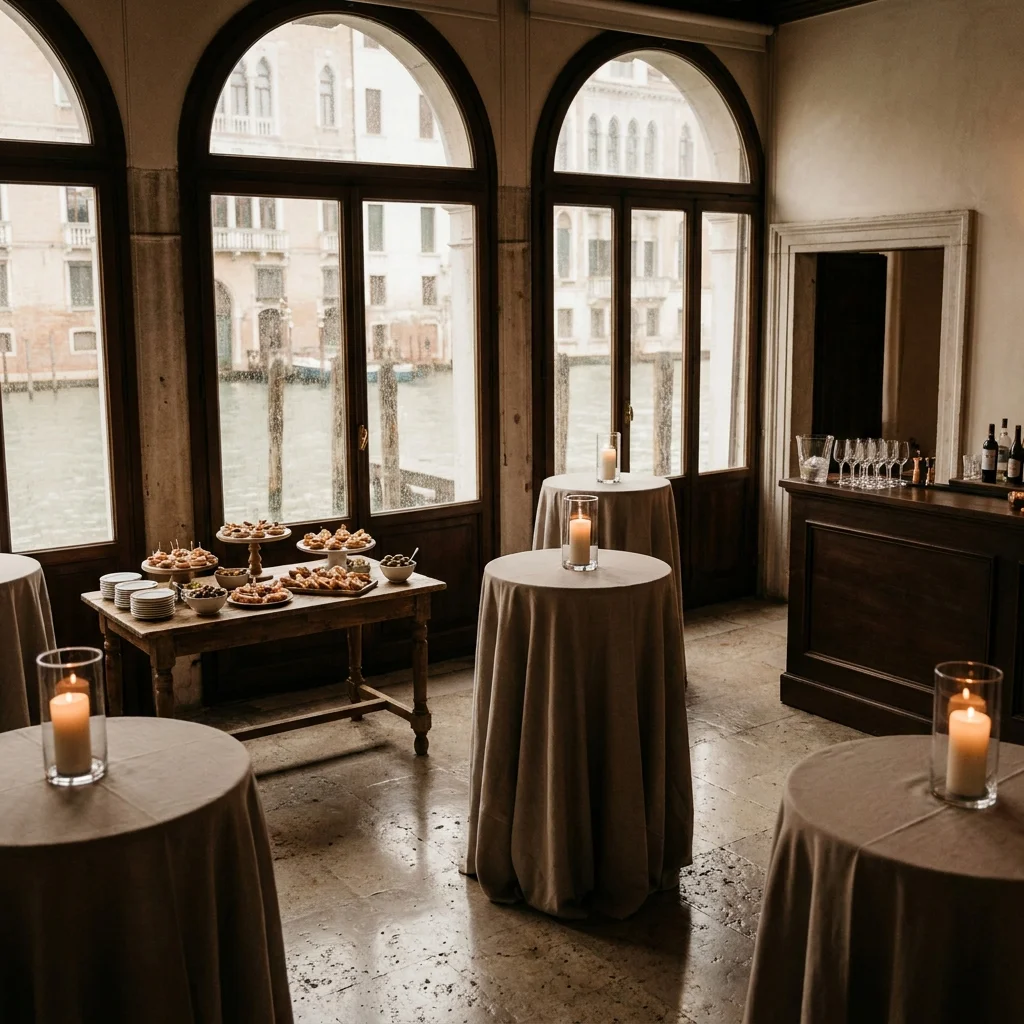
Venice operates under its own rules. An Italian wedding cocktail hour in a Venetian palazzo requires coordination with the comune for noise ordinances, with the venue for weight-load limits on historic floors, and — if you’re considering a waterfront aperitivo — with the harbor authority for temporary mooring of service boats delivering supplies. We’ve managed all of this dozens of times. What makes Venice unique is that the aperitivo space is often a different floor or wing of the building from the dining room, meaning guest transition must be choreographed with staff positioned at stairwells and corridors.
The cost of a Venice wedding reflects these complexities. Bar setup in a palazzo without a commercial kitchen often requires a temporary bar built to specification, delivered by water taxi, and assembled on-site the morning of the event. We handle this entirely — from selecting the bar fabricator to coordinating the water-taxi schedule with the venue’s loading dock availability, which on the Grand Canal is restricted to specific morning hours.
For couples drawn to Venice’s wedding venues, the aperitivo is often the most memorable segment because of the setting: candlelit courtyards, the sound of water, the play of light on stone. We lean into this with a quieter, more refined cocktail style — Bellinis made with white peach purée, Aperol spritzes served in vintage glassware, and a curated cicchetti station that nods to the city’s bacaro tradition.
Rome and Florence: Urban Cocktail Hours That Demand Sound Management and Guest Control
Urban venues introduce a variable that countryside estates don’t: neighbors. In Rome, rooftop aperitivi near the historic center must comply with decibel limits that vary by quartiere. In Florence, certain palazzo courtyards have sound curfews starting at 10 PM, which means the cocktail hour — even though it occurs earlier — must be planned within a timeline that respects the full evening’s acoustic envelope. We manage this by working directly with the venue’s compliance officer and, when needed, installing discreet sound-monitoring equipment during the event.
What makes a Florence wedding aperitivo distinctive is the architecture. Cocktail hours in Renaissance courtyards or on terraces overlooking the Duomo require minimal decoration — the setting is the design. Our role shifts toward food and beverage curation and guest-flow management. In Florence, we favor Negroni variations as the signature cocktail (the drink was born here, after all) and pair them with schiacciata, lampredotto crostini, and Tuscan olive oil tastings.
Rome’s wedding venues offer more variety — from villa gardens on the Appia Antica to hotel terraces near the Pantheon. The cocktail hour in Rome tends to be more abundant, reflecting the city’s culinary generosity: supplì, fiori di zucca, carciofi alla giudia, and a dedicated fritti station. We calibrate the volume based on the dinner menu to ensure guests arrive at the table with genuine appetite.
Passed Trays vs. Stations vs. Hybrid: The Format Decision That Shapes Your Guests’ Experience
This is where the Italian wedding cocktail hour becomes a design question, not just a catering one. The format you choose — passed service, stationary stations, or a hybrid — affects staffing costs, guest behavior, and the overall atmosphere. Here is how we advise the couples we work with:
Passed service is the most elegant option. Waitstaff circulate with individual trays, offering bites directly to guests. It keeps the space uncluttered and allows for a more curated presentation. The trade-off: it requires more staff (we recommend one server per 15 guests for passed service) and limits the variety you can offer simultaneously, since trays carry one item at a time.
Stationary stations create visual anchors — a cheese display, a seafood bar, a bruschetta station — and give guests autonomy. They work beautifully in large outdoor spaces where you want to encourage movement. The trade-off: stations can create clustering, and food quality degrades faster without active replenishment. We assign a dedicated station attendant to each display.
Hybrid is what we recommend most often. Two or three curated stations provide visual impact and variety, while passed trays deliver the signature bites and ensure every guest — including those who may be less mobile — is served. This format balances cost, elegance, and guest comfort. It’s what we design for roughly 70% of our celebrations.
To discuss which format suits your venue and guest count, reach out to our team directly.
Signature Cocktail Concepts: Regional Spirits, Seasonal Ingredients, and the One-vs-Three Decision
Every Italian wedding cocktail hour benefits from at least one signature drink. It anchors the bar, reduces decision fatigue for guests, and — when photographed — becomes part of the visual narrative of the day. The question is: one signature cocktail or multiple?
One signature cocktail is clean and decisive. It becomes identified with the couple. We’ve designed drinks around limoncello from the groom’s family estate, Barolo chinato for autumn weddings in Piedmont, and a white-peach-and-prosecco blend for summer celebrations on the Ligurian coast. A single signature keeps bar service fast — critical when 120 guests arrive simultaneously.
Three signatures offer variety but slow service. We recommend this only when the bar has at least three bartenders and the cocktail hour exceeds 70 minutes. A typical trio might include one spirit-forward option (Negroni variation), one sparkling option (spritz or prosecco-based), and one non-alcoholic aperitivo — a genuine consideration for international guest lists where some attendees don’t drink. Italian non-alcoholic aperitivi are sophisticated: Sanbittèr, chinotto, or a hand-made virgin spritz with bitter orange and soda.
We curate the cocktail menu as part of our full Italian wedding menu design, ensuring the aperitivo drinks complement rather than compete with the wines served at dinner. For couples who want deeper guidance on wine pairing across the full evening, we coordinate with regional sommeliers hand-selected for each celebration.
What an Italian Wedding Cocktail Hour Actually Costs — And What’s Quoted Separately
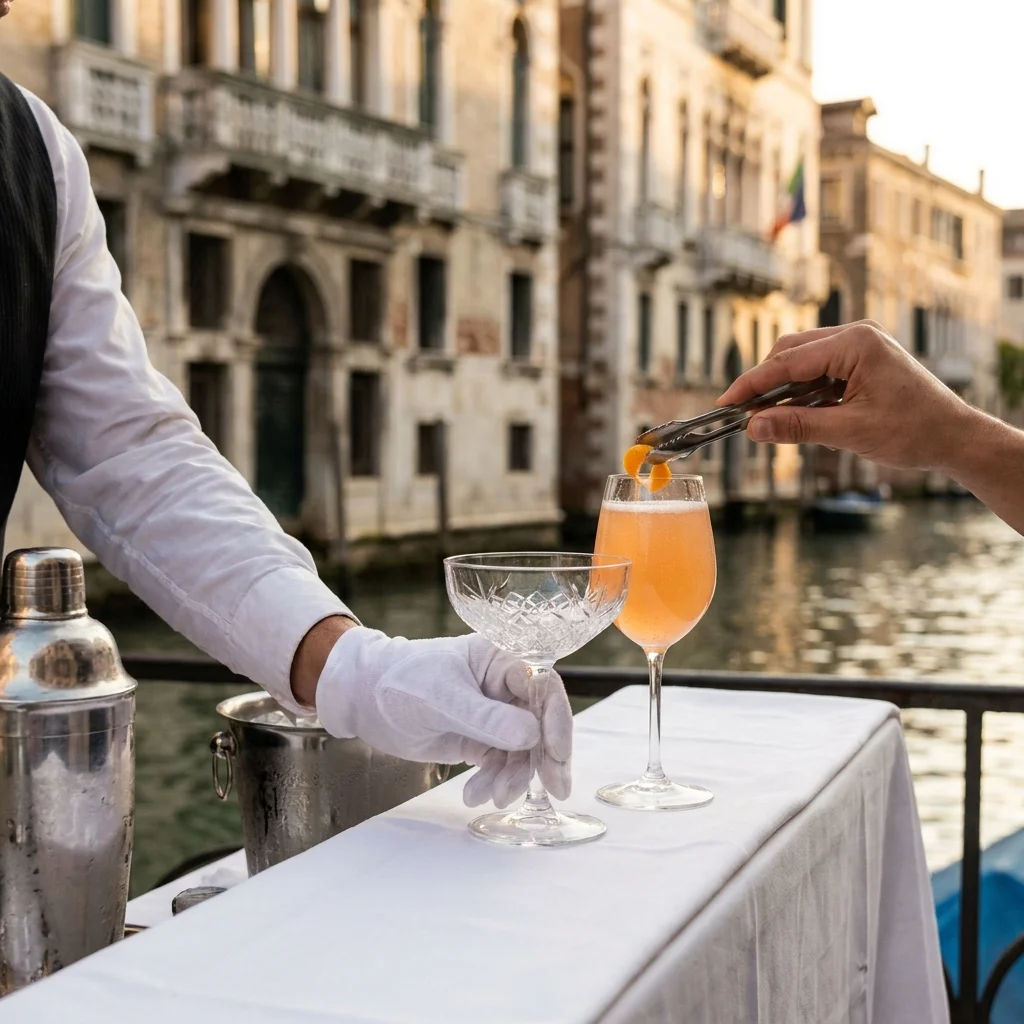
Pricing transparency matters. The ranges below reflect what we see across the Italian wedding market for cocktail-hour service specifically. These are not full-reception costs — they cover the aperitivo window only.
| Component | Typical Range (60–90 guests) | Included | Quoted Separately |
|---|---|---|---|
| Aperitivo food (catering) | €35–€75 per guest | 8–12 bite varieties, station setup, replenishment, service staff | Premium ingredients (truffle, raw seafood); dietary-specific stations; VAT (IVA 22%) |
| Bar service (drinks only) | €25–€55 per guest | Prosecco, 2–3 cocktail options, soft drinks, water, ice, standard glassware | Premium spirits; signature cocktail development; specialty glassware rental; VAT (IVA 22%) |
| Temporary bar construction | €800–€3,500 | Bar unit, back-bar shelving, delivery and removal | Custom design/branding; floral installation on bar; electrical hookup for refrigeration; VAT (IVA 22%) |
Indicative ranges. Contact Kiss Me Italy for a personalized proposal.
| Staffing Element | Typical Range | Included | Quoted Separately |
|---|---|---|---|
| Bartenders (per bartender) | €250–€500 for the event | Service during cocktail hour and open bar later in the evening | Overtime beyond contracted hours; travel to remote venues; accommodation if venue is distant; VAT (IVA 22%) |
| Wait staff (per server) | €180–€350 for the event | Passed service and station attendance during aperitivo; transition to dinner service | Overtime; specialized uniform requirements; VAT (IVA 22%) |
| Cocktail-hour coordinator | Included in Kiss Me Italy planning fee | On-site management of bar, food, guest flow, and photo-timeline sync | N/A |
Indicative ranges. Contact Kiss Me Italy for a personalized proposal.
For a broader understanding of how cocktail-hour costs fit within the full celebration budget, our guide to Italy wedding costs provides the wider framework.
Why the Cocktail Hour Is Your Photographer’s Best Friend — If the Timeline Is Right
Here is a fact that surprises many couples: the cocktail hour exists as much for your photography as for your guests. The 60-to-75-minute window is when your photographer captures couple portraits, bridal-party shots, and — if the light is right — the golden-hour images that become the centerpiece of your album. Without a well-managed aperitivo keeping guests happily occupied, the couple feels rushed and the portraits suffer.
We build the portrait schedule in collaboration with the photographer weeks before the event, identifying the exact locations on the venue property, the optimal light window (which shifts by 3–4 minutes per week across the Italian summer), and the walking time between portrait locations and the cocktail area. Our coordinator on-site communicates in real time with the photography team so that the couple returns to the party at the right moment — not too early, not so late that guests wonder where they’ve gone.
Choosing the right wedding photographer in Italy is essential to making this work. We match couples with photographers whose editorial style aligns with the venue’s light and architecture, and who understand the pacing of an Italian reception intimately enough to work within the timeline rather than against it.
International Guest Considerations: Dietary Needs, Non-Alcoholic Options, and Pacing Expectations
The couples we work with come from everywhere — the US, the UK, the Middle East, Asia, Australia. Their guest lists are equally global. A genuine Italian wedding cocktail hour must account for this diversity without losing its Italian identity.
Dietary needs are managed at the menu-design stage, not improvised on the day. We flag allergies, vegetarian and vegan requirements, halal and kosher considerations, and gluten-free needs during the RSVP process, then work with the caterer to ensure the aperitivo stations include clearly labeled options. This is hospitality, not accommodation — every guest should feel that the food was designed for them, not adapted reluctantly.
Non-alcoholic aperitivi deserve the same attention as the cocktail list. We never relegate non-drinkers to sparkling water. Instead, we design a dedicated non-alcoholic cocktail — often built with Italian bitters, fresh citrus, and artisanal sodas — that sits alongside the alcoholic options with equal presentation.
Pacing expectations vary by culture. American guests tend to expect a shorter cocktail hour and a faster transition to dinner. British guests are comfortable with a longer standing reception. We adjust the timeline and the food volume accordingly, briefing the service team on the specific guest-list composition so they can modulate the rhythm of passed service.
For couples planning a villa wedding in Italy, where the aperitivo and dinner often occur on the same property, this cultural calibration is especially important because the transition between the two is visible and immediate.
The Aperitivo Hour We Design Is the Evening Your Guests Will Talk About First
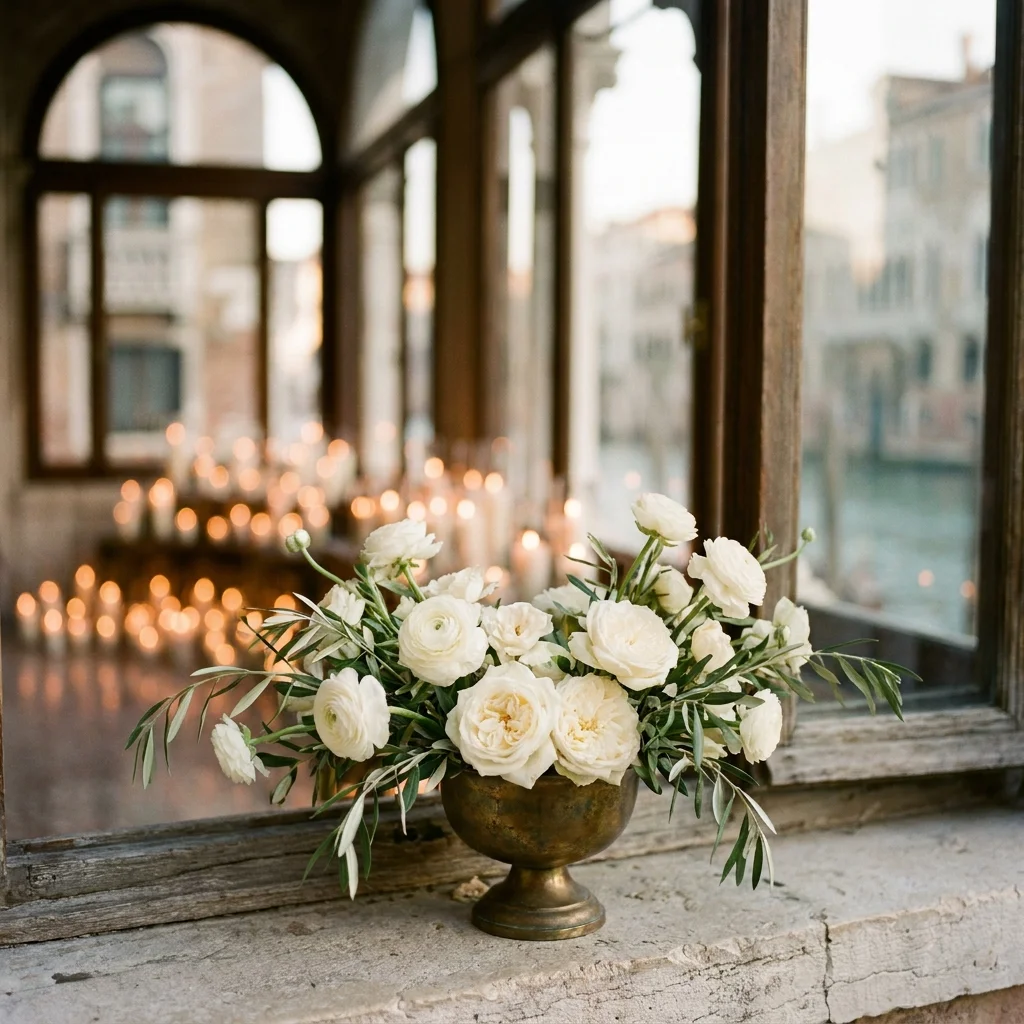
After thirty years, I’ve learned that guests remember the cocktail hour more vividly than almost any other part of the reception. It’s the moment they arrived, took their first sip, looked around, and thought: this is going to be a beautiful evening. That impression doesn’t happen by accident. It happens because every element — the drink in their hand, the food within reach, the music in the air, the light on the landscape — has been considered, coordinated, and managed by a team that has done this hundreds of times.
At Kiss Me Italy, we don’t hand you a cocktail-hour checklist. We design a complete aperitivo experience that reflects your taste, your venue, your season, and your guests’ needs — then we manage every vendor, every timeline cue, and every contingency so that you never see the machinery. You see only the evening.
If you’re ready to begin designing yours, start a conversation with our team. We’ll want to know your venue, your guest count, and the feeling you’re after. Everything else, we handle.
Frequently Asked Questions About the Italian Wedding Cocktail Hour
Can we hold the cocktail hour at a different location from the dinner reception?
Yes, split-location receptions are common in Italy, especially in Venice and along the Amalfi Coast where ceremony, aperitivo, and dinner may occur in different wings or even different buildings. We manage the guest transfer logistics — including boats, shuttles, or guided walks — and coordinate timing so the transition feels intentional rather than disjointed. Additional transport costs apply and are quoted separately.
We recommend finalizing the aperitivo menu no later than six weeks before the wedding. This allows time for a tasting session (usually held on-site or at the caterer’s kitchen), ingredient sourcing for seasonal items, and any adjustments based on final dietary requirements from the RSVP process. Last-minute changes within two weeks of the event may incur surcharges depending on the caterer.
Is it possible to bring our own alcohol or spirits from abroad for the cocktail hour?
It depends on the venue’s licensing and the caterer’s contract. Some Italian venues allow couples to supply specific bottles — a family whisky, for example — but most caterers require that all bar service be handled under their liability insurance. We negotiate this on your behalf and advise on Italian customs regulations for importing spirits, which include duty thresholds and labeling requirements.
What happens if it rains during an outdoor cocktail hour?
Every outdoor aperitivo we design includes a rain contingency — a pre-identified indoor space, a covered loggia, or a tented area that can be activated within minutes. We monitor weather forecasts starting 72 hours before the event and make the call by early afternoon on the wedding day. The contingency plan is built into the timeline from the start, so the shift feels seamless to guests.
Can children be served separately during the cocktail hour?
Absolutely. We often set up a dedicated children’s station with age-appropriate bites — mini pizzette, fruit skewers, plain pasta cups — in a supervised area adjacent to the main aperitivo. This keeps young guests happy and parents relaxed. If a nanny or childcare service is needed, we coordinate that as a separate arrangement well in advance.
Do we tip the bar staff separately, or is gratuity included in the catering contract?
Tipping culture in Italy differs from the US or UK. Gratuity is not typically included in the catering contract, and while it is appreciated, it is not expected. If you wish to tip bar and service staff, we advise a collective envelope presented to the catering manager at the end of the evening, who distributes it among the team. We can advise on appropriate amounts based on the service level and region.
Can we incorporate live music specifically during the cocktail hour?
Live music during aperitivo is one of the most effective ways to set the tone for the evening. A jazz trio, an acoustic guitarist, or a small ensemble works beautifully in the cocktail-hour setting. We source musicians regionally and manage their setup, sound check (conducted before guest arrival), and coordination with the venue’s noise regulations. Music costs are quoted separately from the catering package.
Is VAT (IVA) included in the per-guest cocktail-hour pricing that caterers quote?
In most cases, no. Italian caterers typically quote per-guest prices exclusive of IVA (22%). This is a significant line item — on a cocktail hour costing €60 per guest for 100 guests, IVA adds €1,320 to the aperitivo alone. We ensure that every proposal we present to couples shows both net and gross figures so there are no surprises in the final invoice.
How do you handle guests with severe allergies during a cocktail hour with open stations?
Severe allergies require a protocol beyond simple labeling. We brief the entire service team on the specific allergens, ensure cross-contamination safeguards are in place at every station, and — for anaphylaxis-level allergies — arrange a dedicated tray service for the affected guest so they receive only pre-approved items. This is coordinated directly with the caterer’s chef during the menu-finalization stage.
Keep exploring: Destination Wedding Photographer in Italy: How to Choose the Right Style, Coverage & Locations.