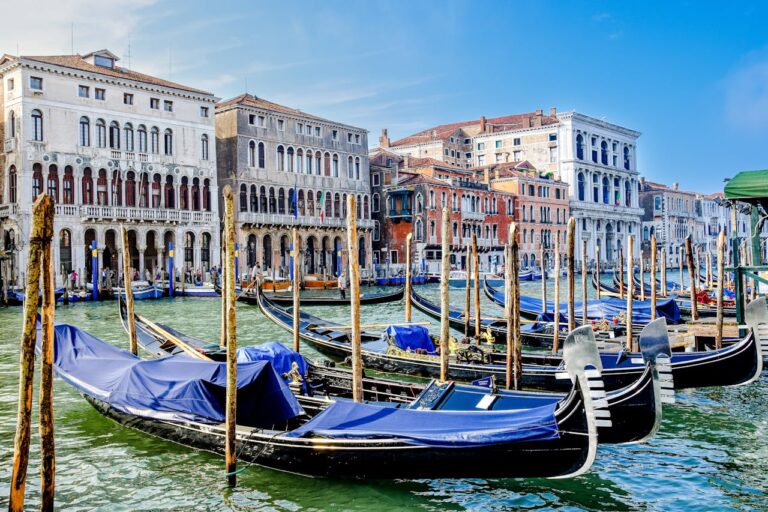
Planning wedding flowers in Italy is one of the most intimate decisions a couple makes—a choice that speaks not only to aesthetic preference but to a deeper understanding of place, season, and occasion.
Italy’s landscape changes with remarkable expressiveness across the calendar year, and the florals that thrive in May’s soft Tuscan light are entirely different from those that grace a December palazzo or a September vineyard terrace above Lake Garda.
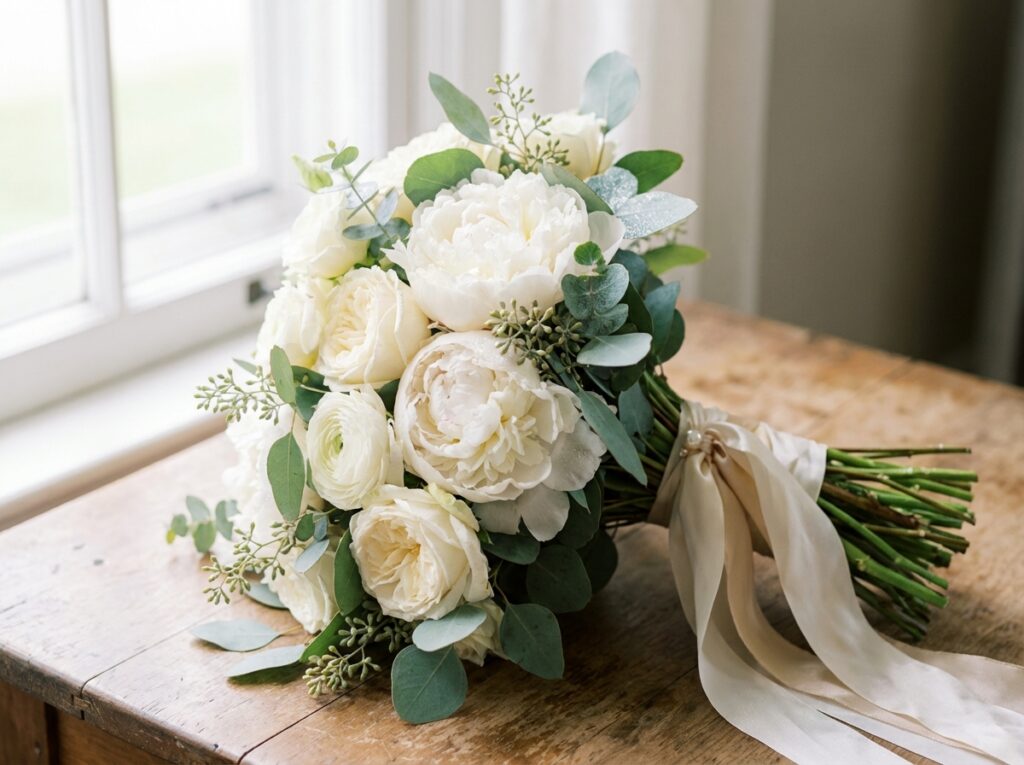
This is not merely a logistical consideration; it is an opportunity. When your flowers are chosen in genuine harmony with the season and setting, the result carries a coherence that no imported substitution can replicate—a sense that the celebration belongs, utterly and completely, to that moment in that place. Whether you are exchanging vows on a hillside overlooking Chianti, beneath the pergola of a Sicilian masseria, or in the gilded interior of a Roman chapel, this guide provides the framework, the seasonal knowledge, and the professional perspective you need. If you are planning bespoke luxury weddings in Italy, consider this your authoritative companion to floral design done right.
Every exceptional celebration begins with a conversation. If you are envisioning wedding flowers in Italy that reflect your singular story and the beauty of this country, the team at Kiss Me Italy is ready to listen. Reach out to begin planning—we would be honoured to guide you.
Wedding Flowers in Italy: What This Guide Covers
This page is designed for destination couples seeking wedding flowers in Italy that are not only visually extraordinary but also seasonally sound, logistically coherent, and reflective of the country’s extraordinary floral heritage. The approach here is consultative rather than prescriptive. You will not find generic checklists or one-size-fits-all recommendations—instead, you will find the considered perspective of specialists who have worked across Italy’s most celebrated venues and witnessed firsthand how the right floral choices transform a wedding into an irreplaceable experience. Within these pages:
- a decision framework rooted in date, venue character, palette, aesthetic vision, and budget reality
- season-by-season guidance with honest notes on availability and regional variation
- logistical intelligence on heat, wind, delivery sequencing, and floral repurposing
- a clear anatomy of what a comprehensive floral quote typically contains
- a briefing framework, planning timeline, and a working glossary of Italian terminology
Approaching floral planning in Italy with clarity and intention—rather than improvisation—is what separates a beautiful celebration from a truly exceptional one. The process begins, always, with two anchors: the date that determines seasonal availability, and the venue that governs everything from arrangement height to installation logistics.
How to Choose Wedding Flowers in Italy: A Decision Framework
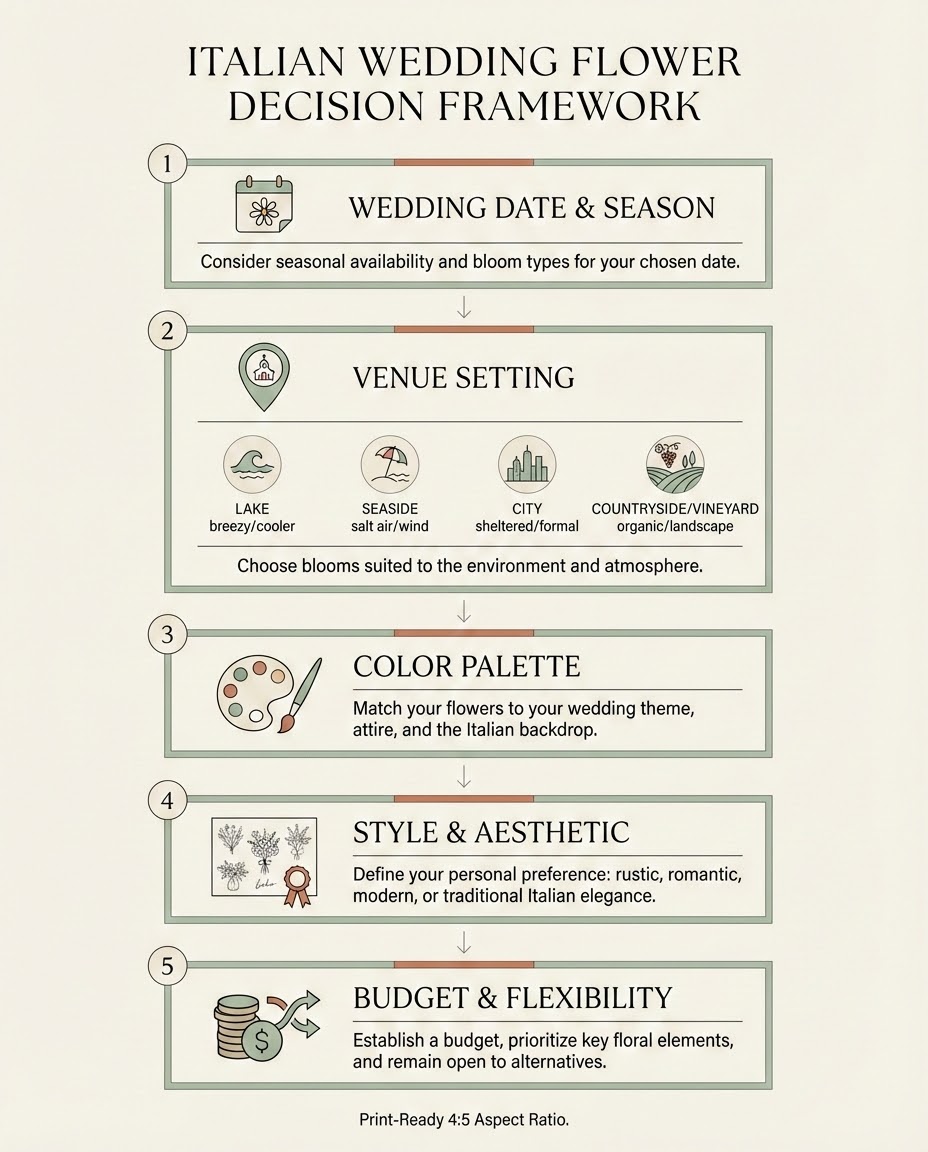
Before a single stem is selected, the most important work is architectural: building the framework within which all floral decisions will live. Choosing wedding flowers in Italy with coherence means understanding the five forces that shape every design outcome, and addressing each one with honesty before moving to the visual and aesthetic conversation.
1. Wedding Date and Seasonality
Your date is the most powerful filter available. Italy’s seasons are generous but not unconditional—each one offers a specific vocabulary of blooms, and working within that vocabulary yields fresher stems, more resilient arrangements, and a design that feels genuinely at home. A request for out-of-season flowers is not impossible, but it introduces cost, fragility, and substitution risk that are entirely avoidable.
2. Venue Setting and Microclimate
Where you are married shapes your floral needs with precision:
- Lake venues: Often breezy and cooler even in midsummer; florals benefit from anchoring, and delicate structures should be avoided in exposed positions.
- Seaside locations: Salt air and afternoon gusts demand hardy blooms and secure installations; low, dense arrangements outperform tall, fragile ones.
- City settings—palazzos, cloisters, historic courtyards: Sheltered and often formally proportioned; taller arrangements, intricate structures, and refined textures are all viable.
- Countryside and vineyard venues: The landscape itself is the backdrop; organic, loosely structured florals that echo meadows and harvest feel entirely natural, and there is room to work with seasonal grasses, foliage, and wildflower elements.
3. Color Palette and Seasonal Harmony
The palette that serves a May wedding in Umbria will not serve a November celebration in Milan. Spring invites blush, white, and pale lavender; summer handles both saturated intensity and sun-bleached neutrality; fall demands warm ochres, deep burgundy, and terracotta; winter calls for the sophistication of dark green, ivory, and jewel tones against candlelight. When palette and season align, the florals feel inevitable.
4. Aesthetic Vision and Style Language
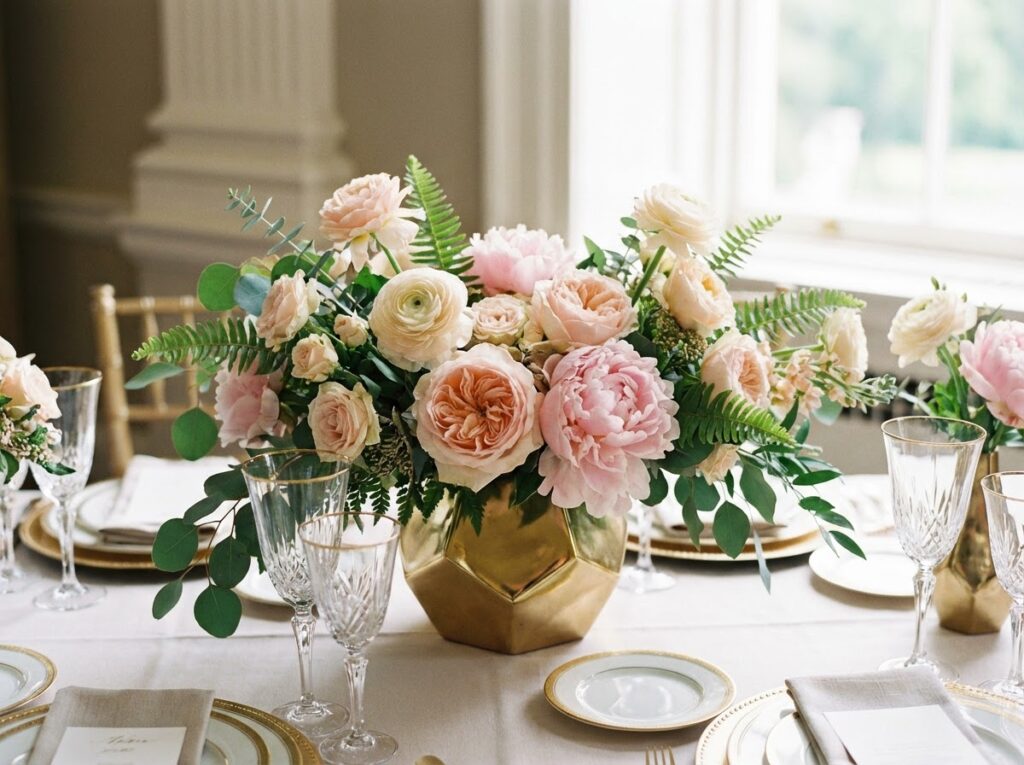
Romantic, rustic, whimsical, architectural, wild garden—each of these terms implies a specific relationship between bloom choice, arrangement density, and finishing sensibility. Style direction is not decoration; it is the interpretive lens through which a florist translates your vision into three-dimensional form. We explore these styles in depth further in this guide.
5. Budget and the Art of Substitution
A fluent understanding of seasonal availability makes your budget work harder. Locally grown, seasonally available flowers require less transport, shorter conditioning time, and fewer interventions to stay fresh and beautiful. Where a specific variety is unavailable, a skilled florist does not simply swap one flower for another—they find a bloom that delivers the same emotional weight: the same softness, scale, fragrance, or texture, in a different form. Openness to this kind of substitution is not a compromise; it is a mark of design intelligence.
For couples considering a more intimate celebration, the same principles apply without exception. Whether you are planning an intimate wedding in Italy or have chosen to elope in Italy, your floral brief—however focused—should still be rooted in season, setting, palette, and purpose.
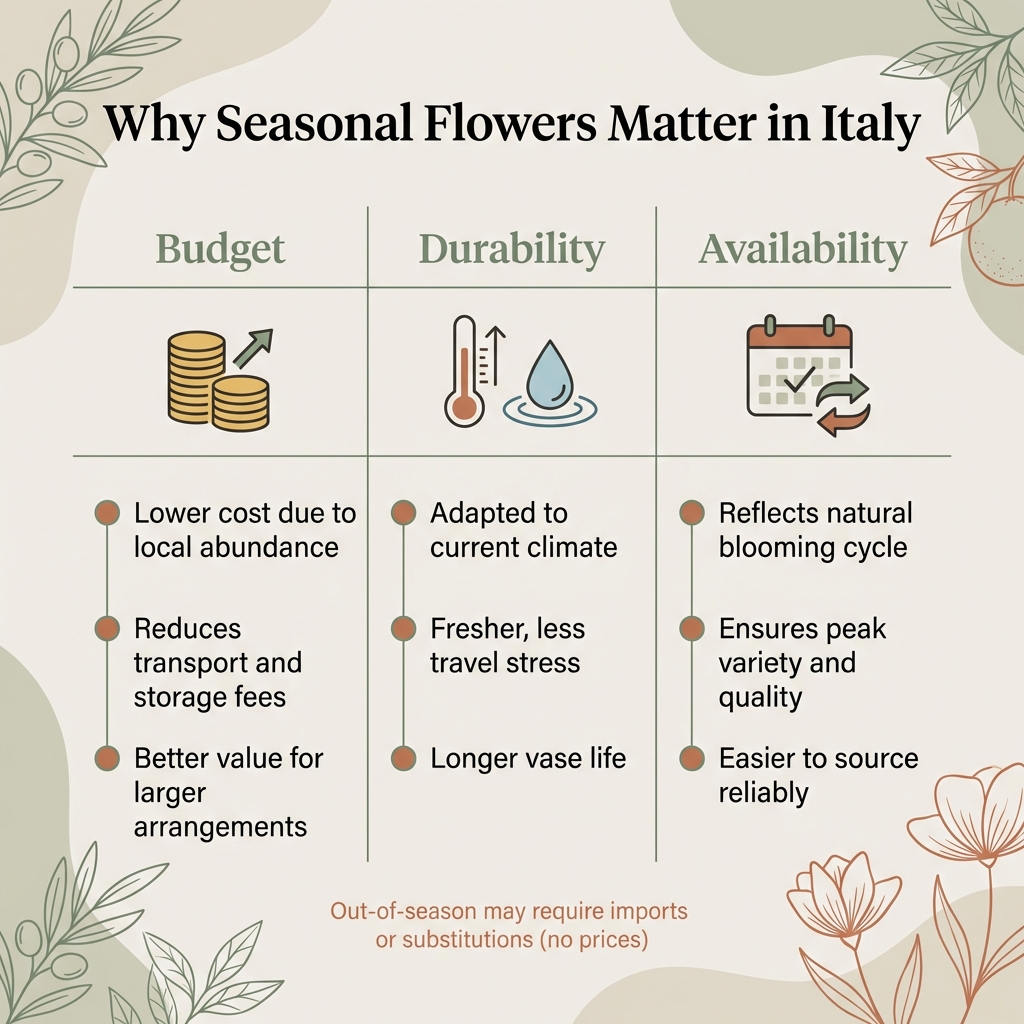
Why Seasonality Is a Strategic Decision
The case for choosing seasonal florals at their natural peak in Italy is not merely aesthetic—it is logistical, financial, and practical in equal measure. Understanding this helps couples approach the floral conversation with confidence and clarity rather than indecision.
Budget Intelligence
Seasonal flowers grown locally or regionally arrive with significantly lower transport costs and no requirement for climate-controlled logistics. A summer wedding filled with sunflowers, zinnias, and herbs from a nearby grower will deliver more volume, more variety, and more design flexibility per euro than one built around imported orchids or tulips flown in from the Netherlands in August. Seasonal alignment is, in effect, a form of budget amplification.
Freshness and Durability
Flowers at seasonal peak have been harvested recently, not stored across continents. They arrive with resilience—the kind that matters during an outdoor ceremony in late August heat or an al fresco reception swept by an evening lake breeze. Out-of-season imports are more fragile, more prone to wilting under stress, and more dependent on florist intervention to appear fresh. When the conditions of an Italian wedding are considered—often outdoors, often warm, often running long—freshness is not a luxury; it is a structural requirement.
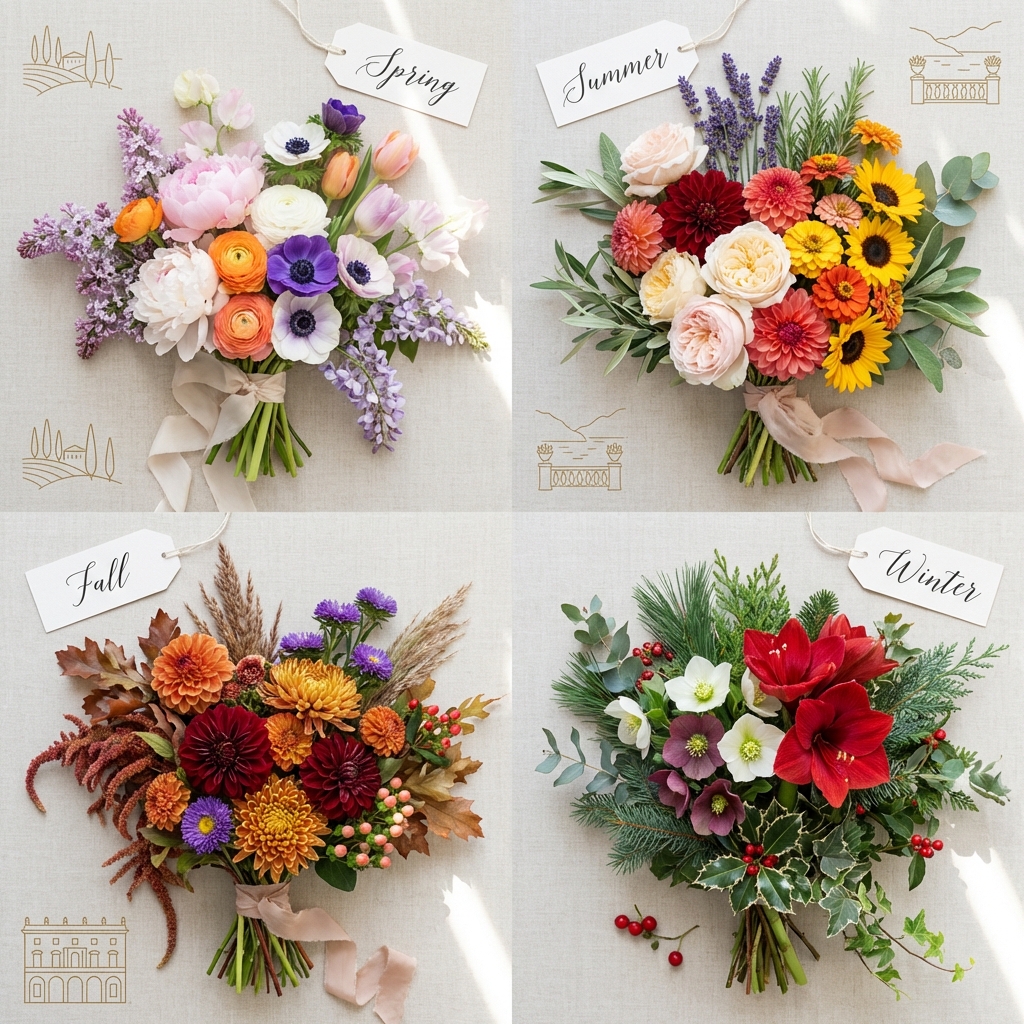
Availability and the Substitution Conversation
Italy’s climate varies meaningfully between north and south, between coastal and inland, and even between valley floors and hilltop villages. But the broad seasonal rhythms are reliable enough to plan around. When you understand what naturally flourishes in each season, you can approach the substitution conversation with a florist not as a compromise but as a collaborative refinement—moving from a mood and palette rather than from a specific stem that may or may not be available on your date.
Navigating seasonal availability, regional suppliers, and floral logistics across Italy’s diverse venues requires expertise that comes from years of on-the-ground planning. Kiss Me Italy works with a curated network of Italy’s finest floral designers. Contact our team to discuss how we can translate your vision into something extraordinary.
Spring Wedding Flowers in Italy (March–May)
Spring in Italy arrives with a softness that seems almost theatrical—pale light flooding hillside gardens, cherry branches in full bloom above ancient stone walls, the air carrying something sweet and provisional before the heat of summer settles in. Spring wedding flowers in Italy draw directly from this atmosphere: they are delicate, fragrant, abundant with movement, and deeply expressive of the season’s particular tenderness.
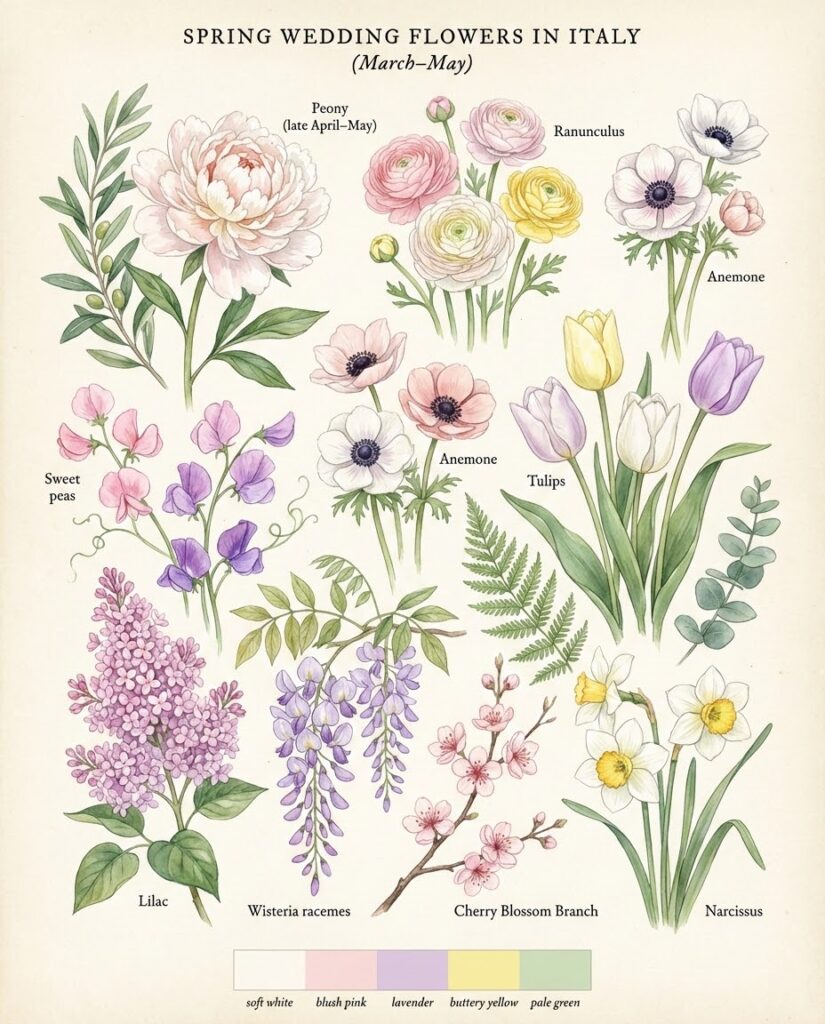
What’s Naturally Available
Spring’s floral vocabulary is among the most beloved across all seasons. Subject to regional variation, supplier relationships, and the year’s growing conditions, spring typically offers peonies—usually from late April through May—ranunculus, anemones, tulips, sweet peas, lilac, wisteria, flowering branches such as cherry blossom, narcissus, and an abundance of lush, early-season foliage. Flowering branches in particular allow for installations of unusual scale and drama at ceremony spaces and entrances.
Palette and Style Direction
The palette of spring florals in Italy is one of the most refined available anywhere: soft whites, blush rose, pale lavender, the gentlest of buttery yellows, and the cool freshness of sage and mint green. These tones suit romantic and whimsical aesthetics with particular grace—loose, garden-inspired bouquets that feel gathered rather than constructed, ceremony arches that seem to have grown in place, centerpieces with the effortless abundance of a private cutting garden. Countryside and garden venues are a natural counterpart to this aesthetic, though spring florals translate with equal elegance to historic interior settings and lakeside terraces.
Practical Intelligence
Italy’s spring weather is variable. Warm afternoons may give way to cool evenings, and light rain is not uncommon, particularly in March and April. Spring blooms are generally resilient in these conditions, though many are more fragile than the hardy summer varieties. The most important logistical consideration is timing: arrangements should be installed as close to the ceremony as possible to protect freshness, and a contingency plan for unexpected wind or rain is advisable for outdoor celebrations.
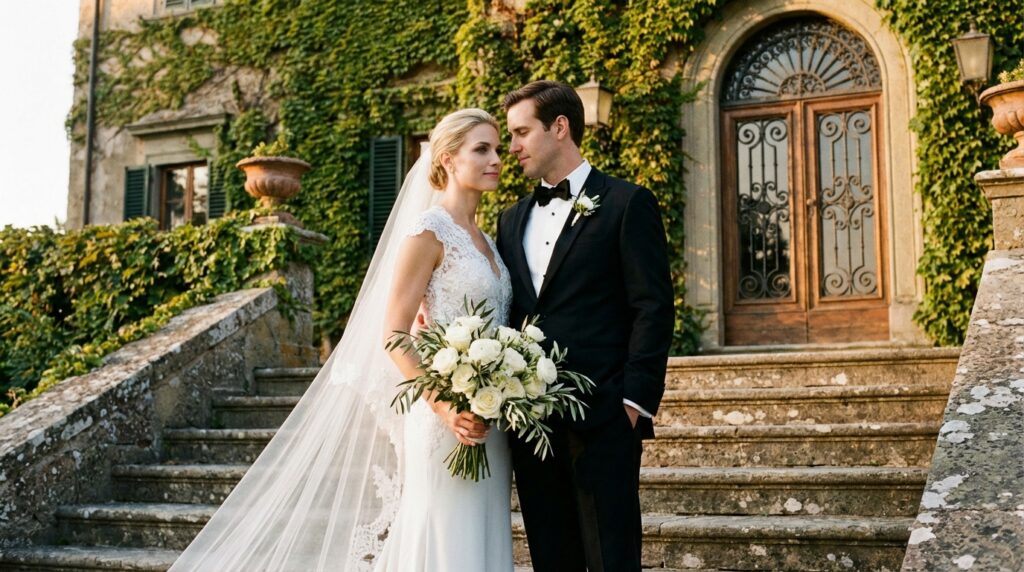
Summer Wedding Flowers in Italy (June–August)
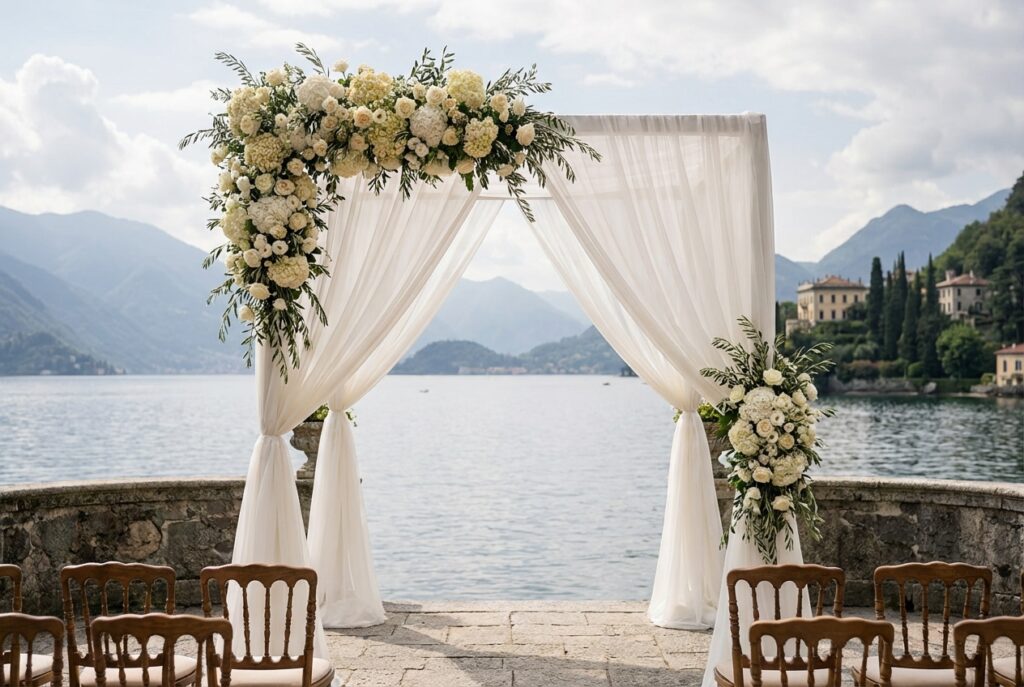
Summer is the height of Italy’s wedding calendar, and the floral landscape in these months is extraordinary in its richness—a season that asks not which flowers to choose, but how to harness such abundance with discipline and vision. Yet summer also presents the most demanding logistical context of the year, and planning summer wedding flowers in Italy requires an equal measure of beauty and pragmatism.
What’s Naturally Available
The palette available to a summer wedding in Italy is among the broadest of any season: garden roses in endless variety, dahlias, zinnias, sunflowers, cosmos, scabiosa, lisianthus, delphiniums, lavender, and an entire vocabulary of culinary herbs—rosemary, sage, thyme—that bring fragrance and informality to arrangements in equal measure. Wildflowers and grasses are plentiful; olive branches, eucalyptus, and ornamental foliage expand the textural range further. From bold, saturated designs to airy compositions in bleached neutrals, summer enables almost any aesthetic direction.
Heat: The Principal Consideration
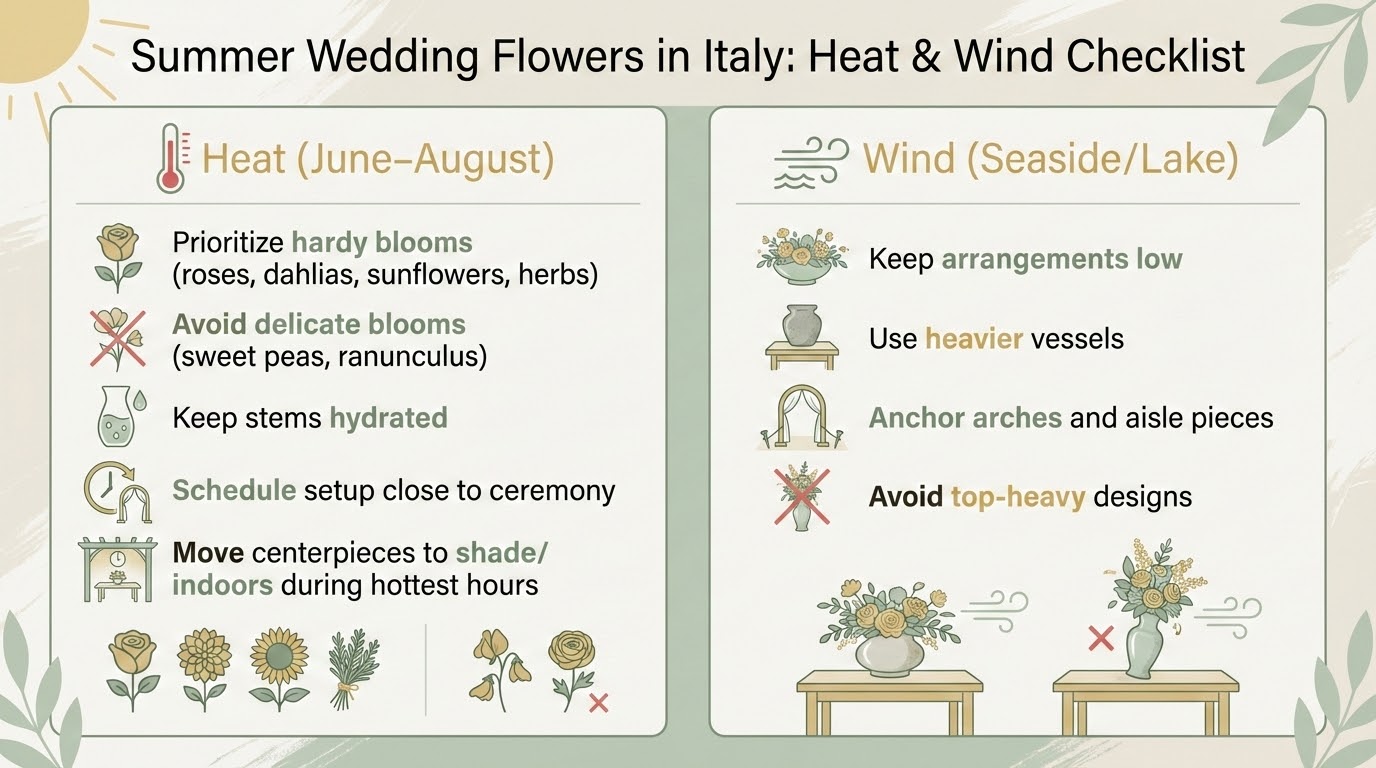
Outdoor summer celebrations, particularly in southern Italy or the inland valleys of Tuscany and Umbria, regularly reach 30°C or above. Not every flower withstands sustained heat with equanimity. Garden roses, dahlias, sunflowers, and herbs are reliable in these conditions; sweet peas, ranunculus, and anemones—more at home in spring—will deteriorate quickly. Your florist should work with appropriate conditioning techniques to keep stems hydrated, and arrangements should be installed as late as the ceremony timeline allows. For reception tables under the open sky, moving centerpieces into shade or a cooled interior during the hottest afternoon hours, then returning them to tables at dusk, is a practical and effective approach.
Palette and Style Direction
Summer can carry both extremes of the chromatic spectrum with confidence. Deep corals, bright yellows, and rich purples speak to the season’s intensity; a softer approach—whites, creams, pale peach, and sage—channels the quality of late afternoon light. Wild garden and rustic styles are particularly well-suited to summer, with organic, loosely structured arrangements that mirror the surrounding landscape. At coastal and lakeside venues, keep arrangements lower and denser to resist the breezes that typically arrive with the afternoon.
Wind and Structural Security
Seaside and lakeside venues experience variable afternoon winds, and ceremony installations at these locations require additional engineering. Arches and aisle markers should be anchored with weight, and top-heavy designs avoided. Communicate your venue’s exposure clearly when briefing your florist; experienced Italian wedding floral designers will have worked in these conditions before and will have established solutions ready.
Fall Wedding Flowers in Italy (September–November)
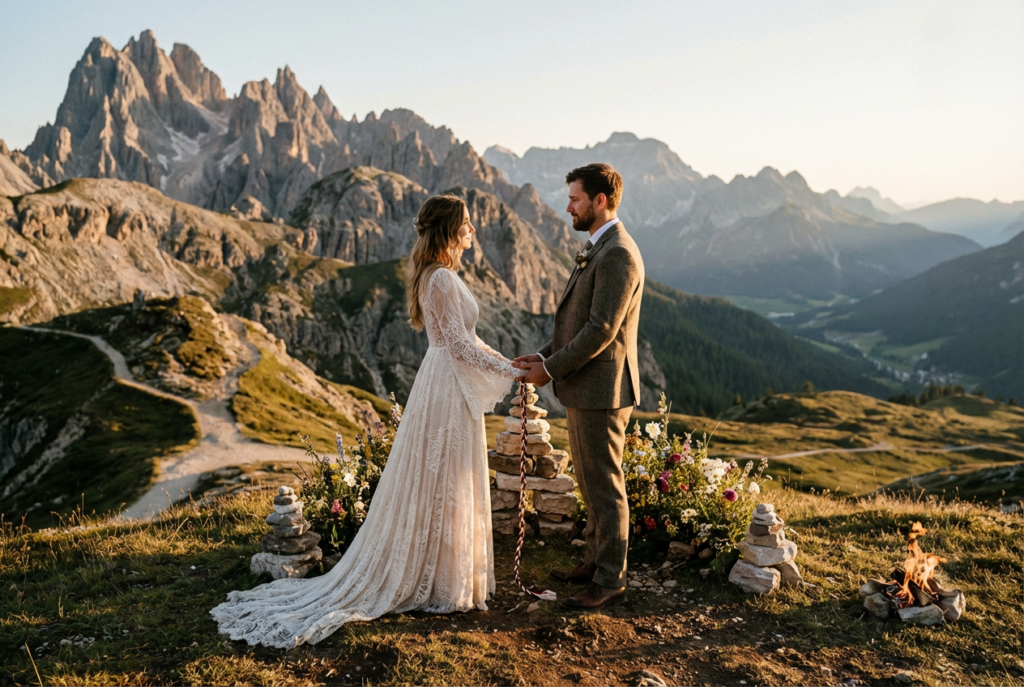
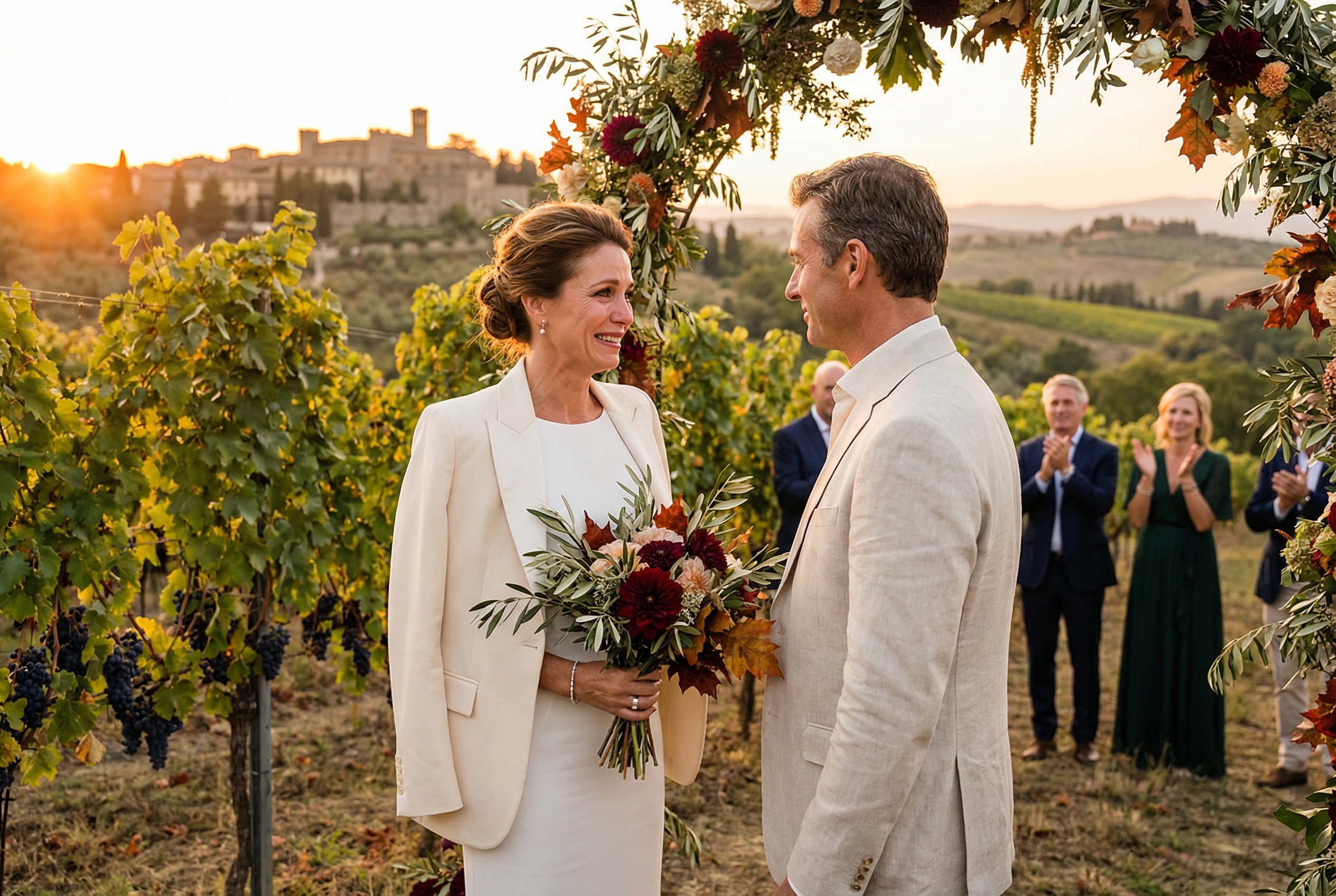
Autumn in Italy is a season of uncommon beauty—the light turns amber, the vineyards shift through copper and gold, and the air carries the particular clarity that follows summer. It is also, for many couples, the most underestimated time of year for a wedding. The fall wedding flowers in Italy available in these months are rich, textured, and sophisticated in a way that no other season entirely replicates.
What’s Naturally Available
Dahlias are the undisputed protagonists of the Italian autumn, available in a range of forms—café au lait, dinner plate, ball, pompon—and colors that shift from pale champagne to the deepest burgundy. Alongside dahlias, fall typically offers garden roses with late-season blooms, chrysanthemums, asters, amaranthus, celosia, hypericum berries, and seasonal foliage of extraordinary variety: oak leaves turning rust and bronze, ornamental grasses catching the last warm light, beech branches with their characteristic papery texture. Foraged elements—seed pods, wild branches, autumn berries—add an organic naturalism that feels entirely appropriate to the season’s spirit.
Palette and Style Direction
The palette available in autumn is deeply saturated and emotionally resonant: burgundy, rust, terracotta, burnt orange, deep plum, golden yellow, and the darkest chocolate browns. These tones pair with exceptional naturalness to countryside and vineyard settings, where the landscape itself reflects the same chromatic shift. Romantic and rustic styles work with particular authority in these months—lush, abundant arrangements that feel gathered from the surrounding land, layered with texture and warmth. For couples who want something more architectural and moody, dark foliage and jewel-toned blooms can create a dramatic formality that suits the season equally well.
Weather Considerations
September and early October are typically the most forgiving weeks of the autumn season—warm, stable, and often the most beautiful of the year. By November, particularly in northern Italy, temperatures drop and rain becomes more likely. For late-autumn celebrations, covered contingency options are advisable, and your florist should be briefed on the likelihood of evening temperatures falling quickly. Flowers themselves are generally hardy in autumn conditions, though prolonged rain can compromise delicate arrangements.
Winter Wedding Flowers in Italy (December–February)
Winter weddings in Italy occupy a world of their own—intimate by nature, architecturally magnificent in their settings, and possessed of an atmosphere that the high season simply cannot replicate. The winter wedding flowers in Italy available in these months are fewer in variety but remarkable in their suitability to the season: restrained, elegant, and deeply expressive of the quiet grandeur that defines Italian winter celebrations.
Whether you are drawn to the lushness of a Tuscan spring or the restrained magnificence of a winter palazzo, Kiss Me Italy has the expertise to align your floral vision with Italy’s seasonal best. Speak with our planning team to explore what is possible for your date and setting.
What’s Naturally Available
Winter is the most constrained season for locally grown blooms, but this constraint invites a different kind of creativity. Hellebores—among the most sophisticated of all winter flowers—are available, along with amaryllis, anemones (depending on timing and supplier), and an extraordinary range of evergreen material: pine, fir, cedar, eucalyptus, olive, ivy, holly, and winter berries. Greenhouse roses and carnations are typically accessible. For a wider palette, florists may source imports—tulips, ranunculus, orchids—but expect these to carry a meaningful cost premium.
The Indoor Advantage
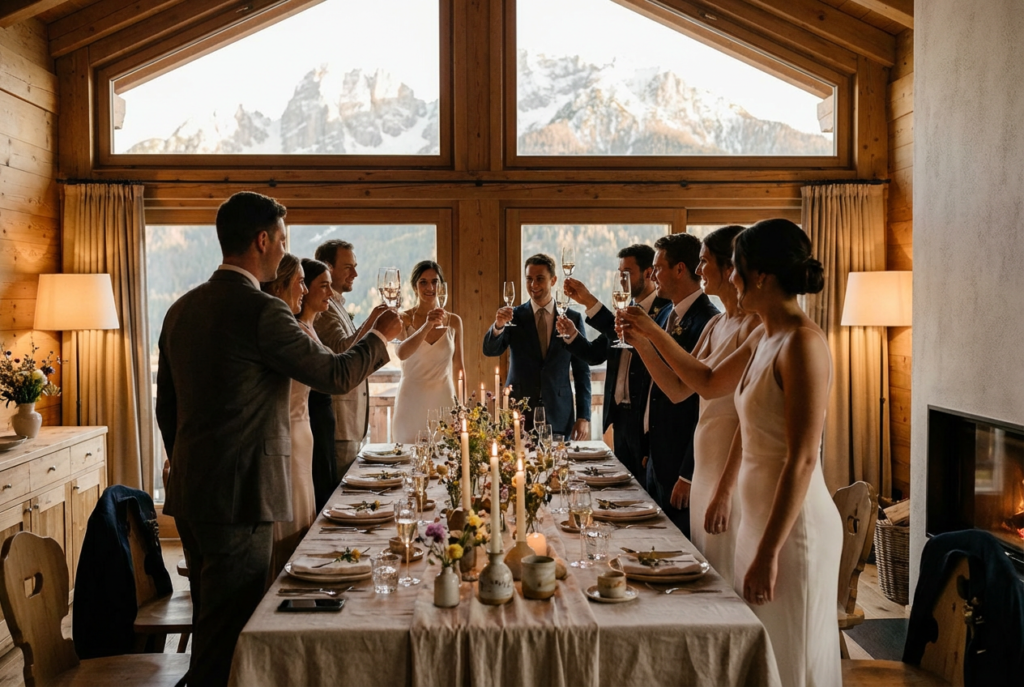
The great majority of winter weddings in Italy take place indoors, and this changes the design equation entirely. Freed from the constraints of heat, wind, and outdoor logistics, your florist can work with dramatic scale: lush garlands cascading from stone balustrades, tall candelabra arrangements rising above candlelit tables, richly layered centerpieces that transform a historic dining room into something from another century. Evergreens and foliage, used with generosity, can create extraordinary volume without relying on expensive imported blooms.
Substitutions and Non-Floral Elements
If a specific bloom is essential to your vision but seasonally unavailable, a skilled winter florist will not simply tell you no—they will offer an alternative that captures the mood: garden roses where peonies are absent, graceful hellebores in place of ranunculus. Winter also presents a singular opportunity to integrate non-floral elements that would feel out of place in summer: candles, branches, seasonal fruits, metallics in gold and copper—all of which add warmth and sophistication without competing with the ceremony setting.
Palette and Style Direction
The winter palette is inherently sophisticated: deep greens, cold whites, rich creams, burgundy, and the warm glint of gold and silver against candlelight. Romantic styles with soft whites and evergreens have an almost ecclesiastical beauty in Italian winter settings; rustic styles with natural wood, berries, and foraged branches feel anchored and warm. Both approaches honour the season rather than fight it.
Floral Styles in Italy and How to Translate Them into Your Celebration
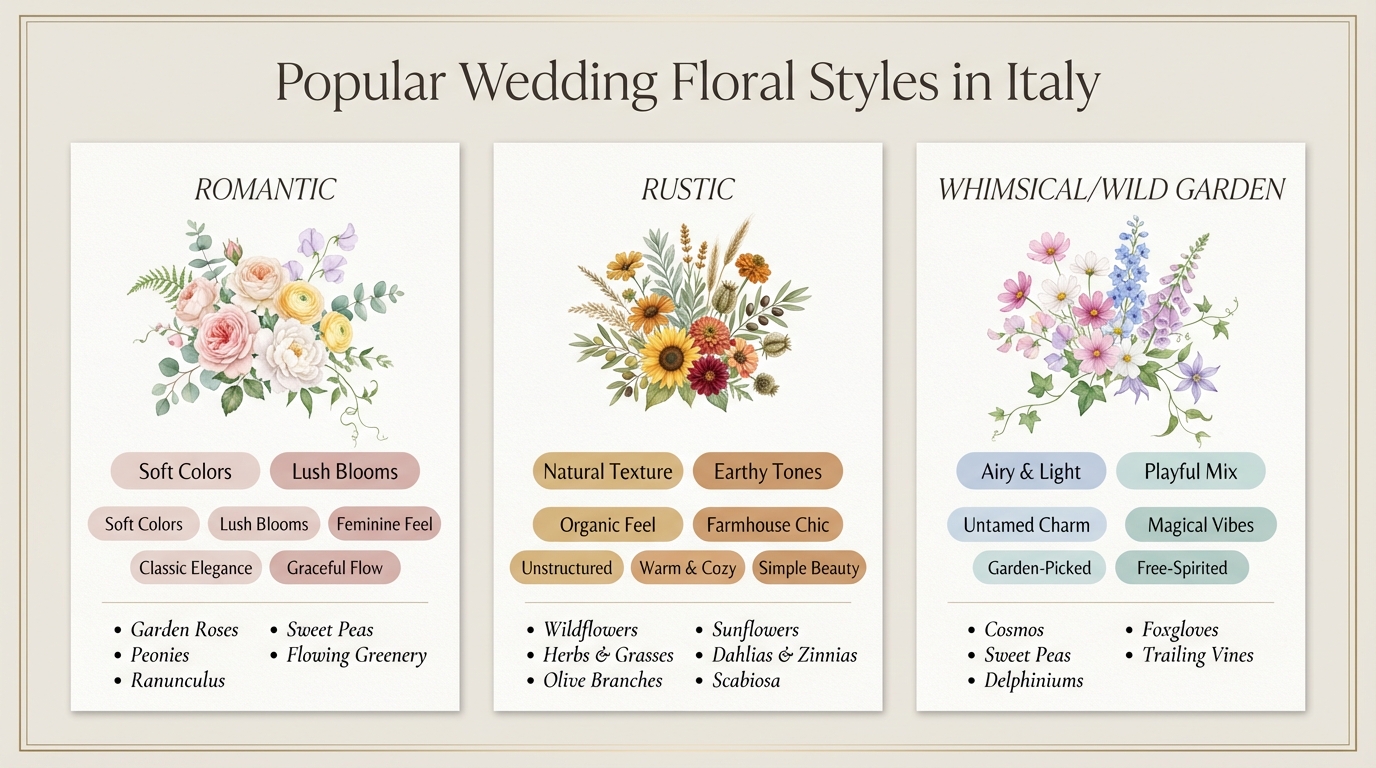
Aesthetic language is often the most difficult part of a floral brief—couples arrive with a mood they can feel but struggle to articulate precisely enough for a florist to act on. What follows is an attempt to make that translation easier. Each of these three dominant styles carries its own floral vocabulary, its own relationship to the Italian landscape, and its own seasonal sensibility. For deeper context rooted in local tradition and regional character, exploring Italian wedding traditions can offer genuine creative inspiration.
Romantic
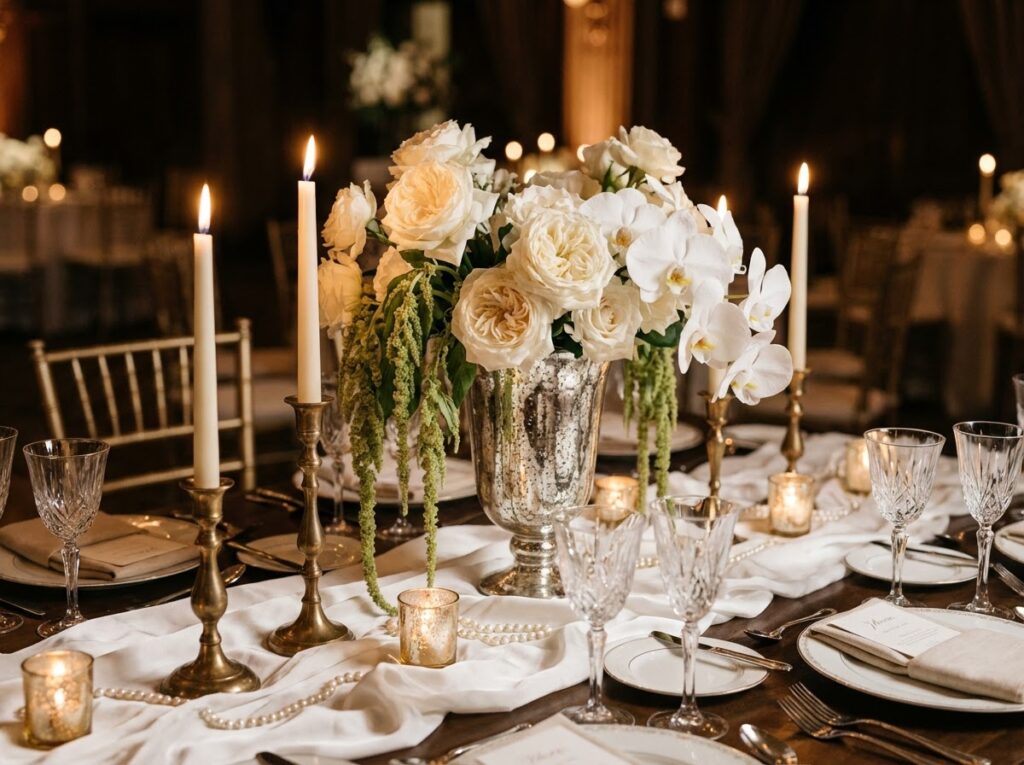
The romantic aesthetic in Italy is defined by softness, abundance, and the appearance of effortlessness. The flowers themselves lean toward the full and the fragrant—garden roses, peonies, ranunculus, sweet peas—arranged with a generosity that allows petals to overlap and stems to curve as they would in a private garden. Color palettes are muted: blush, ivory, soft peach, pale lavender, sage. Nothing is stiff or symmetrical; the overall effect is of a celebration that has been gathered from the landscape rather than engineered for it. This style reaches its full expression in spring and early summer, and pairs with particular grace alongside historic venues, lake settings, and gardens enclosed by old stone walls.
Rustic
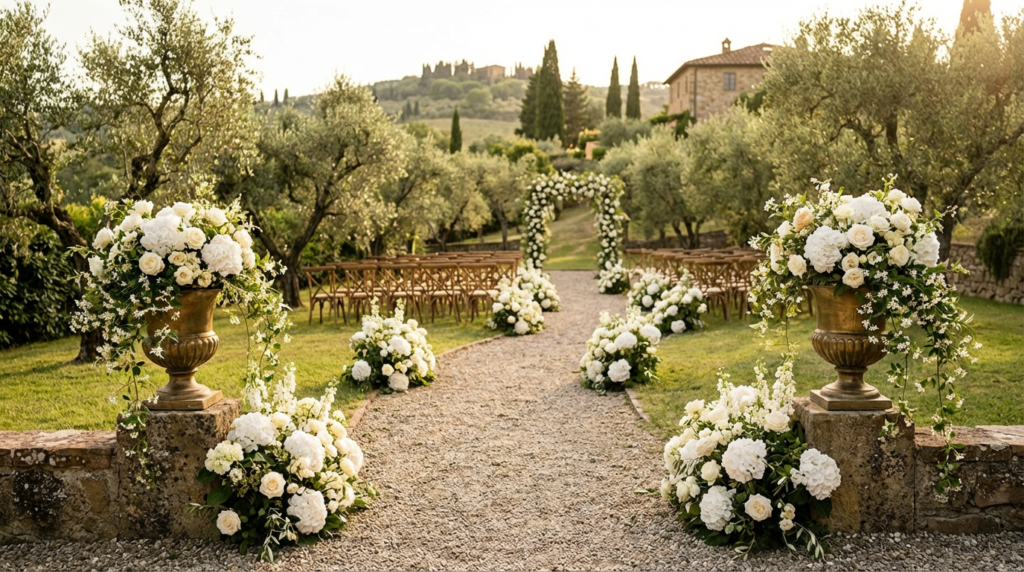
Rustic florals are not a relaxation of standards—they are a deliberate embrace of organic texture and seasonal authenticity. The vocabulary here includes wildflowers, culinary herbs, grasses, olive branches, and blooms with strong structural character: sunflowers, dahlias, scabiosa, zinnias. Arrangements feel loose and unhurried, with visible stems and the natural asymmetry of something genuinely gathered. Palettes can shift between warm and earthy—terracotta, mustard, rust—and the softer register of cream, taupe, and sage. Countryside venues, farmhouses, and working vineyards are the natural counterpart to this aesthetic, though skilled designers make it work equally across settings. It adapts across all four seasons with the right bloom selection.
Whimsical / Wild Garden
The wild garden style is the most expressive and least formal of the three—playful, asymmetrical, joyfully abundant, and resistant to any impulse toward matching or repetition. Its vocabulary is deliberately varied: cosmos, sweet peas, delphiniums, foxgloves, trailing vines, unexpected foliage, and blooms chosen as much for character as for colour. The palette can be soft and romantic or eclectic and bold; the defining quality is spontaneity. Summer provides the conditions for this style to reach its natural maximum, when the sheer range of available blooms allows a florist to design without constraint. This is also, of all the styles, the one most likely to feel distinctly personal—a reflection of two individuals rather than a genre of celebration.
Understanding Wedding Floral Packages: What a Quote Should Contain
When a quote arrives from an Italian wedding florist, the ability to read it with intelligence—knowing what is standard, what is optional, and what is conspicuously absent—is essential. The structure of Italian wedding floral packages follows a broadly consistent logic, though individual florists vary considerably in how they present and price each element. What follows is the anatomy of a comprehensive quote. If you are also building out your reception details, exploring Italian wedding menu ideas offers useful perspective on how table styling and florals function together as a unified visual experience.
Personal Flowers
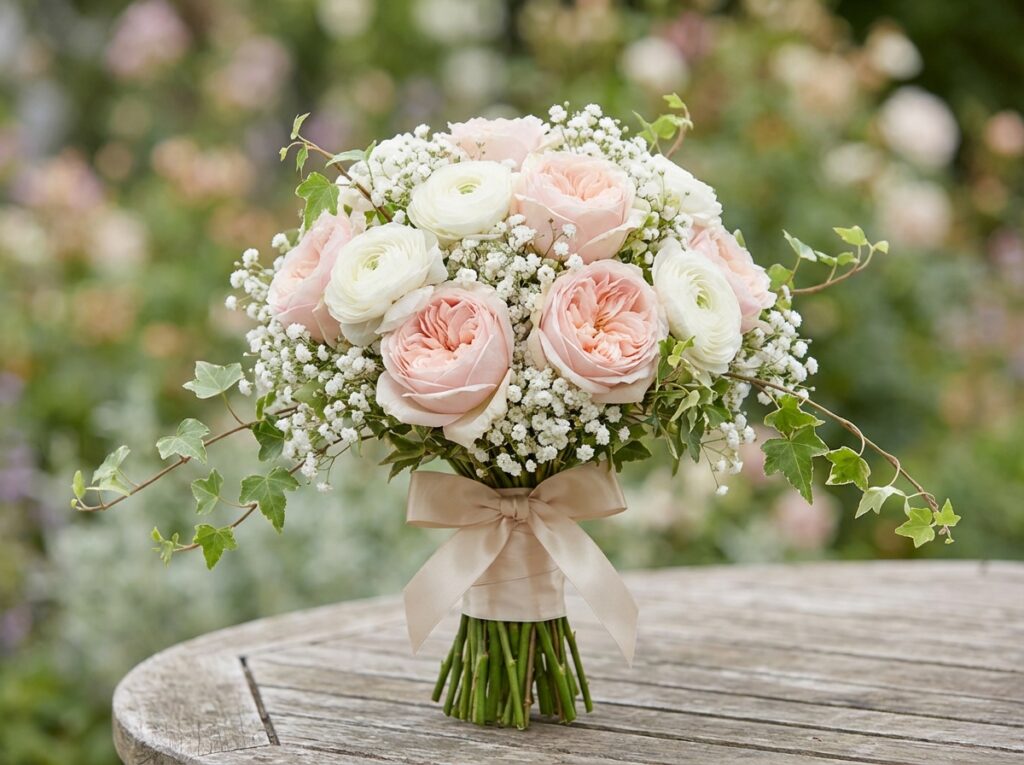
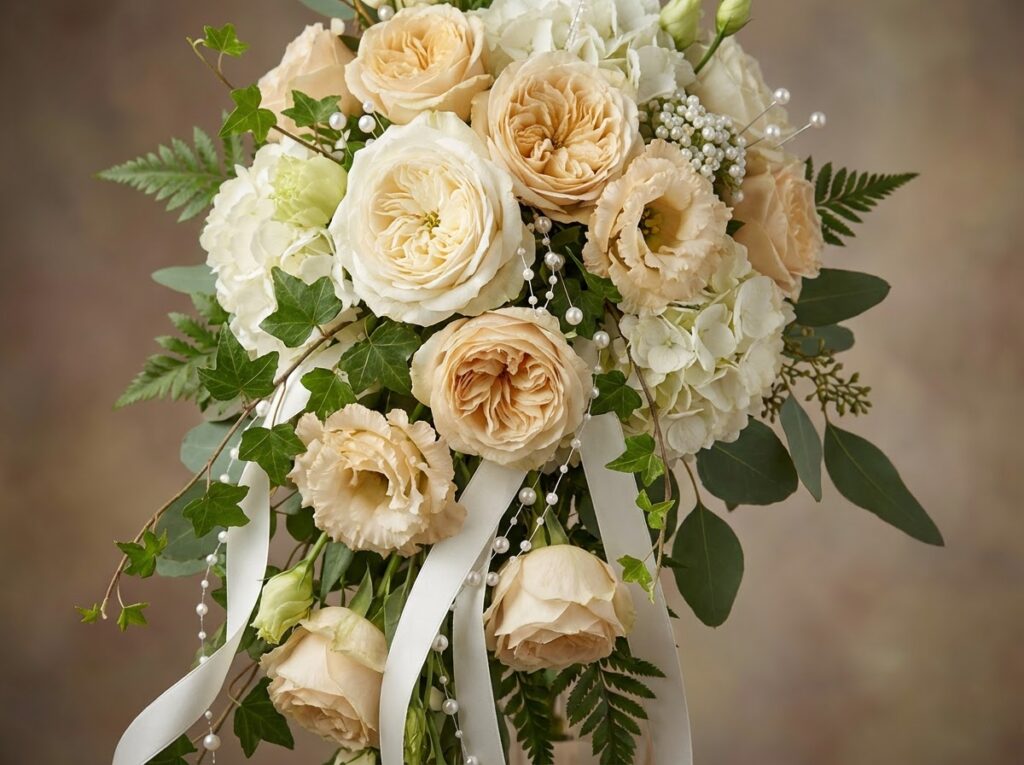
The bridal bouquet is the centrepiece of personal florals—often the most technically detailed and photogenically significant piece in the entire commission, and typically priced accordingly. Bridesmaids’ bouquets should coordinate in style and palette without simply replicating the bridal piece; a smaller scale, a shared bloom, or a complementary variation all work with more sophistication than exact replication. Boutonnieres for the groom, groomsmen, and fathers are typically a single bloom or small cluster with foliage and wiring; corsages for mothers and grandmothers are available on request, though less common in Italian wedding culture than in some other contexts.
Ceremony Flowers
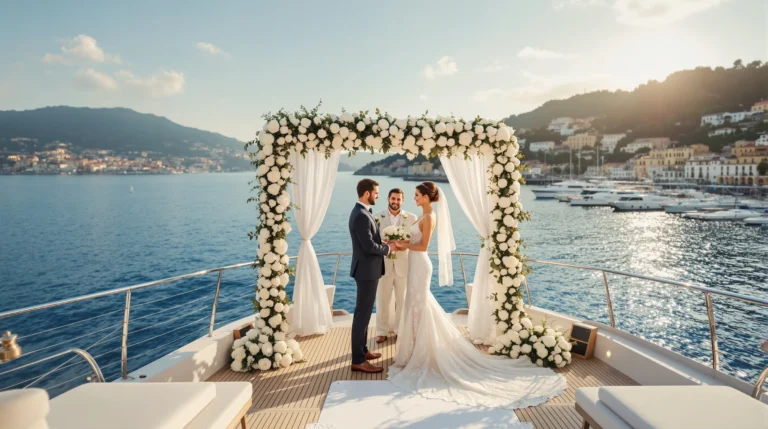
The ceremony arch or backdrop is often the single most visually powerful element of the entire floral scheme—the structure behind which vows are made and around which the most significant photographs are taken. It can range from a restrained garland to a monumental installation with cascading greenery and massed blooms. Aisle markers—small posies, lanterns dressed with foliage, or scattered petals—are optional but add visual rhythm and depth. Any arrangement at an altar or signing table, however modest, completes the ceremonial picture.
Reception Flowers
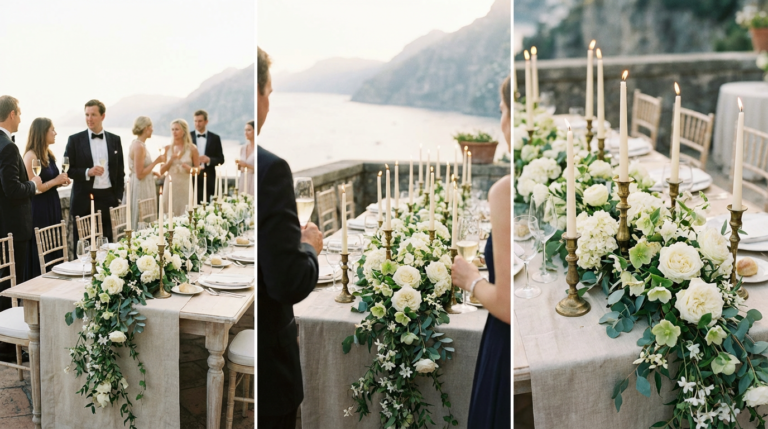
Centerpieces are the most variable element across all floral categories—in height, density, volume, and cost. A mix of heights across the reception space adds dynamism; confirming the exact number required against your final table plan prevents both over-ordering and gaps. The head table or sweetheart table arrangement warrants additional investment, as it appears behind the couple in virtually every key image. Cocktail hour arrangements at high tables and bars are often serviced by repurposed ceremony flowers, which represents a practical and economical use of existing investment. Fresh blooms placed on or around the wedding cake should always be coordinated with the baker, confirmed as food-safe, and secured appropriately.
Delivery, Setup, and Breakdown
Most established Italian wedding floral designers include delivery and professional setup in their quoted fee, but it is worth confirming explicitly what coverage that includes—particularly whether breakdown and removal after the event are part of the service or billed separately. Some venues require the complete removal of all installations by a specific hour, which has cost and staffing implications. Repurposing services—transitioning ceremony flowers to the cocktail area or reception tables—are a genuinely efficient way to extend the visual impact of your floral investment.
For smaller celebrations, elopement packages in Italy frequently integrate florals within a curated bundle of services, simplifying the briefing and coordination process considerably
How to Brief and Book a Wedding Florist in Italy from Abroad
Commissioning florals for a celebration in Italy from a different country requires a level of preparation and communication clarity that is meaningfully different from working with a local supplier. The distance is not only geographical—it encompasses language, cultural context, logistical access, and the inability to walk a venue together in person. Structure, specificity, and trust are the three pillars of a successful remote briefing process. For couples managing multiple vendor relationships across time zones and languages, working with a luxury wedding planner in Italy transforms this process—ensuring that your florist receives everything they need, that coordination happens seamlessly, and that the final result reflects your vision rather than a series of compromises born from miscommunication.
When to Secure Your Florist
The timeline begins earlier than most couples expect: 8–12 months before your wedding for peak season dates (May–September), and no later than 6 months for quieter months. The floral designers who consistently produce work at the highest level are rarely available at short notice. Booking early also gives you the planning depth required for design development, mockups where appropriate, and confident adjustments to the brief as other wedding details evolve.
What Your Initial Brief Should Include
A strong initial brief contains: the full venue name and location with any relevant logistical notes (access restrictions, setup hours, indoor and outdoor spaces); your guest count and event timeline; your color palette presented as clearly as possible, ideally with fabric swatches, colour reference images, or a curated mood board; your aesthetic direction using specific descriptors and visual references; any blooms you feel strongly about, expressed alongside genuine openness to seasonal substitution; and your budget range communicated directly. A florist working within an honest budget parameter will produce a more coherent proposal than one working to an unstated number they must guess at.
Questions That Protect Your Investment
Before signing any contract, the following questions are essential: what precisely is included in the quote across personal flowers, ceremony, reception, delivery, setup, and breakdown; how the florist approaches substitutions when requested varieties are unavailable; what the delivery and setup sequence looks like on the wedding day; whether a final walkthrough or image review is offered before the ceremony begins; what the cancellation and refund terms are; whether the florist carries professional liability insurance; and whether they have worked at your venue before and can provide photographic references. If they will coordinate directly with your venue and planner, or if you are expected to manage that communication yourself, is a detail worth clarifying before the relationship begins.
Planning Timeline
- 8–12 months before: Book your florist and share your initial brief.
- 6 months before: Refine the design, confirm all inclusions, and finalise the contract.
- 3 months before: Review the detailed proposal including specific blooms subject to seasonal confirmation, quantities, and installation sketches where applicable.
- 1 month before: Final confirmation call or meeting to lock delivery and setup times and communicate any adjustments to timeline or layout.
- 1 week before: The florist sources and conditions flowers; you confirm final guest count if it affects centerpiece quantities.
Coordinating every element of a destination wedding—from florist briefings to venue logistics—is precisely what Kiss Me Italy does with expertise built across hundreds of Italian celebrations. If you are ready to move from inspiration to execution, our team is here.
FAQ: Planning Florals for Your Italian Wedding
What flowers are in season for a spring wedding in Italy?
Spring (March–May) offers peonies, ranunculus, anemones, tulips, sweet peas, lilac, wisteria, cherry blossom branches, and narcissus. Foliage is lush and abundant. Peonies typically arrive from late April through May—a narrow window that rewards early confirmation with your florist.
What flowers are in season for a summer wedding in Italy?
Summer (June–August) brings garden roses, dahlias, zinnias, sunflowers, cosmos, scabiosa, lisianthus, delphiniums, lavender, and herbs including rosemary and sage. Wildflowers and ornamental grasses are plentiful, making this the most diverse season for textural and structural design.
What flowers are in season for a fall wedding in Italy?
Fall (September–November) belongs, above all, to dahlias—available in a remarkable range of forms and colours. The season also offers garden roses, chrysanthemums, asters, amaranthus, celosia, hypericum berries, and rich foliage including oak leaves and ornamental grasses. This is one of the most rewarding seasons for textured, layered design.
What flowers are in season for a winter wedding in Italy?
Winter (December–February) offers hellebores, anemones, amaryllis, evergreens including pine, eucalyptus, cedar, and olive, along with holly, ivy, and winter berries. Greenhouse roses and carnations are available year-round. A wider selection can be sourced through imports, though at meaningfully higher cost.
Is it less expensive to choose seasonal blooms for a wedding in Italy?
Yes—and not only less expensive, but fresher, more resilient, and more abundant in variety. Seasonal, locally grown flowers require less transport and conditioning investment. When blooms are imported out of season, that cost is passed on directly; aligning your choices with what is naturally available is simply the most efficient use of your floral budget.
How far in advance should I book a wedding florist in Italy?
8–12 months before your wedding, without exception for peak season dates (May–September). The most accomplished floral designers fill their calendars early, and this lead time also gives you the space to develop, refine, and finalise a design that genuinely reflects your vision.
Can I request specific flowers, and what happens if they’re not available?
You can absolutely express preference for specific flowers. A skilled florist will source them where possible and propose thoughtful substitutions where not—finding alternatives that deliver the same emotional register, colour, scale, or fragrance. The conversation about must-haves and flexibility is one of the most valuable you will have in the planning process.
What should I ask an Italian wedding florist before signing a contract?
Confirm what is included in the quote across personal flowers, ceremony, and reception, and whether delivery, setup, and breakdown are all covered. Ask how substitutions are handled, when installation will begin and conclude, whether they will coordinate directly with your venue and planner, and what the cancellation terms are. References or photographs from events at your specific venue are always worth requesting.
The most exceptional wedding flowers in Italy are not the product of the most expansive budget—they are the product of the most thoughtful brief. When you approach the conversation with clarity about your season, your setting, your palette, and your aesthetic intention, you give a skilled floral designer the raw material to create something that feels entirely inevitable: arrangements that belong to that day, that place, and no other.
Begin Your Consultation
At Kiss Me Italy, we believe that a truly exceptional celebration is built from an accumulation of considered decisions—none more intimate than the flowers you choose to surround you on your wedding day. Our team works with Italy’s most gifted floral designers across every season, every region, and every setting. If you are ready to begin translating your vision into something of rare and lasting beauty, we invite you to contact us. We would be honoured to be part of your story.