
Rome isn’t just a backdrop for your wedding day—it’s a transformation. When couples choose to marry in the Eternal City, they’re not simply selecting a beautiful location; they’re stepping into a narrative that spans millennia, where every cobblestone street and sun-drenched piazza becomes part of their love story. We design Rome weddings from inside the city walls, and what we’ve learned after years of creating celebrations here is that the most unforgettable weddings aren’t the ones that try to impose a vision onto Rome, but the ones that let Rome reveal itself through careful, considered design.
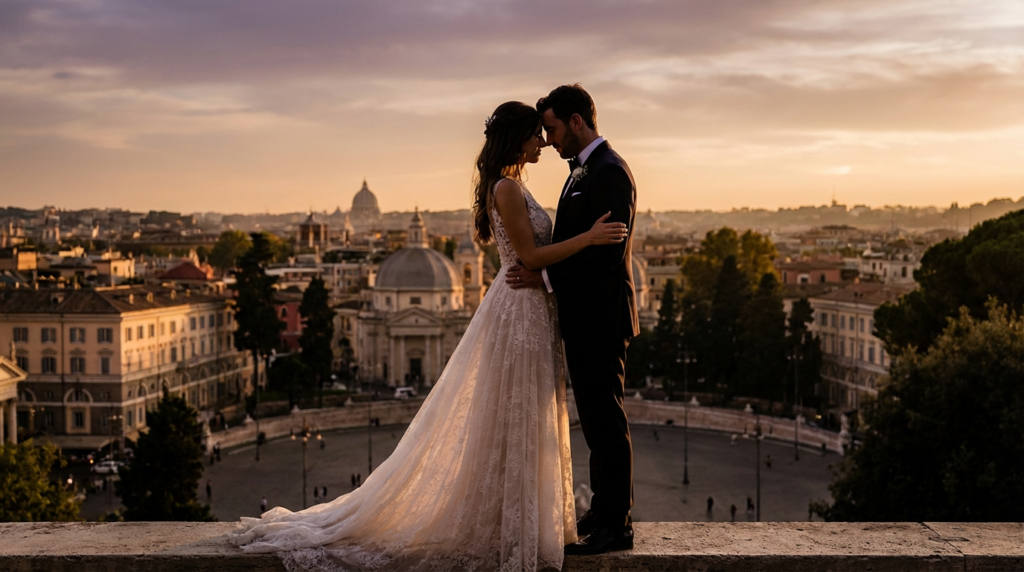
Rome Wedding
Planning a destination wedding in Rome means navigating both practical logistics and cultural nuances. You’ll need to understand everything from legal ceremony requirements and realistic budgets to the best neighborhoods for your guests and how Roman seasonality affects everything from lighting to menu availability. This guide draws on our team’s experience designing weddings throughout Rome, offering the kind of insider perspective you can only get from people who live and work in this city every day. Whether you’re envisioning an intimate ceremony in a hidden courtyard or a grand celebration overlooking the Roman Forum, we’ll walk you through every decision with the depth and honesty you need to create something truly yours.
Discover how we design intimate weddings in Italy
WHY CHOOSE ROME FOR YOUR DESTINATION WEDDING
Rome offers something few other wedding destinations can match: a density of historical significance combined with surprisingly practical accessibility. The city is served by two international airports—Leonardo da Vinci-Fiumicino and Ciampino—with direct flights from major cities across North America, the Middle East, Australia, and Asia. Your guests won’t struggle to reach you, and the infrastructure for hosting international visitors is sophisticated and well-established.
But accessibility is only the beginning. What makes Rome distinctive as a wedding destination is its architectural variety. Within a fifteen-minute drive, you can move from ancient ruins to Renaissance gardens to Baroque palaces to modernist spaces. This range means you’re not locked into a single aesthetic—Rome can accommodate minimalist contemporary celebrations just as gracefully as it hosts opulent historical affairs. Alessandra Ferretti, our creative director, often reminds couples that “Rome doesn’t demand you work in one style. The city has absorbed so many eras that it holds space for multiple visions simultaneously.”
Rome also offers privacy in ways larger, more tourist-dense destinations cannot. Yes, the Colosseum and Trevi Fountain draw crowds, but the city is filled with private palazzos, walled gardens, and hilltop villas where you can host fifty or one hundred and fifty guests in complete seclusion. These aren’t public venues that turn over three weddings a day—many are historic family properties or boutique estates that limit bookings to maintain exclusivity.
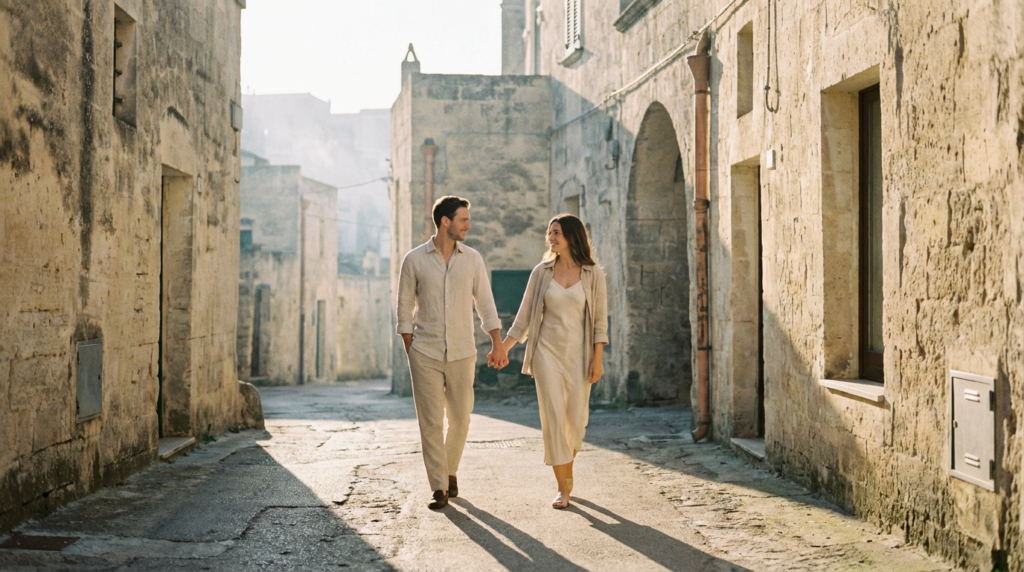
Finally, there’s the cultural depth. Your guests won’t run out of things to do. Rome is a walking city with world-class museums, neighborhood trattorias that have served the same families for generations, wine bars tucked into medieval cellars, and markets where vendors still sell produce grown in the Roman countryside. The city rewards curiosity, and that richness of experience becomes part of your wedding weekend, not just the ceremony itself.
ROME VS OTHER ITALIAN DESTINATIONS
Choosing between Italian wedding destinations often comes down to understanding what each location offers and what it asks of you in return. Here’s how Rome compares to other popular choices:
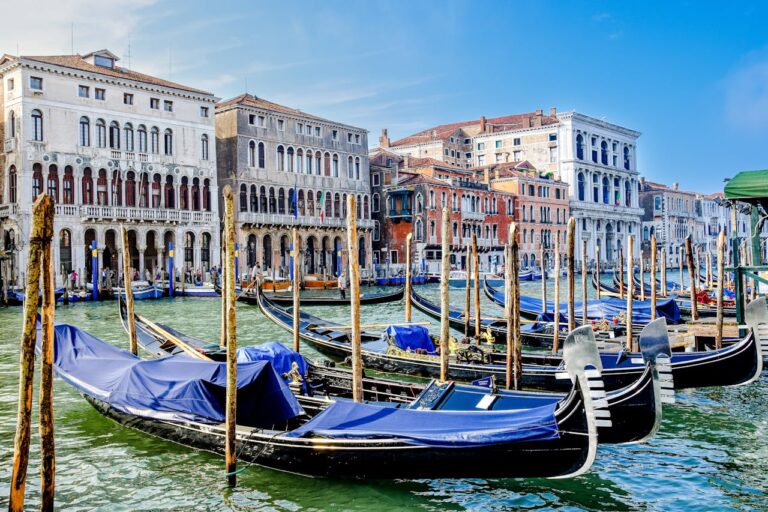
ACCESSIBILITY: Rome leads. Two international airports, excellent train connections, and a city center reachable within 30-45 minutes from the airport. Venice requires water taxis and navigating logistics around tides and floods. Florence has one smaller airport with limited international service. Lake Como relies on Milan’s airports, adding 90 minutes of transfer time. Amalfi requires flying into Naples and then navigating coastal roads. If ease of arrival matters to you and your guests, Rome is unmatched.
ACTIVITIES FOR GUESTS: Rome offers the deepest variety. Your guests can visit ancient ruins, Renaissance churches, contemporary art galleries, shop via Condotti, take cooking classes, go on food tours, or simply wander. Venice is breathtaking but smaller, with fewer options beyond sightseeing. Lake Como is serene and beautiful but quieter, better suited to guests who want relaxation over exploration. Florence offers art and architecture but feels more concentrated. Rome gives you range.
VENUE DIVERSITY: Rome presents the widest spectrum—historic villas, private palazzi, lush gardens, panoramic rooftops, hidden courtyards, even ancient ruins for symbolic ceremonies. Venice is limited by its island geography; most venues are palazzos or hotels. Lake Como and Amalfi lean heavily toward lakeside or cliffside villas. Tuscany offers agriturismos and estates. Rome’s 2,500 years of continuous habitation mean layers of architectural styles all accessible within one city.
WEATHER CONSISTENCY: Rome enjoys a Mediterranean climate with hot, dry summers and mild winters. Spring and autumn are nearly perfect. Venice can be humid and prone to flooding in autumn and winter. Lake Como and northern destinations see more rain and cooler temperatures. Amalfi is stunning but can be extremely hot in summer with limited air flow in some venues. Rome’s weather is predictable, which reduces risk.
PRICE POINT: Rome sits in the mid-to-upper range. Venice and Lake Como tend to be more expensive due to limited venue availability and logistical complexity. Tuscany and Puglia can be more affordable, especially in countryside locations. Amalfi varies wildly depending on specific town. Rome offers good value considering what you get—international accessibility, infrastructure, and range of options.
BEST FOR: Rome excels at weddings where you want a full cultural experience, where your guests have varying interests, where you need strong infrastructure, and where you want architectural grandeur without isolation. Choose Venice for romance and visual drama but accept logistical challenges. Choose Lake Como for serene natural beauty with a smaller, more relaxed gathering. Choose Tuscany for countryside intimacy and wine culture. Choose Amalfi for dramatic coastal views and Mediterranean warmth. Each has its place; Rome is the most versatile.
PEAK SEASON: Rome’s peak is May-June and September-October. Venice peaks similarly but adds February (Carnival) and autumn issues with acqua alta. Lake Como peaks June-September. Amalfi peaks July-August. Tuscany mirrors Rome. If you want flexibility in dates, Rome gives you more options outside peak windows while still maintaining good weather.
IDEAL GROUP SIZE: Rome handles any size gracefully—from intimate elopements of two to grand celebrations of 200+. The city’s venue range accommodates this spectrum. Venice struggles with groups over 100 due to space and logistics. Lake Como is ideal for 30-80 guests. Amalfi works best for 40-120. Tuscany can go large but often feels best at 60-100. Rome scales.
BEST TIME OF YEAR FOR A ROME WEDDING
SPRING (MARCH-MAY): Spring in Rome is a study in renewal. By late March, the wisteria begins climbing the walls of private gardens, and by April, roses bloom in Villa Borghese. Temperatures range from 12°C to 22°C, climbing toward 25°C by late May. The light is soft and clear, perfect for photography. Spring is also when the city feels most alive—locals emerge from winter, sidewalk cafés fill, and the energy is palpable.
From a practical standpoint, spring offers good value. You’re outside the absolute peak season of late May and June, so venue availability improves and some vendors offer slightly better rates. The risk is rain—April can be unpredictable—but most venues have covered backup options. If you’re flexible and can embrace a Plan B, spring rewards you with beauty and more relaxed booking timelines.
SUMMER (JUNE-AUGUST): Summer is Rome at its most intense. June is glorious—long days, warm evenings, temperatures around 28-32°C. July and August push toward 35°C and higher, and the city empties as Romans flee to the coast. This creates an interesting dynamic: fewer crowds at major sites (ideal for wedding photos), but also a somewhat quieter city overall.
Summer weddings work best if you’re planning evening or nighttime events. The heat during the day is formidable, so ceremonies typically start at 6 or 7 PM, taking advantage of the extended golden hour that stretches until nearly 9 PM in June and July. You’ll need robust cooling solutions—air-conditioned indoor spaces, fans, plenty of cold drinks during cocktail hour. But if you love warmth, vibrant sunlight, and long evenings, summer delivers. Just avoid mid-August (Ferragosto), when much of the city shuts down.
AUTUMN (SEPTEMBER-NOVEMBER): Autumn is our favorite season for Rome weddings, and we’re not alone—it’s when we see the highest concentration of celebrations. September offers summer warmth (25-30°C) without the peak heat, and by October, temperatures settle into the low 20s with crisp mornings and comfortable afternoons. The light in October is extraordinary—golden, slanted, warm without harshness. It’s the light photographers dream about.
Autumn also brings harvest season, which influences menus. You’ll see porcini mushrooms, chestnuts, figs, and game appear on plates, and wine lists feature new vintages. There’s a sense of abundance that translates beautifully to wedding celebrations. November can be cooler and wetter, but early November often holds, and you’ll benefit from lower rates and higher availability as you move deeper into the month.
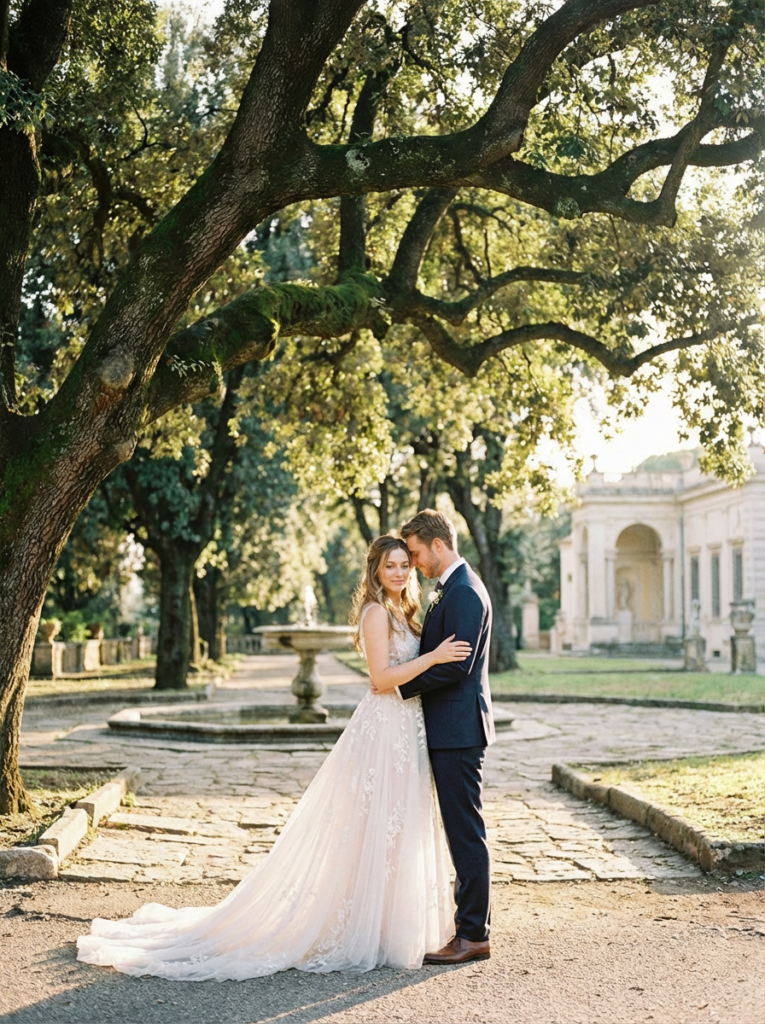
WINTER (DECEMBER-FEBRUARY): Winter weddings in Rome are rare but magical for the right couple. Temperatures range from 8-15°C, and while you’ll need heating solutions, the trade-off is intimacy and uniqueness. The city is quieter, venues are more available, and rates drop significantly—sometimes 20-30% lower than peak season.
December offers holiday charm if you’re planning around Christmas or New Year, with the city decorated and festive. January and February are the slowest months, which means you have maximum flexibility and negotiating power. Winter light is softer and lower, which some photographers love for its moodiness. It’s not for everyone—you’ll need contingency plans for weather, and outdoor spaces are less viable—but if you’re drawn to the idea of a cozy, candle-lit Roman celebration with a smaller group, winter can be extraordinary.
ROME WEDDING VENUES: BEYOND THE OBVIOUS
Choosing a venue in Rome isn’t about finding the most famous backdrop; it’s about finding the space that holds your vision without overwhelming it. Rome’s venues fall into distinct categories, each with its own character and capacity range.
HISTORIC VILLAS (80-200 GUESTS): These are the grand dame estates—properties built for Roman aristocracy in the 17th and 18th centuries, often set on hilltops with sweeping views over the city. Think manicured gardens, neoclassical architecture, frescoed interiors, and terraces designed for entertaining. Historic villas offer the most complete package: ceremony spaces, cocktail areas, and dinner settings all within one property. They’re ideal for couples who want a single, contained location where guests can move through different environments—garden ceremony, terrace cocktails, palazzo dining—without ever leaving the estate.
The challenge with historic villas is that they come with constraints. Many are protected landmarks, which means restrictions on décor (you often can’t hang or install things on walls), sound curfews (music must end by midnight or 1 AM), and limited flexibility in setup. You’re working within the architecture, not imposing on it. Claudia Scortegagna, who manages design for many of our villa weddings, puts it this way: “A villa already has a personality. Our job is to amplify what’s there, not fight it.”
PRIVATE PALAZZI (40-150 GUESTS): Palazzi are urban counterparts to villas—historic townhouses or noble residences located within the city center, often just steps from major landmarks. They tend to be more intimate in scale, with fewer outdoor spaces but extraordinary interiors: marble staircases, gilded salons, original artwork, and hidden courtyards. Palazzi work beautifully for couples who want to be in Rome, not on its outskirts, and who value architectural drama over sprawling gardens.
Because palazzi are within the historic center, logistics require more planning—vendors access may be limited, load-in times restricted, and sound ordinances stricter. But the trade-off is location. Your guests can walk back to their hotels through Roman streets, and you can incorporate the city itself into your celebration—perhaps a pre-dinner passeggiata through nearby piazzas or post-dinner drinks at a rooftop bar within walking distance.
LUSH GARDENS (30-250 GUESTS): Rome is greener than most people expect. The city is dotted with botanical gardens, private estates with centuries-old trees, and hidden green spaces where you can host ceremonies under pergolas or within groves. Garden venues range in formality—some are manicured and structured, others wild and romantic. They’re ideal for daytime weddings, for couples who want natural beauty without leaving the city, and for celebrations where the landscape is the focal point.
Gardens present weather considerations. You’ll always need a backup plan, and depending on the season, you may contend with heat (summer) or chill (spring evenings, autumn). But the visual payoff—guests seated under ancient oaks, ceremonies framed by flowering shrubs, cocktail hours on lawns with views over Rome—is unmatched. Gardens also photograph exceptionally well, offering depth and texture that hard architecture can’t provide.
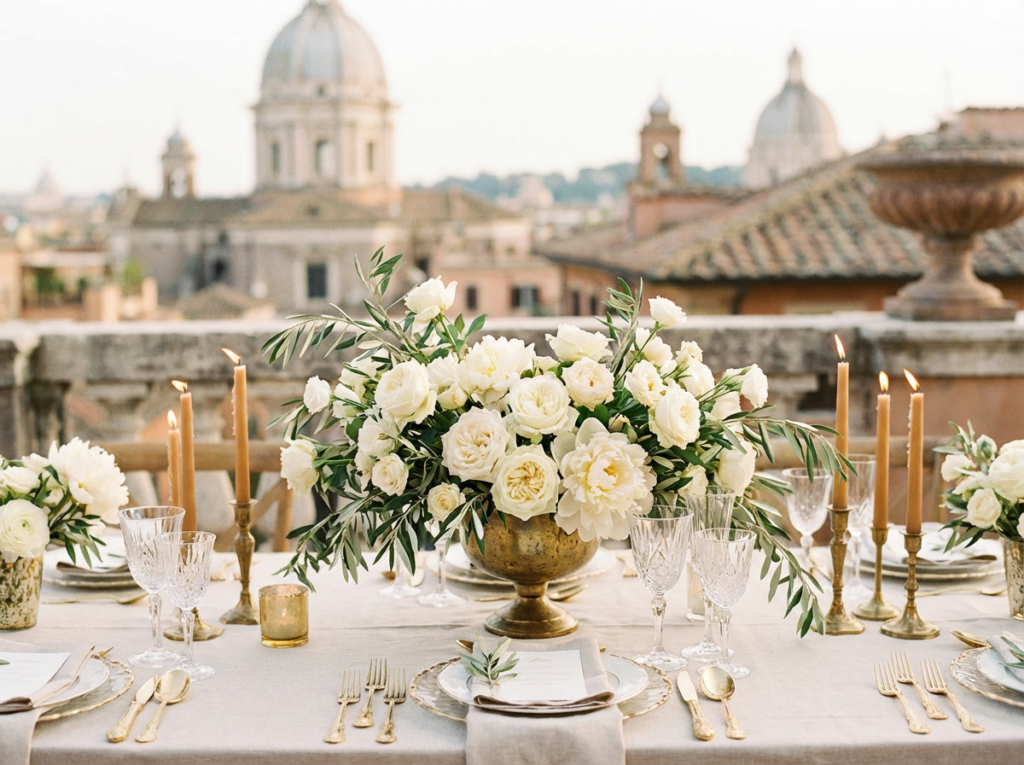
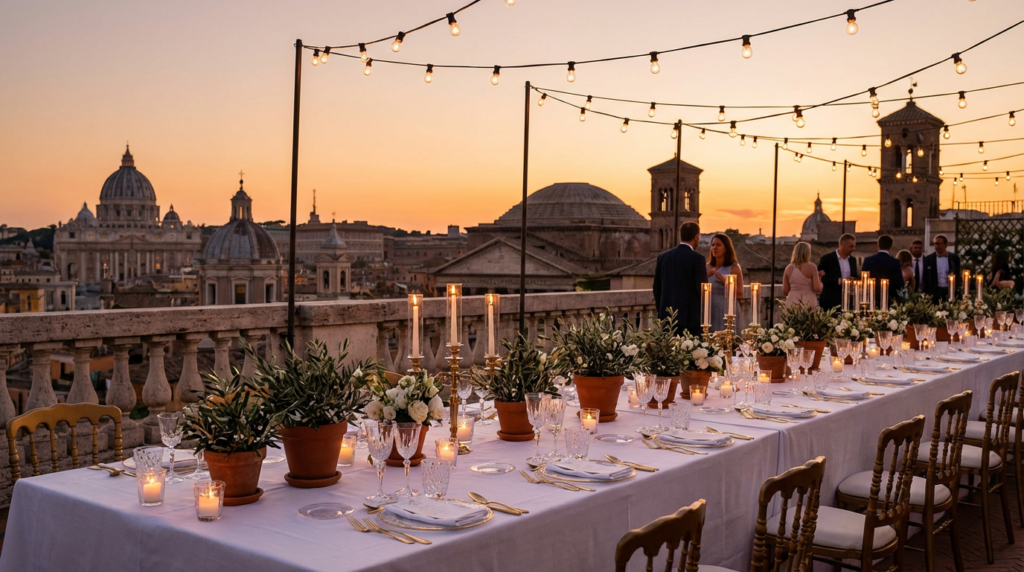
PANORAMIC ROOFTOPS (30-100 GUESTS): Rooftop venues give you Rome’s skyline—domes, bell towers, terracotta roofs stretching to the horizon. They’re typically found atop boutique hotels, private clubs, or historic buildings, and they work best for smaller, more intimate groups. Rooftops are inherently urban and modern in feel, even when the building itself is historic. They suit couples who want Rome as a backdrop rather than an enclosure—the city is visible but not engulfing you.
Rooftops come with exposure: wind, sun, and limited shelter. You’ll need thoughtful planning around shade structures for daytime events, heating for cooler months, and wind-resistant décor. But the drama of a rooftop ceremony at sunset, with Rome glowing below you, is hard to match. And because they’re smaller, they often feel more exclusive.
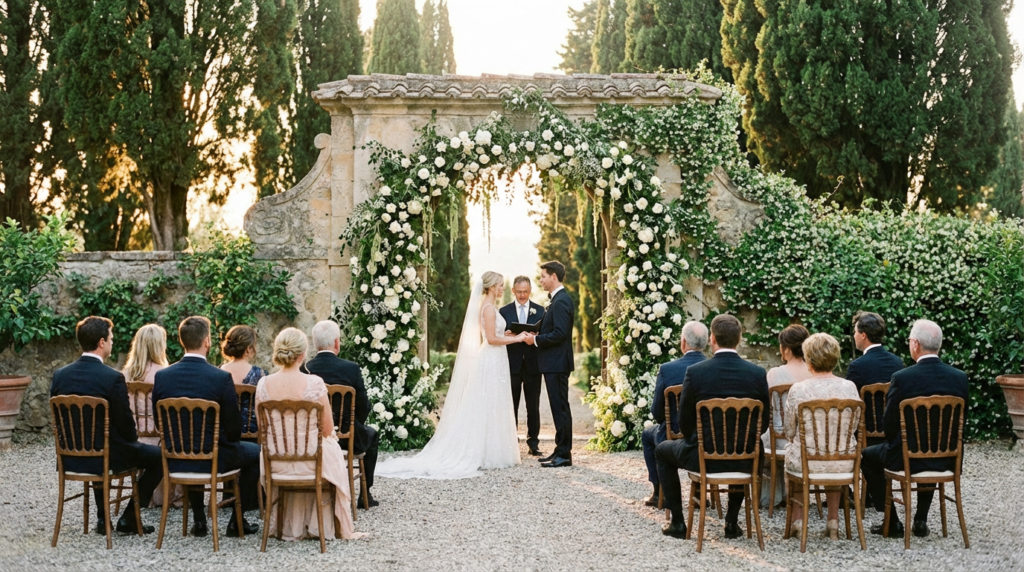
HIDDEN COURTYARDS (20-80 GUESTS): These are Rome’s secret spaces—internal courtyards within palazzi, cloistered gardens attached to convents or monasteries, or walled enclosures in residential neighborhoods. They offer privacy and intimacy in a way larger venues cannot. You’re surrounded by Rome’s architecture—stone walls, ivy, iron gates—but completely removed from the public eye. Hidden courtyards work best for couples who want a sense of discovery, who prioritize atmosphere over grandeur, and who are comfortable with smaller guest counts.
The limitation is capacity. Most courtyards can’t accommodate more than 60-80 guests comfortably, and some cap at 40. But if your vision is an intimate, almost secretive celebration where every guest feels essential, these spaces deliver something irreplaceable.
DESIGN PHILOSOPHY: One principle guides our approach to venue selection and design: work with the architecture, not against it. Rome’s spaces are layered with history and personality. If you try to impose a heavily styled vision—draping everything in fabric, installing elaborate structures, overwhelming the space with florals—you risk losing what makes the venue distinctive. Instead, we design in dialogue with the space. If the villa has frescoed ceilings, we keep lighting subtle and let the ceiling be the focal point. If the courtyard has ancient stone walls, we use them as texture and add minimal greenery rather than covering them. Rome’s venues are strong; they don’t need to be transformed. They need to be revealed.
PLANNING TIMELINE: 12-18 MONTHS OUT
12-18 MONTHS BEFORE: This is the foundation phase. You’ll secure your venue, book your planner (if you’re working with one), and establish your overall budget. In Rome, popular venues during peak season (May-June, September-October) book 12-18 months in advance, sometimes longer for the most sought-after estates. If you’re planning a peak-season wedding, start this phase as early as possible.
You’ll also begin gathering legal documents if you’re pursuing a civil ceremony. The process for obtaining a Nulla Osta (certificate of no impediment) can take 2-6 months depending on your home country’s administrative speed, so starting early reduces stress later. Even if you’re planning a symbolic ceremony, this is the time to confirm your legal marriage plans—whether you’ll marry at home before or after the Rome celebration.
9-12 MONTHS BEFORE: Vendor booking intensifies. You’ll select and contract your photographer and videographer, finalize catering and menu direction, book florists, and arrange music (whether live band, DJ, or ceremony musicians). In Rome, the best vendors work across multiple weddings each weekend during peak season, so securing them early matters.
This is also when you’ll send save-the-dates and begin blocking hotel rooms for guests. Rome has thousands of hotel rooms, but if you’re hosting a large group (60+) during a busy weekend, coordinating blocks in a few key hotels makes logistics smoother for everyone. We often recommend booking in two or three neighborhoods—one in the historic center for guests who want walkability, one near your venue if it’s outside the center, and one mid-range option for budget-conscious travelers.
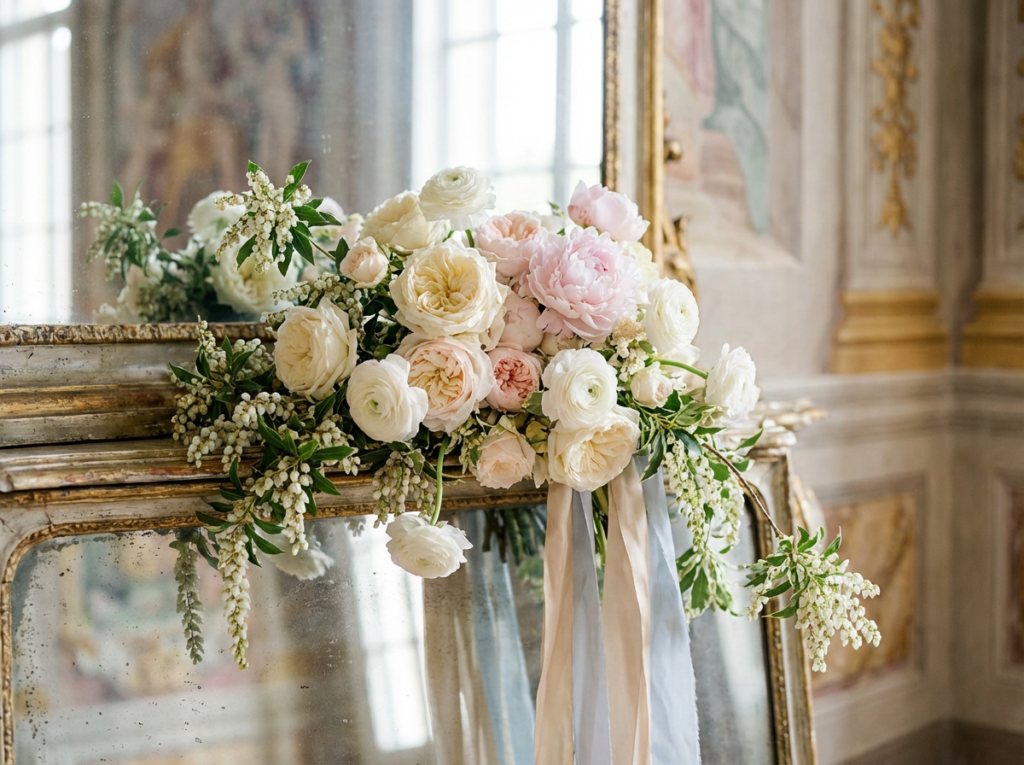
6-9 MONTHS BEFORE: Design direction solidifies. You’ll work through the visual and experiential elements—floral concepts, lighting plans, table settings, stationery design, and overall aesthetic direction. This is the phase where mood boards translate into concrete decisions. You’ll also finalize your ceremony structure (readings, vows, music, processional order) and begin thinking about the flow of the day—timing for each segment, transitions between spaces, pacing.
Guest management becomes active. You’ll launch your wedding website with travel information, set up RSVP systems, and begin fielding questions from attendees about what to pack, what to see, and how to navigate Rome. If you’re planning additional events—a welcome dinner, a day-after brunch—you’ll book those venues and begin outlining menus and formats.
3-6 MONTHS BEFORE: Details crystallize. Final menu selections, linen choices, printing of stationery, seating charts, and escort card designs all happen here. You’ll have advanced conversations with your photographer about must-have shots and preferred locations for couple portraits. If you’re planning a post-ceremony photo tour through Rome (common for couples who want to capture iconic backdrops), you’ll plot the route and timing.
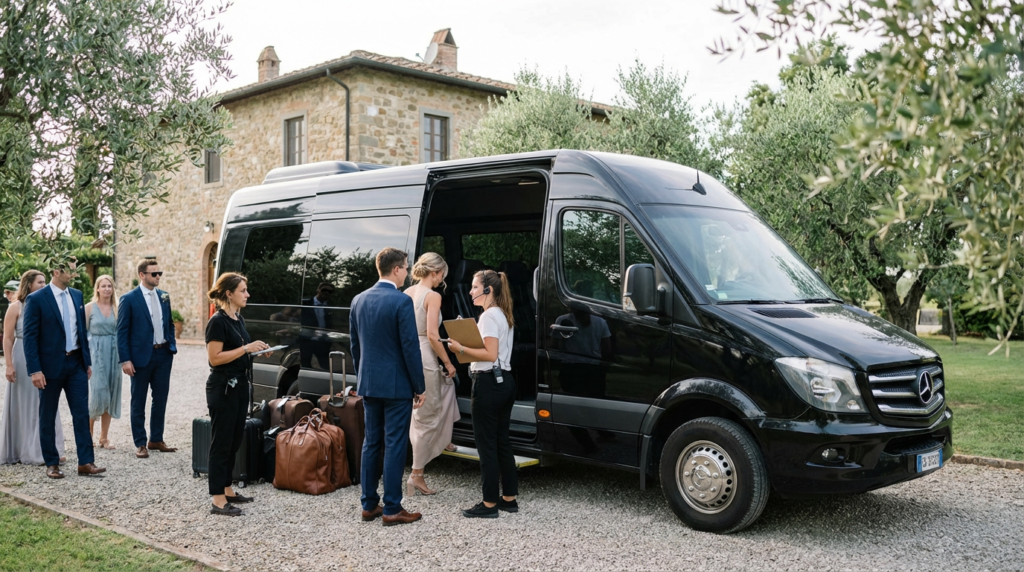
This is also when you’ll confirm transportation logistics—airport transfers for key guests, shuttles between hotels and venue, and any special arrangements like vintage cars or Vespas for couple portraits. Legal paperwork, if you’re having a civil ceremony, should be complete or nearly complete by the end of this phase.
1-3 MONTHS BEFORE: Final numbers, final payments, final confirmations. RSVPs are due, which allows you to finalize seating arrangements and confirm headcount with your caterer. You’ll have your final planning meeting with your planner and key vendors to walk through the timeline minute by minute. Any last-minute adjustments—swapping a menu item, adding an extra musician, extending cocktail hour—happen here.
You’ll also prepare materials for the day itself: final payments for vendors, tip envelopes, timeline printouts for the wedding party, a shot list for your photographer, and any ceremonial items (rings, vows, readings). The goal is to finish this phase with everything locked and communicated, so the final weeks before your wedding are about rest and anticipation, not scrambling.
LEGAL, SYMBOLIC, AND CATHOLIC CEREMONIES IN ROME
CIVIL CEREMONIES: A legal civil wedding in Rome requires navigating Italian bureaucracy, which is detailed but manageable with proper planning. The key document is the Nulla Osta, a certificate proving you’re free to marry. To obtain it, you’ll need your birth certificates, passports, and affidavits of marital status from your home country, all translated into Italian and authenticated with an Apostille stamp.
The process begins at your home country’s consulate in Rome or, in some cases, your local consulate before traveling. You’ll submit your documents, they’ll review and issue the Nulla Osta, and then you’ll present this to the Rome town hall (Comune) where you wish to marry. There’s a mandatory waiting period—typically two days—between filing your intent to marry and the actual ceremony.
Rome offers two primary civil ceremony venues: Campidoglio (the Capitoline Hill town hall, with stunning Renaissance architecture and views) and Caracalla (near the ancient Baths of Caracalla). Both are grand and historic. Civil ceremonies in Italy are brief—about 15-20 minutes—and conducted entirely in Italian, which means you’ll need an official translator present. Danilo Leo Lazzarini, who coordinates legal ceremonies for us, emphasizes that “the legal ceremony is functional, not theatrical. If you want emotional depth and personalization, plan a symbolic ceremony before or after the civil one, and use the civil ceremony to satisfy the legal requirement.”
Timeline: Budget 2-6 months for the full process, depending on how quickly your home country processes documents. Learn more about the requirements for U.S. citizens marrying in Italy.
SYMBOLIC CEREMONIES: A symbolic ceremony is legally non-binding but fully customizable. You’ll marry legally in your home country (before or after your Rome celebration), and the Rome ceremony is purely celebratory. This is the route most of our couples choose because it offers maximum flexibility—you write your own vows, choose your own readings, select your ceremony location without municipal restrictions, and control the length and tone entirely.
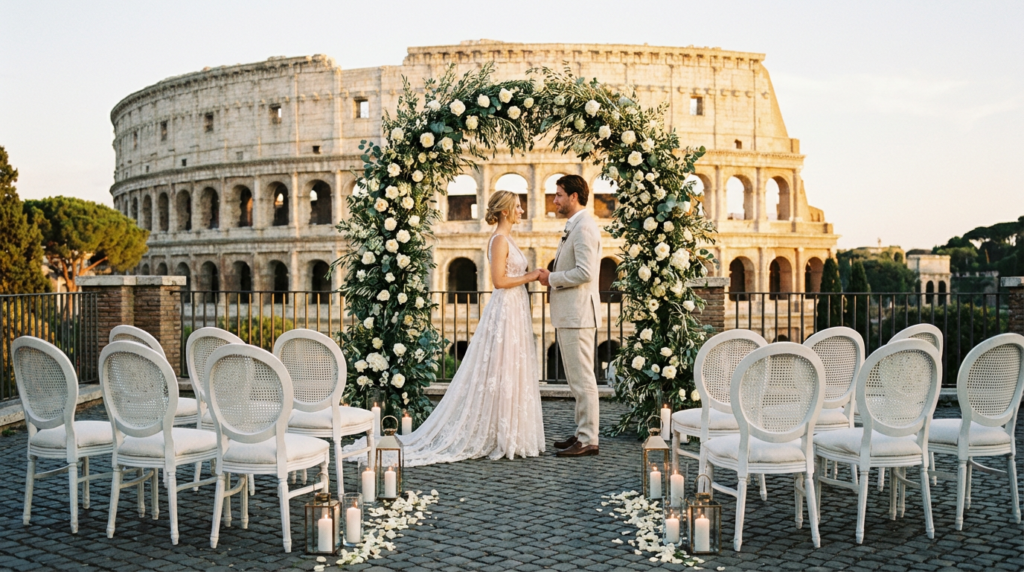
Symbolic ceremonies can happen anywhere: a private villa garden, a rooftop at sunset, a hidden courtyard, even in front of ancient ruins. You’ll work with a celebrant who can be religious or secular, bilingual or native English-speaking. The ceremony can be 15 minutes or 45, intimate or theatrical. Because there’s no legal component, there’s no paperwork, no waiting periods, and no translator requirement.
The trade-off is that the ceremony carries no legal weight. For some couples, this feels anticlimactic; for others, it’s liberating. Many couples find that handling the legal marriage quietly at home and then celebrating fully in Rome gives them the best of both worlds—legal simplicity plus emotional grandeur.
CATHOLIC CEREMONIES: Catholic weddings in Rome are possible for practicing Catholics, but they require advance planning and church approval. You’ll work with a specific parish in Rome, which typically requires at least one member of the couple to be baptized and confirmed Catholic. The church will ask for baptismal certificates, confirmation certificates, and often letters from your home parish confirming your active participation.
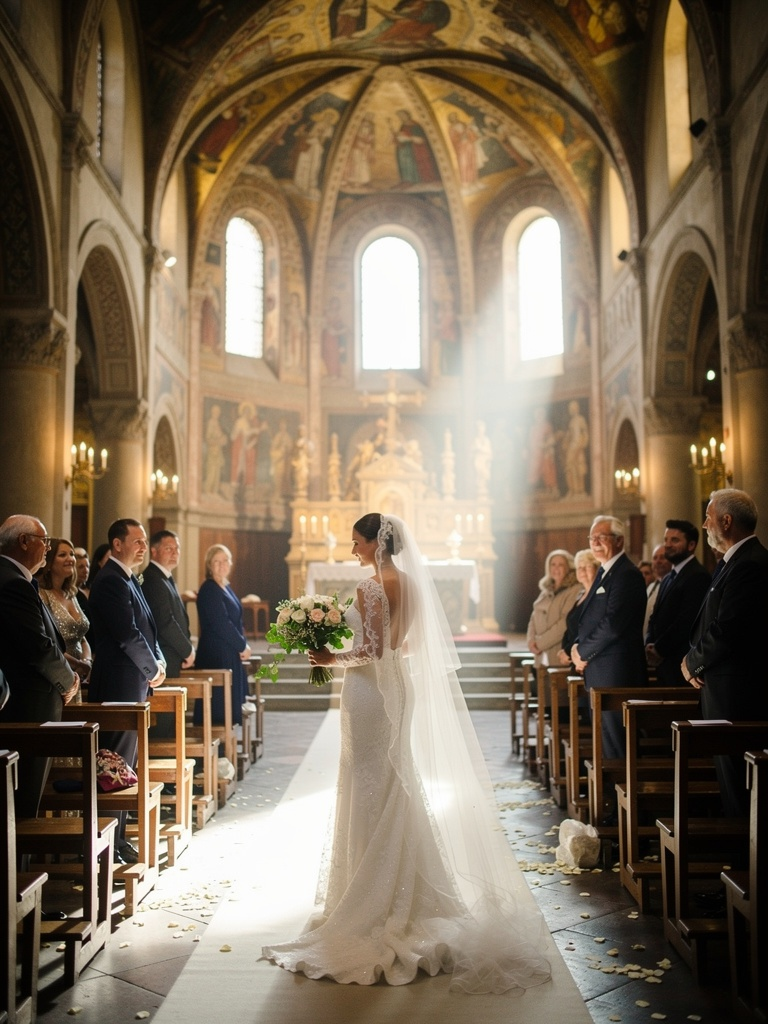
Some parishes require pre-Cana (marriage preparation classes), though this requirement can sometimes be fulfilled at your home parish before traveling. The ceremony itself follows Catholic liturgy—expect a full Mass if you’re both Catholic, or a shorter ceremony without Communion if only one of you is Catholic or if you opt for a ceremony outside Mass.
Catholic ceremonies in Rome offer access to some of the world’s most beautiful churches—Baroque masterpieces with frescoed domes, ancient basilicas, intimate chapels. The music and ritual are deeply structured, which appeals to couples seeking tradition and sacrament. The limitation is flexibility: you can’t write your own vows, the readings come from a prescribed list, and the length and order of the ceremony are largely fixed. If you want a Catholic wedding in Rome, start the process at least 6-9 months in advance to navigate parish requirements and schedule the church.
ROME WEDDING COSTS: REALISTIC BUDGET BREAKDOWN
Let’s address cost directly, because budget is where many couples feel uncertain when planning a destination wedding. Rome weddings span a wide range—your final cost depends on guest count, venue tier, season, and design ambition. Here are realistic benchmarks based on our experience:
INTIMATE (20-30 GUESTS): €40,000–€70,000 total. This includes a boutique or mid-tier venue, solid catering (€100–€150/person), professional photography and videography, planning and coordination, florals, music, stationery, hair and makeup, transportation, and rentals. At this size, you’re often working with venues that cater specifically to intimate groups—private dining rooms in historic palazzi, small villas, or rooftop spaces.
MID-SIZE (50-75 GUESTS): €90,000–€160,000 total. You’re moving into larger venues with more complex logistics. Catering costs rise not just due to headcount but also because you need more elaborate setups—multiple food stations, larger bar service, more staff. Floral and décor costs increase to fill larger spaces. Planning fees rise because coordination becomes more complex with more guests, more travel logistics, and more moving parts.
GRAND (100-150 GUESTS): €180,000–€350,000+. At this scale, you’re booking Rome’s premier venues—sprawling villas, landmark palazzi, estates with capacity for large seated dinners. Catering can run €150–€250/person or higher depending on menu complexity and wine selection. You’ll likely need multiple photographers and videographers to cover the event adequately, expanded floral installations, larger bands or entertainment, and comprehensive planning and design services.
CATEGORY BREAKDOWN (percentages are approximate and shift based on priorities):
- Venue: 15-25% of budget. Top-tier venues command €10,000–€30,000+ for the space alone.
- Catering: 25-35%. This includes food, wine, bar service, staff, rentals (plates, glassware, linens), and service charges. Expect €80–€250/person depending on tier.
- Photography & Videography: 8-12%. Budget €3,000–€12,000+ depending on hours, number of shooters, and whether you’re including albums or extended video edits.
- Planning & Design: 10-15%. Full-service planning ranges from €8,000–€20,000+, or 12-18% of your total budget for luxury comprehensive services.
- Florals & Décor: 8-12%. €5,000–€20,000+ depending on floral density, installation complexity, and whether you’re including specialty rentals or lighting design.
- Music & Entertainment: 5-8%. Live bands cost more than DJs; expect €2,000–€8,000+.
- Stationery: 2-3%. Save-the-dates, invitations, programs, menus, escort cards, thank-you notes: €1,500–€4,000.
- Hair & Makeup: 2-3%. For bride and bridal party: €800–€2,500.
- Transportation: 2-3%. Shuttles, vintage cars, airport transfers: €1,500–€5,000.
- Rentals: 3-5%. Specialty furniture, lighting, tents (if backup needed): €2,000–€10,000.
- Miscellaneous: 3-5%. Favors, welcome bags, tips, unexpected costs.
- Contingency: 10%. Always budget this. Things shift.
VAT: Italy charges 22% VAT (IVA) on most services. Some vendors include it in their quotes, others add it on top. Always clarify whether the price you’re seeing is VAT-inclusive or exclusive. This can significantly impact your budget if you’re not accounting for it.
WHERE TO SPLURGE: Photography and videography—these are what you keep forever. Venue—it sets the tone for everything. Catering—your guests will remember the food and wine. Planning—professional coordination reduces stress and often saves money by preventing mistakes.
WHERE TO SAVE: Off-peak dates (November-March) can save 20-40%. Weekday weddings offer venue discounts. Digital invitations or simpler stationery cut costs. Limited bar options (wine and beer, signature cocktails only) reduce beverage spend. Smaller floral installations focused on key areas (ceremony backdrop, head table) rather than covering every surface.
Moreno Busato, who handles budget and logistics for many of our weddings, reminds couples: “Transparency matters. A Rome wedding is an investment, and you should understand exactly where your money is going. If a vendor can’t break down their pricing clearly, that’s a red flag.”
ITALIAN WEDDING DAY TIMELINE & ETIQUETTE
Italian wedding timing differs from Anglo-American norms, and understanding this helps you design a day that flows naturally rather than feeling rushed or dragging. Italian wedding traditions influence structure and pacing.
LATE AFTERNOON START: Most Rome weddings begin between 4 PM and 6 PM. Italians traditionally avoid mid-day ceremonies, partly due to heat (especially in summer) and partly because the post-ceremony celebration extends late into the evening—sometimes past midnight. A 5 PM ceremony means you capture golden hour light, allow guests time to rest after traveling or sightseeing, and set up a natural progression into evening.
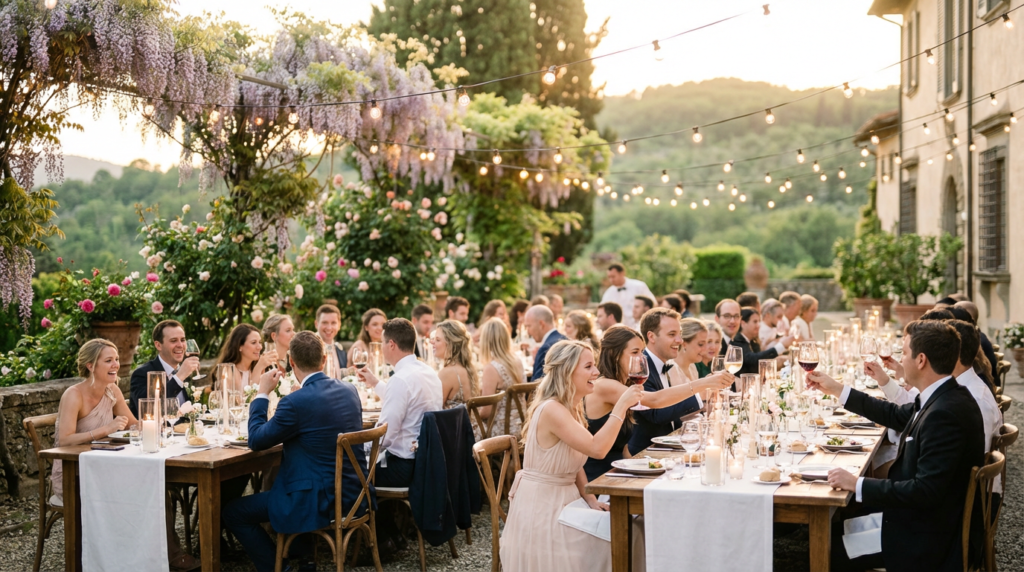
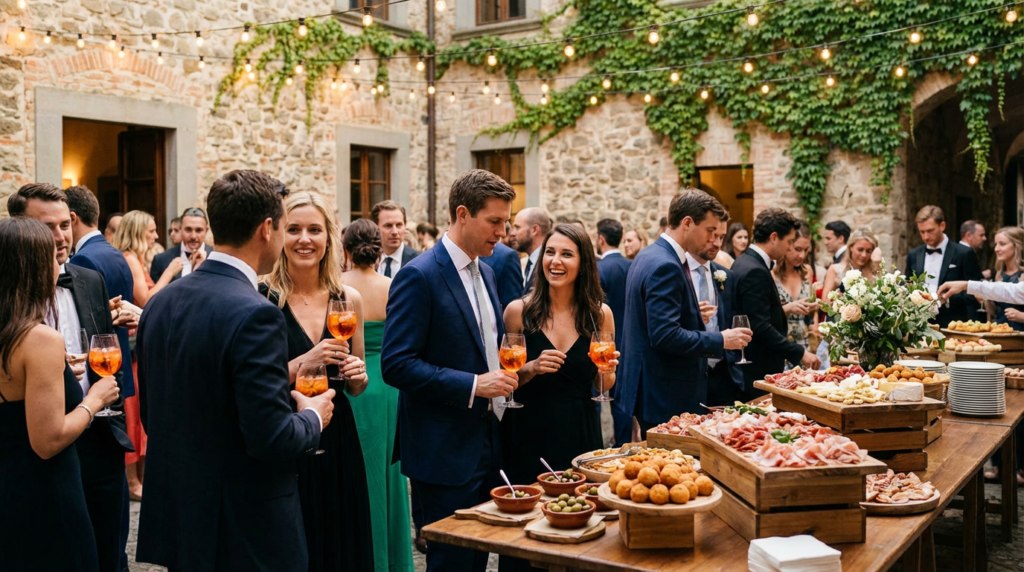
EXTENDED COCKTAIL HOUR: Budget 90 minutes to 2 hours for cocktails, not the 45-60 minutes common in other countries. This is when guests mingle, enjoy aperitivo, and transition from ceremony emotion to celebration mode. Italian cocktail hours are social and leisurely—multiple food stations, passed appetizers, bars with Aperol spritzes and prosecco, often live music (a jazz trio, a classical quartet). Don’t rush this. It’s a cherished part of the day.
MULTI-COURSE SEATED DINNER: Dinner in Italy is never a quick affair. Expect 3-4 hours for a full Italian wedding meal. You’ll typically have:
- Antipasti: Several courses of appetizers, sometimes served family-style, sometimes plated.
- Primi: A pasta or risotto course (this is non-negotiable at an Italian wedding).
- Secondi: A main protein course—often a choice of meat and fish.
- Contorni: Vegetable sides.
- Dolci: Dessert, often multiple options plus wedding cake.
- Coffee & Digestivi: Espresso and after-dinner liqueurs.
Italians don’t plate all courses simultaneously. Each comes separately, with time between for conversation. Speeches and toasts happen throughout dinner, not all clustered at the beginning or end. This pacing feels relaxed rather than regimented. If you’re hosting international guests unfamiliar with Italian timing, prepare them—let them know dinner will be leisurely and last well into the evening.
LATE-NIGHT DANCING: Dancing rarely starts before 10 or 11 PM. By the time dinner ends, the cake is cut, and guests have transitioned to the dance floor, it’s late. Music typically continues until midnight or 1 AM, depending on venue restrictions. Some couples arrange a late-night snack—pizza, panini, or a sweets table—around 11 PM to give guests a second wind.
CULTURAL NOTES: Italians prioritize family and multi-generational celebrations. If you’re inviting older relatives or children, structure the day to accommodate them—perhaps an earlier ceremony, a quieter lounge area for guests who want to step away from dancing, or organized activities for children. Toasts in Italy are personal and heartfelt; expect emotion, laughter, and sometimes multiple toasts from different family members. Finally, Italians value spontaneity—a timeline is a guide, not a straitjacket. Build in buffer time and embrace flexibility.
WHERE YOUR GUESTS SHOULD STAY
Rome’s neighborhoods each have distinct personalities, and where your guests stay affects their experience of the city. Here’s how we guide couples in making recommendations:
CENTRO STORICO (HISTORIC CENTER): This is Rome’s heart—the Pantheon, Piazza Navona, Campo de’ Fiori, narrow medieval streets, endless cafés and restaurants. Staying here means everything is walkable. Your guests can step out of their hotel and within minutes be at major landmarks. The trade-off is cost (this is Rome’s priciest neighborhood) and nighttime noise (some streets are lively until late).
Best for guests who want the full Roman experience and who don’t mind paying for location. Recommend hotels like the Pantheon Iconic Rome, Portrait Roma, or mid-range options like Albergo del Senato.
TRASTEVERE: Across the Tiber River, Trastevere is bohemian, charming, and filled with neighborhood trattorias. Cobblestone streets, ivy-covered buildings, a local feel despite tourism. It’s walkable to the center (about 15-20 minutes) or a quick taxi ride. Trastevere is quieter than Centro Storico but still vibrant, especially at night.
Best for guests who want charm and a neighborhood vibe without being in the thick of tourist density. Recommend boutique hotels like Hotel Santa Maria or Casa Trastevere.
MONTI: Monti is Rome’s “cool” neighborhood—artisan shops, vintage stores, hip wine bars, younger crowd. It’s near the Colosseum and Termini Station (convenient for train travel), but feels more residential and local than Centro Storico. Monti offers excellent value—boutique hotels at lower price points than the center.
Best for guests who want to feel like locals, who appreciate design-forward spaces, and who are comfortable walking or taking trams. Recommend Hotel Monti Palace or Nerva Boutique Hotel.
PRATI: Prati is residential, elegant, and located near the Vatican. It’s where Romans actually live—less touristy, more everyday Rome. Wide boulevards, local markets, family-run restaurants. It’s quieter and often 20-30% cheaper than the historic center. The trade-off is it’s a bit removed—you’ll need taxis or public transport to reach major sites.
Best for families, older guests who want calm, or budget-conscious travelers. Recommend Hotel Alimandi Vaticano or Colors Hotel.
TESTACCIO: Testaccio is Rome’s foodie neighborhood—markets, trattorias, wine bars, almost zero tourists. It’s authentic, working-class in character, and feels completely different from the center. It’s farther out (15-20 minutes by taxi to the center) but offers genuine Roman life.
Best for adventurous guests who prioritize food and authenticity over proximity to landmarks. Recommend smaller B&Bs or Airbnb options in the area.
HOTEL TIER RECOMMENDATIONS: Divide your recommendations into three tiers—luxury (€300-600+/night), boutique/mid-range (€150-300/night), and budget-friendly (€80-150/night). This allows guests to self-select based on their comfort and budget. If you’re hosting a large group, consider negotiating room blocks at 2-3 hotels across different neighborhoods and price points, giving everyone options.
DESIGNING THE GUEST EXPERIENCE
A Rome wedding isn’t just the ceremony and reception—it’s a multi-day experience. The most memorable weddings we design treat the celebration as a long weekend where guests feel cared for, engaged, and immersed in Rome without being over-scheduled.
PRE-WEDDING ACTIVITIES: Think about what would enhance your guests’ time without demanding their participation. Options include:
- Wine tasting: Arrange a group tasting at an enoteca in Trastevere or Monti. This is social, relaxed, and doesn’t require physical exertion.
- Cooking class: Partner with a local chef for a hands-on pasta or pizza-making session. It’s interactive, fun, and gives guests something tangible (a meal they helped create).
- Guided tours: Offer a private walking tour of the historic center or the Vatican Museums. Keep it small (15-20 people max) so it feels intimate.
- Market visit: Take a small group to Campo de’ Fiori or Testaccio Market, followed by lunch at a nearby trattoria.
The key is making these optional and clearly communicated. Not every guest wants structured activities—some prefer to explore on their own. Provide a list of suggestions and bookable experiences, but don’t assume everyone will participate.
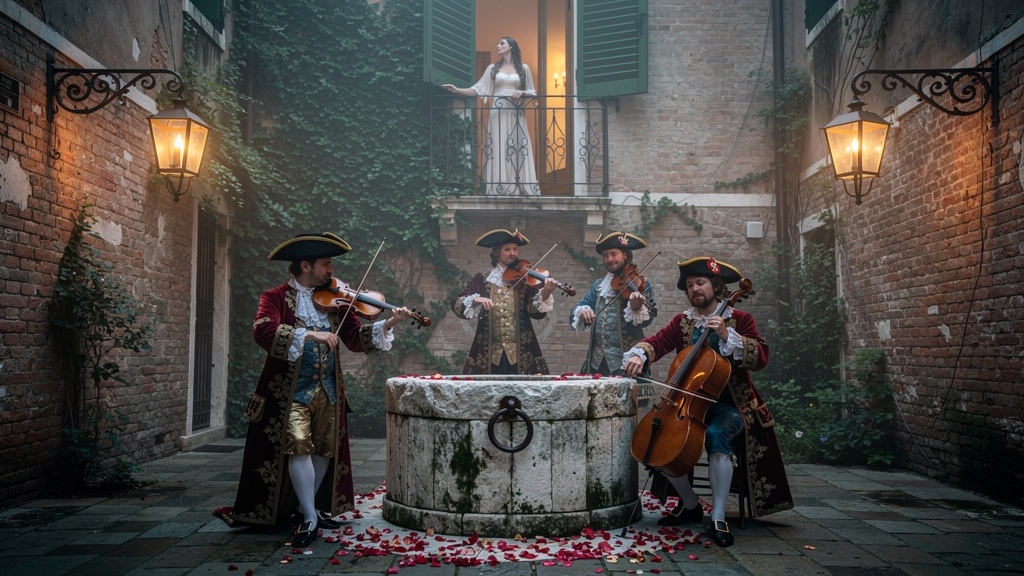
If you’re interested in creating memorable pre-wedding moments in Rome, consider how proposal experiences in Italy can inspire other special celebrations for your guests.
WELCOME DINNER: This is typically the night before the wedding, and it serves as both a reunion (for guests arriving from different places) and a preview of the weekend’s tone. Welcome dinners can be casual (a trattoria buyout with family-style service) or more formal (a private room at a rooftop restaurant). We generally recommend something relaxed—guests have been traveling, and forcing formality the night before the wedding can feel exhausting.
Choose a venue within walking distance of where most guests are staying, or arrange transportation. Keep speeches brief—this isn’t the time for long toasts. Instead, create space for conversation, laughter, and connection. Maximilian Figel, who specializes in multi-day wedding experiences, advises: “The welcome dinner sets the emotional tone. If it feels warm and inclusive, guests arrive at the wedding day already connected to each other, not just to the couple.”
DAY-AFTER BRUNCH: This is becoming standard for destination weddings, and for good reason—it extends the celebration and gives the couple time to interact with guests they may have barely spoken to during the wedding itself. Brunch is low-pressure: guests arrive when they’re ready (usually late morning), the food is casual (pastries, eggs, fruit, coffee, Bloody Marys), and the vibe is recovery and storytelling.
Host brunch at your hotel, a nearby café with outdoor seating, or even a picnic in Villa Borghese if weather permits. No speeches, no formality—just time together before everyone departs.
CURATED ITINERARIES: Provide guests with a simple, well-designed itinerary guide—not a rigid schedule, but a resource. Include:
- Restaurant recommendations by neighborhood and cuisine type
- Must-see sites with tips (best time to visit, how to skip lines)
- Hidden gems (a specific café, a lesser-known church, a viewpoint)
- Practical info (how to use the metro, taxi apps, tipping norms)
- Emergency contacts (your planner’s number, hotel concierge)
This document doesn’t need to be elaborate—a well-formatted PDF or a simple wedding website page works. The goal is to empower guests to explore confidently on their own time.
ROME WEDDING DESIGN & AESTHETICS
Design in Rome requires restraint. The architecture is so strong, so layered with history, that heavy-handed styling can feel like shouting over a symphony. Our approach: amplify, don’t impose.
WORKING WITH ROMAN ARCHITECTURE: If your venue has frescoed ceilings, don’t cover them with draped fabric or elaborate installations. Instead, light them subtly so they glow. If your courtyard has ancient stone walls, use them as texture—add trailing greenery or simple uplighting, but let the stone speak. If your villa has a grand staircase, make it a focal point for portraits rather than covering it with flowers.
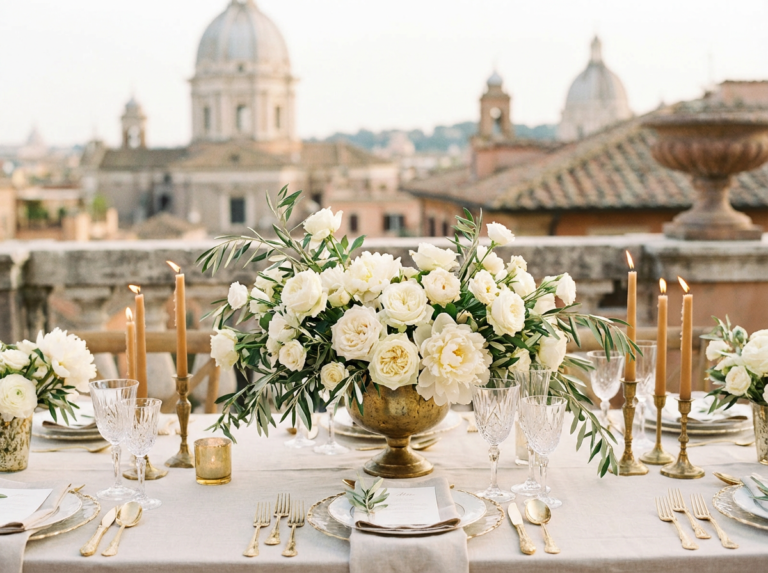
This philosophy extends to table settings. In a Baroque palazzo, we might use simple white linens and gold flatware, letting the room’s ornamentation provide the visual richness. In a minimalist modern space, we can be bolder with color and texture because the architecture won’t compete. Alessandra Ferretti describes it as “listening to the room first, then deciding how loud our design needs to be.”
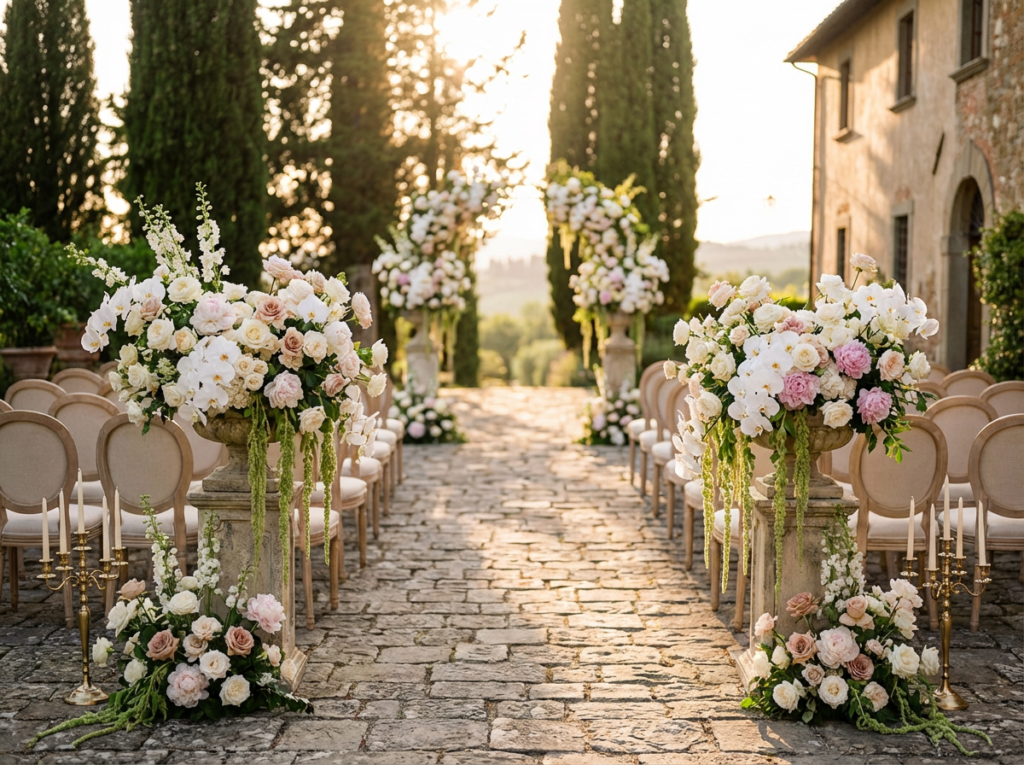
SEASONAL FLORALS: Rome’s floral availability shifts with the seasons, and designing with what’s naturally abundant produces better results than forcing out-of-season imports.
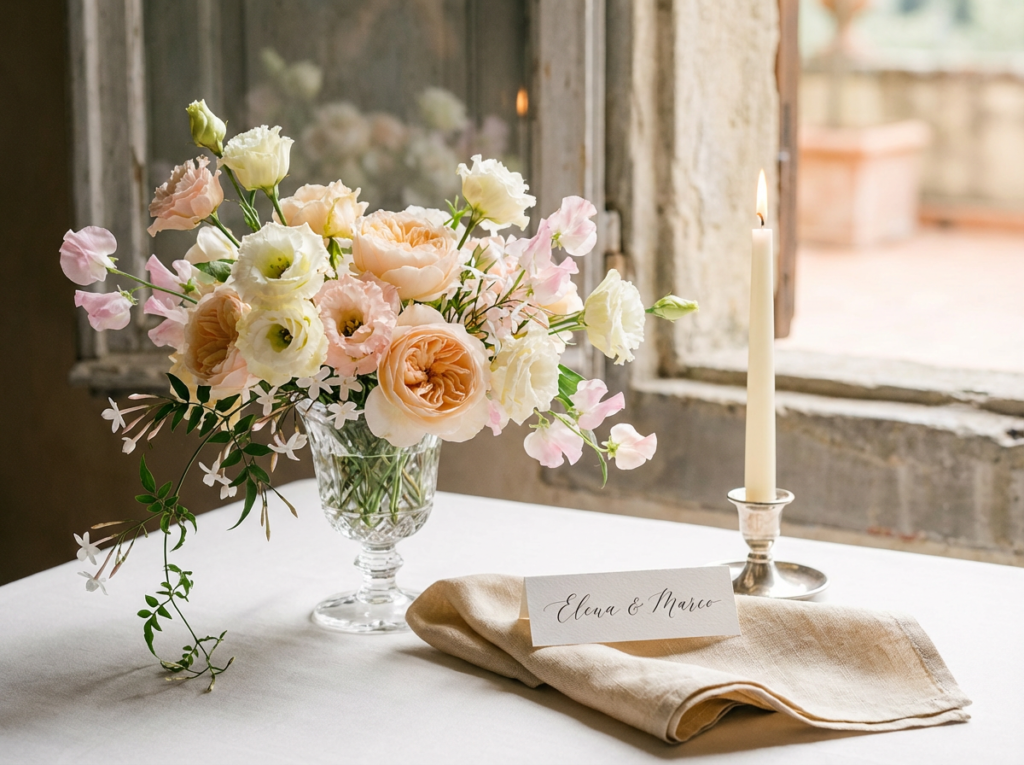
- Spring: Peonies, garden roses, ranunculus, tulips, wisteria, jasmine. Colors trend soft—blush, cream, pale lavender.
- Summer: Hydrangeas, dahlias, sunflowers, lavender, olive branches. You can go bold here—vibrant yellows, deep blues, bright whites.
- Autumn: Dahlias, marigolds, chrysanthemums, late roses, olive branches, pomegranates. Rich tones—burgundy, rust, gold, deep green.
- Winter: Amaryllis, hellebores, anemones, evergreen branches, berries, eucalyptus. Lean into texture—silver, white, deep green, hints of metallics.
We prioritize locally grown florals when possible. Lazio has excellent flower farms, and using local blooms reduces cost, environmental impact, and ensures freshness.
LIGHTING DESIGN: Lighting transforms spaces, especially at night. In Rome, we often use:
- Bistrot lights (string lights): Strung across courtyards or gardens, they create a warm, European café ambiance.
- Candles: Hundreds of them—votives on tables, pillars on windowsills, tapers in candelabras. Candlelight softens everything.
- Uplighting: Used on ancient walls, columns, or trees to add drama and depth.
- Pin spots: Focused light on centerpieces or key design elements.
We avoid harsh overhead lighting or overly theatrical colored washes. Rome doesn’t need theatrics—it needs enhancement.
COLOR PALETTES: What works in Rome:
- Soft neutrals + terracotta + gold: Timeless, warm, complements ochre Roman buildings.
- Deep jewel tones (emerald, sapphire, burgundy): Luxurious and bold, works well in grand spaces.
- All white + greenery: Classic, clean, lets architecture dominate.
- Pastels (blush, lavender, soft blue): Romantic, works beautifully in gardens and spring weddings.
What tends not to work: overly bright neons or highly saturated primary colors, which clash with Rome’s muted, earthy palette.
PERSONALIZATION: We encourage couples to bring elements that reflect their story—family heirlooms as centerpieces, a playlist curated from meaningful songs, custom cocktails named after shared memories. Personalized wedding design in Italy isn’t about branding everything with your monogram; it’s about weaving narrative into the details so guests understand who you are.
PHOTOGRAPHY & VIDEOGRAPHY IN ROME
Rome is one of the most photographed cities on Earth, but capturing your wedding here requires more than pointing a camera at the Colosseum.
BEST LOCATIONS FOR PORTRAITS: Iconic doesn’t always mean best. Yes, the Colosseum and Trevi Fountain are stunning, but they’re also crowded. If you want those shots, plan for early morning (6-7 AM) or late evening. Alternatively, consider these locations:
- Villa Borghese gardens: Lush, shaded, peaceful, multiple backdrops within one location.
- Pincio Terrace: Sweeping views over Piazza del Popolo and the city, ideal at sunset.
- Janiculum Hill: Panoramic views, fewer tourists, golden light in the afternoon.
- Trastevere alleys: Cobblestones, ivy-covered walls, colorful shutters, intimate scale.
- Roman Forum at sunrise: Dramatic, empty, bathed in soft light. Requires permits and early wake-up, but worth it.
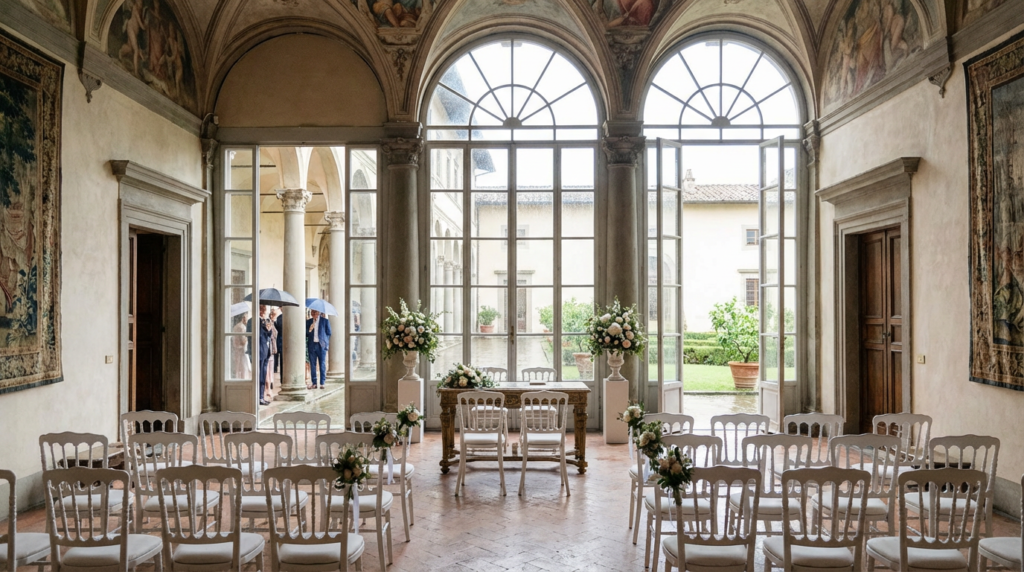
TIMING CONSIDERATIONS: Golden hour in Rome (the hour before sunset) is magical—warm, soft, flattering light that makes skin glow and buildings look luminous. If your ceremony is at 5 or 6 PM, you’ll capture this light naturally. If you’re doing a morning portrait session, aim for 7-9 AM when light is cool and clear but not harsh.
Avoid mid-day (11 AM-3 PM) if possible—light is overhead, shadows are hard, and heat is intense. If you must shoot mid-day, find shaded areas or interiors.
PERMITS & LOGISTICS: Some locations require permits for professional photography—particularly anything involving props, large groups, or commercial use. The Roman Forum, Colosseum, and other archaeological sites require permits, which your photographer or planner can arrange. Budget €100-€300 for permits depending on location and complexity.
GEAR & STYLE: Rome’s architecture and light lend themselves to editorial, romantic photography—soft focus, natural light, film-like tones. Discuss style preferences with your photographer. Do you want bright and airy, or moody and dramatic? Documentary candid, or more posed and directed? Rome accommodates both, but knowing what you want helps your photographer deliver.
INVESTMENT RANGES:
- Basic (€2,000-€4,000): 6-8 hours, one photographer, digital gallery.
- Mid-tier (€4,000-€7,000): 8-10 hours, one photographer + assistant, engagement session, digital gallery + basic album.
- Premium (€7,000-€12,000+): Full day coverage, two photographers, videographer, drone footage, engagement session, luxury album, same-day edit or highlight film.
VIDEOGRAPHY: Video captures what photos can’t—movement, voices, laughter, the sound of your vows, your first dance. Even a short 3-5 minute highlight film becomes a treasure. Full ceremony edits (20-30 minutes) allow you to relive the entire event. Budget €2,000-€6,000+ depending on hours, shooters, and deliverables.
THE ROMAN CULINARY EXPERIENCE
Food at a Rome wedding isn’t just sustenance—it’s storytelling through cuisine. Roman food culture is rooted in simplicity, quality ingredients, and tradition, and the best wedding menus honor this.
LAZIO INGREDIENTS (THE FOUNDATION): Rome sits in the Lazio region, and local ingredients define authentic Roman cuisine:
- Pecorino Romano: Sheep’s milk cheese, sharp and salty, essential in pasta dishes.
- Guanciale: Cured pork cheek, used in carbonara and amatriciana.
- Carciofi Romaneschi: Roman artichokes, braised or fried alla giudìa.
- Puntarelle: Bitter chicory, served with anchovy dressing.
- Abbacchio: Milk-fed lamb, roasted with rosemary and garlic.
- Porchetta: Whole roasted pork, seasoned with herbs, crispy skin.
These ingredients aren’t trendy—they’re centuries-old staples. Using them signals authenticity.
EXAMPLE MENU STRUCTURE:
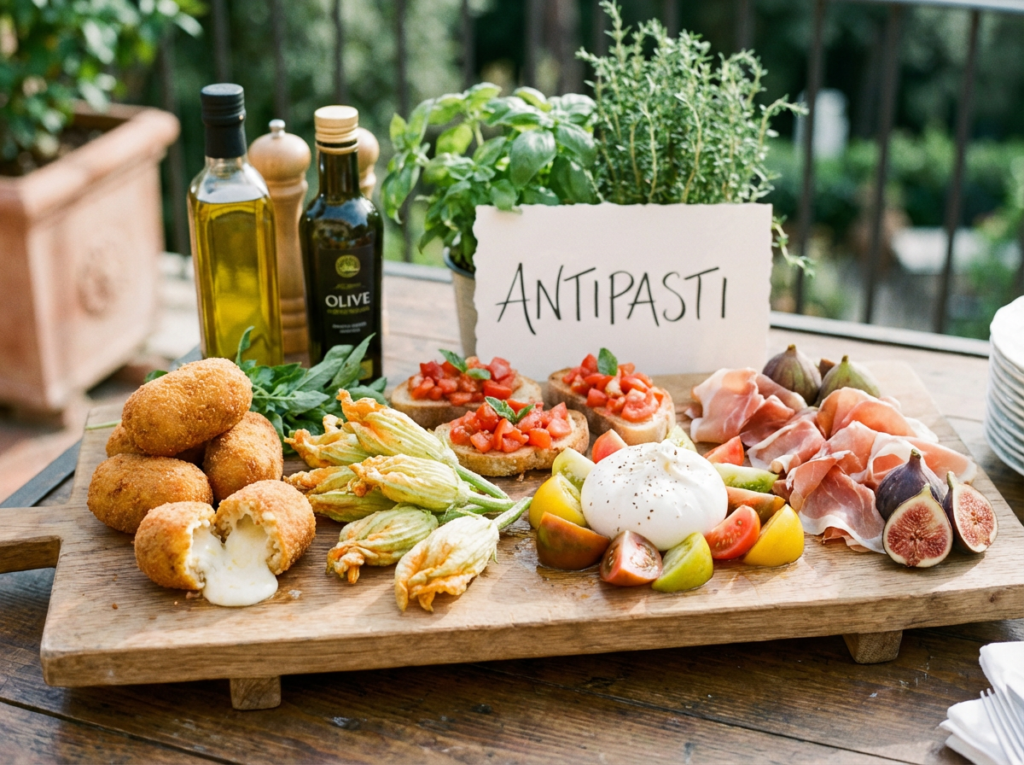
ANTIPASTI (passed or stationed during cocktail hour):
- Supplì al telefono (fried rice balls with mozzarella)
- Fiori di zucca fritti (fried zucchini blossoms)
- Bruschetta al pomodoro
- Prosciutto di Parma with figs
- Burrata with heirloom tomatoes
PRIMI (seated, plated):
- Cacio e pepe (pecorino and black pepper pasta)
- Amatriciana (guanciale, tomato, pecorino)
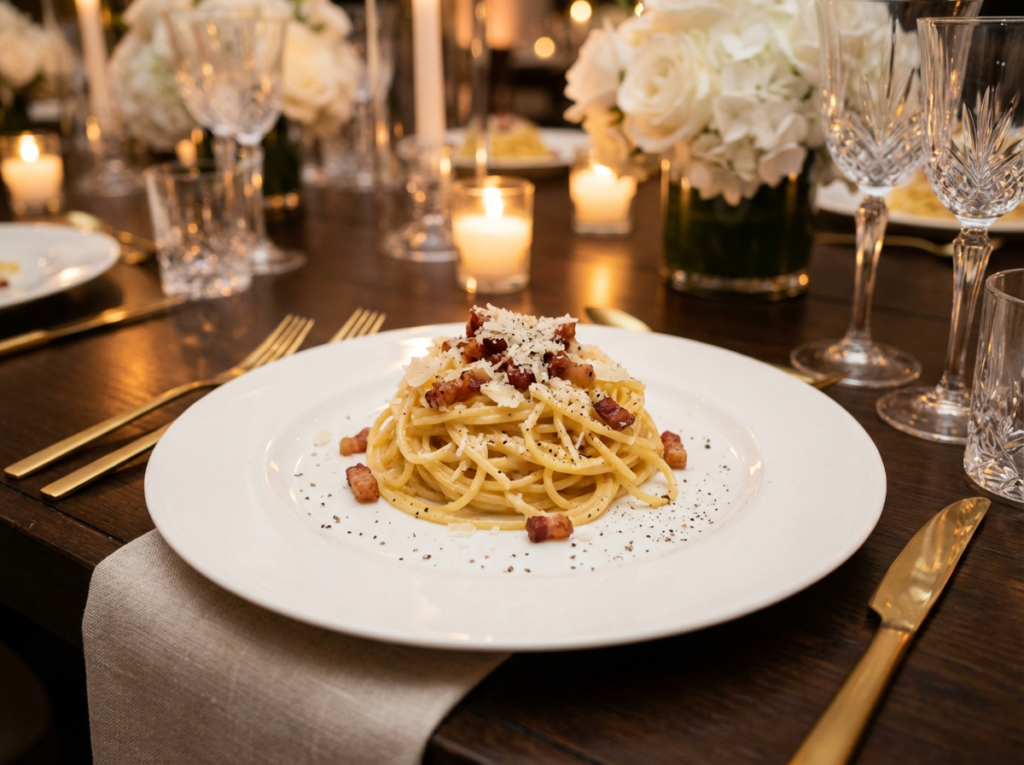
- Carbonara (guanciale, egg, pecorino)
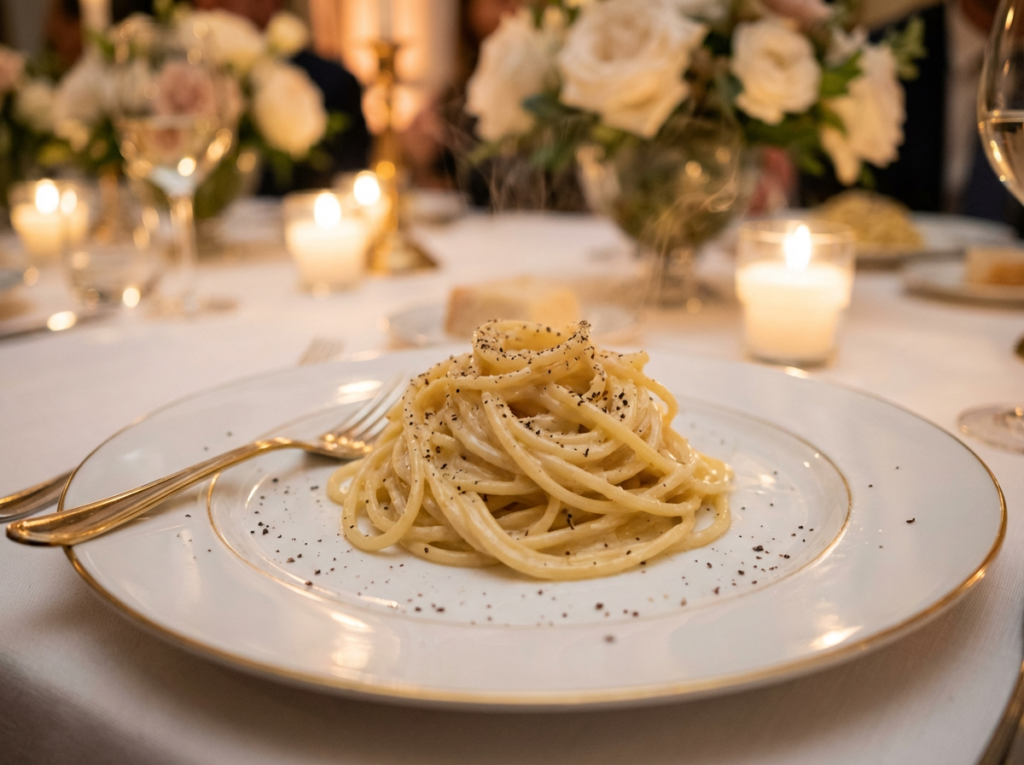
Choose one for your menu, or offer two options. Romans take their pasta seriously—it must be perfectly al dente, and the sauces must be balanced.
SECONDI (plated or family-style):
- Abbacchio scottadito (grilled lamb chops)
- Saltimbocca alla romana (veal with prosciutto and sage)
- Branzino al forno (baked sea bass with herbs)
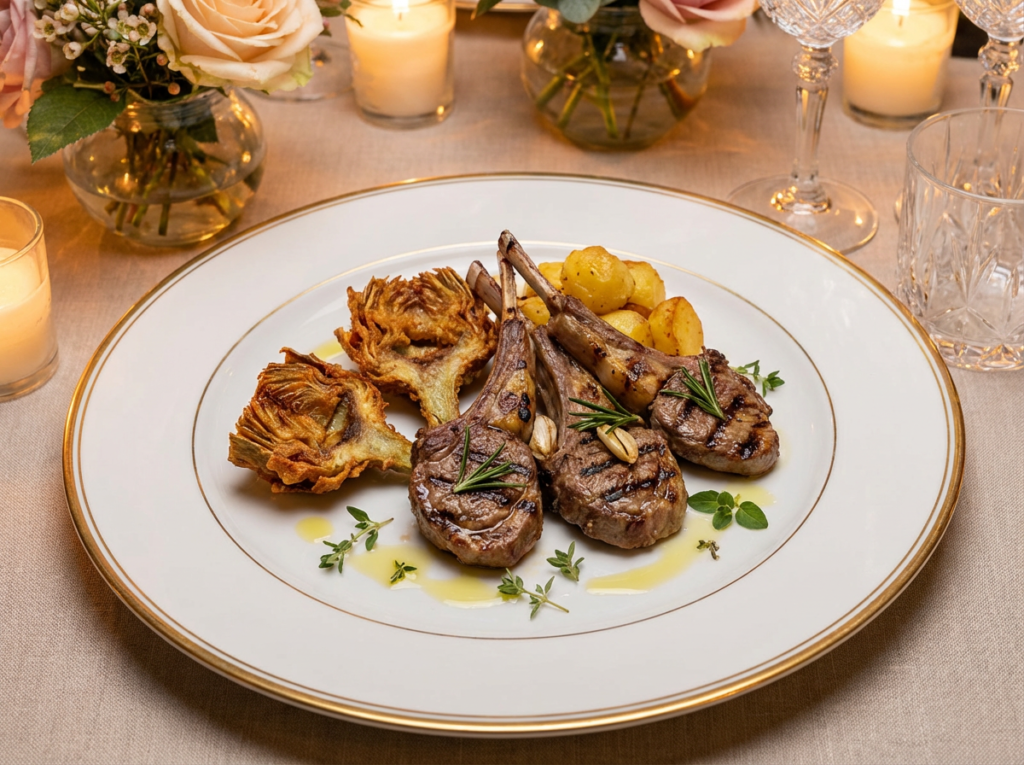
Offer a choice of meat and fish if your budget allows.
CONTORNI (sides, often family-style):
- Carciofi alla giudìa or alla romana
- Patate al forno (roasted potatoes)
- Seasonal vegetables
DOLCI (dessert, often a combination):
- Tiramisu
- Panna cotta
- Maritozzo (sweet bun with whipped cream)
- Fresh fruit
- Wedding cake
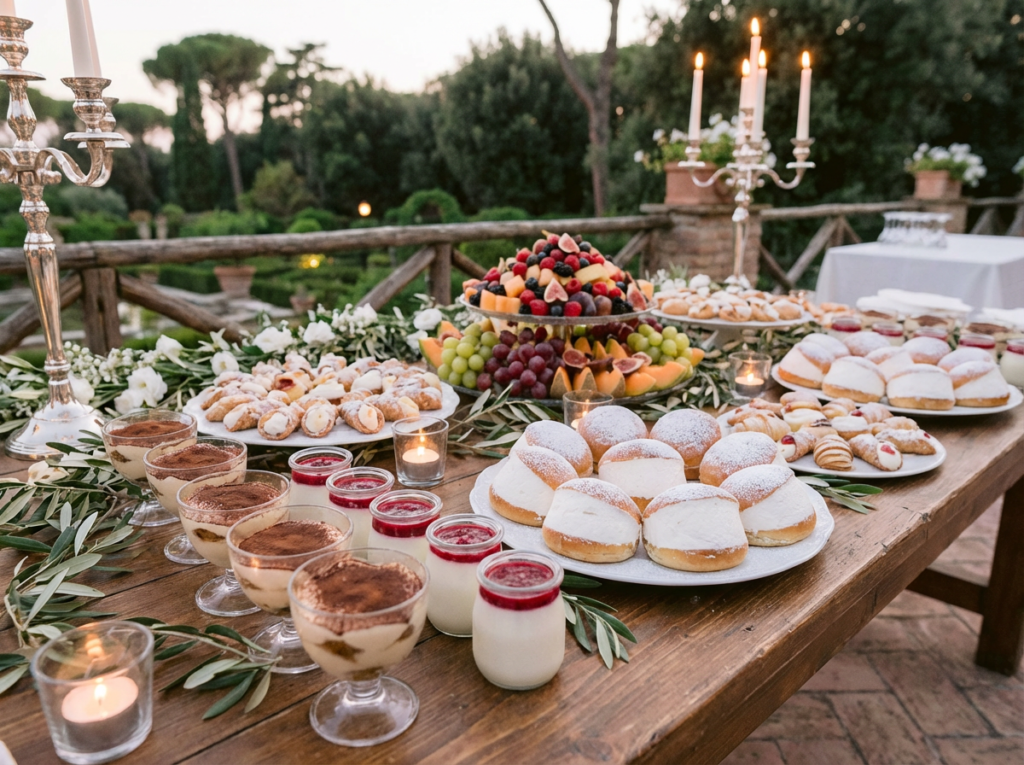
Follow with espresso and digestivi (limoncello, grappa, amaro).
WINE PAIRINGS: Lazio produces excellent wines often overlooked in favor of Tuscany or Piedmont:
- Frascati: Crisp white, pairs well with seafood and antipasti.
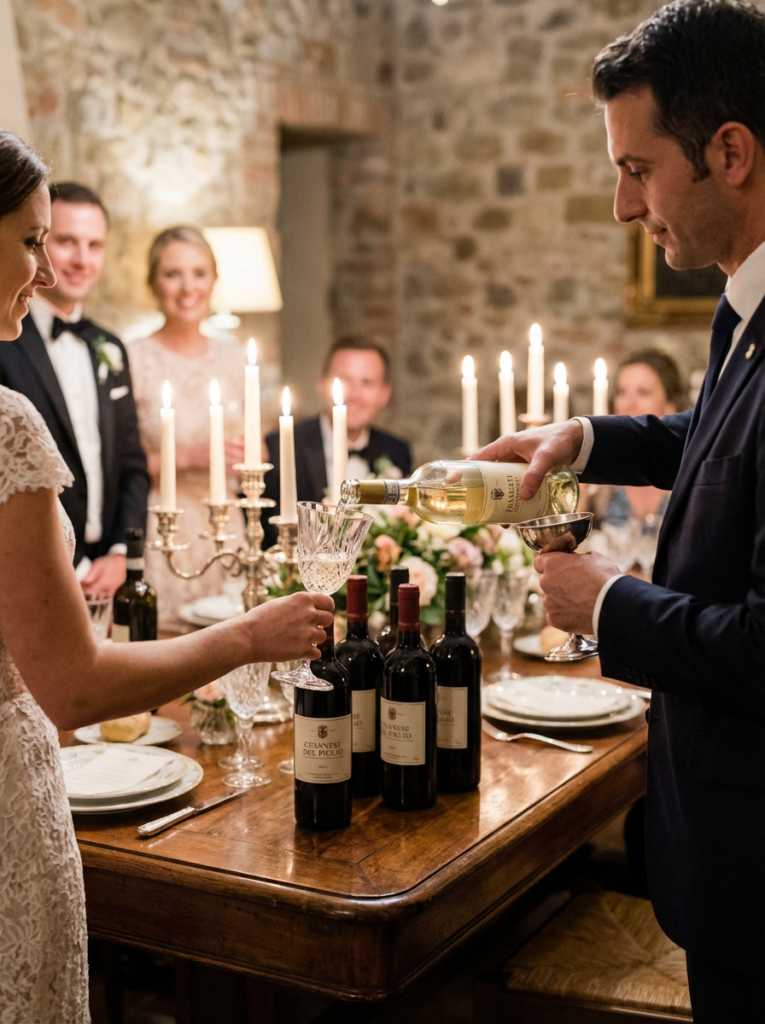
- Cesanese del Piglio: Medium-bodied red, cherry and spice notes, great with lamb.
- Nero Buono di Cori: Deep, structured red, pairs with richer meats.
Supplement with a prosecco or Franciacorta for cocktail hour and toasts, and perhaps one or two “name” bottles (a Brunello, a Barolo) for guests who want something more recognizable.
CATERING COST BREAKDOWN: Expect €80-€250/person depending on:
- Menu complexity: Simple three-course vs. elaborate five-course with wine pairings
- Service style: Family-style (less expensive) vs. plated (more labor-intensive)
- Beverage package: Wine and beer only vs. full open bar with premium spirits
- Staffing: Ratio of servers to guests (1:10 is standard, 1:8 is premium)
Most caterers include VAT (22%), rentals (plates, glassware, linens), and service charges in their pricing. Always confirm what’s included. For more menu inspiration, explore Italian wedding menu ideas.
WORKING WITH A LOCAL ROME WEDDING PLANNER
WHY LOCAL EXPERTISE MATTERS: Planning from abroad presents challenges—time zones, language barriers, unfamiliarity with vendors, lack of site visit opportunities. A Rome-based planner eliminates these frictions. We speak Italian fluently, have established relationships with the best vendors (often securing better rates or priority booking), understand permit processes and legal requirements, and know how to navigate Italian bureaucracy and cultural expectations.
A local planner also provides cultural intelligence. We know that Italian vendors operate differently than those in the U.S. or UK—timelines are more fluid, communication styles are more relational, and contracts may be less detailed. We bridge that gap, translating not just language but also expectations.
WHAT A PLANNER DOES (three service levels):
PARTIAL PLANNING (€3,000-€8,000): You handle most decisions—venue, vendors, design direction—and the planner assists with specific tasks like vendor recommendations, contract review, timeline creation, and day-of coordination. This works for couples who enjoy planning but want expert backup and someone on the ground in Rome.
FULL PLANNING (€8,000-€20,000): The planner manages the entire process from venue search to day-of coordination. You make final decisions, but the planner presents options, negotiates contracts, coordinates all vendor communication, manages timelines and budgets, attends site visits on your behalf, and oversees design execution. This is the most common service level for destination weddings.
LUXURY PLANNING (€20,000+): Comprehensive design and planning with a dedicated team. This includes custom design concepts, full guest experience curation (welcome events, activities, day-after brunch), premium vendor selection, high-touch client communication, and often a creative director in addition to a logistics coordinator. This level suits couples planning large, complex, or highly designed weddings.
Alternatively, some planners work on a percentage basis (12-18% of total wedding budget), particularly for luxury weddings where the budget exceeds €150,000.
WHAT TO LOOK FOR in a Rome wedding planner:
- Based in Rome (not just “works in Italy”—you want someone who lives here and has daily access to vendors and venues)
- Fluent in English and Italian (essential for clear communication)
- 5+ years of experience (enough weddings to have seen problems and solved them)
- Strong portfolio (do their aesthetic and style align with yours?)
- References from past clients (ask to speak to 2-3 couples)
- Clear, detailed proposal (what’s included, what costs extra, payment schedule, cancellation policy)
- Responsive communication (if they’re slow to reply during the inquiry phase, that won’t improve once you’re booked)
OUR APPROACH: We view planning as both logistical and creative. Yes, we manage timelines, budgets, contracts, and vendor coordination—but we also bring design perspective, cultural insight, and a commitment to creating something that feels distinctly yours. Our team includes designers, coordinators, and on-site managers, so you’re never working with just one person—you have a full support system.
f.a.q. FREQUENTLY ASKED QUESTIONS
HOW MUCH DOES A ROME WEDDING COST? A Rome wedding typically costs €40,000-€70,000 for an intimate celebration (20-30 guests), €90,000-€160,000 for a mid-size event (50-75 guests), and €180,000-€350,000+ for a grand wedding (100-150+ guests). This includes venue, catering, photography, videography, florals, planning, music, stationery, hair and makeup, and all associated costs. Prices vary based on season, venue tier, and design complexity. All prices are subject to Italy’s 22% VAT.
WHAT IS THE BEST TIME OF YEAR FOR A ROME WEDDING? September and October are ideal—warm but not hot (20-28°C), excellent light for photography, harvest season for food and wine, and generally stable weather. April and May are also beautiful, with blooming flowers and mild temperatures, though slightly more rain risk. June is popular but hot. July and August are very hot (30-35°C+) and many Romans leave the city. November through March offer the best rates and availability, but cooler temperatures and higher rain probability.
CAN WE HAVE A LEGAL WEDDING IN ROME? Yes. You’ll need to obtain a Nulla Osta (certificate of no impediment) by presenting your birth certificates, passports, and affidavits of marital status, all translated into Italian and authenticated with Apostille stamps. Submit these to Rome’s town hall (Comune), wait the mandatory period, then marry in a civil ceremony at Campidoglio or Caracalla. The process takes 2-6 months. Many couples choose a symbolic ceremony in Rome and handle legal marriage at home for simplicity.
DO WE NEED TO SPEAK ITALIAN? No. Most wedding vendors in Rome—planners, photographers, caterers, florists—speak English fluently. For a legal civil ceremony, you’ll need an official translator present, but this is arranged through the town hall. Your planner handles all vendor communication, so language is rarely a barrier.
HOW FAR IN ADVANCE SHOULD WE BOOK? For peak season weddings (May-June, September-October), book 12-18 months in advance. Top venues and vendors book up quickly during these months. For off-peak (November-April), 9-12 months is usually sufficient. If you have flexibility on dates, you’ll have more options. Last-minute bookings (3-6 months) are sometimes possible but limit your choices.
WHAT ARE THE BEST ROME WEDDING VENUES? It depends on your style and guest count. Historic villas work for 80-200 guests seeking grandeur and gardens. Private palazzi suit 40-150 guests wanting urban elegance and architectural drama. Lush gardens accommodate 30-250 guests prioritizing natural beauty. Panoramic rooftops fit 30-100 guests who want Rome’s skyline as backdrop. Hidden courtyards host 20-80 guests seeking intimacy and privacy.
CAN OUR GUESTS EXPLORE ROME EASILY? Absolutely. Rome is walkable, has excellent public transport (metro, buses, trams), and taxis and ride-sharing are readily available. Most major sites are within the historic center or easily accessible. We provide guests with curated itineraries, restaurant recommendations, and practical tips to help them explore confidently.
WHAT HAPPENS IF IT RAINS? Every venue has a backup plan—covered terraces, indoor spaces, or tents. We always build contingency plans into the timeline and design. Rome’s rain tends to be brief rather than all-day, and many venues offer stunning covered options that maintain the atmosphere. Trust your planner to have this covered.
HOW LONG DOES PHOTO AND VIDEO DELIVERY TAKE? Photography typically delivers within 3-4 weeks—a full edited gallery with high-resolution images. Videography takes longer due to editing complexity, usually 6-8 weeks for a highlight film and full ceremony edit. Rush delivery can sometimes be arranged for an additional fee. All files are delivered via online gallery for download and sharing.
WHAT SHOULD WE BUDGET FOR GUEST ACCOMMODATIONS? Rome offers accommodations across all price ranges. Luxury hotels run €300-€600+/night, boutique and mid-range options €150-€300/night, and budget-friendly stays €80-€150/night. We recommend negotiating room blocks at 2-3 hotels across different price tiers, giving guests options. Many hotels offer group discounts for 10+ rooms.
IS TIPPING EXPECTED IN ITALY? Service charges are typically included in vendor contracts, so additional tipping isn’t required. However, if vendors exceed expectations—your coordinator goes above and beyond, your photographer captures something extraordinary—a discretionary tip (5-10% or a fixed amount) is appreciated. Prepare tip envelopes in advance if you plan to tip.
CAN WE CUSTOMIZE OUR WEDDING? Absolutely. Every wedding we design is unique. We tailor everything—menu, design, timeline, guest experience—to reflect your preferences, story, and vision. Cookie-cutter weddings don’t interest us. Our goal is to create something that feels entirely yours while honoring Rome’s character.
BEGIN YOUR ROME LOVE STORY
Rome has hosted love stories for millennia—emperors and poets, artists and dreamers, and now, you. What makes a Rome wedding unforgettable isn’t the grandeur alone, though the city offers that in abundance. It’s the way Rome holds space for intimacy within its vastness, the way centuries of history make your single day feel both momentous and part of something larger, the way the light at sunset turns ochre buildings to gold and makes you believe, just for a moment, that time has stopped.
We’ve designed hundreds of weddings in this city, and what we’ve learned is that the best ones aren’t the most elaborate—they’re the most honest. They’re the weddings where couples trust the city to do half the work, where design amplifies rather than overwhelms, where guests leave feeling they’ve experienced not just a wedding but a place, a culture, a story.
If you’re reading this, you’re already imagining yourself here—walking Roman streets the morning of your wedding, exchanging vows in a hidden garden, toasting under string lights as the city hums around you, dancing past midnight with everyone you love. That vision is possible. Let’s design it together.
Ready to start planning your Rome wedding? Contact Kiss Me Italy to begin your love story in the Eternal City.
2 Commenti