Planning Italy’s wedding calendar starts with three variables—ceremony type, reception style, and travel logistics—then builds the day around light, comfort, and Italian hospitality. For couples seeking a refined, fully managed experience, explore our luxury weddings in Italy approach.
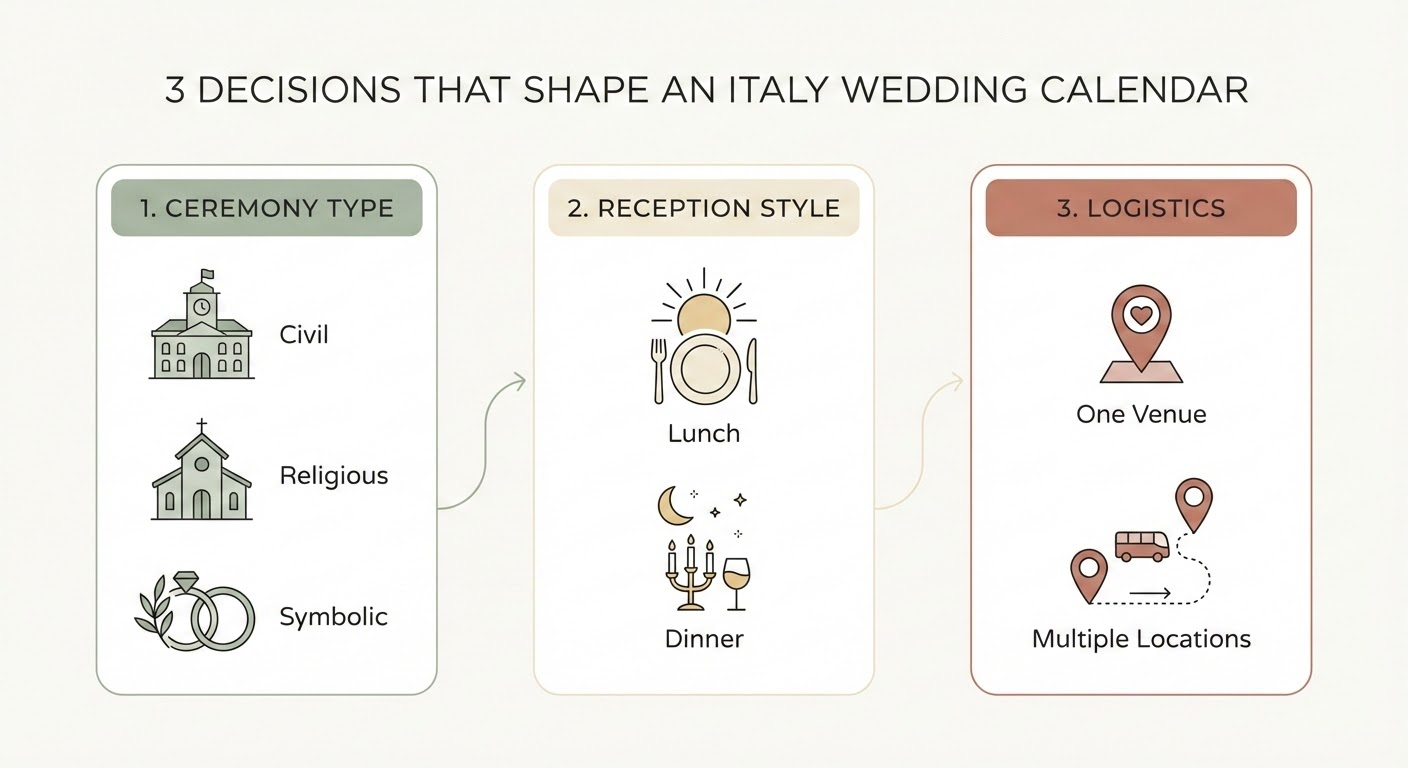
How to Use Italy’s Wedding Calendar (3 Decisions That Shape Everything)
Before exploring months and milestones, three foundational decisions will define the structure of your Italy wedding calendar. These choices determine not only the order of events but also the rhythm, logistics, and emotional arc of your celebration.
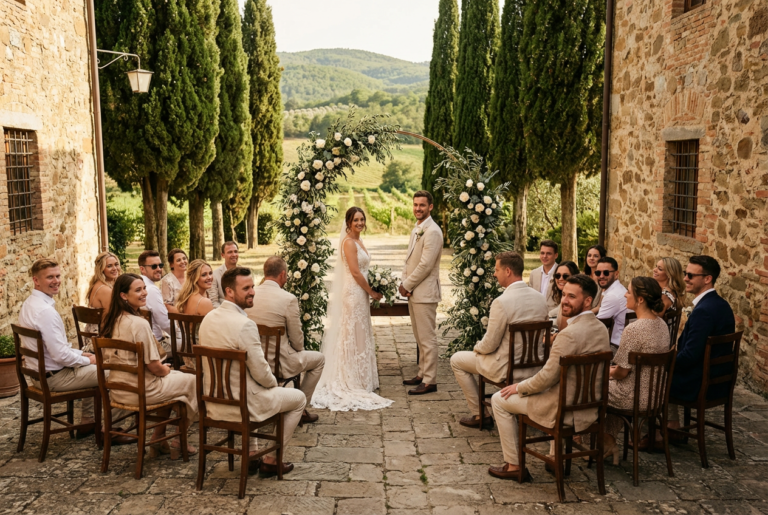
Ceremony type: civil, religious, or symbolic. A civil ceremony requires advance legal preparation, coordination with a local registrar, and often takes place in a town hall or authorized venue. Religious ceremonies involve church protocols, documentation, and timing constraints tied to liturgical calendars. Symbolic ceremonies offer the greatest flexibility in location and schedule, allowing you to marry on a terrace at sunset or in a garden at midday. Each format carries different lead times, vendor coordination, and day-of pacing.
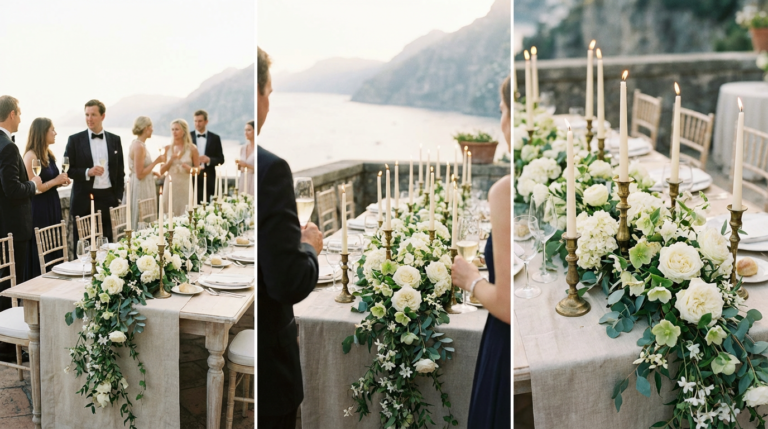
Reception style: lunch or dinner. This single choice reshapes your entire timeline. A lunch reception begins earlier, takes advantage of midday light, and often concludes by late afternoon—ideal for spring and early summer when evenings are still cool. A dinner reception starts later, flows into twilight and dancing under the stars, and suits the long, warm evenings of June through September. The rhythm of Italian hospitality—aperitivo, multiple courses, toasts, cake cutting—adapts to both formats, but the start time and energy shift significantly.
Logistics: one venue or multiple locations. Hosting your ceremony, aperitivo, and reception at a single estate simplifies transitions and allows guests to move fluidly through the day. Splitting events across locations—a church ceremony followed by a villa reception, or a coastal ceremony with a hilltop dinner—adds travel time, coordination, and the need for transportation. Kiss Me Italy designs timelines that account for these transitions, building in realistic buffers and ensuring that every transfer feels seamless rather than rushed.
These three decisions form the skeleton of your Italy wedding calendar. Once established, we layer in seasonality, light, and the specific character of your chosen location to create a timeline that feels both effortless and exquisitely timed.
If you’d like help translating these three decisions into a clear, season-appropriate schedule, contact us for a tailored timeline built around your ceremony type, reception style, and logistics.
The Best Time to Get Married in Italy: Season-by-Season Overview
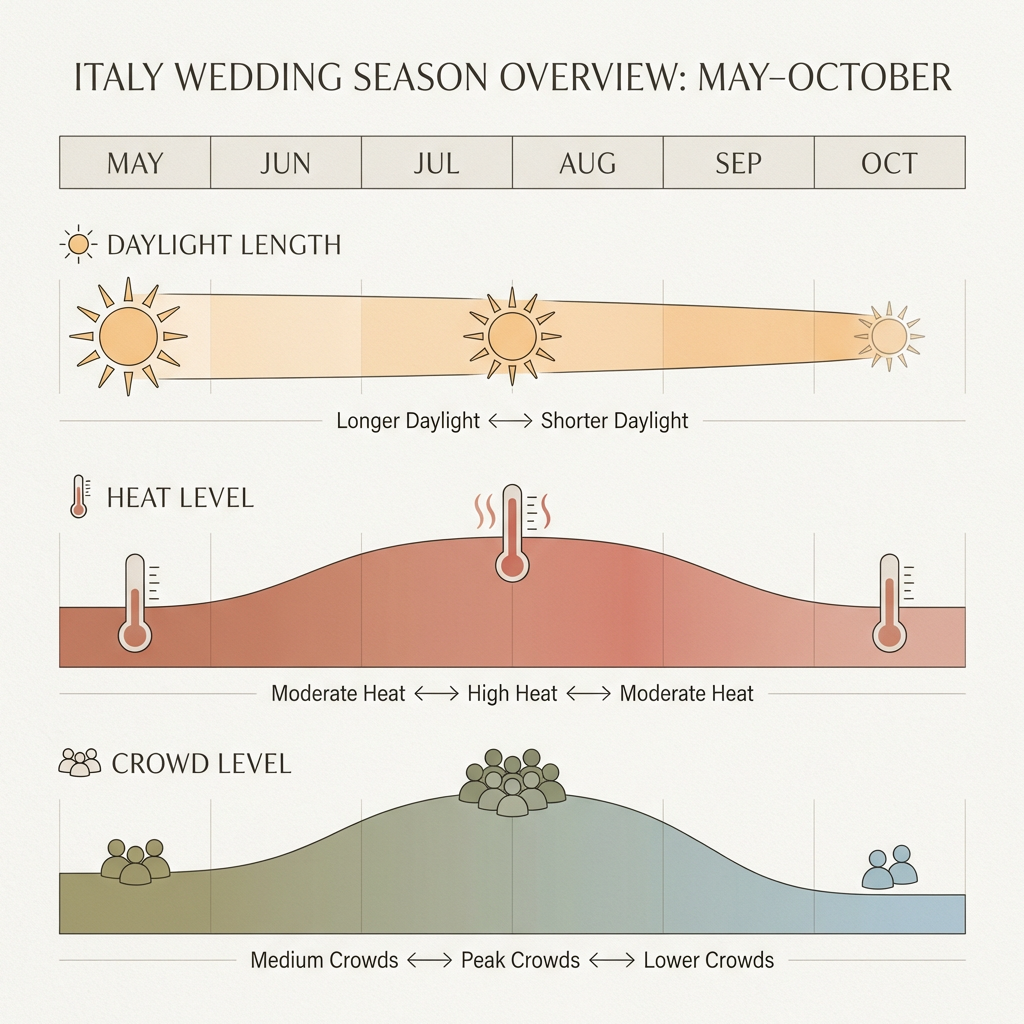
The best time to get married in Italy spans May through October, a six-month window that captures the country’s most favorable weather, longest daylight, and fullest expression of landscape and light. This period is often referred to as Italy’s wedding season, and for good reason: temperatures are warm but not oppressive, venues are open and staffed, and the natural beauty of gardens, vineyards, and coastlines reaches its peak. Within this window, each month offers a distinct character, and understanding these nuances allows you to align your celebration with the atmosphere you envision.
Season affects more than weather. It determines sunset timing, guest comfort, and vendor availability. A June wedding in Tuscany offers nearly nine hours of daylight after a 4 p.m. ceremony, allowing for a leisurely aperitivo, golden-hour portraits, and a reception that flows into a starlit evening. A September wedding in Puglia benefits from softer heat, fewer crowds, and the rich amber light of early autumn. Even within the peak season, the rhythm of the day shifts as the calendar progresses, and Kiss Me Italy tailors your timeline to the specific light and energy of your chosen month.
For couples considering a more intimate format, the flexibility of an elope in Italy opens additional months—April and early November become viable options when guest travel and large-scale logistics are not factors. The Italy wedding calendar is not rigid; it is a framework that adapts to your priorities, guest list, and the experience you wish to create.
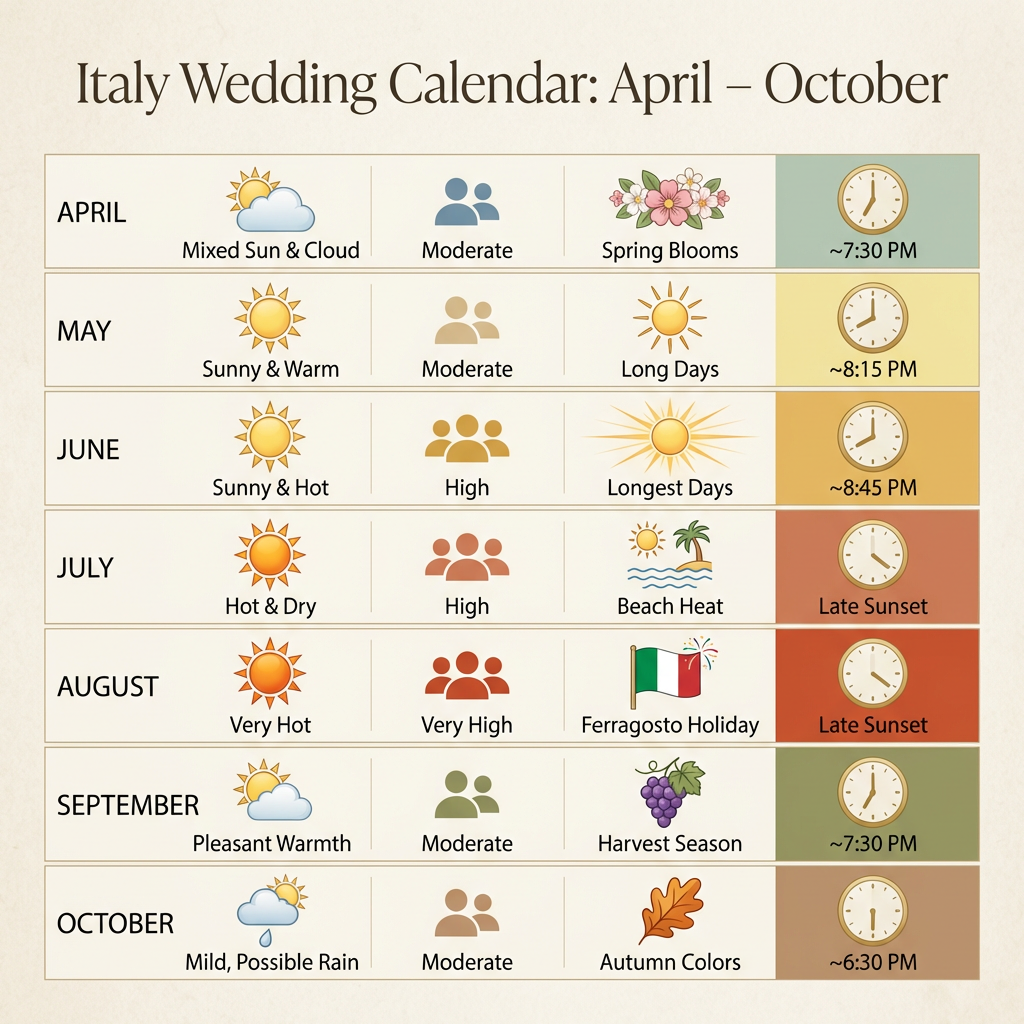
Month-by-Month Italy Wedding Calendar (Weather, Crowds, and Vibe)
April: Spring arrives unevenly across Italy. The south warms early, while northern lakes and mountain regions remain cool. April offers blooming gardens, fewer tourists, and lower venue costs, but weather can be unpredictable. Rain is possible, and outdoor ceremonies require contingency plans. Sunset occurs around 7:30 p.m., allowing for late-afternoon ceremonies. This month suits couples seeking privacy and flexibility, particularly for smaller celebrations.
May: One of the most beautiful months to marry in Italy. Temperatures range from the mid-60s to mid-70s Fahrenheit, gardens are lush, and the countryside is vibrant with wildflowers and new growth. Crowds are manageable, and venues are not yet at peak-season capacity. Sunset extends to 8:15 p.m. by late May, offering ample time for ceremony, cocktails, and portraits in natural light. Lake Como wedding planning often centers on May for its balance of weather and tranquility.
June: Peak season begins. Temperatures rise into the 70s and low 80s, and daylight stretches to nearly 9 p.m. June is the most popular month for weddings in Italy, and venues, photographers, and planners book early. The energy is celebratory, the weather is reliably warm, and the long evenings allow for extended receptions. Coastal venues like Portofino wedding venues and Cinque Terre wedding and elopement ideas are particularly sought after in June, as the Mediterranean light is at its most luminous.
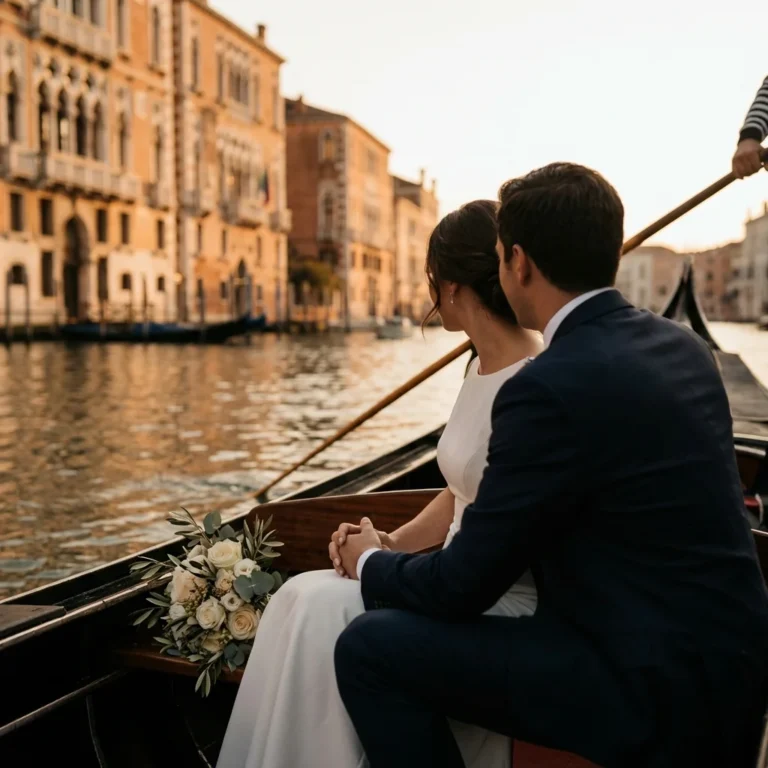
July: Heat intensifies, especially in inland and southern regions. Temperatures can reach the upper 80s and low 90s, and midday ceremonies become less comfortable. Evening weddings are preferred, with ceremonies starting at 6 or 7 p.m. to take advantage of cooler temperatures and sunset light. July suits couples who embrace warmth and want the full vibrancy of Italian summer. Venice wedding planning often includes July, though the heat requires thoughtful pacing and shaded spaces for guests. If you’re comparing editorial styles and logistics, see our guide to wedding in Venice for a venue-first perspective.
August: August is Italy’s holiday month, and Ferragosto—the mid-August national holiday—sees many Italians on vacation and some businesses closed. Weddings are still possible, but vendor availability is more limited, and popular venues may be fully booked. Heat peaks, and coastal or lakeside locations are preferable to inland estates. August weddings require early planning and realistic expectations about staffing and logistics. For couples who value exclusivity and are flexible with vendor selection, August can offer a quieter, more private celebration. Lake Garda wedding venues and planning often accommodate August weddings with careful coordination.
September: One of the finest months for an Italy destination wedding. Temperatures moderate into the 70s, crowds thin as summer tourism wanes, and the quality of light shifts to a warmer, softer tone. Harvest season begins in wine regions, and the landscape takes on golden and amber hues. Sunset occurs around 7:30 p.m., ideal for late-afternoon ceremonies. September offers the sophistication of peak season without the intensity of July and August.
October: Early October remains warm and pleasant, particularly in southern Italy and coastal areas. By mid-October, temperatures cool, and rain becomes more frequent in northern regions. Foliage turns, and the countryside takes on an autumnal palette. Sunset shifts earlier, around 6:30 p.m., requiring adjusted timelines for golden-hour portraits. October suits couples who prefer a quieter, more contemplative atmosphere and are comfortable with the possibility of cooler evenings.
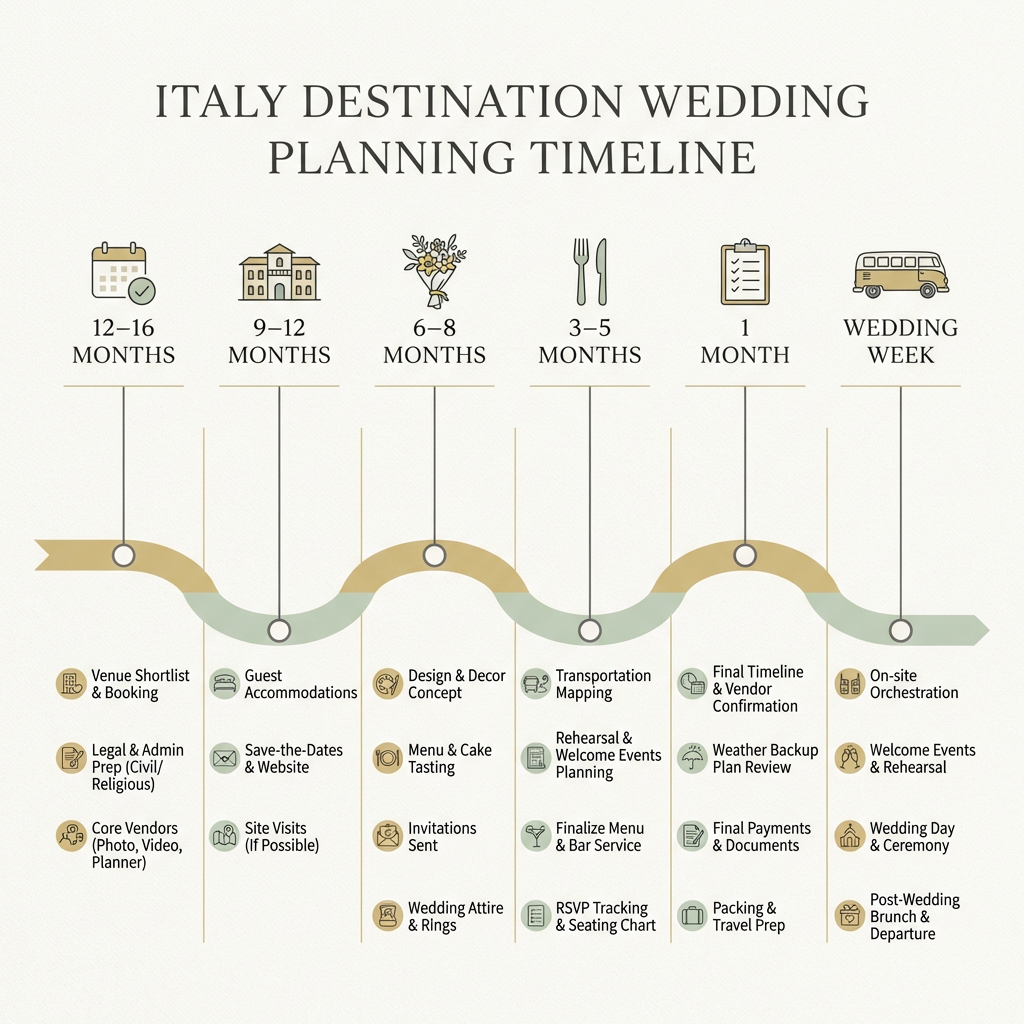
Planning Timeline: What to Do 12–16 Months to Wedding Week
Italy’s wedding calendar extends beyond the day itself—it encompasses the months of preparation that ensure every detail aligns seamlessly. Planning a destination wedding in Italy involves coordination across time zones, legal systems, vendor networks, and guest logistics. Kiss Me Italy manages this complexity from the first inquiry to the final farewell, guiding you through each phase with clarity and precision. The timeline below reflects the milestones we coordinate on your behalf, ensuring that nothing is overlooked and every decision is made with confidence.
12 to 16 months before: This is the phase of vision and foundation. We begin by understanding your priorities—ceremony style, guest count, preferred season, and the atmosphere you wish to create. From there, we curate a shortlist of venues that align with your aesthetic and logistical needs. Popular locations book quickly, and securing your first-choice venue often requires early commitment. We also initiate the legal and administrative process for civil or religious ceremonies, coordinating with local authorities and ensuring that all documentation is prepared correctly. This phase also includes selecting your core vendors—photographer, florist, caterer—and beginning the design conversation that will shape your celebration. A luxury wedding planner in Italy becomes your single point of contact, translating your vision into a cohesive plan and managing all vendor relationships on your behalf.
9 to 12 months before: Design and detail refinement. We finalize your menu, select linens and tableware, and begin building the visual identity of your wedding—color palette, floral installations, lighting design. Guest accommodations are secured, and we coordinate room blocks at nearby hotels or arrange exclusive use of villas. Save-the-dates are sent, and we begin advising guests on travel logistics, including flights, transfers, and itinerary suggestions. For couples planning an elopement in Italy planning experience, this phase is more streamlined but no less intentional—every element is chosen to reflect your story and the intimacy of the celebration.
6 to 8 months before: Vendor confirmations and contract finalization. We lock in musicians, officiants, hair and makeup artists, and any specialty services such as fireworks, live painters, or custom installations. Invitations are designed and mailed. We also begin coordinating the multi-day guest experience, planning welcome dinners, day-after brunches, and optional excursions. Transportation logistics are mapped in detail—shuttle schedules, private car services, and contingency plans for delays.
3 to 5 months before: Final details and rehearsal coordination. We confirm the ceremony script, finalize seating arrangements, and review the day-of timeline with every vendor. Menu tastings are completed, and any last adjustments to floral design or décor are made. We also prepare a detailed guest guide that includes travel tips, event schedules, and contact information. This is the phase where the Italy wedding calendar becomes tangible—every hour of your celebration is mapped, and every transition is choreographed.
1 month before: Final confirmations and on-the-ground preparation. We conduct site visits, confirm delivery schedules, and ensure that every vendor has the information they need. Weather contingencies are reviewed, and backup plans are finalized. We also coordinate final payments and ensure that all legal documents are in order. For destination weddings, this is when guest RSVPs are finalized, and we adjust seating and catering numbers accordingly.
Wedding week: Full orchestration. Kiss Me Italy is on-site, managing every detail from vendor arrivals to guest coordination. We oversee setup, conduct final walkthroughs, and ensure that the timeline unfolds exactly as designed. Our role is to anticipate, adjust, and execute—so that you experience only the joy of the celebration, not the logistics behind it.
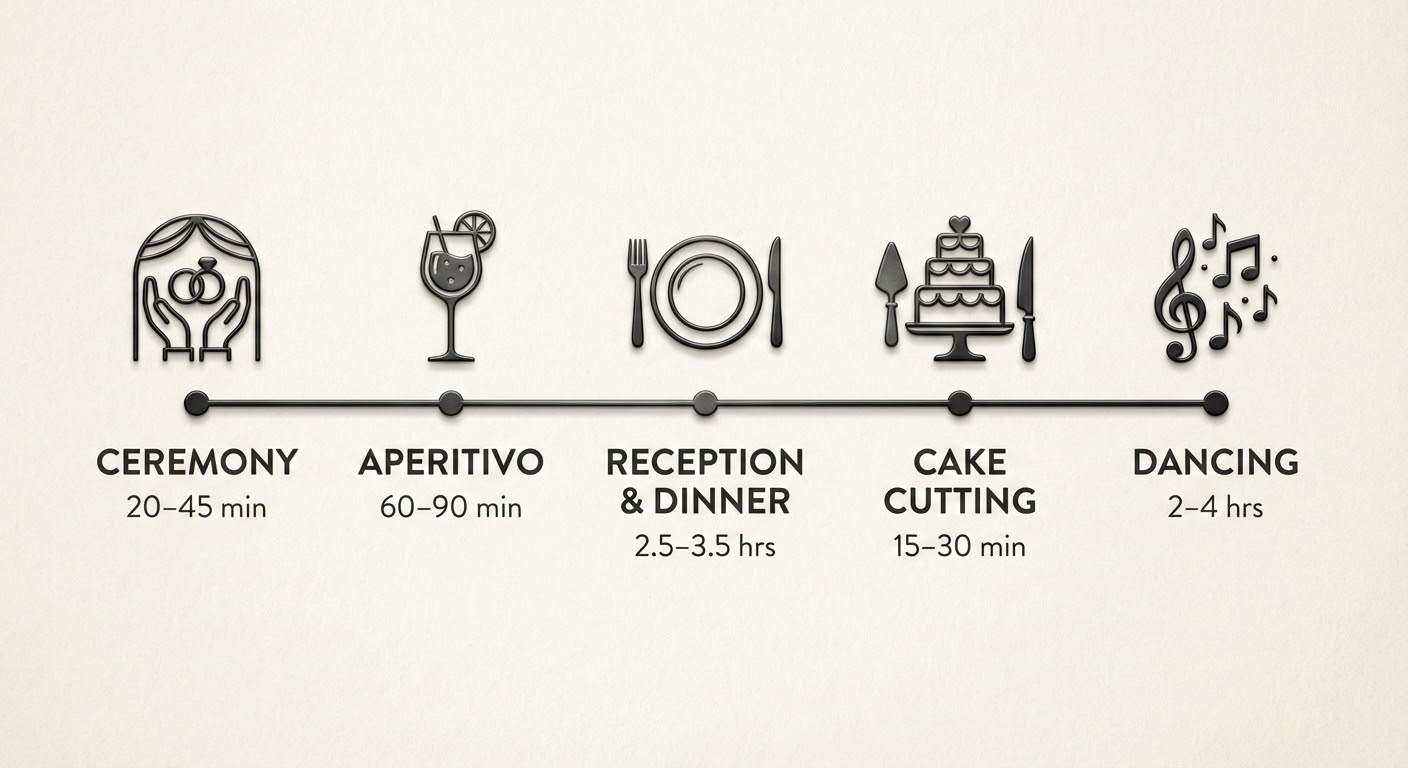
Wedding Day Timeline in Italy: The Classic Flow (and How Long Each Part Takes)
The structure of an Italian wedding day follows a rhythm that balances tradition, hospitality, and the natural progression of light and energy. While every celebration is unique, the classic flow includes five core phases: ceremony, aperitivo, reception, cake cutting, and dancing. Understanding the typical duration and purpose of each phase allows you to build a timeline that feels both generous and intentional, with space for spontaneity and connection.
Ceremony: 20 to 45 minutes, depending on format. A civil ceremony is typically brief and formal, lasting 20 to 30 minutes. A religious ceremony may extend to 45 minutes or longer, particularly if it includes a full Catholic mass. A symbolic ceremony offers the most flexibility, often lasting 20 to 30 minutes and tailored entirely to your preferences. The ceremony is the emotional anchor of the day, and its timing determines the structure of everything that follows.
Aperitivo: 60 to 90 minutes. Immediately following the ceremony, guests gather for drinks, passed hors d’oeuvres, and conversation. This is the Italian tradition of the cocktail hour, but elevated—often held in a garden, on a terrace, or overlooking a vineyard. The aperitivo allows guests to mingle, offers time for family portraits and couple photos, and creates a natural transition from the formality of the ceremony to the warmth of the reception. It is also the phase when golden-hour light is most abundant, and photographers capture the majority of portrait work.
Reception and dinner: 2.5 to 3.5 hours. Italian wedding dinners are leisurely, multi-course experiences that unfold over several hours. Guests are seated, toasts are made, and each course is served with intention and pacing. The reception is not rushed—it is designed to be savored. Music, speeches, and moments of celebration punctuate the meal, and the atmosphere shifts from formal to festive as the evening progresses. Italian wedding traditions often include specific rituals during this phase, such as the tarantella dance or the breaking of a glass for good luck.
Cake cutting: 15 to 30 minutes. Typically held toward the end of dinner or as a transition into dancing, the cake cutting is both a symbolic moment and a practical one—it signals the shift from seated dinner to open dancing and socializing. Dessert and coffee are often served alongside the cake, and the energy of the evening begins to lift.
Dancing and celebration: 2 to 4 hours. The final phase of the evening is unstructured and joyful. A live band or DJ keeps the energy high, and guests move between the dance floor, the bar, and outdoor spaces. Some couples choose to end the night with a dramatic exit—sparklers, fireworks, or a vintage car departure—while others let the celebration wind down naturally as guests depart at their own pace.
Want a draft schedule that fits your venue’s flow and your guests’ travel logistics? Contact us and we’ll map the day around light, transfers, and the pace of Italian hospitality.
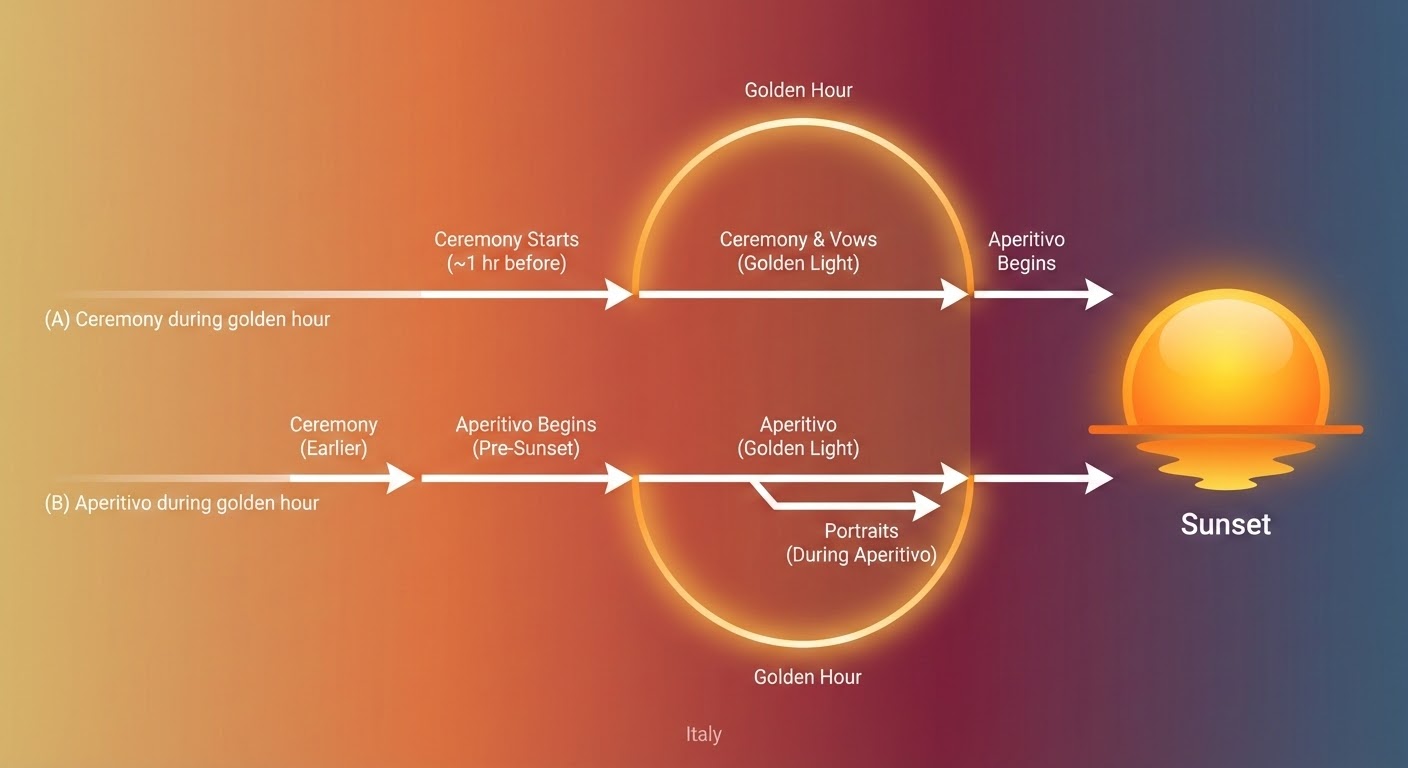
Build Your Timeline Backwards from Sunset (Golden Hour Planning)
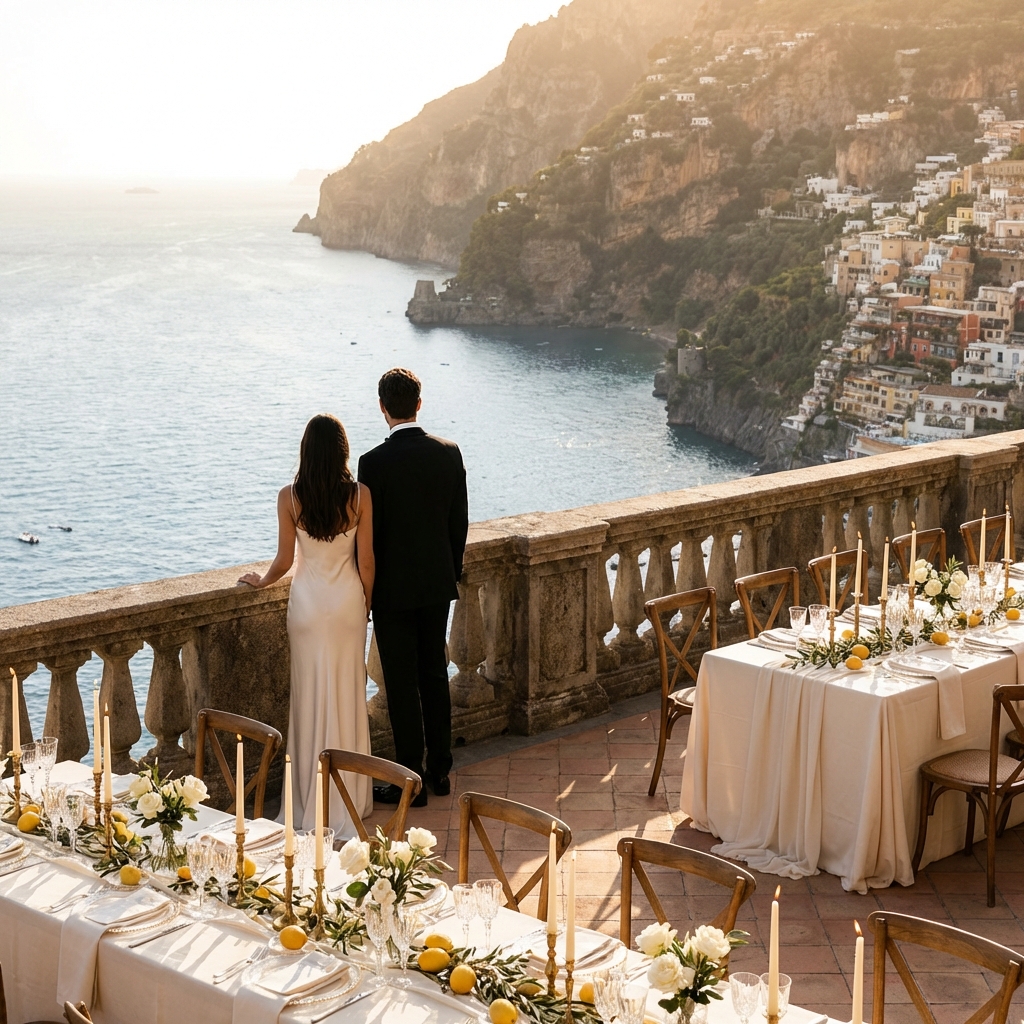
One of the most strategic decisions in planning your Italy wedding calendar is determining your ceremony start time based on sunset. In Italy, light is not merely a backdrop—it is a defining element of the experience. The golden hour, the period roughly one hour before sunset, offers the most flattering, luminous light for portraits and creates an atmosphere of warmth and intimacy that no artificial lighting can replicate. Building your timeline backwards from sunset ensures that your ceremony, aperitivo, and key photo moments align with this irreplaceable window of light.
The process begins with identifying the exact sunset time for your wedding date and location. Sunset varies significantly across Italy’s geography and throughout the wedding season. In June, sunset in Tuscany occurs around 8:45 p.m., while in September it shifts to 7:15 p.m. Coastal locations may experience slightly earlier sunsets due to horizon lines, and elevated venues may extend golden hour by a few minutes. Kiss Me Italy provides precise sunset data for your chosen date and location, and we use this as the anchor point for your entire day-of schedule.
Once sunset is established, we work backwards. If sunset is at 8:00 p.m. and you want your ceremony to take place during golden hour, the ceremony should begin around 7:00 p.m. This allows the ceremony to unfold as the light softens, and guests transition into the aperitivo just as the sky takes on its most dramatic colors. If you prefer a slightly earlier ceremony—say, 6:00 p.m.—the aperitivo will occur during golden hour, and portrait sessions can be scheduled during this time while guests enjoy drinks and hors d’oeuvres.
For a dinner reception, working backwards from sunset also determines when guests should be seated. If you want the reception to begin at twilight, with candles and ambient lighting taking over as natural light fades, dinner should start around 8:30 or 9:00 p.m. This creates a seamless transition from the warmth of golden hour to the intimacy of evening, and the atmosphere shifts naturally as the celebration progresses.
Golden hour planning is not only about aesthetics—it also affects guest comfort and energy. A ceremony that begins too early in the afternoon, particularly in July or August, may subject guests to intense heat and harsh light. A ceremony that starts too late risks losing natural light entirely, and the aperitivo may feel rushed or poorly lit. Kiss Me Italy calibrates your timeline to balance light, temperature, and the rhythm of Italian hospitality, ensuring that every phase of the day feels both beautiful and comfortable.
Key Variations: Civil vs Religious vs Symbolic, and On-Site vs Off-Site Logistics
Not all Italy wedding calendars follow the same structure. Two primary variables—ceremony type and venue logistics—introduce significant differences in timing, coordination, and guest experience. Understanding these variations allows you to anticipate how your celebration will unfold and ensures that your timeline is built around the realities of your chosen format.
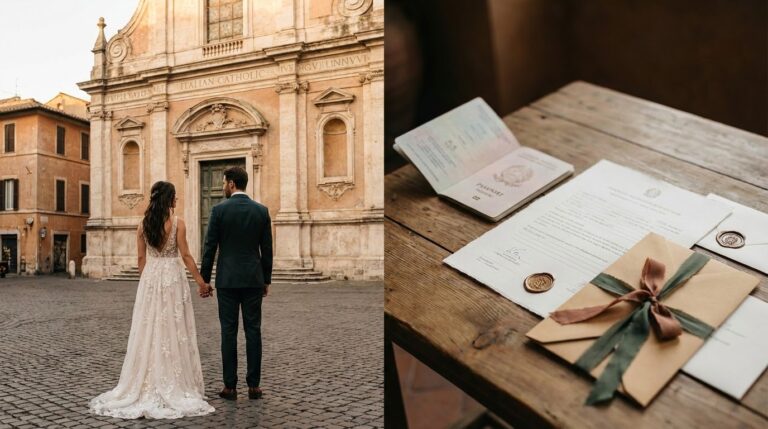
Civil ceremonies are legally binding and must take place in a town hall or a venue authorized by the local municipality. They require advance legal preparation, including the submission of documents, translations, and affidavits. The ceremony itself is formal and typically brief, lasting 20 to 30 minutes. Civil ceremonies are often scheduled earlier in the day, as municipal offices may have limited availability, particularly on weekends. After the ceremony, guests travel to the reception venue, which introduces a transportation buffer—typically 30 to 60 minutes depending on distance. For US-based couples, review the steps to get married in Italy as a US citizen before you lock your date. This format requires precise coordination between the municipality, your planner, and your transportation provider to ensure that the transition feels seamless rather than disjointed.
Religious ceremonies take place in a church and follow the liturgical requirements of the Catholic Church or other denominations. They require pre-marital counseling, baptismal certificates, and approval from the local parish. Religious ceremonies are longer, often 45 minutes to an hour, and are subject to the church’s schedule—some churches do not permit ceremonies during certain liturgical seasons or times of day. Like civil ceremonies, religious ceremonies typically occur off-site, followed by a transfer to the reception venue. The formality and tradition of a church ceremony create a distinct emotional tone, and the timeline must accommodate both the ceremony’s structure and the logistical transition that follows.
On-site vs off-site logistics represent the second major variation. When your ceremony and reception take place at the same venue, the timeline is streamlined. Guests move naturally from one space to another—ceremony in the garden, aperitivo on the terrace, dinner in the courtyard—without the need for transportation or extended waiting periods. This format allows for a more relaxed pace and reduces the risk of delays. It also simplifies vendor coordination, as all setup, catering, and technical needs are centralized.
When your ceremony and reception occur at different locations, the timeline must account for travel time, guest coordination, and potential delays. A 20-minute drive between a church and a villa becomes a 45-minute buffer when you factor in guest boarding, traffic, and arrival staggering. Kiss Me Italy builds realistic transportation buffers into every multi-venue timeline, coordinating shuttle schedules, private car services, and contingency plans to ensure that no guest is left waiting and no phase of the day feels rushed. We also design the aperitivo to begin as soon as the first guests arrive, so that the celebration continues seamlessly even as others are in transit.
These variations are not obstacles—they are design opportunities. Each format creates a distinct rhythm and atmosphere, and Kiss Me Italy tailors your Italy wedding calendar to the specific structure, logistics, and emotional arc of your chosen ceremony and venue configuration.
Lunch vs Dinner Weddings in Italy: Two Sample Schedules
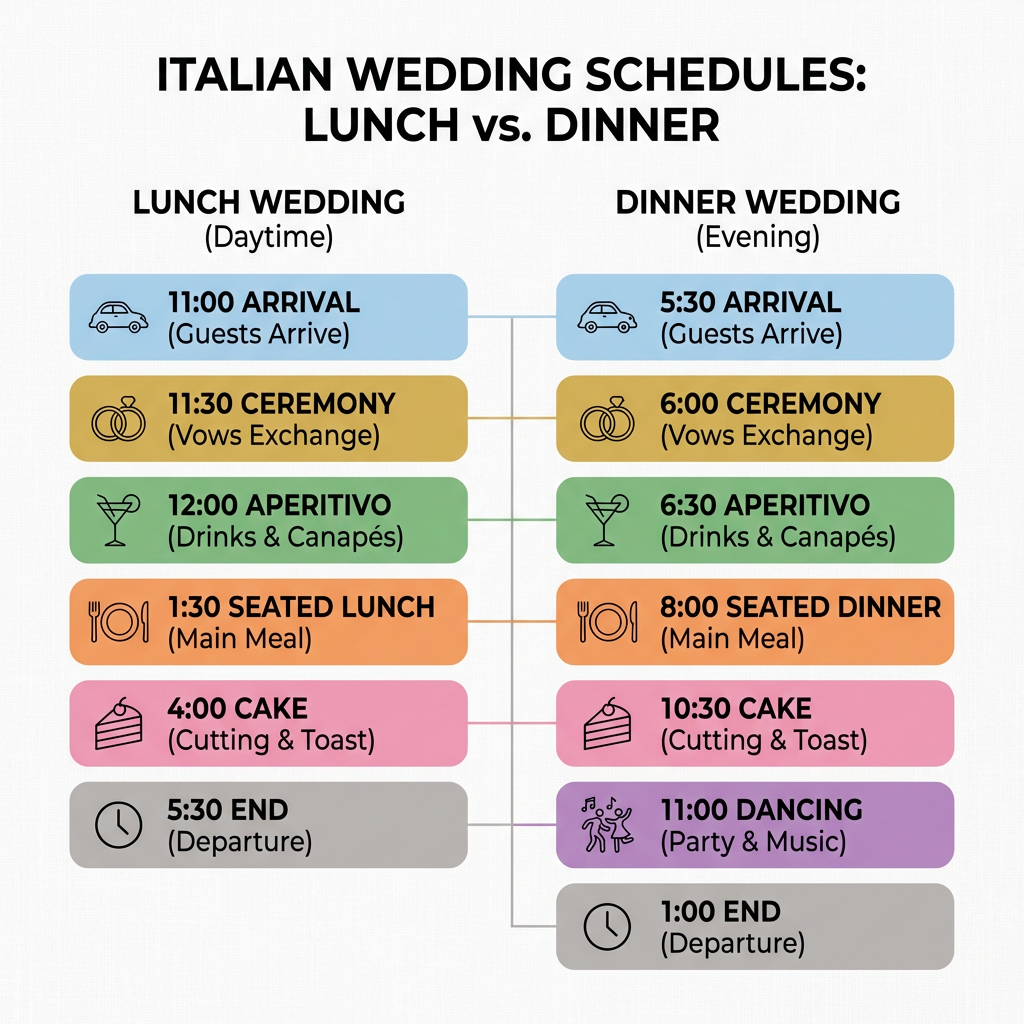
The choice between a lunch and a dinner reception is one of the most defining decisions in your Italy wedding calendar. Each format creates a different energy, requires different timing, and suits different seasons and guest profiles. Below are two sample schedules that illustrate how the day unfolds for each format. These are frameworks, not rigid templates—Kiss Me Italy customizes every timeline to your specific venue, season, and vision—but they provide a clear sense of pacing and structure.
Sample lunch wedding timeline (spring or early summer):
- 11:00 a.m. – Guests arrive and are seated for the ceremony
- 11:30 a.m. – Ceremony begins (symbolic or civil, 20–30 minutes)
- 12:00 p.m. – Ceremony concludes; guests move to aperitivo area
- 12:00–1:30 p.m. – Aperitivo with drinks, passed hors d’oeuvres, and mingling; couple portraits during this time
- 1:30 p.m. – Guests are seated for lunch
- 1:45 p.m. – First course served; toasts and speeches throughout the meal
- 4:00 p.m. – Dessert and cake cutting
- 4:30 p.m. – Coffee and digestivi; guests begin to depart or continue socializing
- 5:30 p.m. – Celebration concludes
Lunch weddings are ideal for spring and early summer, when midday temperatures are comfortable and the light is bright but not harsh. They create a relaxed, garden-party atmosphere and allow guests to enjoy the remainder of the day at their leisure. Lunch receptions also suit couples who prefer a more casual tone or who are hosting a smaller, intimate celebration. The menu for a lunch wedding often features lighter fare—fresh pasta, seasonal vegetables, grilled fish—and the overall pacing is less formal than an evening event. Italian wedding menu ideas for lunch receptions emphasize freshness, simplicity, and the flavors of the season.
Sample dinner wedding timeline (summer or early fall):
- 5:30 p.m. – Guests arrive and are seated for the ceremony
- 6:00 p.m. – Ceremony begins (symbolic or civil, 20–30 minutes)
- 6:30 p.m. – Ceremony concludes; guests move to aperitivo area
- 6:30–8:00 p.m. – Aperitivo during golden hour; couple portraits and family photos
- 8:00 p.m. – Guests are seated for dinner
- 8:15 p.m. – First course served; toasts and speeches throughout the meal
- 10:30 p.m. – Dessert and cake cutting
- 11:00 p.m. – Dancing begins; live band or DJ
- 1:00 a.m. – Celebration concludes (or continues for those who wish to stay)
Dinner weddings are the most traditional format in Italy and suit the long, warm evenings of summer and early fall. They allow for a more dramatic progression of light—from golden hour to twilight to candlelit evening—and create a sense of occasion and celebration that extends late into the night. Dinner receptions are ideal for couples who want a full, multi-course Italian feast and who envision dancing and celebration as central to their wedding experience. The energy of a dinner wedding builds throughout the evening, and the atmosphere becomes increasingly festive as the night progresses.
Both formats are equally elegant and equally Italian. The choice depends on your priorities, your season, and the experience you want to create for your guests. Kiss Me Italy designs your timeline to honor the rhythm and character of your chosen format, ensuring that every phase feels intentional and every moment is savored.
Wedding Week Calendar: Welcome Dinner, Day-After Brunch, and Guest Experience
For destination weddings in Italy, the celebration extends beyond a single day. Most couples host a multi-day experience that includes a welcome dinner the evening before the wedding and a farewell brunch or lunch the day after. These additional events transform your wedding into a true destination experience, allowing guests to connect, explore, and immerse themselves in the landscape and culture of Italy. Planning the wedding week calendar requires the same attention to pacing, logistics, and atmosphere as the wedding day itself, and Kiss Me Italy orchestrates every element to ensure that the entire experience feels cohesive and effortless.
Welcome dinner: Typically held the evening before the wedding, the welcome dinner is a more casual, intimate gathering that sets the tone for the celebration to come. It is an opportunity to greet guests who have traveled from afar, introduce families, and create a sense of warmth and anticipation. Welcome dinners are often hosted at a local restaurant, a private villa, or an outdoor terrace, and the menu reflects the region’s culinary traditions. The atmosphere is relaxed—no formal speeches or structured program—and the focus is on connection and hospitality. For couples planning an intimate wedding in Italy, the welcome dinner may be as significant as the wedding day itself, offering a chance to celebrate in a more personal, unscripted way.
Wedding day: The centerpiece of the week, as outlined in the previous sections. Guests experience the full arc of ceremony, aperitivo, reception, and celebration, and the day is designed to be both memorable and seamless.
Day-after brunch or lunch: Held the morning or early afternoon after the wedding, the farewell brunch is a chance to gather once more before guests depart. It is typically more low-key than the welcome dinner—often a buffet-style meal with coffee, pastries, fresh fruit, and light fare. The farewell brunch allows for final goodbyes, the sharing of photos and memories, and a gentle transition back to everyday life. Some couples use this time to distribute welcome bags or small gifts, while others simply enjoy a leisurely meal with no agenda.
Spacing these events requires careful consideration of guest energy and travel logistics. If your wedding is a late-night celebration that concludes at 1 or 2 a.m., the farewell brunch should not begin before 11 a.m. or noon, allowing guests time to rest and recover. If guests are departing on different schedules, the brunch should be flexible, with a window of time rather than a fixed start. Kiss Me Italy coordinates all logistics—venue reservations, catering, transportation—and ensures that each event complements the others without overwhelming your guests or your budget.
For couples and guests extending the trip, our guide to romantic getaways in Italy offers ideas that pair naturally with a wedding week itinerary.
Common Calendar Mistakes to Avoid (Especially in Peak Season)
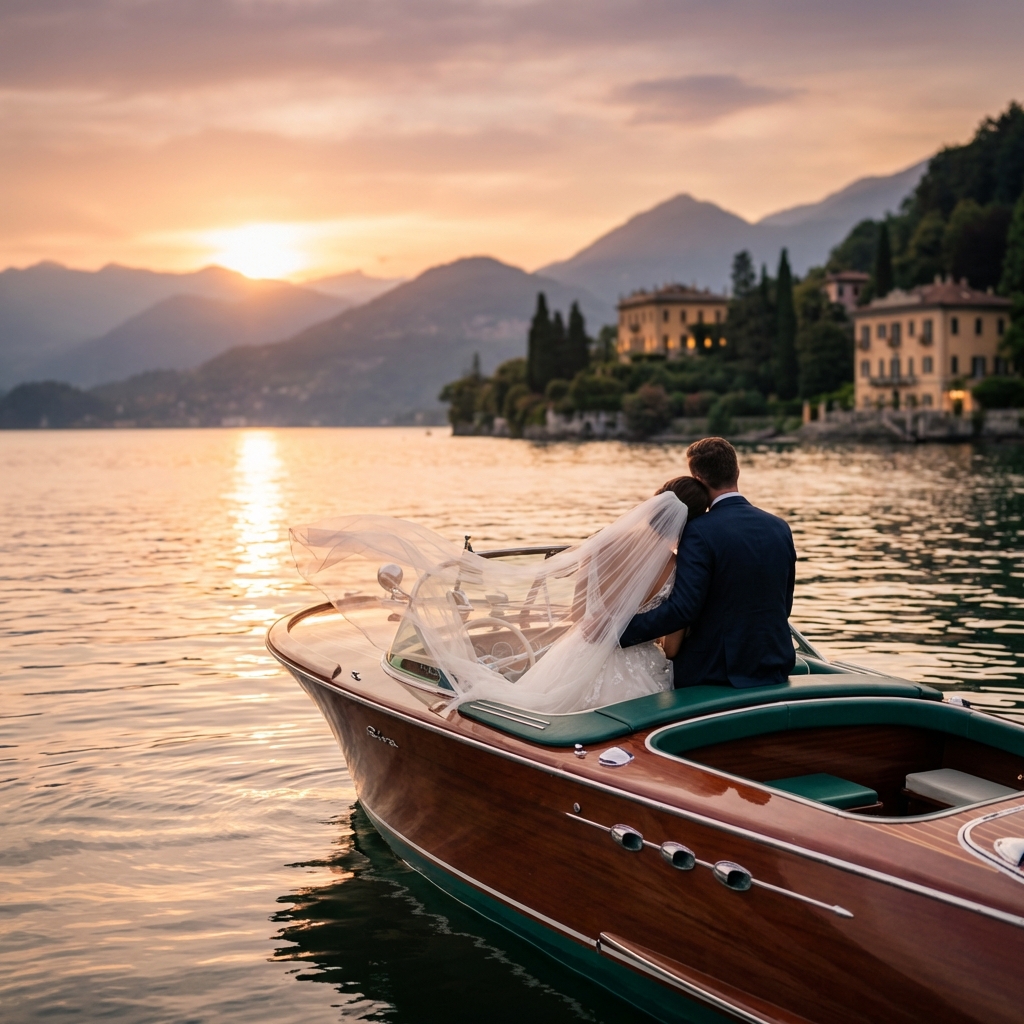
Even with careful planning, certain calendar decisions can create unnecessary stress, discomfort, or logistical challenges. Understanding these common pitfalls allows you to make informed choices and ensures that your Italy wedding calendar is built on realistic expectations and thoughtful design. Kiss Me Italy anticipates these challenges and designs your timeline to avoid them entirely.
Underestimating heat and daylight impact. July and August bring intense heat, particularly in inland and southern regions. A 2 p.m. ceremony in Tuscany in late July may subject guests to temperatures in the low 90s with no shade. Similarly, a ceremony that begins too late in September may lose natural light before the aperitivo concludes, forcing photographers to rely on artificial lighting and reducing the quality of portraits. Understanding the specific heat patterns and sunset times of your chosen month and location is essential, and your timeline should be designed to work with—not against—the natural rhythms of the day.
Not accounting for August constraints. August is Italy’s holiday month, and many vendors, suppliers, and even some venues operate on reduced schedules or close entirely for Ferragosto. Booking a wedding in mid-August without confirming vendor availability can lead to last-minute scrambling or compromises in quality. If you choose August, early planning and clear communication with your planner are critical. Kiss Me Italy maintains relationships with vendors who work through August and ensures that your celebration is fully staffed and flawlessly executed, even during the holiday season.
Not adding transportation buffers. Multi-venue weddings require realistic travel time estimates. A 15-minute drive between a church and a villa can easily become 30 or 40 minutes when you account for guest boarding, traffic, and parking. Failing to build in adequate buffers can result in delayed receptions, rushed aperitivos, and stressed vendors. We design transportation schedules with generous margins, coordinate shuttle departures, and ensure that every phase of the day begins on time, even if travel takes longer than expected.
Overloading the wedding week schedule. While multi-day celebrations are a hallmark of destination weddings, packing too many events into a short window can exhaust guests and dilute the impact of the wedding day itself. A welcome dinner, a wedding day that extends past midnight, and an early farewell brunch may leave guests with little time to rest or explore. We help you balance structure with flexibility, ensuring that your wedding week feels celebratory without feeling overwhelming.
These mistakes are avoidable with the right guidance and a calendar built on experience, local knowledge, and realistic expectations. Kiss Me Italy’s role is to foresee potential challenges and design your timeline to eliminate them before they arise, so that you experience only the joy and beauty of your celebration.
If You Want Help Turning Dates into a Seamless Plan
Italy’s wedding calendar is a layered framework—seasonality, planning milestones, and day-of timing—that requires local expertise, vendor relationships, and a deep understanding of how light, logistics, and Italian hospitality intersect. While the information in this guide provides a foundation, every celebration is unique, and the most successful weddings are those designed around the specific priorities, constraints, and vision of the couple. If you’d like support turning your dates into a seamless plan, contact us for a tailored timeline and planning roadmap.
Kiss Me Italy specializes in translating your calendar into a seamless, personalized plan. We tailor every element—venue selection, vendor coordination, timeline design, guest experience—to your chosen season, location, and style. Whether you envision a grand celebration with a hundred guests or an intimate elopement for two, we manage every detail with precision and care, ensuring that your Italy wedding calendar reflects not only best practices but also your personal story. If you are ready to move from ideas to action, we invite you to reach out. Our approach is rooted in collaboration, transparency, and a commitment to creating celebrations that are as flawless in execution as they are beautiful in design. For couples seeking a fully curated experience, our bespoke luxury weddings in Italy service offers the highest level of personalization and support. For those who prefer a more streamlined format, our Italy elopement packages provide structure and simplicity without sacrificing elegance or attention to detail.
FAQ: Italy’s Wedding Calendar and Timeline
What are the best months to get married in Italy?
The best months to get married in Italy are May, June, September, and early October. These months offer warm but comfortable temperatures, reliable weather, long daylight hours, and the full beauty of Italy’s landscapes. May and September are particularly favored for their balance of pleasant weather and fewer crowds, while June is the most popular month and books earliest.
Is August a good month for a wedding in Italy?
August is Italy’s holiday month, and many Italians take vacation during Ferragosto in mid-August. While weddings are possible, vendor availability may be more limited, and heat can be intense, particularly inland. If you choose August, early planning and realistic expectations are essential. Coastal or lakeside venues are preferable to manage the heat.
How far in advance should we book an Italy destination wedding?
Most couples book 12 to 16 months in advance to secure their preferred venue and vendors. Popular locations and peak-season dates—especially in June and September—often book 18 months or more ahead. Early planning allows for greater choice and reduces the risk of availability constraints.
What’s a typical Italian wedding day timeline?
A typical Italian wedding day includes a ceremony (20–45 minutes), an aperitivo or cocktail hour (60–90 minutes), a multi-course dinner reception (2.5–3.5 hours), cake cutting (15–30 minutes), and dancing (2–4 hours). The exact timing depends on ceremony type, reception style (lunch vs dinner), and whether events occur at one venue or multiple locations.
How does the timeline change for a civil vs symbolic vs religious ceremony?
Civil ceremonies are brief and formal, typically 20–30 minutes, and must occur at a town hall or authorized venue. Religious ceremonies are longer, often 45 minutes to an hour, and follow church protocols. Symbolic ceremonies offer the most flexibility in length, content, and location. Civil and religious ceremonies often require guest transportation to a separate reception venue, while symbolic ceremonies can take place on-site.
Should we plan a wedding lunch or a wedding dinner in Italy?
Lunch weddings are ideal for spring and early summer, offering a relaxed, garden-party atmosphere and concluding by late afternoon. Dinner weddings suit summer and early fall, allowing for golden-hour ceremonies, candlelit receptions, and late-night dancing. The choice depends on your season, preferred energy, and guest profile.
How do we plan our ceremony time around sunset and photos?
Determine the exact sunset time for your wedding date and location, then build your timeline backwards. If you want your ceremony during golden hour, schedule it to begin about one hour before sunset. If you prefer the aperitivo during golden hour, start the ceremony earlier. This approach ensures that your key moments align with the most beautiful natural light.
How much buffer time should we add for transportation between locations?
For a 15–20 minute drive, add at least 30–45 minutes to account for guest boarding, traffic, and arrival staggering. For longer distances, add 60 minutes or more. Kiss Me Italy designs transportation schedules with realistic buffers and coordinates shuttle departures to ensure that no phase of the day is delayed.
What should happen during wedding week for a destination wedding in Italy?
Most destination weddings include a welcome dinner the evening before the wedding and a farewell brunch or lunch the day after. These events allow guests to connect, rest, and immerse themselves in the experience. Optional excursions—wine tastings, tours, cooking classes—can be offered throughout the week for guests who wish to explore the region.
Can we get legally married in Italy as US citizens?
Yes, but the process requires advance legal preparation, including document translations, affidavits, and coordination with local authorities. Many US couples choose to complete the legal marriage in the US and hold a symbolic ceremony in Italy, which offers greater flexibility in timing and location. Kiss Me Italy guides you through both options and manages all coordination.
Conclusion: Choose Your Season, Then Build the Day Around Light and Logistics
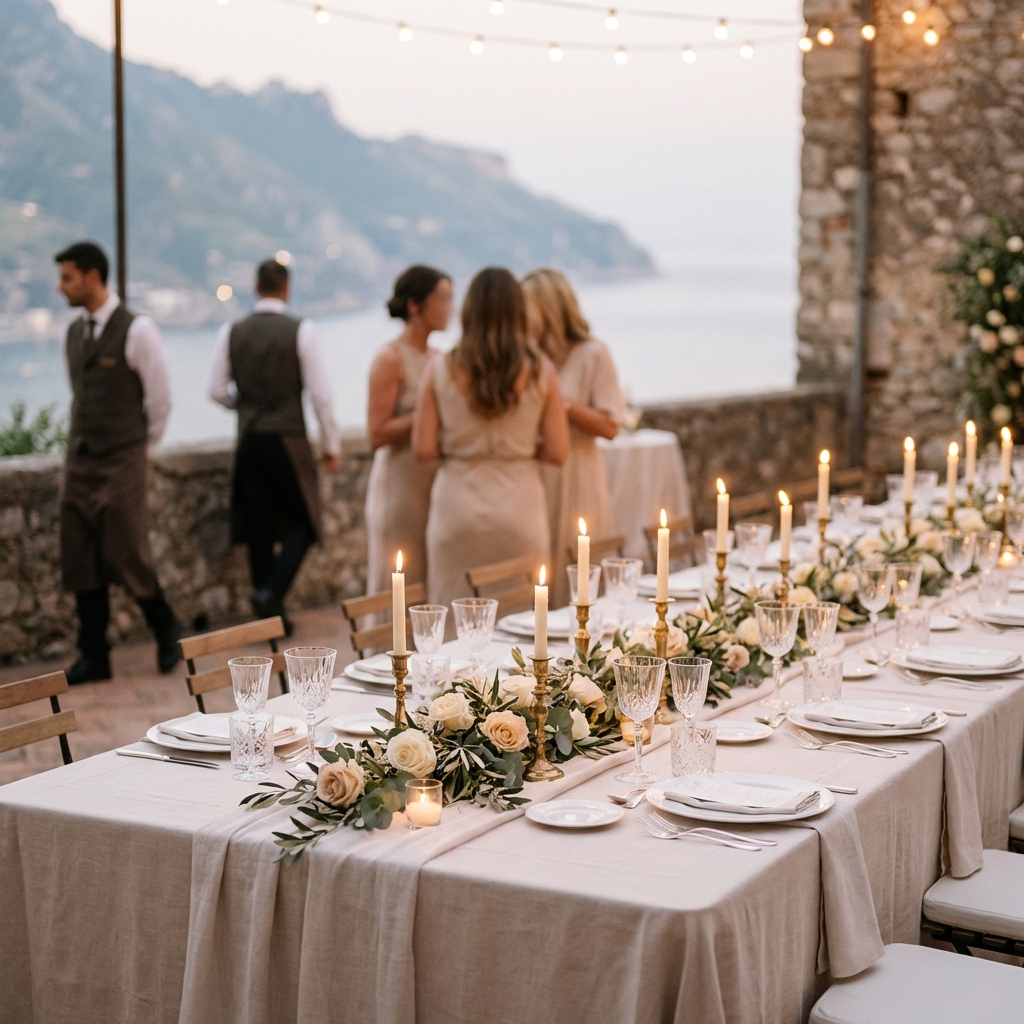
Italy’s wedding calendar is not a single document—it is a strategic framework that integrates seasonality, planning milestones, and day-of timing into a cohesive, personalized plan. The month you choose determines weather, light, and availability. Your planning timeline ensures that every vendor, permit, and detail is coordinated seamlessly. And your wedding day schedule—built backwards from sunset and tailored to your ceremony type, reception style, and venue logistics—becomes the final expression of months of thoughtful design.
If you are ready to begin drafting your Italy wedding calendar and would like a personalized proposal that reflects your season, location, and vision, we invite you to reach out. Our approach is rooted in collaboration, local expertise, and a commitment to creating celebrations that are both extraordinary and effortless. Choose your season, trust the process, and let Kiss Me Italy guide you through every decision with clarity, confidence, and care.