
A Chinese wedding in Italy combines a traditional tea ceremony, a Western or civil ceremony, and a multi-course Italian reception into one cohesive celebration—typically over two to three days. Kiss Me Italy manages the cultural sequencing, multilingual vendor coordination, and legal documentation so that every ritual is honored and every guest feels at home, whether they’ve arrived from Shanghai, Sydney, or San Francisco.
Chinese Wedding in Italy
The first question our U.S. clients ask is rarely about flowers—it’s about the tea ceremony. Where does it sit in the timeline? Can it happen on the same property as the Western ceremony? Will the venue allow incense or open flame? These decisions shape everything that follows. Kiss Me Italy designs the sequence, secures approvals, and coordinates every vendor touchpoint—so tradition is honored with the precision a luxury celebration demands.
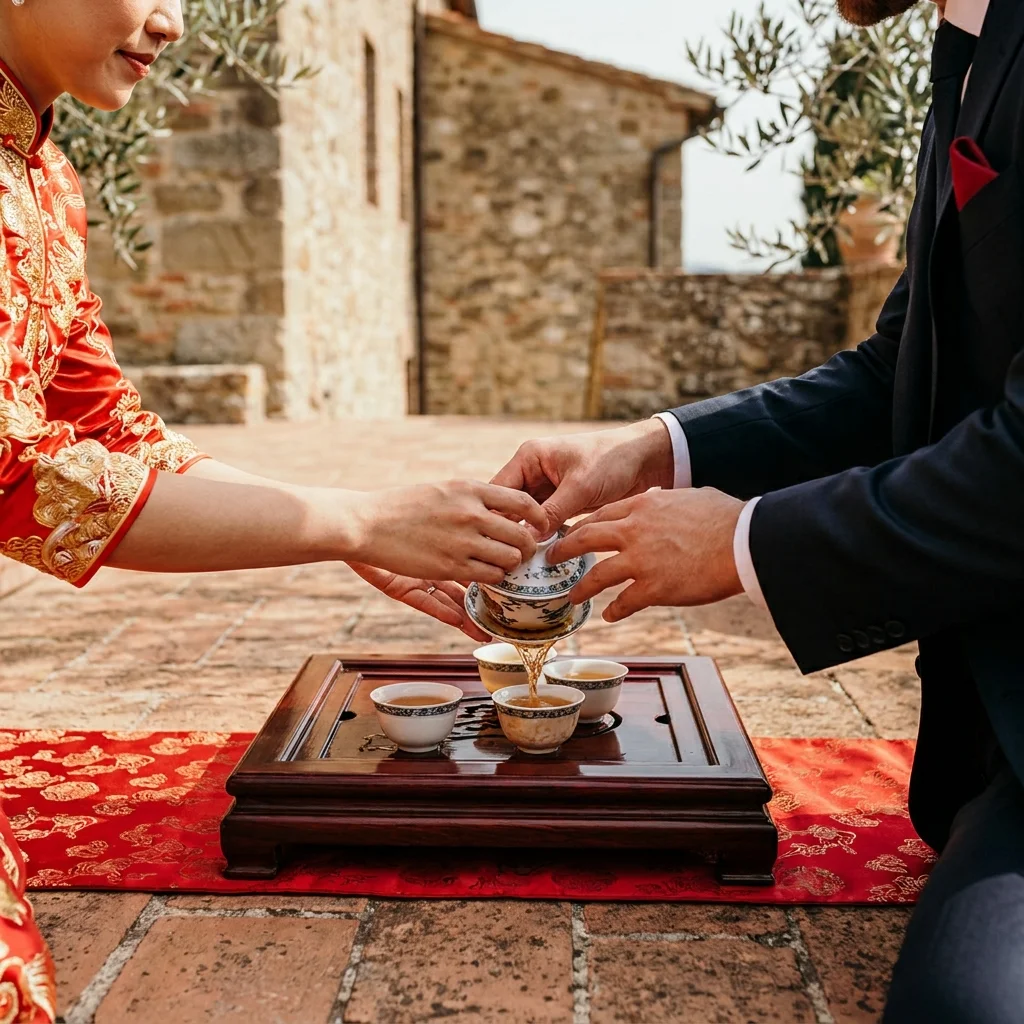
Tea Ceremony Before or After the Western Ceremony: Why the Sequence Changes Everything
In mainland China and among diaspora families in North America and Australia, the tea ceremony traditionally precedes the banquet. In Italy, however, venue access windows and municipal scheduling often compress the morning hours. A civil ceremony at a Tuscan town hall may be fixed at 10:00 a.m., leaving the tea ceremony two options: an intimate early-morning session at the couple’s villa, or a mid-afternoon pause between ceremony and reception.
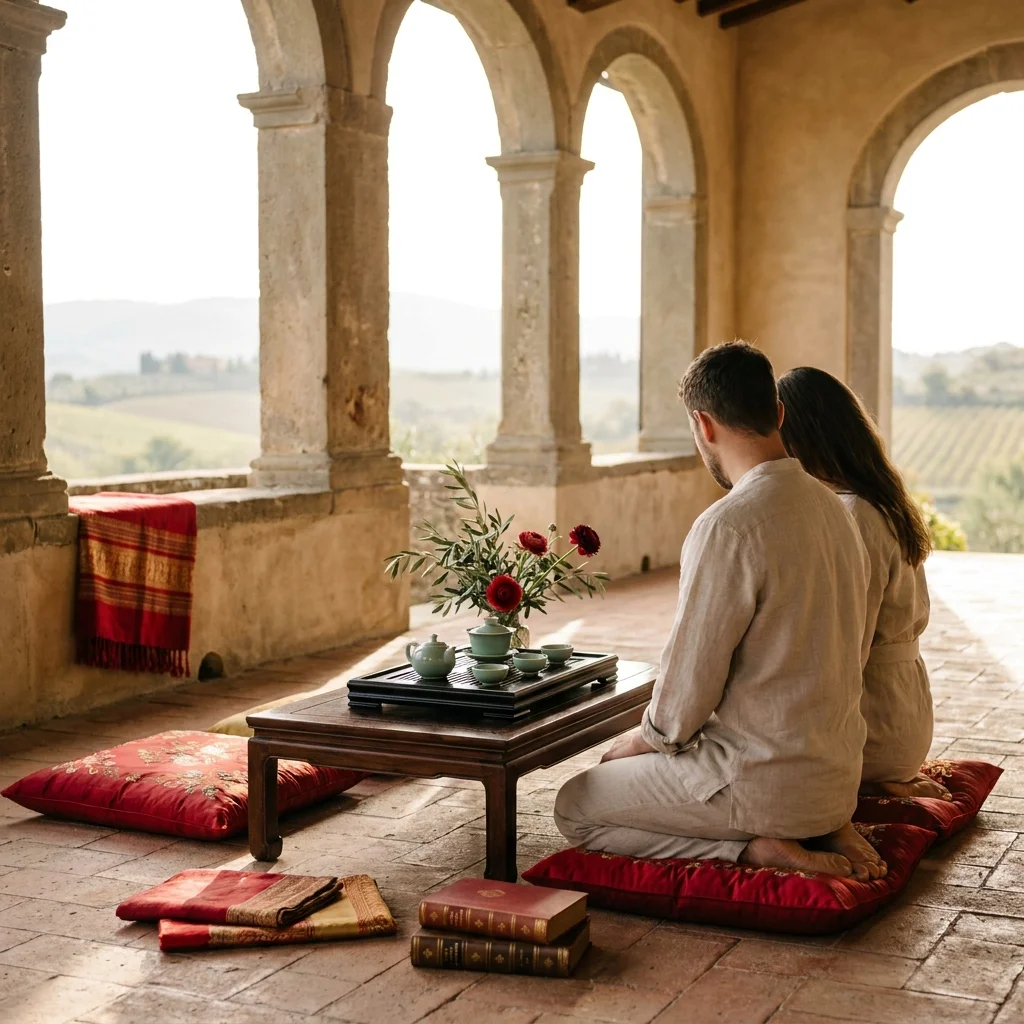
We almost always recommend the morning approach. It gives the family a private, unhurried moment—parents seated, tea prepared with care, the couple kneeling on cushions in a loggia or garden room while a photographer captures soft, directional light. By the time the civil ceremony begins, the emotional arc has already been set. The alternative—inserting a tea ceremony between a 4:00 p.m. symbolic ceremony and a 7:30 p.m. dinner—compresses the cocktail hour and risks guest fatigue.
The logistics are specific. We source gaiwan tea sets and red silk cushions through our network of import specialists in Milan and Rome, verifying that each set arrives at least ten days before the wedding. We coordinate with the venue’s event manager to confirm that incense, candles, or joss sticks are permitted indoors—many heritage properties in Tuscany and the Veneto restrict open flame due to insurance constraints. When a venue says no, we adapt: LED candles in lacquered holders, or an outdoor terrace setup with wind guards.
Couples exploring what a legal marriage in Italy requires for foreigners often discover that the civil pathway itself influences the tea ceremony timeline, because municipal office hours are non-negotiable.
Tuscany vs. Lake Como vs. Venice: Which Region Suits a Chinese Destination Wedding in Italy Best
Each region offers a distinct rhythm. The choice is not only aesthetic—it’s logistical.
Tuscany provides the widest selection of exclusive-use estates, which means the tea ceremony, Western ceremony, and reception can all happen on one property without transporting guests. For weddings of 80–150 guests, this is the most efficient layout. Many estates south of Florence include on-site accommodation for 30–50 guests, reducing shuttle coordination. Couples interested in the region’s villa options will find our guide to Tuscan wedding venues useful for understanding capacity and exclusivity tiers.
Lake Como is ideal for smaller celebrations—40 to 80 guests—where the visual drama of the lake compensates for tighter venue footprints. The practical reality is that lakeside properties often have terraced gardens rather than flat lawns, which affects seating arrangements for a tea ceremony. We position the ceremony on a covered loggia overlooking the water, with the couple facing east for morning light. Our Lake Como wedding planning page details the specific access and timing constraints of the region.
Venice presents the most cinematic backdrop but the most complex logistics. Guest transport is entirely by water taxi. Equipment, tea sets, floral installations—everything arrives by boat. For a tea-ceremony-led itinerary with 60+ guests, Venice requires a minimum of three months’ additional lead time for transport permits and palazzo coordination. The investment is detailed in our Venice wedding cost guide, which breaks down water transport, venue hire, and catering surcharges specific to the lagoon.
Rome works beautifully for couples who want a blend of historical grandeur and accessibility. Direct flights from Beijing, Hong Kong, and major U.S. hubs land at Fiumicino, and our Rome venue curation includes several palazzi with interior courtyards suited to both a tea ceremony and a seated dinner for up to 200.
How a 120-Person Guest List Spanning Three Countries Actually Moves Through the Weekend
This is where most planning conversations stall. A Chinese-Italian wedding celebration rarely involves a single nationality. Our typical client profile: the bride’s family flies in from China or Hong Kong, the groom’s family from the United States or United Kingdom, and a contingent of friends from both sides. Languages include Mandarin, Cantonese, English, and Italian. Dietary expectations range from Cantonese banquet norms to gluten-free requests from American guests.
We design the weekend in three acts.
Act One: Arrival and Welcome Dinner (Day One). Guests land across a six-hour window. We arrange staggered airport transfers—typically from Pisa or Florence airports for Tuscan weddings—and a casual welcome dinner at the villa or a nearby restaurant. Bilingual printed programs in Mandarin and English are placed in each guest room alongside a weekend timeline, Wi-Fi details, and local emergency contacts. This is not a detail we delegate. Kiss Me Italy’s multilingual coordination team prepares these materials in-house.
Act Two: Tea Ceremony and Wedding (Day Two). Morning tea ceremony for immediate family. Civil or symbolic ceremony mid-afternoon. Cocktail hour with both Italian aperitivi and Chinese delicacies—think dim sum stations alongside bruschetta and Prosecco. Seated dinner follows, typically five Italian courses with one or two Chinese-inspired intermezzo dishes negotiated with the caterer months in advance. Our team works with chefs who understand Italian wedding menu construction and can integrate wok-fired or steamed courses without disrupting kitchen flow.
Act Three: Farewell Brunch (Day Three). A relaxed morning gathering. Congee alongside cornetti. This is where the cultural bridge feels most natural—guests from both families seated together, the formality of the previous day dissolved.
If you’re considering this kind of multi-day structure, reach out to our coordination team to discuss timeline feasibility for your preferred region and season.
Civil vs. Symbolic: The Legal Pathway That Determines Your Italian Wedding Weekend with a Tea Ceremony Timeline
Italian law does not recognize a Chinese tea ceremony as a legal act. It is a symbolic ritual. For the marriage to be legally binding in Italy—and recognized in China, the U.S., the U.K., or Australia—couples must either complete a civil ceremony at a municipal office or an approved venue, or obtain a religious ceremony through a concordat church.
Most of our international clients choose one of two paths:
Path A: Legal civil ceremony in Italy. This requires consulate-issued documentation, including a Nulla Osta (declaration of no impediment) from the relevant embassy or consulate. For Chinese nationals, this document comes from the Chinese Embassy in Rome or the Consulate General in Milan. Processing takes 15–30 business days. For American citizens, the process routes through the U.S. Embassy in Rome or consulates in Florence, Milan, or Naples. We manage the appointment scheduling, document translation (sworn translations into Italian), and Apostille verification. Our legal marriage guide for foreigners covers the full documentation chain.
Path B: Symbolic ceremony in Italy + legal marriage at home. Many couples marry legally in a brief civil ceremony in their home country weeks before flying to Italy, then celebrate with a symbolic ceremony at the Italian venue. This eliminates consulate paperwork entirely and gives the officiant creative freedom—readings in Mandarin and English, cultural rituals woven into the vows, no bureaucratic constraints on venue or timing.
The practical reality: Path B is faster, simpler, and chosen by roughly 60% of our clients planning this bicultural wedding weekend. Path A is the right choice when the couple wants the legal act to happen in Italy for personal or family reasons. Either way, the tea ceremony sits outside the legal framework and can be designed entirely around family tradition.
What a Chinese Wedding in Italy Costs: Real Ranges Anchored to Region and Guest Count
Pricing your Italy celebration requires honesty about what’s included. The tea ceremony itself is a modest line item—the real cost drivers are venue exclusivity, catering for cross-cultural menus, multilingual coordination, and photography that respects both the intimate tea ritual and the grand reception.
| Component | Typical Range (80–120 guests) | Includes | Quoted Separately |
|---|---|---|---|
| Venue hire (exclusive-use estate, Tuscany) | €15,000–€45,000 | 3-day exclusive use; ceremony and reception spaces; on-site accommodation for 20–40 guests | Additional guest rooms, external catering kitchen setup, late-night surcharge after midnight |
| Catering (5-course Italian + 2 Chinese-inspired courses) | €180–€320 per person | Aperitivo, seated dinner, open bar (Italian wines and spirits), staff | Premium Champagne, imported Chinese spirits (baijiu), late-night food stations; VAT (IVA 22%) quoted separately |
| Tea ceremony setup & styling | €1,500–€4,000 | Gaiwan set sourcing, red silk décor, cushion and table arrangement, on-site coordination | Custom calligraphy signage, imported teas, incense accessories |
| Wedding planning & coordination (Kiss Me Italy) | €8,000–€18,000 | Full timeline design, vendor selection, multilingual guest communication, legal document coordination, 2-day on-site management | Third-day coordination, additional site visits, destination excursion planning |
Indicative ranges. Contact Kiss Me Italy for a personalized proposal.
| Component | Typical Range | Includes | Quoted Separately |
|---|---|---|---|
| Photography (full weekend) | €5,000–€12,000 | Two-day coverage (tea ceremony + wedding day); single lead photographer; travel within Tuscany or Lake Como; digital gallery delivery within 8 weeks | Second shooter (+€1,200–€2,500); albums and prints; drone coverage; post-production rush delivery; photographer travel/accommodation outside home region |
| Videography (cinematic edit + highlights) | €6,000–€14,000 | Two-day coverage; 8–12 min cinematic film; 2–3 min highlights reel; single videographer; travel within region | Second videographer; same-day edit; raw footage delivery; aerial filming permits; VAT (IVA 22%) |
| Floral design (ceremony + reception + tea ceremony accents) | €4,000–€12,000 | Bridal bouquet, ceremony arch or installation, table centerpieces, tea ceremony floral accents | Elaborate suspended installations, imported peonies or orchids out of season, venue delivery surcharge for island/lake venues |
Indicative ranges. Contact Kiss Me Italy for a personalized proposal.
For couples considering the Amalfi Coast, our Amalfi Coast wedding cost breakdown provides region-specific pricing that applies to Chinese weddings held in Ravello or Positano, where cliffside access and limited vendor parking add logistical surcharges.
| Region | Estimated Total (80–120 guests, luxury tier) | Key Cost Driver |
|---|---|---|
| Tuscany | €60,000–€150,000 | Venue exclusivity and guest accommodation capacity |
| Lake Como | €70,000–€180,000 | Waterfront premium and limited-capacity venues |
| Venice | €80,000–€200,000 | Water transport, palazzo hire, equipment logistics |
| Rome | €55,000–€140,000 | Permit fees for historic-center venues; accessibility offsets some costs |
| Amalfi Coast | €75,000–€190,000 | Cliffside access, limited vendor availability in peak season |
Indicative ranges based on Kiss Me Italy’s 2025–2026 project data. VAT, legal fees, and guest travel quoted separately. Contact us for a tailored estimate.
Red and Gold in a Tuscan Villa: How We Integrate Chinese Aesthetics Without Competing with the Architecture
Here is where the tone shifts. Let me describe what it actually looks like.
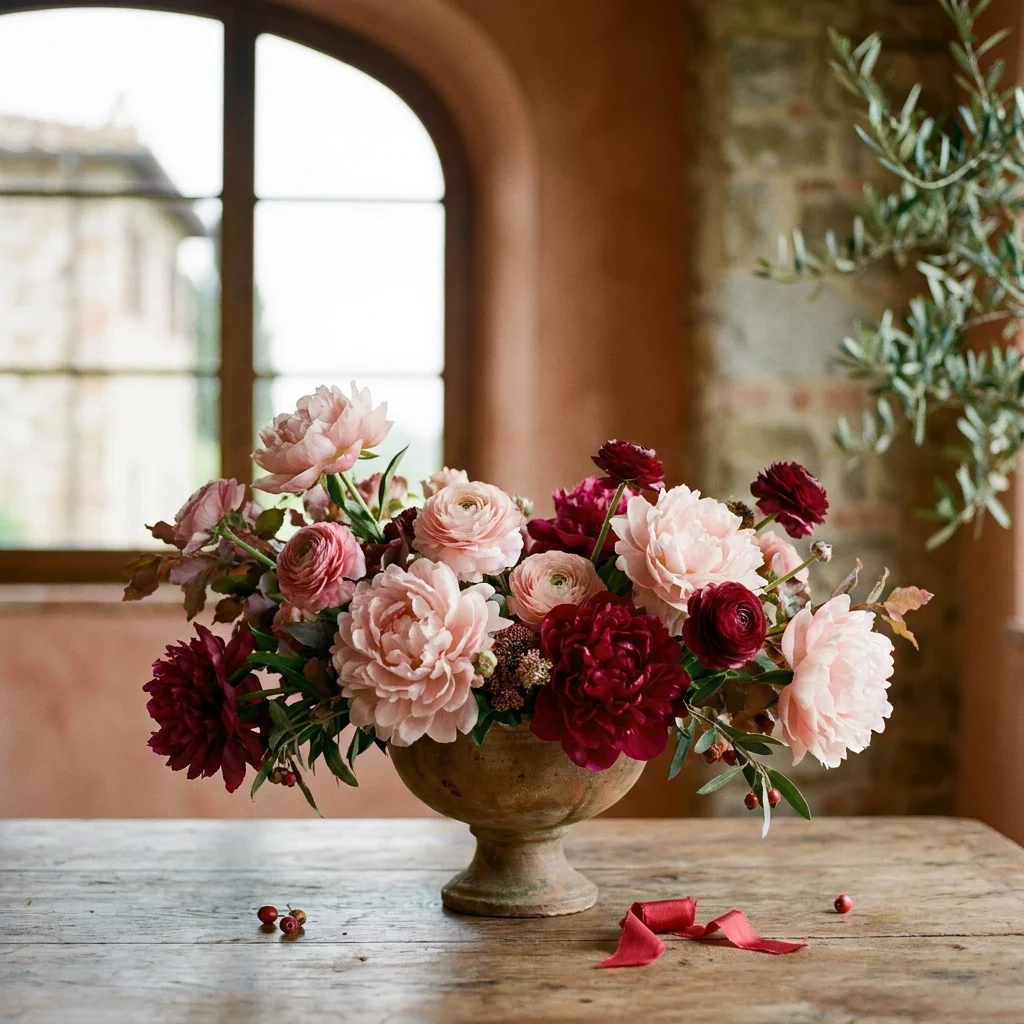
A stone villa south of Siena. September morning. The couple’s family gathers in a room with terracotta floors and high, arched windows. A long wooden table, centuries old, holds a lacquered tray with a gaiwan set in celadon glaze. Red silk runners trace the table’s length but don’t cover it entirely—the wood breathes through. Peonies in blush and burgundy sit in low ceramic vessels. No centerpiece towers. No competing grandeur.
The bride wears a qipao in deep red with gold embroidery. The groom wears a dark suit with a subtle red pocket square. They kneel on silk cushions. The bride’s mother receives the first cup. Then the groom’s mother. The photographer works from the doorway, capturing the scene through the frame of the arch—silhouettes against morning light, hands holding porcelain, the quiet choreography of respect.
This is the balance we protect. Italian architecture is already dramatic. Chinese ceremony is already rich with symbolism. Our design team’s role is restraint—choosing where red appears and where it doesn’t, ensuring gold accents complement rather than clash with gilded Baroque ceilings or rustic stone walls. We’ve coordinated Chinese weddings in Italy at properties ranging from Renaissance palazzi in Florence to minimalist contemporary villas on the Ligurian coast, and the design approach changes every time.
Couples drawn to the idea of a villa wedding in Italy will find that exclusive-use estates offer the most flexibility for integrating dual-culture décor across multiple spaces.
Why Bilingual Vendor Coordination Is the Invisible Cost Most Couples Underestimate
Italian vendors—caterers, florists, lighting designers—work in Italian. Contracts are in Italian. Invoices reference Italian tax codes. When a family member in Beijing needs to discuss the banquet menu, or when the couple’s parents in Melbourne want to understand the ceremony timeline, someone must bridge those conversations in real time.
This is a core function of Kiss Me Italy’s international coordination team. We don’t simply translate documents. We interpret cultural expectations. When a Chinese family asks for “eight courses” at dinner, they’re referencing a banquet structure that doesn’t map directly onto Italian service. We negotiate with the chef to create a flow that feels like eight distinct moments—amuse-bouche, two antipasti, primo, intermezzo, secondo, pre-dessert, dessert—without doubling the kitchen’s workload or extending dinner past three hours.
When the couple’s photographer is Italian and the family’s preferred second shooter flies in from Hong Kong, we coordinate shot lists, equipment sharing, and editing style alignment before the wedding day. This prevents the jarring mismatch of two visual languages in the final gallery.
Our approach to selecting and coordinating wedding photographers in Italy accounts for exactly this kind of multi-team dynamic.
Italian Reception Flow vs. Chinese Banquet Pacing: Finding the Rhythm That Keeps 120 Guests Engaged
An Italian wedding dinner unfolds slowly. Courses arrive with deliberate pauses. Wine is poured, conversations stretch, the evening builds toward a late dessert and dancing. A Chinese banquet, by contrast, is faster-paced—dishes arrive in quick succession, toasting rounds punctuate the meal, and the energy peaks earlier in the evening.
For this bicultural wedding weekend, we design a hybrid pacing model:
Cocktail hour (60–75 minutes): Italian aperitivi plus dim sum or bao stations. This is the longest informal window and gives guests from both cultures something familiar. A string duo or solo pianist provides ambient sound without competing with conversation.
Seated dinner (2–2.5 hours): Five courses with one Chinese-inspired intermezzo. Toasting rounds are scheduled between the primo and secondo, giving the couple a structured moment to visit each table—a gesture familiar to Chinese guests—without disrupting Italian service timing. Our coordination team briefs the maître d’ on toasting protocol in advance.
Dessert and dancing (90+ minutes): Italian wedding cake, possibly a secondary Chinese dessert (tang yuan or red bean pastries), followed by a DJ set or live band. We’ve found that entertainment choices land best when the first dance happens immediately after cake cutting, bridging the two cultures’ expectations of when the party begins.
May vs. September for a Chinese Wedding in Italy: Climate, Availability, and Pricing Compared
May and September are the two months we recommend most frequently for Chinese weddings in Italy. Both avoid the extreme heat of July and August, which matters when a tea ceremony involves kneeling on cushions in formal attire.
May offers longer daylight—sunset around 8:30 p.m. in Tuscany—and peak peony season, which aligns beautifully with Chinese floral symbolism. Venue availability is moderate; peak season pricing hasn’t fully engaged. The risk: occasional spring rain, which requires a covered backup for outdoor ceremonies.
September brings harvest energy, warmer evenings, and the beginning of vendemmia (grape harvest) at vineyard estates. Sunset is earlier—around 7:15 p.m.—which compresses the photography window between ceremony and dinner. Pricing is at or near peak. The advantage: more predictable weather and the possibility of incorporating a vineyard setting at its most photogenic moment.
For couples flexible on dates, our Italian wedding calendar provides month-by-month guidance on climate, pricing trends, and venue availability across regions.
The Coordination Behind a Chinese Wedding in Italy That Guests Remember for Years
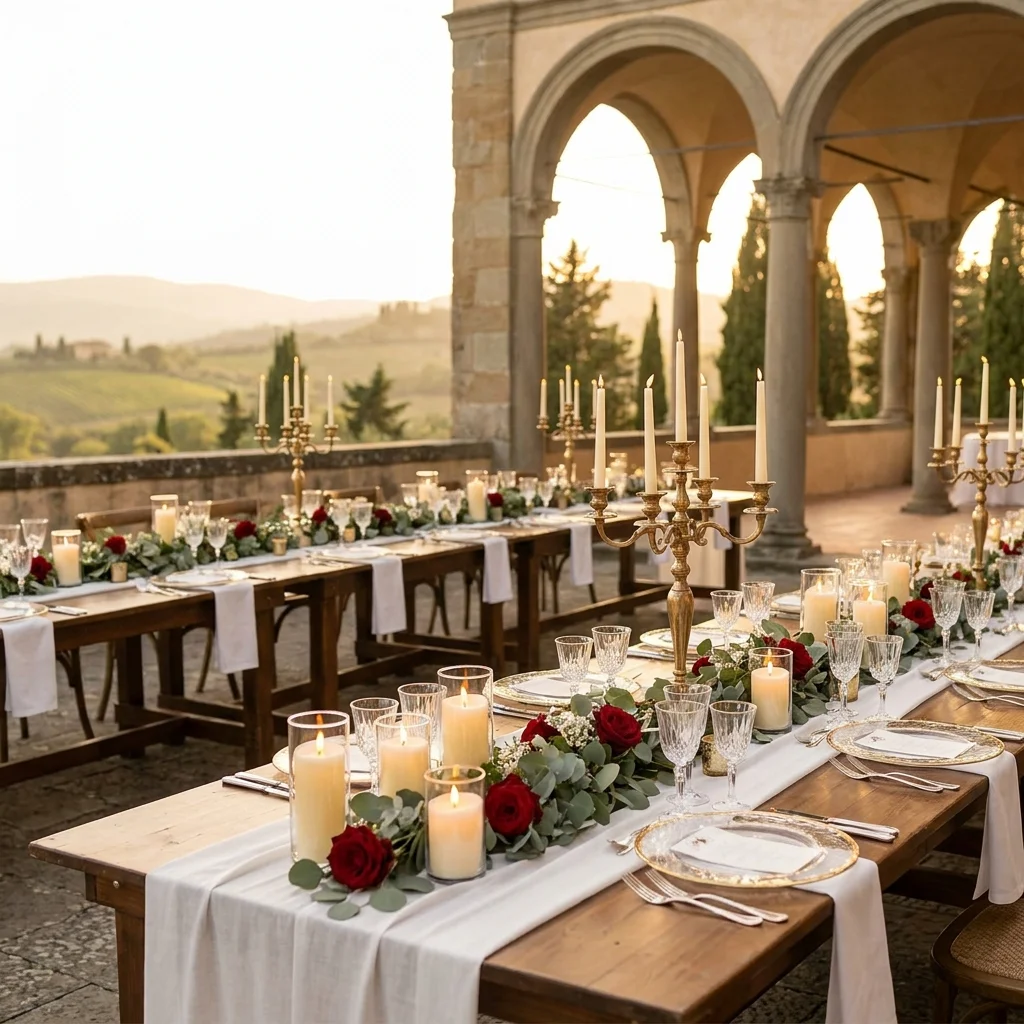
A Chinese wedding in Italy is not a standard destination wedding with a tea ceremony added on. It is a bicultural production requiring documentation fluency, cross-cultural vendor management, and a timeline architecture that respects two distinct ceremonial traditions without rushing either one.
At Kiss Me Italy, we’ve built this bridge for couples arriving from four continents. The result is a celebration where the groom’s American college friends feel as welcomed as the bride’s grandmother from Guangzhou—where every ritual has space, every meal has intention, and every logistical seam is invisible.
If you’re beginning to plan a Chinese wedding in Italy—whether you’re six months out or eighteen—start a conversation with our team. We’ll map your timeline, clarify documentation requirements for your specific nationalities, and build a proposal around the region, season, and cultural elements that matter most to your families.
Frequently Asked Questions About a Chinese Wedding in Italy
Can we include a tea ceremony inside a historic villa if the venue has strict preservation rules?
Yes—when planned correctly. We adapt the ritual to preservation constraints by using flame-free styling, protective floor coverings where required, and furniture layouts approved by the venue manager. The goal is to keep the ceremony authentic while remaining fully compliant with heritage and insurance policies.
How do you manage gift-giving (hongbao) discreetly and securely during an Italian wedding weekend?
We plan a secure, discreet process in advance: a designated gift table location, a trusted bilingual attendant, and a documented handover to the couple or a nominated family member. For larger events, we recommend a lockable case and a clear timeline for moving gifts off-site to avoid any risk during dancing or venue turnover.
What’s the best way to handle speeches and translations without slowing the reception?
We structure speeches as short, high-impact moments and use professional interpreters for consecutive translation only where it matters most. When appropriate, we prepare bilingual on-screen subtitles for a video message or provide printed bilingual speech summaries—so the room stays engaged and the dinner service remains on schedule.
Can we schedule a tea ceremony if we’re doing a Catholic ceremony or a church blessing?
Yes. The tea ceremony is a family ritual and can be scheduled privately at the villa or hotel suite—typically in the morning—while the religious ceremony remains the public centerpiece later in the day. We design the timing so neither tradition feels rushed and the couple isn’t forced into unnecessary outfit changes.
How do you plan for jet lag when immediate family must attend a morning tea ceremony?
We build arrival buffers into the itinerary—often recommending that parents arrive 48–72 hours before the wedding day. When that isn’t possible, we adjust the tea ceremony start time, simplify hair and makeup schedules, and keep the ritual intimate so it remains meaningful rather than exhausting.
Do we need special permits for fireworks, lantern releases, or outdoor performances?
Often, yes—and in many regions certain activities are restricted for safety and environmental reasons. We advise on compliant alternatives (for example, professional cold-spark effects instead of fireworks) and handle venue approvals and local permitting where allowed, so the experience remains spectacular without legal or safety risk.
When you are ready to plan it for real, explore our proposal packages in Italy.